Air Freight for Amazon FBA: A Practical Shipping Guide
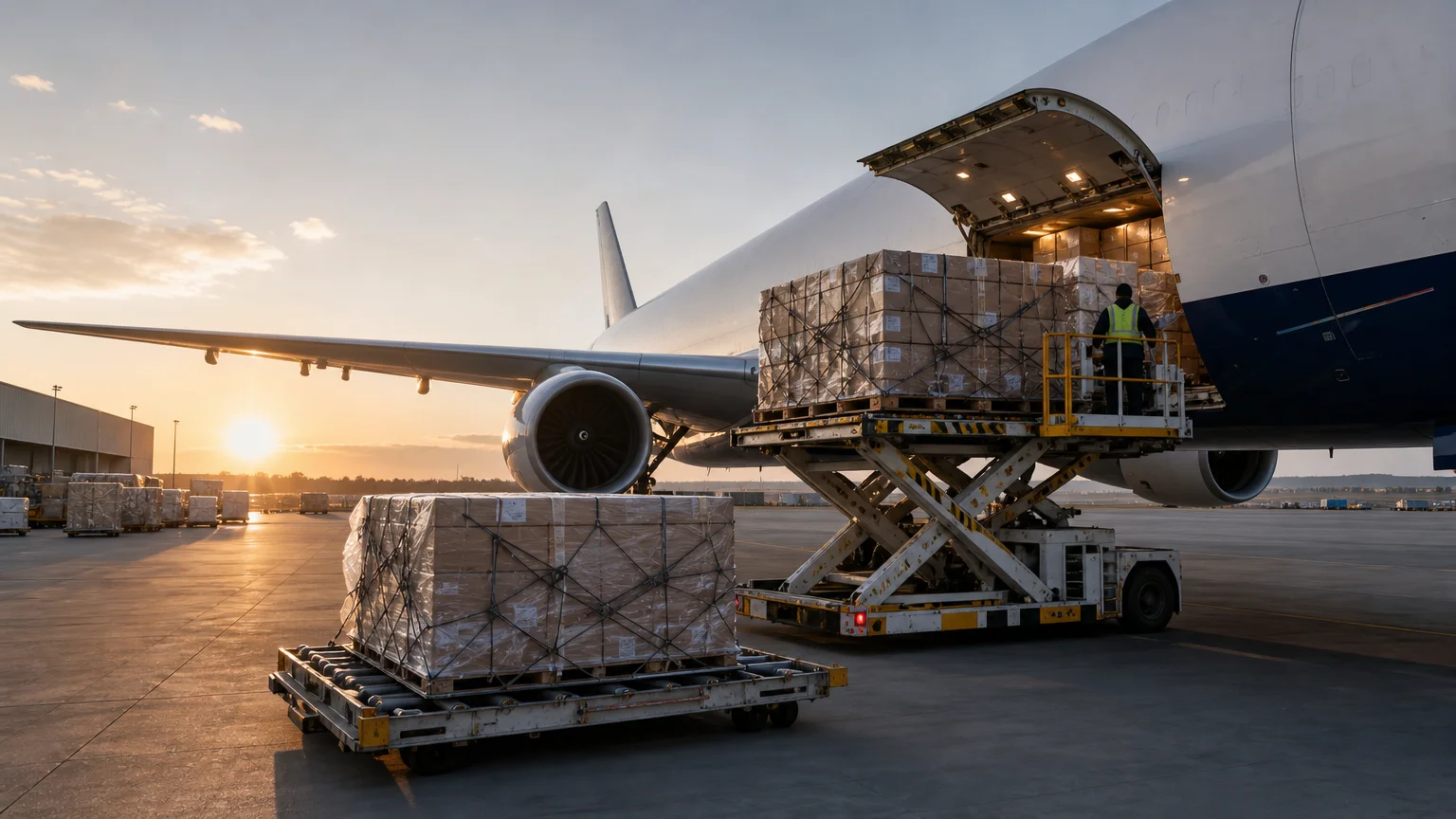
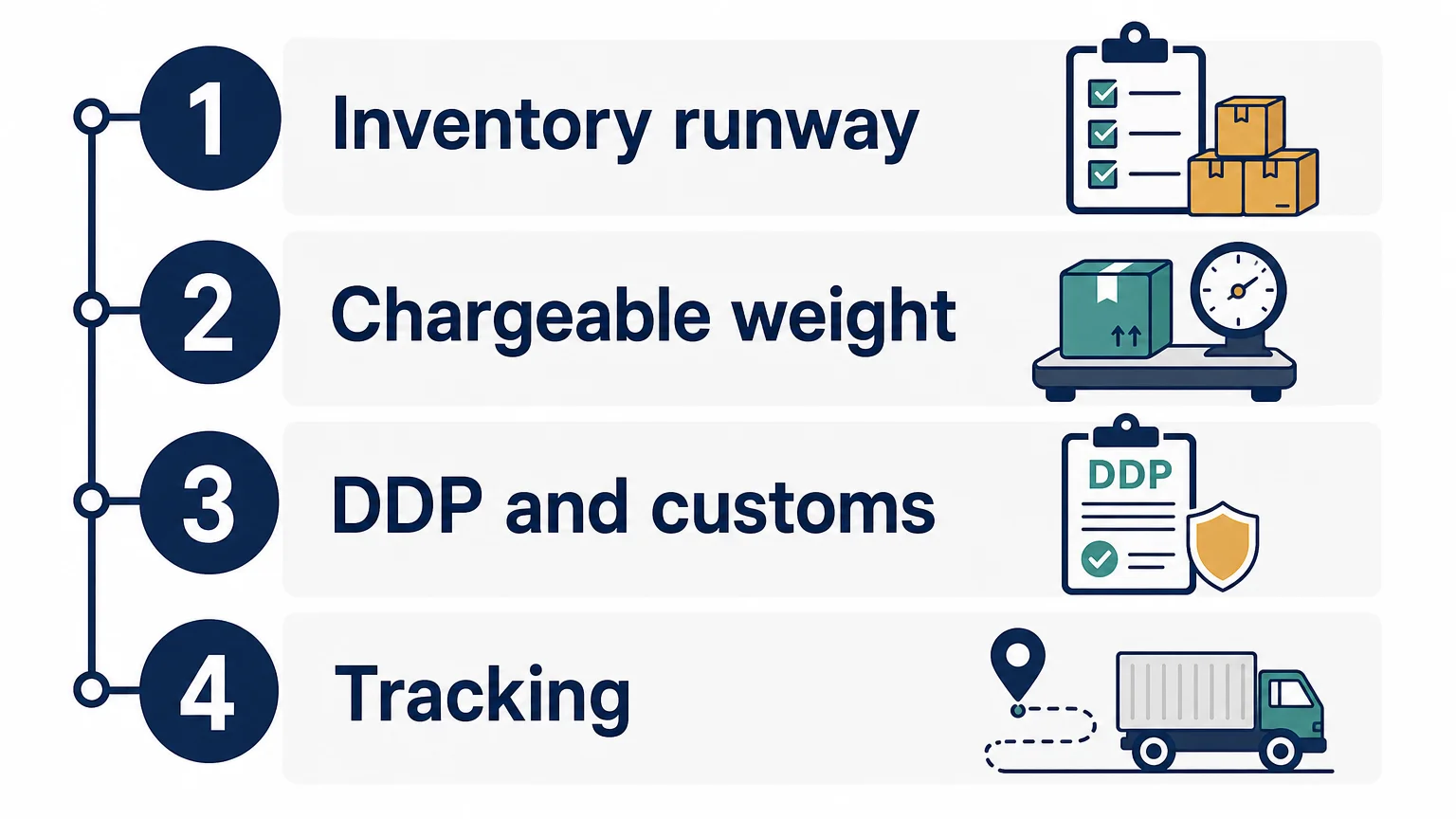
Summary: Air freight is usually the right choice for Amazon FBA when inventory urgency, product value, or launch timing matters more than the lowest freight rate. The best decision compares inventory runway, chargeable weight, landed cost, customs handling, and Amazon receiving requirements, rather than looking at transit speed alone.
Air freight can protect an Amazon listing when ocean transit would leave too little inventory runway. For US sellers, the decision becomes clearer when you compare urgency, product density, and the full landed cost. Our guide to air freight cost per kilogram from China can help you prepare the shipment data needed for a realistic quote.
The fastest route is not always the most profitable route. Air freight can reduce the risk of stockouts, but its premium must be measured against product margin, replenishment timing, customs charges, and the value of capital tied up in inventory.
When is air freight the right choice for FBA?
Air freight is most useful when a delay would cost more than the freight premium. This commonly includes urgent restocking, product launches, seasonal demand, and lightweight products with relatively high value per kilogram.
Amazon describes its Global Logistics air service as a way to move inventory into the FBA network in days rather than weeks. Its program includes origin pickup, export declaration, international transportation, destination customs clearance, and delivery to Amazon facilities. Review the current scope of Amazon Global Logistics before comparing it with a third-party forwarder.
However, a quoted flight time is not the same as live FBA inventory. You must also allow time for supplier readiness, pickup, export processing, customs clearance, domestic delivery, Amazon check-in, and possible receiving delays. Your useful planning question is therefore not, “How fast can the aircraft fly?” It is, “How many selling days will this shipment protect?”
Air freight is generally easier to justify when the product is compact, high-value, fragile, or highly time-sensitive. It is harder to justify for bulky, heavy, low-margin goods that can be planned several weeks in advance.
Air freight versus ocean freight for Amazon FBA
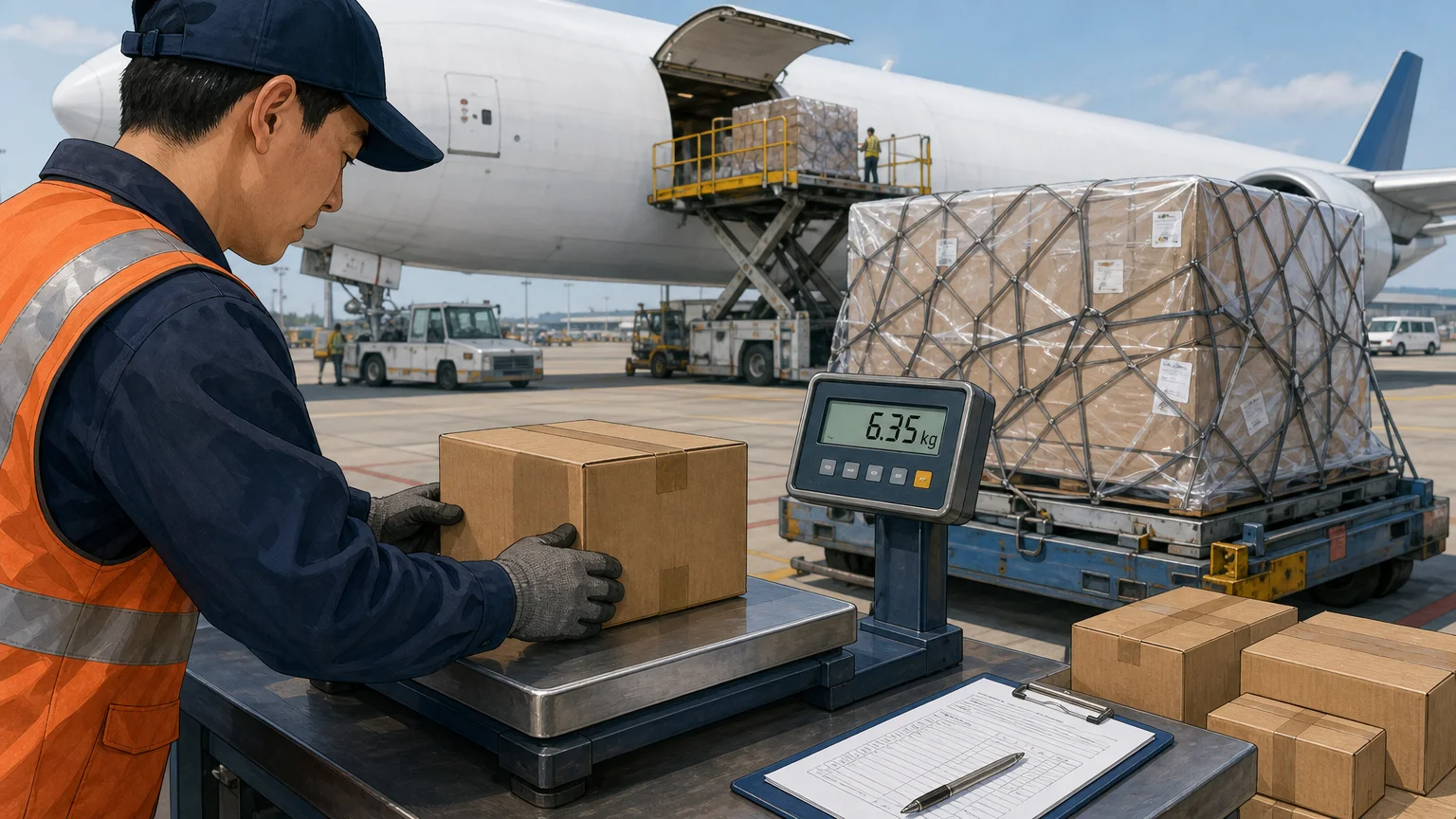
Air and ocean freight solve different inventory problems. Air prioritizes speed and flexibility, while ocean usually provides a lower cost per unit when the shipment is dense, large, and planned early.
| Criterion | Air freight | Ocean freight |
|---|---|---|
| Primary advantage | Shorter transport time and faster replenishment | Lower cost for larger planned shipments |
| Best fit | Urgent, lightweight, high-value, or launch inventory | Heavy, bulky, palletized, or non-urgent inventory |
| Pricing logic | Usually driven by chargeable weight and service scope | Usually driven by volume, container space, handling, and destination charges |
| Main inventory risk | Higher freight spend can reduce margin | Longer transit can increase stockout exposure |
| Planning approach | Use when timing has a measurable commercial value | Book earlier and maintain sufficient safety stock |
A 2023 USITC trade report described air cargo as complementary to ocean freight on important trade routes. That principle applies to FBA planning as well. Many sellers can use ocean for their base inventory and air for the portion required to protect availability.
Our ocean freight versus air freight for FBA comparison can help you assess the trade-off by shipment size, urgency, and product characteristics. The correct answer may change from one purchase order to the next.
What determines the cost of air freight for FBA?
There is no universal air freight price for Amazon FBA. A reliable quote depends on the complete shipment profile, not only the gross weight.
The main variables include:
- Chargeable weight, which may reflect actual weight or dimensional volume.
- Carton dimensions, carton count, and total shipment volume.
- Supplier pickup location and the destination Amazon warehouse.
- Air service level, routing, fuel charges, and available capacity.
- Chinese export declaration requirements.
- Customs clearance, duties, taxes, and destination handling.
- Door-to-door delivery and any DDP structure.
- Special handling, insurance, labeling, or preparation requirements.
Compare quotes using the same basis. One provider may quote airport-to-airport freight, while another includes pickup, customs, duties, domestic delivery, and FBA handling. The lower headline rate may therefore produce the higher final cost.
Our pricing is shipment-specific and depends on weight, volume, selected freight mode, pickup fees, freight charges, export requirements, customs clearance, destination duties, and the door-to-door destination. DDP quotes are presented as all-inclusive, although an additional fee applies when an export declaration is made under the supplier’s name for a Chinese export tax refund.
For a meaningful comparison, calculate the estimated cost per unit after freight, duties, preparation, and delivery. Then compare that amount with the margin protected by avoiding a stockout. This connects freight selection to the economics of the ASIN instead of treating logistics as an isolated expense.
Customs and FBA receiving can decide the outcome
Fast transportation cannot compensate for incomplete import documents or a shipment that Amazon cannot receive. FBA compliance begins before cargo leaves the supplier.
Before booking air freight, confirm the commercial invoice, packing list, air waybill details, product descriptions, declared values, and applicable tariff classification. You should also establish who handles import clearance, duties, taxes, insurance, and the importer-of-record responsibility.
Amazon’s 2026 Global Logistics terms describe a service framework that can include transportation, warehousing, handling, consolidation, palletization, labeling, booking, and customs clearance. Review the relevant Global Logistics service terms and confirm which services apply to your route.
Your forwarder should also verify the current requirements in the applicable Amazon Send to Amazon workflow. These can include unit labels, carton labels, packaging, carton quantities, pallet preparation, shipment identifiers, and delivery appointments.
Product restrictions require separate attention. The available company information does not provide a complete restricted-product list or detailed eligibility rules. Ask the forwarder to review batteries, liquids, cosmetics, food-contact materials, regulated products, branded goods, and other special categories before the shipment is accepted.
A split-mode plan can protect inventory availability
When demand is stable but the ocean schedule is too slow, split-mode shipping can balance cost and availability. You send enough inventory by air to cover the immediate sales period, then move the remaining quantity by ocean.
This approach works best when you know your weekly sell-through, current FBA inventory, supplier production date, and realistic receiving timeline. The air portion should be based on a defined inventory gap, not an arbitrary percentage of the purchase order.
The 2026 BTS freight framework organizes US freight flows by weight, value, and activity. That structure supports a useful planning principle: shipment weight alone is not enough. Product value, shipment volume, and the commercial effect of delay should influence the selected mode.
A practical calculation is:
- Estimate the date when existing FBA inventory will reach its risk threshold.
- Subtract supplier production, pickup, customs, delivery, and receiving time.
- Identify the quantity that must arrive through a faster route.
- Send the remaining volume through the lower-cost route if its timing remains acceptable.
Our fast boat versus air freight analysis can also help when your shipment needs a middle option between premium air service and slower ocean freight.
This strategy is not automatic. It can create additional handling, separate documents, and two delivery schedules. Use it when the value of maintaining availability is greater than the added coordination and freight cost.
How to evaluate an FBA air freight forwarder
The forwarder affects more than the transportation leg. A suitable provider should connect supplier pickup, export handling, air freight, customs, domestic delivery, and Amazon receiving requirements in one controlled process.
Use this selection checklist:
- Confirm FBA experience. Ask how the provider handles labels, shipment plans, carton data, delivery appointments, and Amazon receiving issues.
- Request an itemized quote. Separate freight, pickup, customs, duties, taxes, insurance, handling, and final delivery.
- Clarify DDP responsibility. Confirm who acts as importer of record and who pays or advances duties and taxes.
- Check product eligibility. Discuss batteries, regulated products, special handling, and documentation before booking.
- Review tracking support. You should receive milestone updates from pickup through customs and final delivery.
- Compare alternatives. Ask whether air, ocean, fast boat, or rail better matches your timing and shipment profile.
We coordinate supplier pickup, Chinese export declaration, international freight, destination customs clearance, DDP duties and taxes, door-to-door delivery, tracking, and route selection for shipments from Chinese suppliers to Amazon warehouses worldwide.
When you submit product information through WhatsApp or a packing list, we provide three route options with shipment-specific pricing and estimated timelines within 24 hours. Our packing-list upload accepts PNG, JPG, WEBP, PDF, or XLSX files up to 10 MB, with product details, quantities, weights, and dimensions used to support the quote process.
Our service is designed for sellers who need a single logistics workflow rather than separate coordination between a supplier, carrier, customs provider, and final-mile operator. Route suitability remains dependent on the cargo, destination, timing, and applicable customs requirements.
Make the freight decision from inventory economics
The right air freight for Amazon FBA decision depends on more than speed. Compare inventory runway, chargeable weight, landed cost, customs responsibility, product restrictions, and Amazon receiving requirements. Use air when the value of faster availability justifies the premium, and consider a split-mode plan when ocean can carry the base volume without creating a stockout risk.
Plan your next FBA air shipment
When timing is important, a clear route comparison can make the difference between a controlled replenishment and an expensive emergency shipment. Prepare your product details, carton dimensions, quantities, and destination, then compare the available freight modes against your inventory runway.
We can review your shipment profile and coordinate pickup, air freight, customs handling, DDP processes, door-to-door delivery, and tracking. Request our Amazon FBA air freight services to compare route options according to your budget, urgency, product characteristics, and destination.
Frequently Asked Questions
Is air freight suitable for every Amazon FBA product?
No. Air freight is generally more suitable for urgent, lightweight, high-value, or time-sensitive inventory. Heavy, bulky, low-margin products often fit ocean freight better when you can plan replenishment early.
How should I compare air freight quotes?
Compare quotes using the same service scope and shipment details. Confirm whether each quote includes pickup, export handling, customs clearance, duties, taxes, insurance, domestic delivery, and delivery to the Amazon warehouse.
What is chargeable weight in air freight?
Chargeable weight is the amount used to price the shipment after considering both physical weight and dimensional volume. Ask the forwarder to show the calculation so bulky, lightweight cartons do not create an unexpected surcharge.
Can I combine air freight and ocean freight for one replenishment?
Yes. Many sellers use air freight for the urgent quantity and ocean freight for the remaining volume. This requires coordinated documentation, receiving, and inventory planning, so confirm that both shipments can be managed without creating additional compliance problems.
How can QG Horizon help with Amazon FBA air freight?
We coordinate supplier pickup, export declaration, international air freight, customs clearance, DDP duties and taxes, door-to-door delivery, tracking, and route comparison. You receive shipment-specific options based on product information, weight, volume, destination, budget, and urgency.
Ready to Optimize Your Amazon Shipping?
Get 3 route options tailored to your products and timeline
Get Your Quote→