Air Freight or Sea Freight for Amazon FBA? A Practical Guide
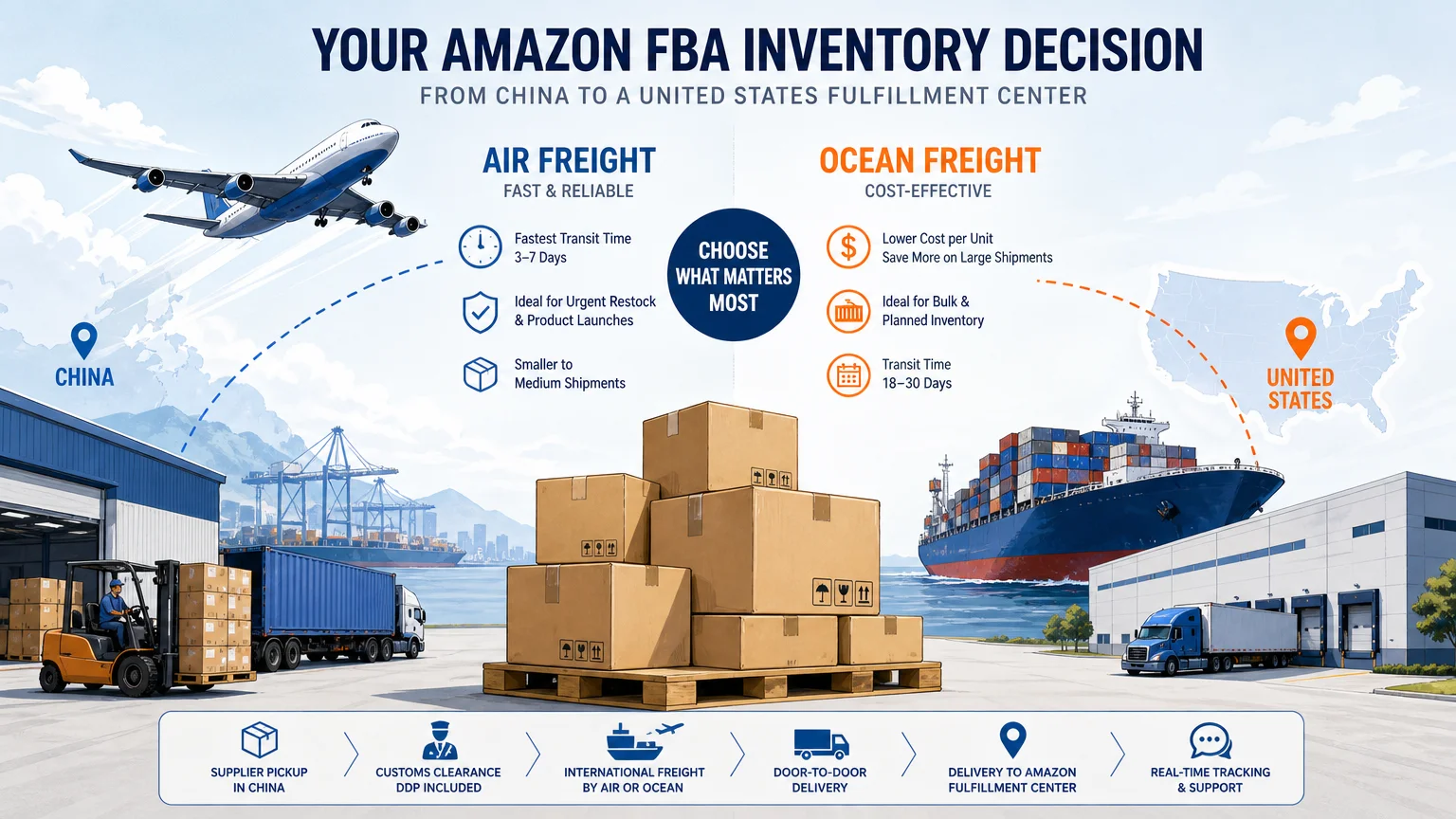
Summary: Air freight or sea freight for Amazon FBA depends on urgency, shipment size, cash flow, and stockout risk. Air is usually the faster option for launches and urgent replenishment, while sea freight generally provides better unit economics for planned, larger shipments. Compare total landed cost and inventory coverage before booking.
A stockout can cost more than a higher freight invoice when a profitable listing loses sales momentum. When deciding between air freight and sea freight, air freight or sea freight for Amazon FBA? is best answered by matching the route to your inventory situation. Our guide to air freight versus ocean freight for Amazon FBA provides additional context for that decision.
Air and ocean routes solve different operational problems. Air can shorten the time between supplier pickup and Amazon receiving, while sea freight can reduce transportation cost when you ship heavier or larger quantities. Amazon also supports air and ocean workflows with pickup, customs handling, delivery, and shipment tracking through its seller logistics services. Amazon’s official shipping overview explains the available workflow and service scope.
Air Freight or Sea Freight for Amazon FBA?
The short answer is simple: choose air when time protects more value than the freight premium, and choose sea when planning capacity allows you to prioritize lower landed cost. The comparison below highlights the main differences for shipments from China to Amazon fulfillment centers in the United States.
| Criterion | Air freight | Sea freight |
|---|---|---|
| Typical timing | Usually measured in days, depending on the route, customs, and Amazon receiving | Usually measured in weeks, with additional variation from ports and inland delivery |
| Cost profile | Higher cost per kilogram or chargeable weight | Lower unit cost for larger or denser shipments |
| Best shipment profile | Lightweight, high-value, urgent, or launch inventory | Heavy, bulky, planned, or larger-volume inventory |
| Inventory role | Emergency restocking, launch coverage, and short bridging shipments | Base replenishment and regular planned inventory flows |
| Main risk | Freight premiums and dimensional weight | Longer lead times, port variability, and greater planning requirements |
| Customs responsibility | Import classification, duties, taxes, and delivery compliance still apply | The same customs responsibilities apply, with additional ocean filing requirements where applicable |
Air Freight: When Speed Protects Revenue
Best for: Air freight is usually best for urgent restocking, product launches, seasonal demand, lightweight high-value products, and shipments that cannot wait several weeks.
Air freight buys time rather than low transport cost. It can help you move a smaller quantity quickly while a larger production order is prepared or transported by sea. This is especially useful when your sales velocity is strong and the expected contribution margin from staying in stock exceeds the additional freight cost.
Air pricing is commonly influenced by chargeable weight. A carton that is light but bulky may be priced according to its dimensional volume rather than its scale weight. Packaging design, carton dimensions, fuel surcharges, route capacity, and service level can therefore change the final quote substantially.
Pros:
- Shorter transit time for launches and urgent replenishment.
- Useful for smaller batches and inventory bridges.
- Can reduce the number of selling days exposed to a stockout.
- Often suitable for products with high value relative to their weight.
Cons:
- Usually carries a higher freight cost per unit.
- Bulky packaging can create a large dimensional-weight charge.
- Frequent emergency use can weaken margins and indicate late replenishment planning.
Sea Freight: When Planning Protects Margin
Best for: Sea freight is usually best for planned replenishment, larger purchase orders, pallets, bulky products, and established listings with predictable demand.
Sea freight generally provides better unit economics because vessels can move much larger quantities. You can use less-than-container load shipping when the order does not fill a container, or full-container load shipping when volume is high enough to justify dedicated capacity. Our guide to sea freight FCL versus LCL for Amazon FBA explains the practical difference between those shipment structures.
The trade-off is planning time. Sea inventory may spend longer in production, origin handling, international transit, customs clearance, inland delivery, and Amazon receiving. You therefore need a reliable reorder point, enough safety stock, and a realistic view of how many selling days remain before the shipment becomes available.
Pros:
- Lower transportation cost per unit for larger shipments.
- Efficient for heavy, bulky, and lower-value products.
- Supports regular replenishment when demand is predictable.
- FCL can reduce handling compared with shared-container arrangements when volume justifies it.
Cons:
- Longer lead times require earlier purchasing decisions.
- LCL shipments may involve additional consolidation and destination handling steps.
- Delays can create stockout pressure when inventory coverage is too low.
- Large orders tie up more cash before the inventory becomes sellable.
Compare Total Landed Cost, Not the Freight Line
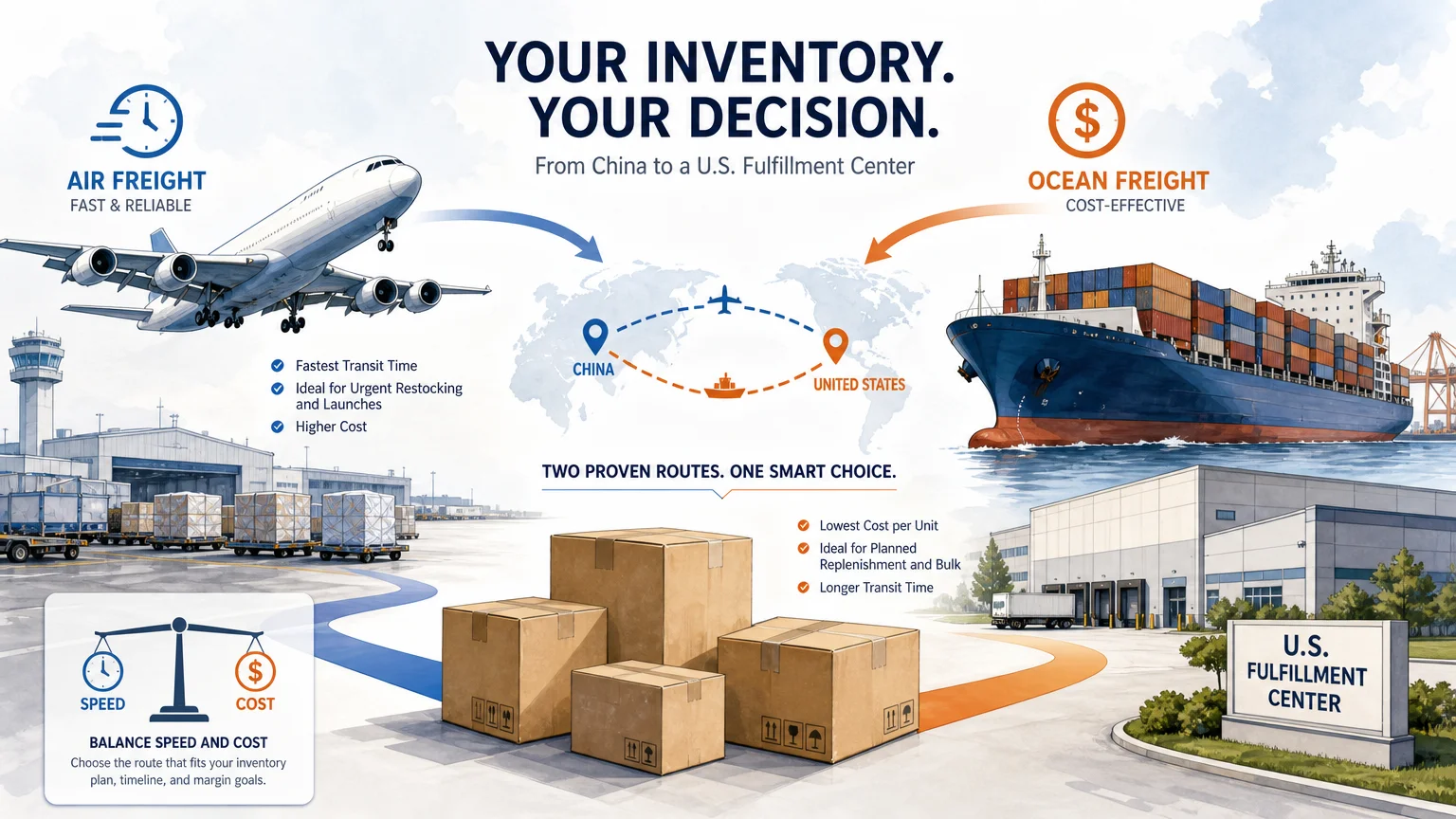
Which option is cheaper depends on more than the main freight charge. Compare both routes using the same supplier pickup point, destination assumptions, shipment quantity, customs scope, delivery method, and Amazon receiving path.
Landed cost per sellable unit includes the product cost, origin pickup, export handling, freight, insurance, duties, taxes, customs clearance, destination delivery, preparation, labeling, and other inbound charges. Divide the complete cost by the number of units that become sellable, not simply by the number of units ordered.
For United States imports, duty and user fees vary according to the commodity, customs value, entry type, and transportation mode. Ocean shipments may also be subject to a Harbor Maintenance Fee, while formal entries can include a Merchandise Processing Fee. Review the current CBP duty and fee guidance and confirm the applicable classification with a qualified customs professional.
Our article on air freight for Amazon FBA and its cost trade-offs covers the central calculation: the air premium should be compared with the contribution margin protected by faster availability.
Match the Route to Your Inventory Situation
Product launches
A new listing often has uncertain demand. A smaller air shipment can help you reach the market sooner and test sales before committing the full order to sea freight. Once demand becomes more predictable, larger replenishment quantities can move by sea to improve unit economics.
Urgent restocking
If available inventory will run out before the next sea shipment arrives, calculate the cost of the gap. Compare the air premium with expected contribution margin, advertising disruption, ranking pressure, and the cost of restarting sales after the stockout.
Planned replenishment
Sea freight is usually the stronger choice when your forecast is reliable and your inventory has enough coverage. The earlier you place the order, the more flexibility you have to select a lower-cost service instead of paying for an emergency solution.
Bulky or heavy products
Large products can become expensive by air because their space creates chargeable weight. Sea freight is often more suitable for furniture, home goods, appliances, and other products where volume is high compared with value.
Limited working capital
Sea freight may lower the cost per unit, but a larger order can keep more cash tied up in transit and storage. Air freight may require less inventory at one time, but its premium can reduce margin. The better choice depends on both freight economics and available cash.
Customs, FBA Receiving, and Quote Scope
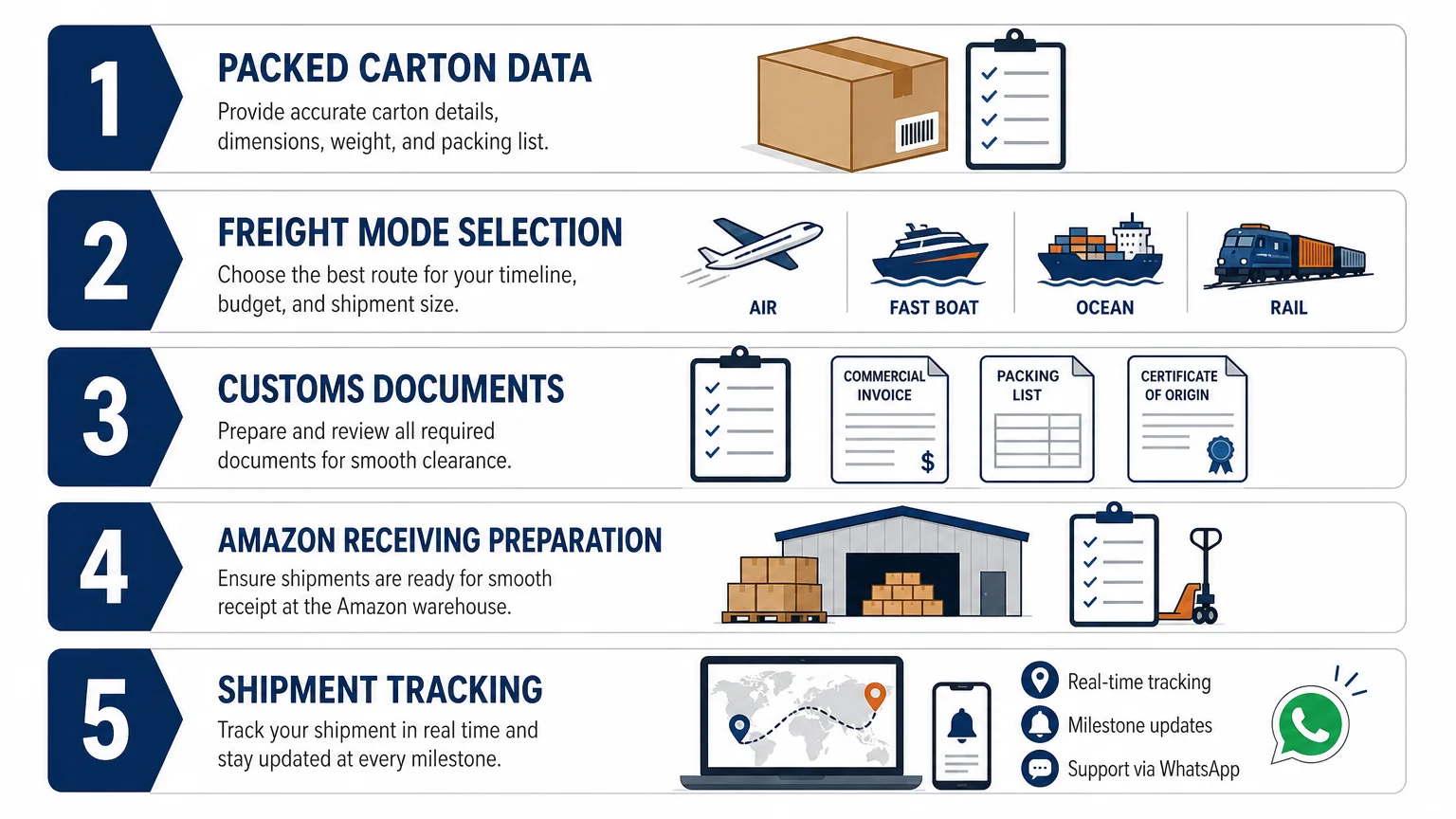
Air and sea freight do not remove customs obligations. You still need accurate product descriptions, correct tariff classification, commercial documents, an importer of record, and a clear plan for duties and taxes.
For United States ocean imports, an Importer Security Filing must generally be submitted before the cargo is loaded onto the vessel. The CBP ISF guidance states that the filing is required no later than 24 hours before loading, and inaccurate or late filings can create penalties.
Classification also matters because the Harmonized Tariff Schedule determines the applicable tariff treatment for imported goods. The relevant product details and origin should be reviewed before booking, especially when duties could materially change the landed cost. The CBP tariff overview explains the role of the Harmonized Tariff Schedule in United States imports.
Your quote should state whether it includes supplier pickup, export declaration, international freight, customs clearance, duties, taxes, final delivery, preparation, labeling, appointment handling, and exception charges. Our overview of Amazon FBA shipping options by air, ocean, rail, and express provides further guidance on comparing route options.
A Practical Decision Framework
Before approving a shipment, use a consistent process rather than choosing the lowest headline rate.
- Measure inventory coverage. Estimate how many selling days remain after production, transit, customs, and Amazon receiving.
- Confirm packed dimensions. Use actual carton weight and dimensions so air chargeable weight and sea volume are calculated correctly.
- Normalize the quotes. Make sure both quotes cover the same destination, customs scope, delivery service, and preparation requirements.
- Calculate stockout exposure. Estimate the contribution margin that could be protected by the faster route.
- Choose one route or split the shipment. Use sea for the planned bulk and air for a smaller bridge quantity when the economics support it.
A split shipment is often practical when the sea order has the best long-term cost but cannot arrive before inventory runs out. The air portion should be limited to the quantity needed to cover the gap, rather than moving the entire order at the premium rate.
Conclusion: Choose the Mode Your Inventory Can Support
There is no universal winner between air and sea freight for Amazon FBA. Air is justified when speed protects a launch, a high-margin listing, or urgent sales continuity. Sea is usually better for planned, larger shipments where lower unit cost matters more than rapid delivery. The most reliable decision compares total landed cost and inventory coverage, then uses a split strategy when one mode alone creates too much risk.
Take action with QG Horizon
When the right freight mode depends on shipment details, a route comparison can make the decision clearer. We help Amazon FBA sellers evaluate urgency, budget, shipment scale, and delivery requirements before selecting a route from China to an Amazon warehouse.
Our Amazon FBA freight forwarding services cover supplier pickup, air, fast boat, ocean, and rail freight, together with customs clearance, DDP handling, door-to-door delivery, tracking, and shipment support. Submit your product information or packing list to compare route options based on your actual shipment.
Frequently Asked Questions
Is air freight or sea freight better for Amazon FBA?
Air freight is usually better when delivery speed protects sales, launch timing, or inventory availability. Sea freight is usually better when you can plan ahead and prioritize lower unit cost.
How do I compare the real cost of air and sea freight?
Compare the complete landed cost per sellable unit. Include freight, duties, taxes, customs, delivery, preparation, labeling, and any Amazon inbound charges that apply to the shipment.
When should I use a split shipment?
Use a split shipment when the main quantity should move by sea but a smaller quantity is needed sooner. The air portion should cover the expected gap until the sea inventory becomes available.
Is sea freight suitable for small Amazon FBA shipments?
It can be suitable through LCL when the shipment does not fill a container. However, compare consolidation, destination handling, minimum charges, and total delivery scope before assuming it is cheaper.
What should a freight quote include for Amazon FBA?
Ask whether the quote includes supplier pickup, export handling, freight, customs clearance, duties, taxes, final delivery, preparation, labeling, appointment handling, tracking, and possible exception charges.
Ready to Optimize Your Amazon Shipping?
Get 3 route options tailored to your products and timeline
Get Your Quote→