How to Succeed as an Amazon FBA Seller in 2026

Summary: An Amazon FBA seller outsources storage, packing, and shipping to Amazon; about 82% of active sellers use FBA, with 64% reaching profitability within 12 months.
With our Amazon FBA seller guide as a starting point, it is clear that the opportunity on Amazon remains massive, yet the landscape has changed dramatically. As of 2025, Amazon has 9.7 million total registered seller accounts globally, though the majority are dormant; only about 1.9 million are actively selling, and 82% FBA adoption signals sellers are investing heavily in infrastructure. The data makes one thing obvious: this is no longer a casual side hustle.
Becoming a successful Amazon FBA seller in 2026 demands strategic thinking across product selection, fulfillment logistics, fee management, and brand building. The “gold rush” era is over; it is now a professional’s game. This article breaks down the current marketplace reality, the fee structures you need to master, the fulfillment decisions that affect your margins, and the shipping strategies that can give you a competitive edge across the US market and beyond.
What Is Fulfillment by Amazon and Why Does It Dominate?
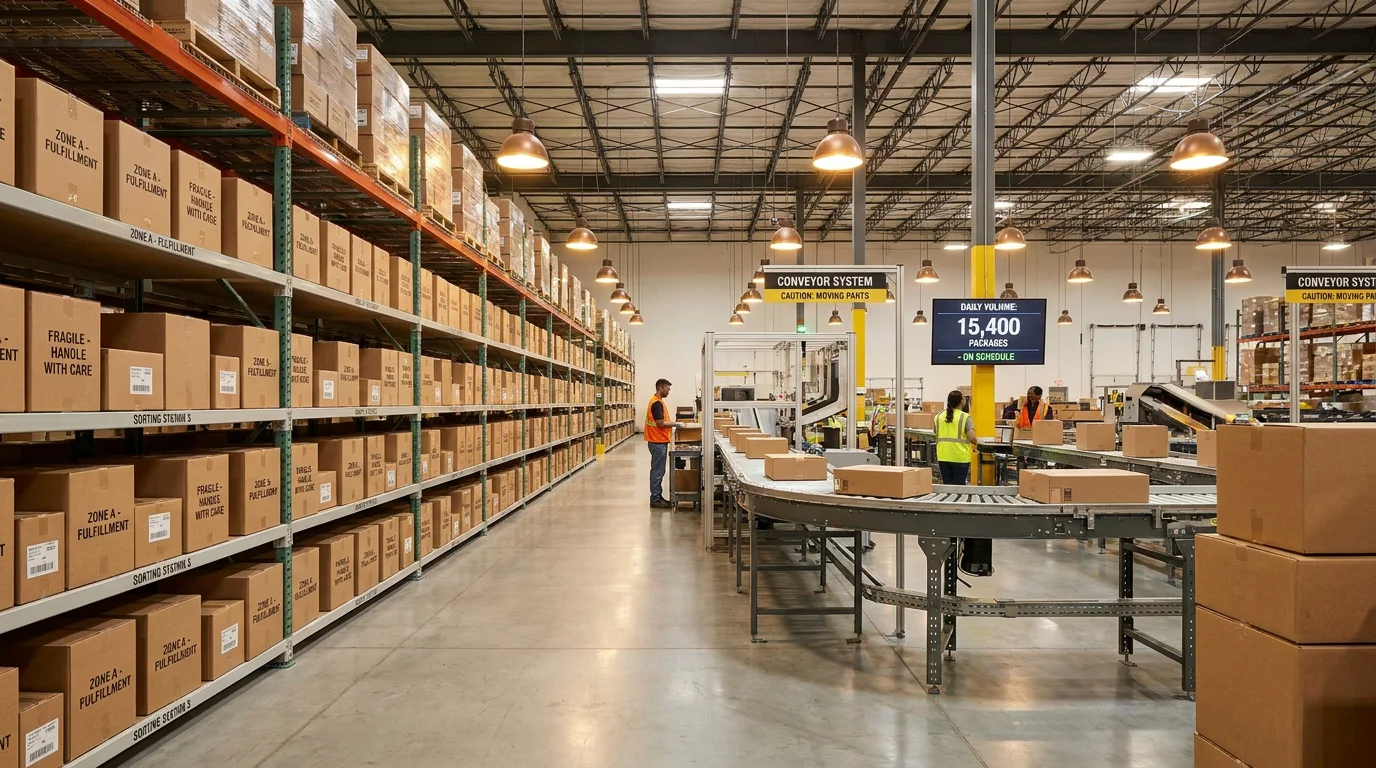
Fulfillment by Amazon (FBA) is a logistics program that allows sellers to store inventory in Amazon’s fulfillment centers. Amazon then picks, packs, ships, and handles returns and customer service on the seller’s behalf. Products enrolled in FBA become eligible for Prime, which gives them a significant advantage in search rankings and the Buy Box.
In 2025, approximately 82% of active Amazon marketplace sellers use FBA, according to multiple industry reports and data analysis firms, with the remaining 18% using Fulfillment by Merchant (FBM) or a hybrid model. This high adoption rate reflects the program’s role as a gateway to Amazon’s Prime customer base, which expects fast, free delivery as a baseline.
For sellers who source products internationally, particularly from China, the FBA model adds a layer of complexity: you must get your inventory from the factory floor into Amazon’s fulfillment network while meeting strict labeling and packaging requirements. That is where specialized freight forwarding becomes essential.
The Amazon Marketplace by the Numbers
Understanding the scale of Amazon’s ecosystem helps you calibrate your expectations and strategy. Amazon and its sellers moved $830 billion in goods in 2025, triple the 2018 number. That growth is not evenly distributed, however.
First-party sales actually declined in 2025 ($255 billion versus $260 billion in 2024), while third-party marketplace sales grew 15% to $575 billion. Amazon is becoming less of a traditional retailer and more of a platform. For independent sellers, this structural shift means the marketplace is increasingly yours to win, but competition is fierce.
New seller registrations hit a decade low of 165,000 in 2025, down 44% from the 2020 peak. While that may seem alarming, it actually reflects a maturing market where casual entrants are being replaced by more serious, professional operators. The marketplace is top-heavy: the top 1% of sellers capture about 27% of total revenue.
How Much Does It Cost to Sell With FBA?
Fee management is arguably the single biggest determinant of profitability for an FBA seller. According to a 2026 analysis by Nova, total selling costs for FBA sellers average 30 to 35% of revenue, including a 15% referral fee, $3.22 to $6.90 per unit fulfillment fee, monthly storage fees, and advertising costs.
Here is a simplified breakdown of the main FBA cost categories:
| Fee Category | Typical Range | Key Detail |
|---|---|---|
| Referral fee | 6% to 45% | Varies by category; most categories are 15% |
| FBA fulfillment fee | $2.37 to $6.90+ per unit | Based on size and weight tier |
| Monthly storage | $0.78/cu ft (standard); $2.40/cu ft (Q4) | Higher during October through December |
| Inbound placement fee | $0.30 to $0.70 per unit | Applies if inventory is not distributed across regions |
| Aged inventory surcharge | Varies | Triggered at 181+ days of storage |
FBA fulfillment fees rose by an average of $0.08 per unit effective January 15, 2026. While that seems small per unit, it compounds quickly across thousands of SKUs. The real margin killer, according to an EcomBrainly analysis, is slow-moving inventory stacking up storage charges alongside the inbound placement fee introduced in 2024; in accounts managed through 2025 and 2026, these two fees together reduced net margins by 4 to 8 percentage points on products with weak sell-through rates.
Profitability: What the Data Actually Shows
The average Amazon seller earns a net profit margin of 15 to 20% after all costs, and about 65% of sellers report being profitable, though it typically takes 6 to 12 months for new sellers to reach consistent profitability. Those figures are encouraging, but they come with caveats.
According to a 2026 report by AMZ Prep, the SmartScout “Voice of the Amazon Seller 2025” report found that over 50% of sellers reported being less profitable in 2024. Rising advertising costs, fee increases, and intensifying competition all contribute to margin compression. The sellers who sustain profitability are those who treat their FBA business as a disciplined operation, not a passive income stream.
Key profitability levers include tight inventory management (keeping sell-through rates high to avoid aged inventory fees), strategic PPC advertising (monitoring TACoS rather than just ACoS), and careful product selection that avoids oversaturated categories. If you are just getting started, reviewing our guide on how to sell on Amazon will help you set realistic expectations from day one.
Setting Up Your Seller Account and Choosing the Right Plan
Amazon offers two selling plans. The Individual plan costs $0.99 per item sold with no monthly subscription, while the Professional plan costs $39.99 per month and includes access to advertising tools, bulk listing features, and advanced analytics. If you anticipate selling more than 40 units per month, the Professional plan is the clear choice.
Creating your account involves providing business information, tax details, bank account data, and identity verification. The process is straightforward but requires attention to detail; errors at this stage can delay your launch by weeks. For a step-by-step walkthrough, our Amazon seller account setup resource covers every requirement.
Once your account is active, you will manage your business through Seller Central, Amazon’s dashboard for listing products, monitoring sales, tracking inventory, and analyzing performance. Mastering Seller Central is non-negotiable. Our guide on Amazon Seller Central breaks down the key reports and tools you need to use effectively.
Shipping to Amazon: The Hidden Competitive Advantage
Most guides focus on what happens inside Amazon’s ecosystem, but the journey from supplier to fulfillment center is where many sellers either gain or lose their edge. This is especially true for sellers sourcing products from China, which accounts for a significant share of Amazon’s third-party supply chain. Over 40% of new FBA sellers in 2026 are based outside the US, reflecting Amazon’s global reach.
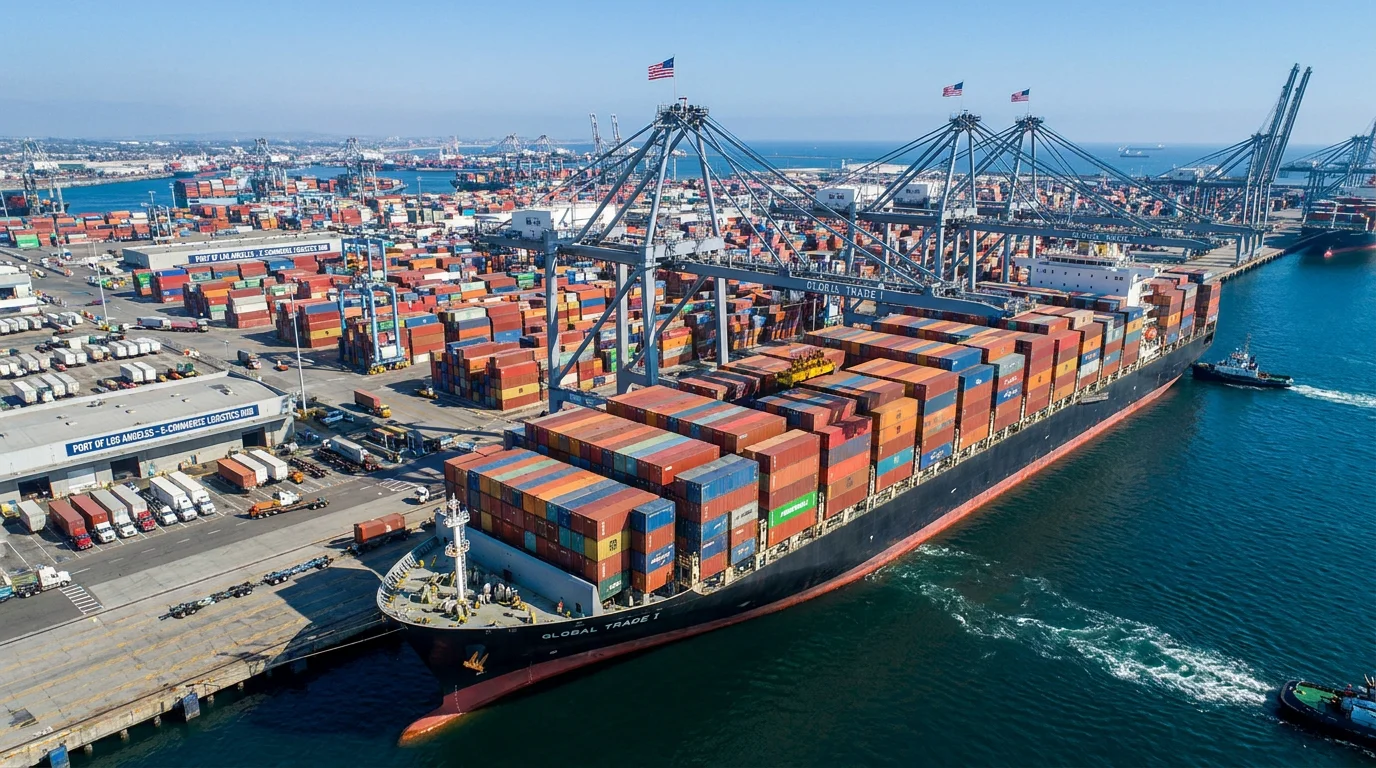
Getting products from a Chinese factory to an Amazon warehouse in the US involves multiple steps: factory pickup, export customs clearance, international freight (by air, sea, rail, or express boat), import customs clearance, and final delivery to the designated fulfillment center. Each step carries risk: delays, unexpected duties, mislabeled shipments, or customs holds can derail your launch timeline and cost you money.
This is where working with a specialized freight forwarder becomes a strategic advantage rather than just a logistical necessity. A partner focused on FBA shipments understands Amazon’s specific labeling requirements, carton content requirements, and delivery appointment systems. We handle every stage of this process, from factory pickup in China through DDP (Delivered Duty Paid) customs clearance and final delivery to Amazon warehouses, so you know your total landed cost before a single carton leaves the factory.
Brand Building and Protection on Amazon
Building a recognizable brand on Amazon is no longer optional; it is a profitability multiplier. In 2026, over 800,000 brands are enrolled in Amazon’s Brand Registry, a 20% increase from the previous year. Enrollment gives sellers access to A+ Content, Sponsored Brands ads, brand analytics, and intellectual property protection tools.
Sellers enrolled in Amazon Brand Registry report higher conversion rates and better customer retention. The program also protects your listings from counterfeiters and unauthorized resellers, which is critical if you are investing in private label products.
Brand building extends beyond Amazon’s tools. Your product packaging, insert cards, and overall customer experience all contribute to repeat purchases and organic reviews. In a marketplace where the top 1% of sellers capture a disproportionate share of revenue, brand equity is what separates sustainable businesses from commoditized ones.
Key Trends Shaping FBA Sellers in 2026
Several developments are reshaping the competitive landscape for Amazon FBA sellers this year. Staying informed is not optional; it is a survival requirement.
- AI and automation: More sellers are using AI tools for product research, pricing, and inventory management. Amazon’s own AI shopping assistant, Rufus, generated $12 billion in incremental sales in 2025, exceeding projections, with over 300 million customers using the tool. Optimizing your listings for AI-driven search is becoming essential.
- Cross-border selling: International expansion is easier than ever, with 40% of new FBA sellers based outside the US. Programs like Remote Fulfillment with FBA allow you to reach customers in Canada and Mexico without additional inventory.
- Rising fee complexity: Amazon has continued its pattern of annual fee adjustments, with most fulfillment and storage fees rising 5 to 10% year over year. Sellers who do not monitor fee changes quarterly risk losing their margins silently.
- Sustainability: Eco-friendly products and packaging are in high demand, with Amazon promoting green initiatives.
- Inventory discipline: Amazon’s FBA capacity environment changed significantly in 2025; your IPI score (0 to 1,000) controls how much FBA storage Amazon allocates to your account, with a minimum threshold of 400 to avoid immediate restrictions on inbound shipments.
A Step-by-Step Roadmap to Launching on FBA
If you are ready to start, here is a streamlined roadmap that accounts for the realities of 2026:
- Product research: Use data-driven tools to identify products with healthy demand, manageable competition, and margins above 25% after all Amazon fees.
- Source your product: Negotiate with suppliers, request samples, and finalize quality specifications. If sourcing from China, establish your shipping plan early.
- Create your seller account: Register for a Professional selling plan ($39.99 per month) and complete identity and tax verification.
- List your products: Optimize titles, bullet points, descriptions, and backend keywords. Invest in professional photography.
- Arrange shipping to Amazon: Coordinate freight from your supplier to the designated fulfillment centers. A DDP shipping arrangement eliminates surprise duties and simplifies cost planning.
- Launch and advertise: Use Sponsored Products campaigns with a controlled budget. Monitor ACoS and TACoS weekly.
- Monitor and optimize: Track your IPI score, sell-through rate, and profit margins at the ASIN level. Remove slow-moving inventory before the 181-day surcharge hits.
Throughout this process, logistics is the thread that ties everything together. A delayed shipment means a missed launch window. An unexpected customs bill erodes your margin before you sell a single unit. That is why having a single point of contact from factory to Amazon warehouse, with a transparent, all-inclusive DDP quote, is not a luxury; it is a competitive necessity.
In a marketplace where net profit margins average 15 to 20%, every dollar saved on shipping and customs directly improves your bottom line. Sellers who master fulfillment logistics consistently outperform those who treat it as an afterthought. Whether you are launching your first product or scaling an established brand across the US and beyond, the right freight partner turns a complex, multi-step supply chain into a predictable, cost-controlled process. To streamline your next shipment from China to Amazon, request a free quote from our FBA freight specialists and see how a DDP solution can protect your margins from day one.
Frequently Asked Questions
How much money do I need to start as an Amazon FBA seller?
Most sellers invest between $2,000 and $5,000 to launch their first product, covering inventory, product photography, initial advertising, and shipping costs. The Professional selling plan adds $39.99 per month. Starting with a smaller, well-researched product batch is often smarter than committing a large sum upfront.
What percentage of Amazon sellers actually make a profit?
Industry data indicates that roughly 64 to 65% of Amazon sellers are profitable, though it typically takes 6 to 12 months to reach consistent profitability. Success depends heavily on product selection, fee management, and advertising discipline.
How do I ship products from China to Amazon FBA warehouses?
You need to arrange international freight (air, sea, rail, or express boat), clear customs, and deliver to the assigned fulfillment center while meeting Amazon’s labeling and packaging standards. Working with a freight forwarder that specializes in FBA shipments simplifies the process. Our team at QG Horizon handles the entire chain, from factory pickup through DDP clearance to Amazon warehouse delivery, with a transparent quote provided within 24 hours.
Ready to Optimize Your Amazon Shipping?
Get 3 route options tailored to your products and timeline
Get Your Quote→