Amazon FBA Shipping for Private Label Sellers: 2026 Guide
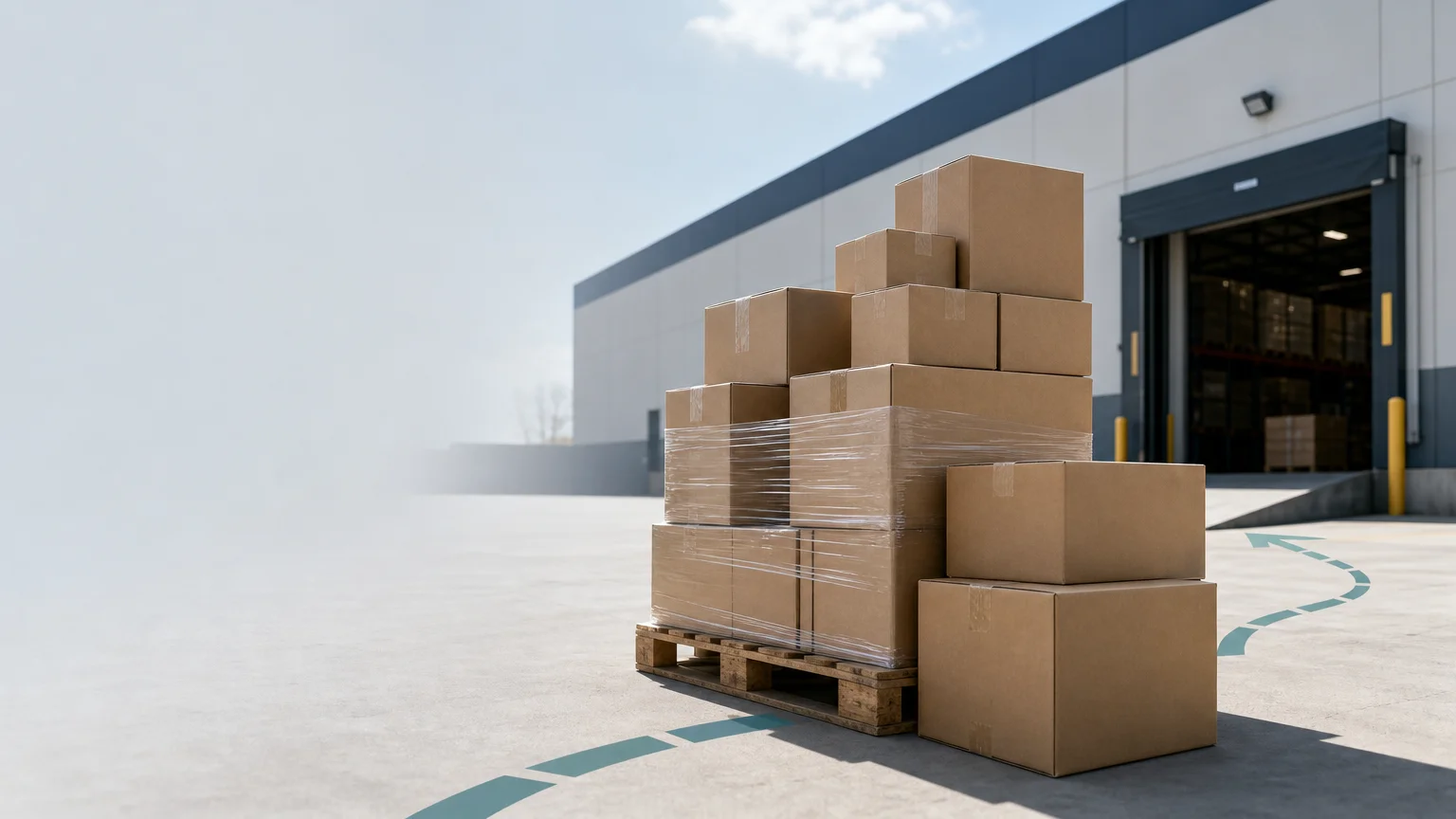
Summary: Amazon FBA shipping for private label sellers involves more than booking freight. You must prepare and label inventory, create an accurate shipment plan, choose a route, budget the full landed cost, and confirm customs responsibilities. A structured process helps protect margins, reduce receiving delays, and keep replenishment aligned with demand.
Every private label shipment begins with a decision that affects both cash flow and inventory availability: how should your products move from the supplier to Amazon? The right answer depends on product dimensions, urgency, shipment volume, customs requirements, and the cost of running out of stock. Our complete Amazon FBA shipping checklist for private label sellers helps you organize those decisions before the goods leave the factory.
Amazon FBA shipping for private label sellers includes product preparation, carton planning, international transportation, customs clearance, and delivery into Amazon’s fulfillment network. It also includes decisions that are easy to overlook, such as barcode selection, importer of record responsibilities, freight insurance, Amazon receiving timelines, and the cost of inventory held in transit.
What does Amazon FBA shipping include from start to finish?
FBA inbound shipping begins before a carrier collects your cartons. You confirm the product listing, assign inventory to FBA, create a shipment plan, prepare each unit, label cartons, and send the shipment to the destination Amazon fulfillment center.
Amazon then stores the inventory and handles picking, packing, customer delivery, returns, and customer service. Your responsibility remains the inbound movement, compliance, and inventory planning before Amazon receives the products.
Barcode decisions are especially important for private label products. SPS Commerce explains commingled inventory and the difference between manufacturer barcodes and Amazon-specific product labels. Your choice should match your inventory control needs, product eligibility, and the instructions shown in your Seller Central shipment workflow.
A practical shipment flow usually follows these stages:
- Confirm product eligibility, dimensions, weights, and destination marketplace.
- Prepare the units according to Amazon’s applicable packaging and labeling rules.
- Create the shipment in Seller Central and confirm assigned fulfillment centers.
- Send the shipment details to your supplier or freight forwarder.
- Arrange pickup, export documentation, international freight, and customs clearance.
- Track the shipment until Amazon receives and checks in the inventory.
- Reconcile received quantities and monitor inventory for replenishment.
The main operational principle is simple: treat the shipment as one connected process. A correct product label cannot compensate for incorrect carton information, and a low freight quote does not help if customs, delivery, or Amazon receiving costs were excluded.
How should you prepare private label inventory before shipping?
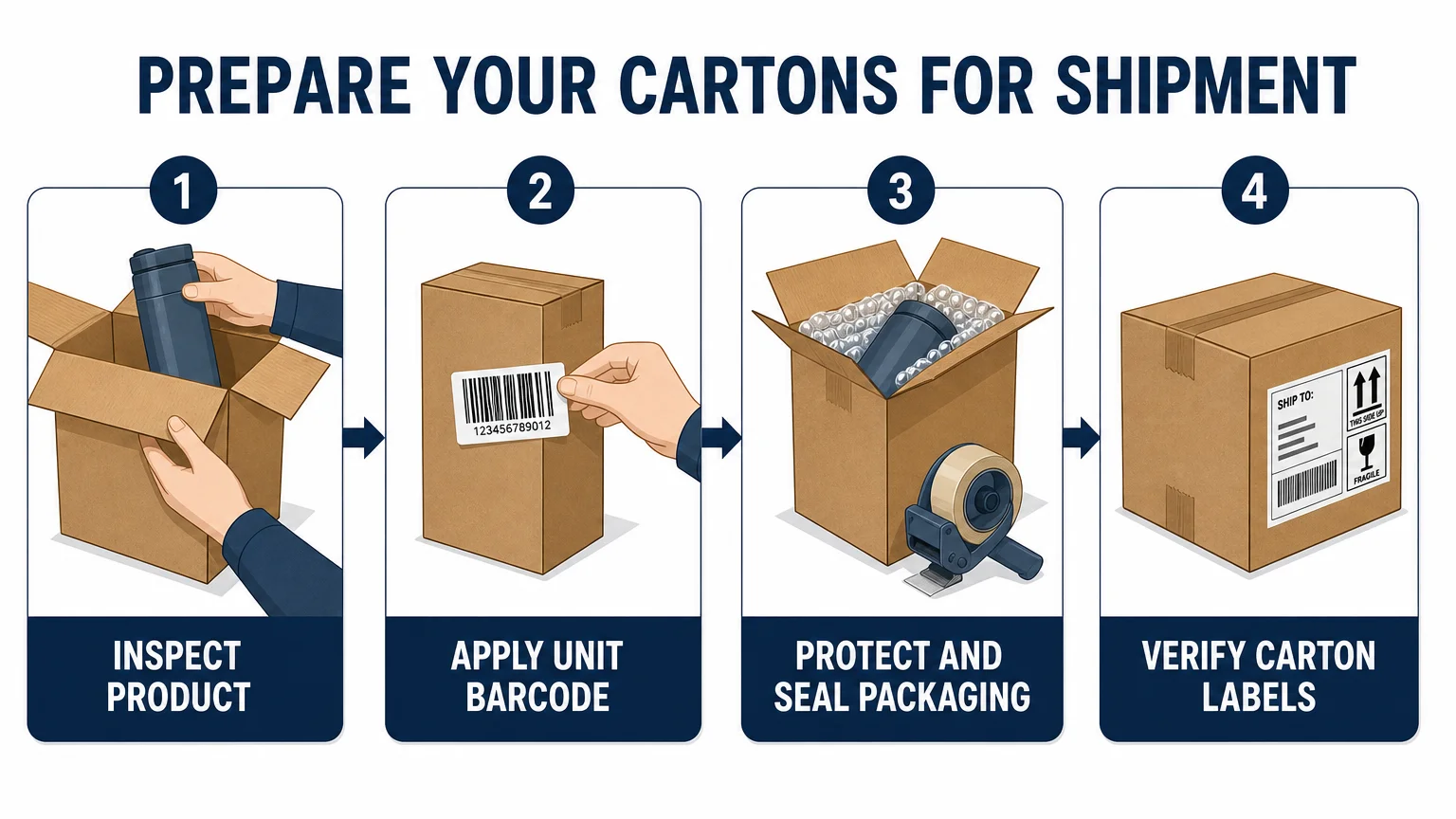
Preparation errors can create delays before the shipment reaches the port. They can also lead to relabeling, repackaging, unplanned service charges, or inventory that Amazon cannot receive as expected.
Start with the sellable unit. Confirm that every unit has the correct barcode, product identifier, suffocation warning where required, expiration information where applicable, and any necessary variation details. The packaging must protect the product during factory handling, international transport, unloading, and fulfillment center receiving.
For private label launches, barcode consistency matters. Seller Sprite’s labeling guidance recommends using verified product identifiers and keeping one clear barcode strategy for each ASIN. It also highlights the importance of correctly placed carton labels and accurate shipment information.
Ask your supplier to provide photographs of finished units and cartons before pickup. The photographs should show:
- The product label and barcode.
- The outer packaging and protective materials.
- The carton count and carton markings.
- The shipping label placement.
- The final packed dimensions and weight.
Measure the packaged product, not only the product itself. Carton dimensions and protective materials can affect dimensional weight, freight pricing, storage exposure, and the fulfillment classification used by Amazon.
Our guide to Amazon FBA packaging requirements for private label products can help you review common preparation risks before your supplier seals the shipment.
Which shipping route fits your inventory and replenishment plan?
There is no universally correct freight mode. The appropriate choice depends on the relationship between urgency, shipment size, product value, and available working capital.
Air freight is generally suited to urgent replenishment, product launches, lightweight products, and high-value inventory. It reduces transit time, but the premium can materially affect landed cost. Air freight is most useful when the cost of delay is greater than the additional transportation expense.
Fast boat service can suit regular ecommerce cartons that need a balance between speed and cost. It is useful when ocean freight is too slow, but air freight would place too much pressure on the unit economics.
Ocean freight is usually appropriate for planned replenishment, pallet shipments, and larger volumes. It can reduce transportation cost per unit, but you must plan earlier and allow additional time for port handling, customs, and delivery appointments.
Rail freight can be relevant for China to Europe movements and selected mid-size shipments. Its suitability depends on the destination, product characteristics, route availability, and required delivery window.
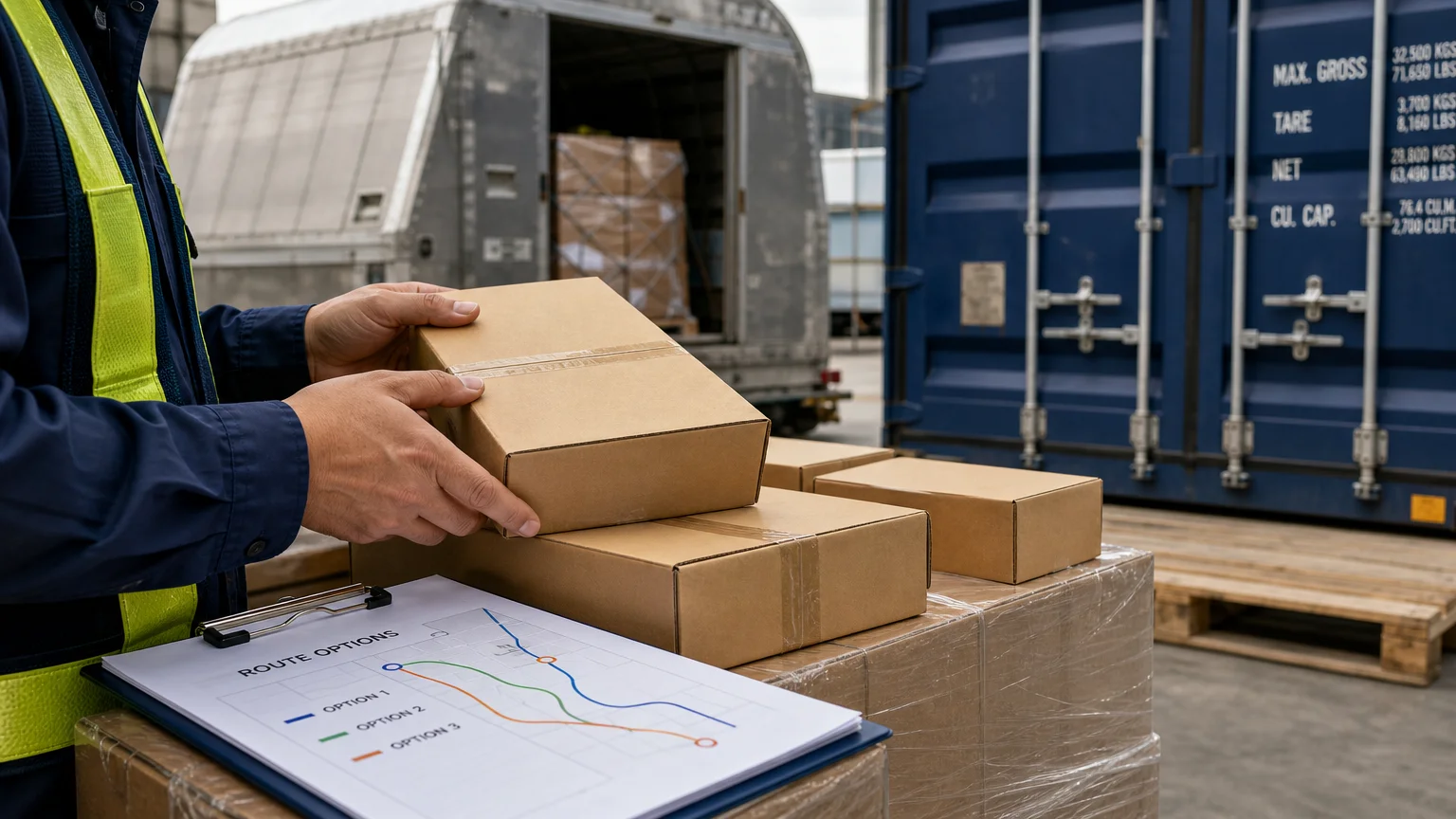
Compare the options using the same assumptions. Each quote should identify the pickup point, freight mode, chargeable weight, destination, customs basis, delivery scope, insurance position, estimated transit time, and exclusions.
Our explanation of Amazon FBA shipping options for private label sellers provides a route comparison framework for evaluating air, ocean, rail, fast boat, and express options.
How do you calculate the true landed cost?
A freight quote is only one part of your cost model. Your private label unit economics should include product cost, supplier packaging, inspection, domestic pickup, export handling, international freight, customs clearance, duties, taxes, insurance, delivery, preparation, Amazon inbound charges, and any storage exposure caused by excess inventory.
For a new launch, calculate the cost per sellable unit rather than the total shipment price. This makes it easier to compare route options and understand the effect of freight on your expected contribution margin.
A 2026 private label budgeting guide from Marknology’s cost guide treats shipping and freight as a distinct launch expense. That distinction is useful because sellers often budget inventory and advertising carefully while underestimating the cash needed to move the product into Amazon.
Use at least three scenarios:
- Base case: the expected freight rate and normal customs process.
- Conservative case: a higher chargeable weight, additional handling, or slower receiving.
- Urgent case: a faster route used to prevent a stockout or support a product launch.
Then compare the result with the cost of delay. A cheaper ocean shipment may become more expensive if it causes a stockout, weakens sales momentum, or forces an emergency air shipment later.
Packaging is also a cost-control lever. Smaller, lighter, and more durable packaging can reduce freight exposure while improving handling. However, do not remove protective materials simply to lower dimensions. Damage, returns, and customer complaints can cost more than the freight savings.
What should you confirm about customs, DDP, and importer of record?
Customs responsibility must be clear before the goods leave the supplier. Ask who prepares the export declaration, who provides commercial documents, who acts as importer of record, who pays duties and taxes, and what happens if customs requests additional product information.
DDP, or Delivered Duty Paid, can simplify the seller’s process because the freight forwarder coordinates delivery, customs, duties, and taxes under the agreed shipment structure. However, the phrase does not remove the need to review the quote. Confirm what is included, what documents are required, and whether supplier-name export declarations create an additional charge.
Product category also matters. Batteries, cosmetics, food, supplements, children’s products, liquids, and other regulated products may require additional documentation or handling. Confirm restrictions before placing a large production order.
You should also ask whether the quoted service includes:
- Supplier pickup and origin warehouse handling.
- Chinese export declaration.
- Destination customs clearance.
- Import duties, taxes, and VAT where applicable.
- Delivery to the assigned Amazon warehouse.
- Insurance or a defined claims process.
- Tracking milestones and exception notifications.
When a shipment uses LCL, compare the full charge structure with an FCL alternative. Our analysis of LCL versus FCL for private label Amazon FBA shipments explains why the lower headline rate does not always produce the lower total cost.
Should you use FBA, FBM, or a 3PL for private label products?
FBA is useful when you want Amazon to store inventory and handle customer orders. It can reduce the operational work associated with picking, packing, customer service, and returns, but it also creates storage, fulfillment, and inventory planning costs.
FBM can provide more control over packaging, customer experience, and inventory location. It may be relevant for bulky, slow-moving, fragile, seasonal, or multi-channel products where sending all inventory into FBA would create unnecessary storage or fulfillment exposure.
A 3PL can support storage, preparation, direct-to-customer fulfillment, and replenishment into Amazon. This model can be useful when you sell through your own website, wholesale channels, and Amazon, although it introduces another operating relationship and another set of service fees.
Many sellers use a blended structure. Fast-moving Amazon units may remain in FBA, while slower or multi-channel inventory stays with a fulfillment partner. The correct choice depends on the SKU’s sales velocity, dimensions, margin, return rate, customer promise, and demand pattern.
For sellers shipping from China into Amazon warehouses, our role is focused on the inbound logistics layer. We coordinate supplier pickup, route selection, customs handling, delivery, and shipment visibility so you can evaluate FBA replenishment without coordinating each stage separately.
How can you create a repeatable launch and replenishment workflow?
A reliable process should work for both your first shipment and your tenth replenishment. The objective is to reduce decisions made under pressure and create clear checkpoints before inventory leaves the supplier.
- Set the inventory target. Estimate launch demand or replenishment demand using realistic sales velocity and lead times.
- Confirm the product data. Record unit dimensions, packed dimensions, weights, carton quantities, product value, and regulatory information.
- Approve preparation. Review samples, labels, packaging, carton markings, and photographs before production is completed.
- Create the shipment plan. Confirm Amazon’s assigned destinations, carton information, shipment requirements, and delivery instructions.
- Compare route quotes. Review total landed cost, estimated timing, customs scope, insurance, and exclusions.
- Book the shipment. Share the final packing list, commercial invoice, labels, and pickup instructions.
- Monitor milestones. Track pickup, export, departure, arrival, customs, delivery, and Amazon receiving.
- Reconcile the result. Compare shipped units, received units, delivery timing, and actual cost against the original plan.
Keep a shipment file for every inbound movement. It should contain the approved packing list, commercial invoice, product photographs, carton labels, freight quote, tracking records, customs documents, and Amazon receiving results.
That documentation helps you identify recurring problems. If cartons repeatedly arrive with incorrect dimensions, if a supplier uses inconsistent labels, or if a route regularly misses its estimate, you can correct the process before the next purchase order.
Build your FBA shipping plan around total cost
Successful private label logistics depends on more than choosing the cheapest freight mode. You need a complete view of preparation, chargeable weight, customs, duties, delivery timing, Amazon receiving, storage exposure, and replenishment risk. For US sellers importing from China, the strongest process is the one that makes each responsibility visible before the shipment is booked.
Use air, fast boat, ocean, or rail according to the product’s urgency and economics. Confirm every DDP assumption in writing, inspect packaging before pickup, and compare actual results with your forecast after Amazon receives the inventory. This turns Amazon FBA shipping for private label sellers into a repeatable operating system rather than a series of one-time decisions.
Take action with QG Horizon
When supplier coordination, freight selection, customs, and Amazon delivery are handled separately, small information gaps can create costly delays. A coordinated inbound process gives you clearer choices before inventory leaves China and better visibility while it moves toward the Amazon warehouse.
We manage China-to-Amazon logistics through supplier pickup, air, fast boat, ocean, or rail freight, DDP customs handling, door-to-door delivery, tracking, and shipment updates. You can submit product information or a packing list, then review three route options based on urgency, shipment size, and budget. Explore our Amazon FBA shipping services to discuss your next inbound shipment.
Frequently Asked Questions
What is the best shipping method for private label products?
The best method depends on urgency, product size, shipment volume, and margin. Air suits urgent or lightweight inventory, while ocean often suits planned bulk shipments; fast boat and rail can provide intermediate options on suitable routes.
Can a freight forwarder deliver directly to Amazon FBA?
Yes, a freight forwarder can coordinate supplier pickup, international freight, customs clearance, and delivery to the Amazon warehouse when the shipment is prepared correctly. You should confirm the shipment plan, carton labels, delivery scope, and customs responsibilities before booking.
What does DDP mean for an Amazon FBA shipment?
DDP means Delivered Duty Paid, with the agreed provider coordinating delivery and the applicable import duties and taxes. Review the quote carefully to confirm whether customs clearance, duties, taxes, delivery, and importer of record services are included.
How can private label sellers reduce FBA shipping costs?
Measure packaged dimensions accurately, compare multiple freight modes, consolidate suitable shipments, and avoid sending more inventory than demand supports. You can also compare LCL and FCL, improve packaging efficiency, and evaluate the cost of delay before choosing the cheapest route.
What information is needed for an Amazon FBA shipping quote?
Provide the product name, quantities, unit and carton dimensions, weights, carton count, supplier location, destination marketplace, product value, and any known compliance requirements. QG Horizon can use this information to prepare route options and estimated timelines for your shipment.
Ready to Optimize Your Amazon Shipping?
Get 3 route options tailored to your products and timeline
Get Your Quote→