Amazon Vendor Central: The Complete Guide for US Brands
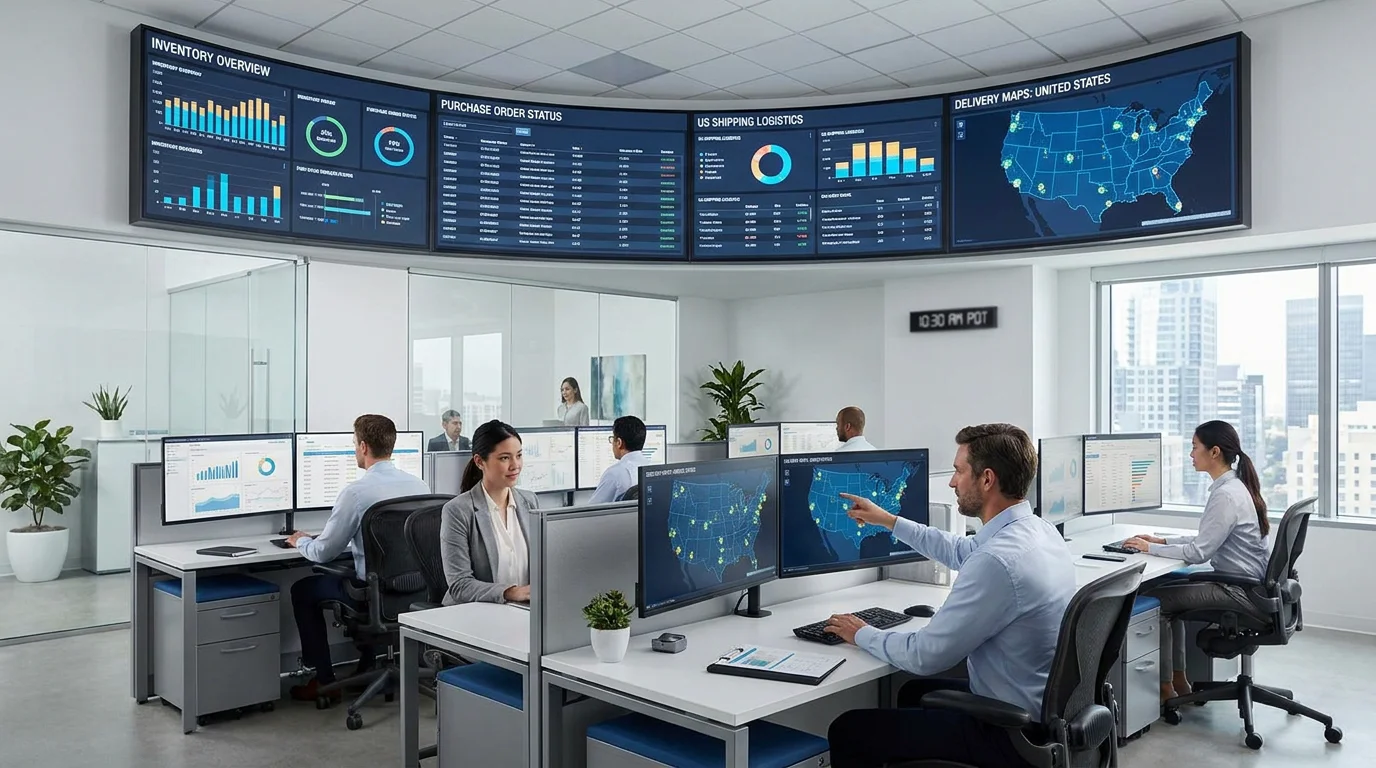
Summary: Amazon Vendor Central is an invite-only wholesale program where Amazon buys directly from brands; in Q4 2025, first-party and third-party units combined drove over $716 billion in annual revenue.
In 2025, Amazon generated $716.9 billion in total revenue, cementing its position as the dominant force in US e-commerce. Behind that number, a significant share of product sales flows through a channel many brands overlook: Amazon Vendor Central. Unlike the third-party marketplace most sellers know, this invite-only platform turns Amazon itself into your wholesale customer, fundamentally changing how products reach over 310 million active shoppers worldwide.
Whether you are an established manufacturer weighing the benefits of a first-party relationship or a growing brand exploring Amazon Seller Central alternatives, understanding how the Vendor Central program works is essential. This guide breaks down the platform’s mechanics, entry requirements, key features, and strategic considerations so you can determine which selling model best fits your business in the US market.
What Is Amazon Vendor Central and How Does It Work?
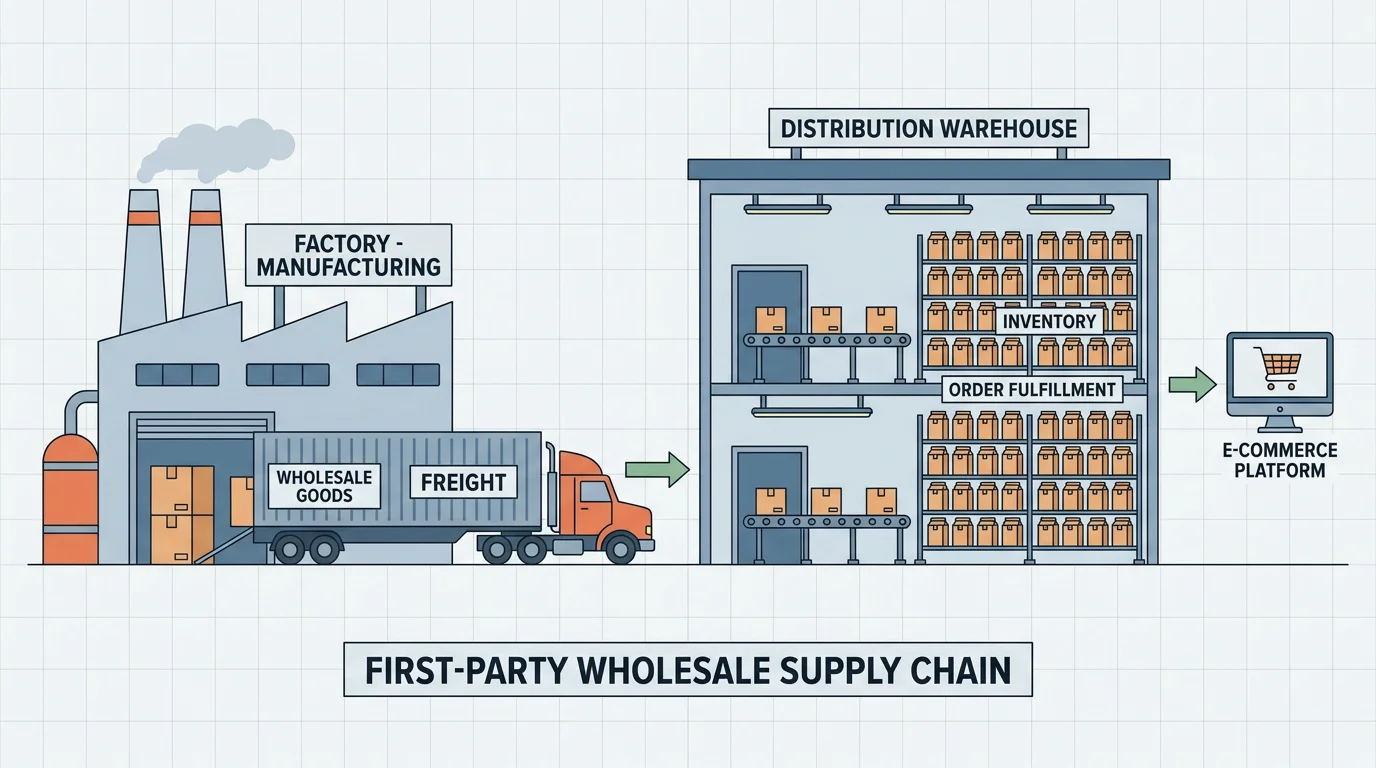
Vendor Central is Amazon’s portal for first-party (1P) vendors who sell directly to Amazon as a wholesale customer. Amazon buys the inventory, sets retail prices, and handles fulfillment. In practical terms, your brand ships products to Amazon’s distribution centers, and Amazon takes ownership of the stock from that point forward.
This model differs sharply from the third-party marketplace. Vendor Central reports focus on shipped COGS, purchase orders, and wholesale margins, whereas Seller Central is for third-party (3P) sellers who list products on Amazon’s marketplace, set their own prices, and manage customer orders, with reports focused on sales proceeds, fees, and customer metrics.
For the brand, the relationship resembles a traditional wholesale arrangement. You receive purchase orders, fulfill them, and invoice Amazon. Amazon then lists the product on its site with the familiar “Ships from and sold by Amazon.com” badge, which tends to increase consumer trust and Buy Box eligibility.
Vendor Central vs. Seller Central: Key Differences
Choosing between the two platforms is one of the most consequential decisions for any brand selling on Amazon. The table below highlights the core distinctions:
| Criteria | Vendor Central (1P) | Seller Central (3P) |
|---|---|---|
| Relationship | Wholesale: you sell to Amazon | Marketplace: you sell to consumers |
| Access | Invite-only | Open registration |
| Pricing control | Amazon sets the retail price | You set the retail price |
| Fulfillment | Amazon handles all fulfillment | FBA or self-fulfilled (FBM) |
| Advertising tools | Full suite including A+ Content, Amazon Vine, DSP | Sponsored Products, Sponsored Brands, A+ (with Brand Registry) |
| Payment terms | Net 30, 60, or 90 days | Disbursements every two weeks |
| Logistics support (QG Horizon) | DDP shipping from factory to Amazon warehouses | DDP shipping from factory to Amazon FBA centers |
In Q4 2025, third-party sellers accounted for 61% of paid units sold on Amazon, but first-party vendors remain critical for large wholesale orders and categories where Amazon prefers direct sourcing. Many established brands operate on both platforms simultaneously, a hybrid approach that can maximize coverage.
If you are still evaluating your options, our guide on how to sell on Amazon covers the full decision framework for new and scaling brands.
How to Get Invited to Vendor Central
There is no public application form. Amazon’s vendor recruitment team actively scouts brands that meet specific performance thresholds. So what triggers an invitation?
- Strong sales velocity on Seller Central: Brands already generating significant revenue on the third-party marketplace are among the first to be noticed.
- High-demand products: Categories where Amazon wants to secure reliable supply at wholesale prices attract recruiter attention.
- Trade show visibility: Innovative products showcased at major industry events can catch Amazon’s eye.
- Operational capacity: Amazon needs assurance you can handle large, consistent purchase orders on time.
Over 100,000 sellers now generate $1 million or more annually on Amazon, up from 60,000 in 2021. Brands approaching that revenue tier are increasingly likely to receive a Vendor Central invitation, particularly in the US market where Amazon invests most aggressively in its first-party catalog.
Once you receive an invitation by email, you will review and accept Amazon’s terms, register your account, configure your EDI integration, and begin uploading product data. The onboarding process is structured but can take several weeks to complete fully.
Core Features and Tools Inside Vendor Central
After logging in, vendors have access to a suite of tools organized around six primary tabs: Orders, Items, Merchandising, Reports, Payments, and Settings. Each serves a distinct operational function.
Purchase Order Management
The Orders dashboard centralizes all incoming purchase orders from Amazon. Vendors can review PO details, track shipment status, monitor returns, and submit updated shipping information. Timely PO fulfillment is critical: late or incomplete shipments can result in chargebacks and strained vendor relationships.
Product Catalog and Cost Management
The Items section allows you to add, edit, or remove products from your catalog. For bulk updates, template-based uploads are available. Key editable fields include product titles, descriptions, images, specifications, keywords, and ASIN parent/child relationships.
Pricing works differently than on Seller Central. Amazon controls the final consumer price. However, you can set Minimum Advertised Price (MAP) guidelines and submit wholesale cost changes via the Edit Item Costs tool. Be prepared for Amazon to review cost adjustments over a period that can range from 30 days to several months.
Demand Forecasting
Amazon provides both sales forecasts and inventory forecasts within the Forecasting dashboard. These projections help vendors anticipate upcoming order volumes and align production accordingly. While useful, many brands supplement Amazon’s forecasts with their own external demand planning tools for greater accuracy.
Marketing and Advertising on Vendor Central
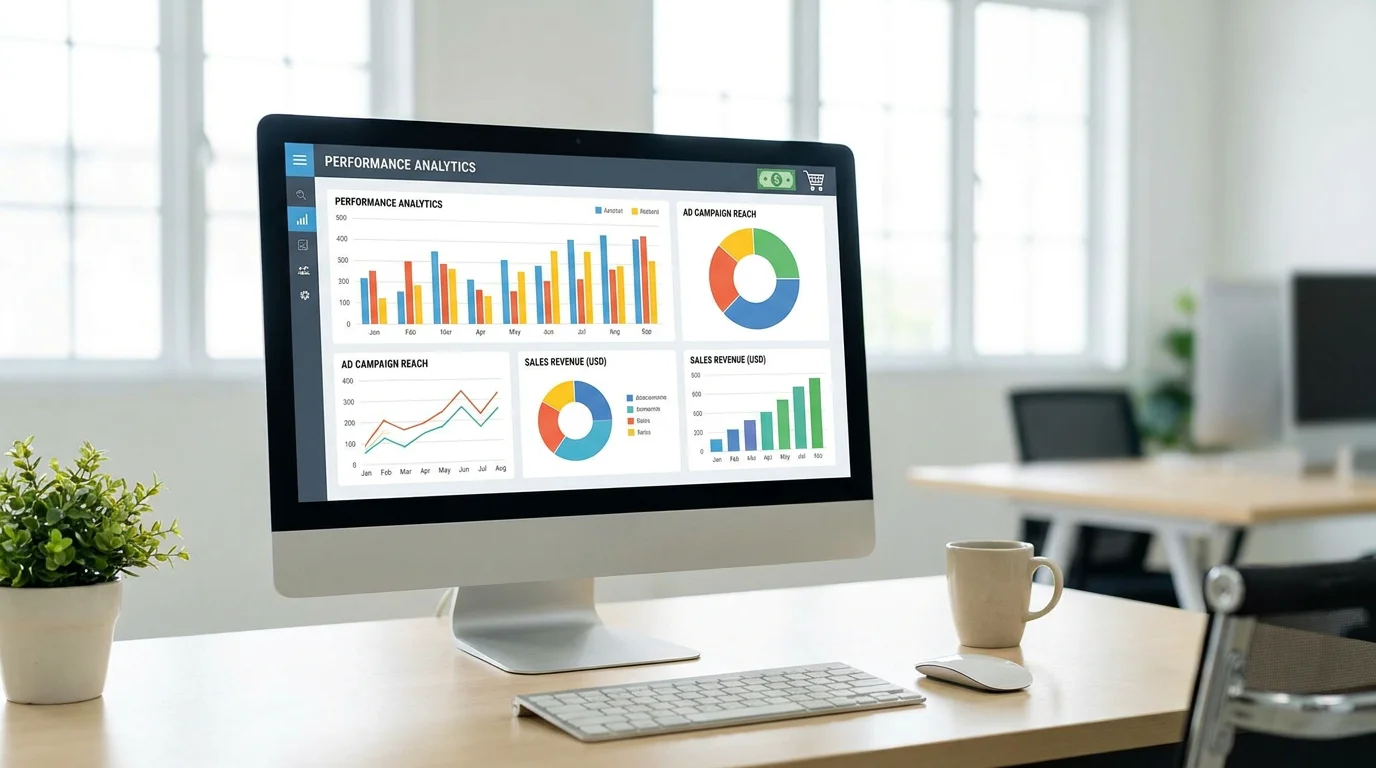
One of the strongest draws of Vendor Central is access to Amazon’s full advertising ecosystem. Amazon’s global ad revenue surpassed $68 billion in 2025, with Q4 alone generating $21.3 billion at 22% year-over-year growth. Vendors contribute significantly to that spend and, in return, gain access to powerful promotional tools.
Amazon Advertising Console
Vendors can create Sponsored Products, Sponsored Brands, and Sponsored Display campaigns targeting specific customer segments. Sponsored Products alone added about $10 billion in incremental ad revenue in 2025, growing roughly 22%. For vendors, these campaigns directly influence product visibility and Buy Box share.
A+ Content and Amazon Vine
A+ Content enables vendors to build enhanced product detail pages with rich media, comparison charts, and branded storytelling modules. This tool, once exclusive to vendors, is now accessible to Seller Central users through Amazon Brand Registry, but vendors typically receive earlier access to premium features.
Amazon Vine connects vendors with trusted reviewers who provide unbiased product reviews in exchange for free samples. Early review velocity can be decisive for new product launches.
Coupons and Promotions
Vendors can create digital coupons, percentage-off promotions, and lightning deals directly within the Merchandising tab. These tools are particularly valuable during peak shopping events. For context, Prime Day 2025 generated $15.8 billion in US sales alone, and vendors who participate in promotional events during such periods typically see outsized returns.
Reporting and Analytics: What Vendors Can Track
Getting to grips with the nuances of Vendor Central is no easy feat. It is a complex platform with hyper-specific data points and terminology. Failing to understand Vendor Central reports will negatively impact your brand’s relationship with Amazon, the integrity of your catalog, as well as your channel profitability, market share, and revenue.
The Retail Analytics dashboard provides access to several key data sets:
- Shipped revenue and units: Track what Amazon has actually sold and shipped.
- Ordered revenue: Monitor what Amazon has ordered from you, independent of sell-through.
- Inventory health: See current stock levels across Amazon’s fulfillment network.
- Net PPM (Pure Profit Margin): A critical KPI showing the profit Amazon earns on your products after all costs.
- Conversion rate and page views: Measure how effectively your detail pages turn visitors into buyers.
Custom Analytics is Amazon’s attempt to provide queryable datasets with longer lookback periods and more granular dimensions. You can filter by date range, ASIN, subcategory, and marketplace. It primarily targets outbound metrics and omits substantial profit, financial, and recovery information. For vendors managing hundreds of ASINs, Custom Analytics reduces manual exports but still requires external tools to join this data with advertising, inventory, and payment datasets.
Common Challenges and How to Overcome Them
Vendor Central is not without friction. Understanding the most frequent pain points helps you prepare proactively.
Pricing Control
Amazon retains full authority over the retail price consumers see. This can create tension when Amazon prices your products below MAP or below what other retail partners charge. Setting MAP guidelines within the Items dashboard and maintaining consistent wholesale cost structures are the primary levers available to vendors.
Chargebacks and Compliance
Amazon enforces strict requirements for packaging, labeling, shipment timing, and ASN (Advance Shipment Notification) accuracy. Non-compliance triggers chargebacks that erode margins. Detailed attention to Amazon’s routing guides and shipping standards is essential.
This is where reliable logistics become a decisive advantage. We offer DDP shipping from factory to Amazon warehouse, handling customs clearance, duties, and taxes so your shipments arrive compliant and on schedule. If you are sourcing from China and shipping to US fulfillment centers, working with a specialized freight forwarder reduces the risk of costly delays and chargebacks.
Payment Terms
Amazon typically pays vendors on Net 60 or Net 90 terms, sometimes requesting early payment discounts of 1% to 2%. Smaller vendors may find these terms straining to cash flow, especially during peak seasons when order volumes spike.
Profitability Pressure
Average CPCs on Amazon PPC rose between 18% and 32% across categories in early 2026, which affects vendors running advertising campaigns alongside their wholesale relationship. Monitoring ACoS (Advertising Cost of Sales) and TACoS (Total Advertising Cost of Sales) is critical to maintaining healthy margins.
Strategic Considerations: Is Vendor Central Right for Your Brand?
Not every brand benefits equally from the 1P model. Vendor Central tends to work best for manufacturers with high production capacity, strong brand recognition, and categories where Amazon prioritizes owning the inventory. Amazon accounts for about 40.4% of US e-commerce sales as of 2025, and its strong logistics network, Prime ecosystem, and marketplace model help maintain its leading position in 2026. Brands that tap into this dominance through a first-party relationship can access massive distribution with minimal operational overhead.
However, the trade-offs are real. Limited pricing control, extended payment terms, and potential margin compression through chargebacks are concerns that require careful financial planning. Many brands adopt a hybrid strategy: selling core, high-volume SKUs through Vendor Central while keeping niche or premium products on Seller Central for greater margin control.
For brands shipping from overseas suppliers, particularly from China, the logistics dimension adds another layer of complexity. Coordinating production schedules with Amazon’s purchase order cadence demands a freight partner who understands Amazon’s requirements. Our team at QG Horizon manages the complete supply chain, from factory pickup through international freight to final delivery at Amazon’s US warehouses, so you can succeed as an Amazon seller or vendor without logistics surprises.
Conclusion
Amazon Vendor Central remains a powerful channel for brands that qualify. It simplifies fulfillment, provides access to premium advertising tools, and positions your products with the trust signal of being “sold by Amazon.” Yet with Amazon announcing a $200 billion capital expenditure plan for 2026, the platform is evolving rapidly, and brands must stay informed to protect margins and capitalize on new opportunities. The key is aligning your selling model with your operational capacity, pricing strategy, and long-term growth goals.
Whether you choose the 1P vendor path, the 3P seller route, or a hybrid approach, getting your products from the factory floor to Amazon’s US fulfillment centers on time and within budget is the foundation of success. We simplify that entire journey with DDP shipping, real-time tracking, and a single point of contact from pickup to delivery. To get started, request a free quote from our freight specialists and take the guesswork out of your Amazon logistics.
Frequently Asked Questions
Can any brand apply to join Amazon Vendor Central?
No. Vendor Central is strictly invite-only. Amazon’s vendor recruitment team identifies brands based on strong sales performance, high-demand products, and operational reliability. There is no public application form, so the best strategy is to build a strong track record on the marketplace first.
What happens to my products if Amazon stops sending purchase orders?
If Amazon reduces or stops ordering certain ASINs, those products may go out of stock on the platform unless you also sell them through Seller Central. Many brands maintain a hybrid presence specifically to mitigate this risk. Our DDP logistics solutions support both 1P and 3P shipments to Amazon warehouses, ensuring continuity regardless of the selling model.
How does Vendor Central handle international shipping and customs compliance?
Vendor Central purchase orders require products to arrive at designated Amazon fulfillment centers in compliant condition. For brands sourcing from overseas, managing customs clearance, duties, and packaging standards can be complex. Working with a specialized freight forwarder that understands Amazon’s routing guides helps avoid chargebacks and delivery delays.
Ready to Optimize Your Amazon Shipping?
Get 3 route options tailored to your products and timeline
Get Your Quote→