CPT Incoterm Meaning: Carriage Paid To Explained for 2026
Summary: CPT stands for Carriage Paid To. The seller arranges and pays for transport to a named destination and clears the goods for export, yet risk passes to the buyer the moment the goods reach the first carrier. Cost and risk transfer at different points, which is the detail that trips up most importers.
A single misunderstanding about when risk transfers can turn a smooth shipment into a costly dispute. Under Carriage Paid To, the seller pays the freight all the way to the destination, so many buyers assume the seller also carries the risk until arrival. That assumption is wrong, and it is exactly why the meaning of the CPT Incoterm deserves close attention. For a deeper breakdown, our guide to CPT Incoterm meaning walks through each obligation step by step.
The Incoterms rules were first introduced by the International Chamber of Commerce in 1936 and are refreshed roughly every decade, with Incoterms 2020 as the edition in force in 2026. According to a LexisNexis guidance note, the Incoterms 2020 rules came into force on 1 January 2020 and updated the previous 2010 edition to reflect a decade of market change. Knowing where CPT sits among the eleven rules helps US businesses choose terms that protect their margins.
What Carriage Paid To Actually Means
The cpt incoterm meaning is straightforward on paper: the seller delivers the goods to a carrier it has contracted, then pays for carriage to the named place of destination. A carrier here can be a shipping line, an airline, a trucking company, a railway, or a freight forwarder. CPT applies to any mode of transport, including sea, road, rail, air, or a combination of them.
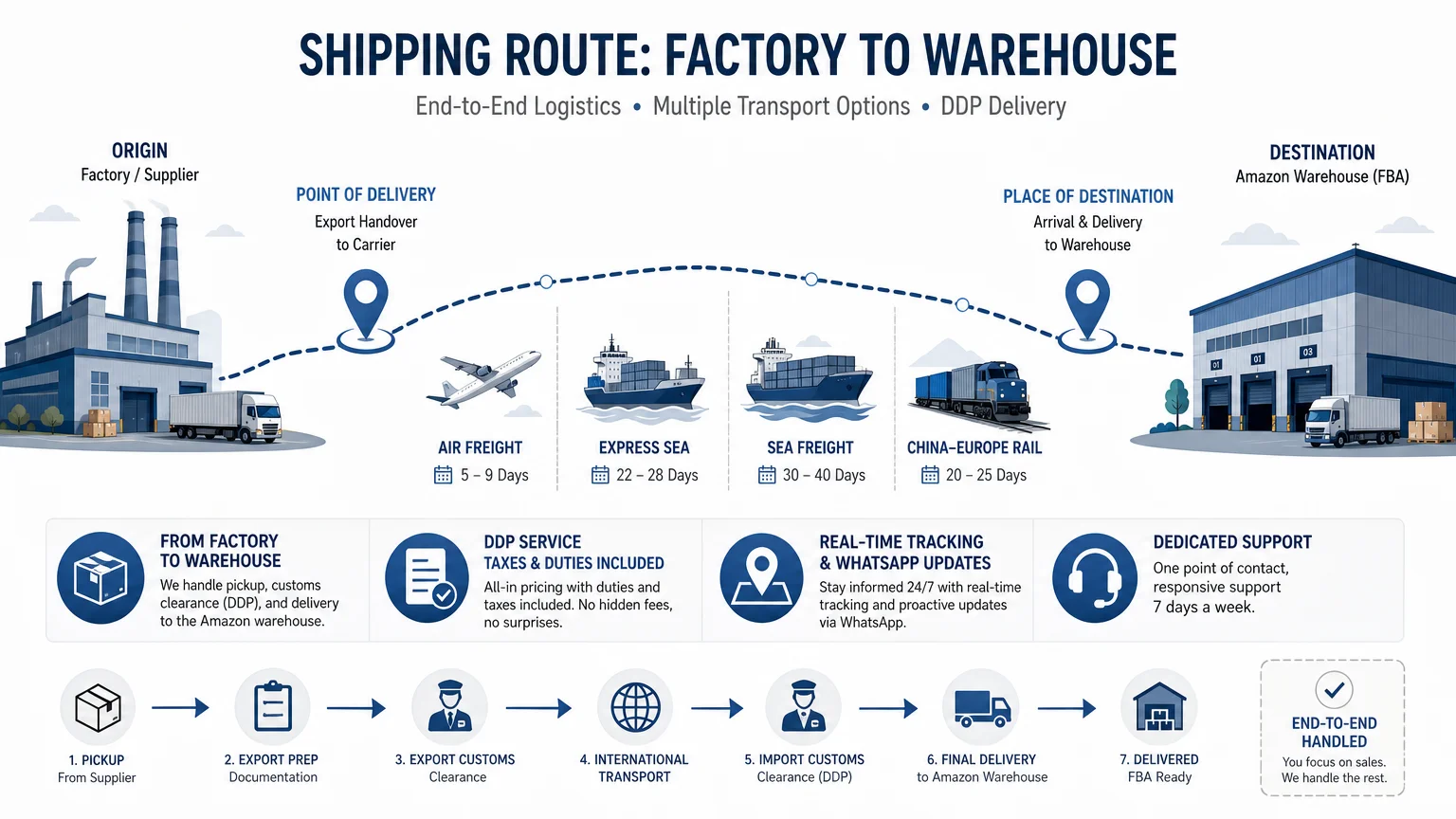
The critical nuance is that delivery and destination are two separate places. The point of delivery is where the seller hands the goods to the first carrier, usually in the exporting country. The named place of destination is where the seller has agreed to pay the freight to. Both should appear clearly in the sales contract to avoid confusion later.
Where Risk and Cost Part Ways
Here is the point that defines CPT. Under this rule, the seller’s risk ends and the buyer’s risk begins when the first carrier receives the goods. Yet the seller still pays every transport cost up to the agreed destination. In other words, the transfer of risk and the transfer of cost happen at different moments.
Consider a shipment sold as CPT to a US port. The seller books and pays the ocean freight, but if a container is damaged during the main voyage, the loss falls on the buyer. This is common to all the “C” terms, and it is where our overview of CPT shipping terms can save you from an expensive surprise.
Seller and Buyer Obligations Side by Side
Responsibilities under CPT are shared but unevenly. The seller shoulders export clearance and the main carriage, while the buyer takes over import duties and onward risk. The table below summarizes who does what.
| Task | Seller | Buyer |
|---|---|---|
| Export packaging and marking | Yes | No |
| Export licenses and customs | Yes | No |
| Main carriage to destination | Yes (pays cost) | No |
| Risk during main carriage | No | Yes |
| Insurance | Optional | Optional |
| Import duties and clearance | No | Yes |
Neither party is legally required to insure the goods under CPT. Because the buyer carries the risk during transit, most buyers arrange their own cover. If you would rather hand the whole chain to a single team, our explanation of CPT shipment terms shows how the duties can be coordinated end to end.
CPT Versus CIP: The Insurance Line
CPT is often confused with CIP, or Carriage and Insurance Paid To. In both, the seller arranges and pays for transport to the destination, and in both, risk passes to the buyer at the first carrier. The single difference is insurance: under CIP the seller must buy cargo cover for the buyer, while under CPT it is optional.
According to Trade Finance Global, CPT has two important places, the place of delivery in the seller’s country and the destination to which the seller contracts the carriage, and confusing the two is a frequent error. Choose CPT when you already hold your own transit insurance or prefer to manage coverage yourself. Choose CIP when you want the seller to guarantee it.
When CPT Fits and When It Does Not
CPT is a practical choice for air freight, containerized ocean freight, small parcel shipments, and roll-on/roll-off vehicle cargo. It suits sellers ready to contract the carrier, pay the freight, and handle export formalities, and buyers who accept that delivery is complete once the goods reach the first carrier.
There is a caveat for cross-ocean containers. Some specialists argue CPT is largely unworkable for sea container trade because buyers rarely want to bear risk before the goods have physically left the exporting country. In the US context, the seller or its agent generally files the Electronic Export Information through the ACE portal, a compliance step that should not be overlooked when you structure a CPT deal.
Common Mistakes Importers Make With CPT
The most damaging mistake is believing that risk stays with the seller until arrival. It does not. Once the first carrier takes charge, any loss or damage during the main journey is the buyer’s problem, even though the seller booked and paid for the freight.
The second mistake is leaving the two named places vague. If the contract does not specify both the delivery point and the destination, the seller may pick whatever suits it, and you may inherit costs you never anticipated. Spell out both locations, confirm who insures the cargo, and align on the carrier before signing. Our breakdown of CPT terms explained covers the contractual language worth double-checking.
Final Thoughts on Carriage Paid To
The meaning of the CPT Incoterm comes down to one asymmetry: the seller pays for carriage to the destination, but the buyer owns the risk from the first carrier onward. Treat that split as the anchor of every negotiation. Name both the delivery point and the destination precisely, decide who insures the cargo, and confirm export and import responsibilities in writing. Handled with care, CPT gives sellers control of routing while keeping the buyer’s exposure clear and manageable.
Take action with QG Horizon
Understanding Incoterms is one thing; executing a clean shipment from a Chinese supplier to a US Amazon warehouse is another. If you sell on Amazon FBA and want the routing, customs, and delivery handled by one team, the right forwarding partner removes the guesswork that terms like CPT can introduce.
We are Amazon sellers ourselves, and we move goods from supplier pickup to the Amazon warehouse with DDP clearance, duties and taxes included, real-time tracking, and WhatsApp support seven days a week. You receive a quote within 24 hours with three route options across air, sea, and rail. Request your free Amazon FBA shipping quote and ship with a single point of contact.
Frequently Asked Questions
What does CPT stand for in shipping?
CPT stands for Carriage Paid To. It means the seller arranges and pays for transport to a named place of destination while clearing the goods for export. Risk, however, transfers to the buyer once the goods reach the first carrier.
Who pays for insurance under CPT?
Neither party is obliged to insure the goods under CPT. Because the buyer carries the risk during the main carriage, buyers usually arrange their own cover. If you want the seller to provide insurance, the CIP rule is the alternative.
Is CPT suitable for all modes of transport?
Yes, CPT applies to any mode, including sea, road, rail, air, or a multimodal combination. It is frequently used for air freight, containerized cargo, and small parcels. Some experts caution against it for cross-ocean container shipments due to how risk transfers.
How is CPT different from CIP?
Both rules require the seller to pay for carriage to the destination, and in both, risk passes at the first carrier. The only difference is insurance: CIP obliges the seller to buy cargo cover for the buyer, while CPT leaves insurance optional.
Does CPT cover delivery to an Amazon warehouse?
CPT covers freight to a named destination, but it does not include import duties or final delivery unless separately arranged. For Amazon FBA shipments, our DDP service handles duties, clearance, and delivery to the warehouse under one agreement, which simplifies the process considerably.
Ready to Optimize Your Amazon Shipping?
Get 3 route options tailored to your products and timeline
Get Your Quote→