DAP in Incoterms: A Complete Guide for US Importers
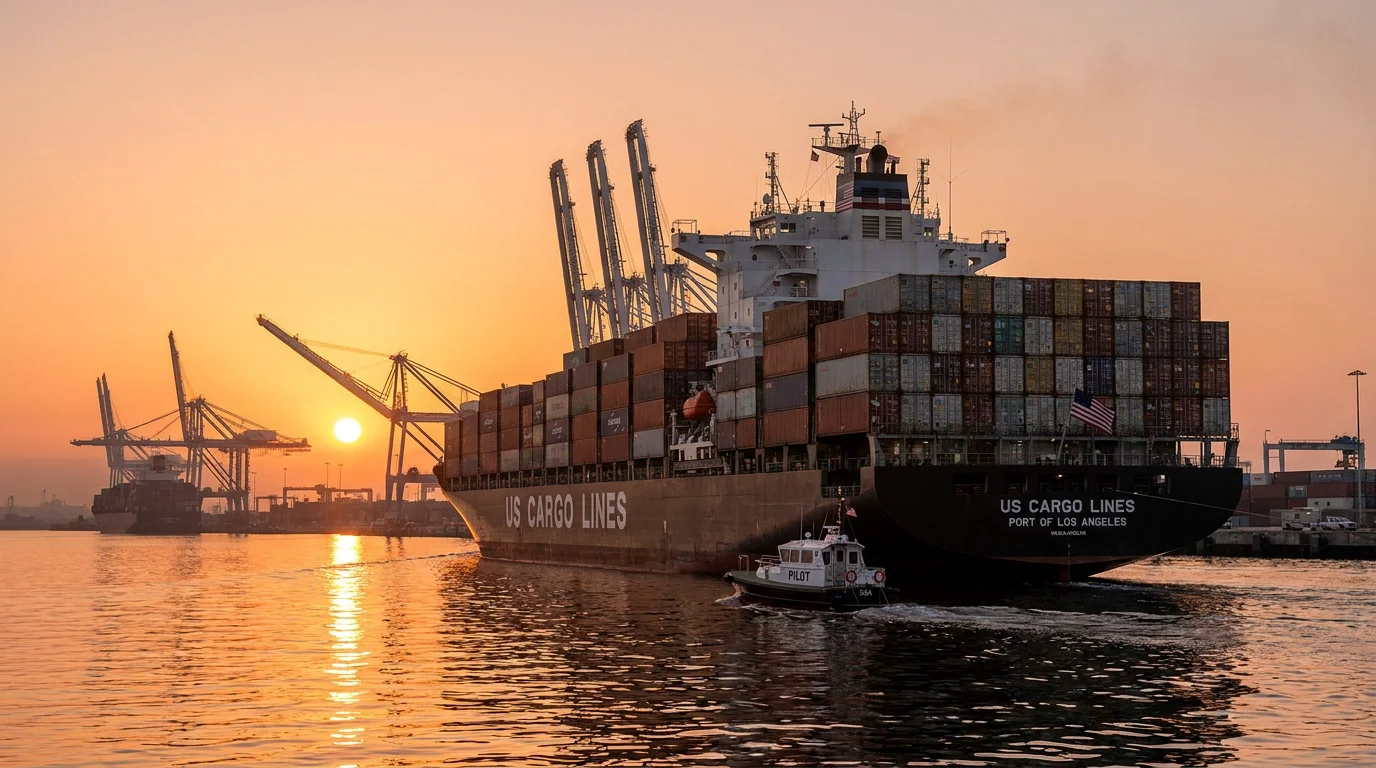
Summary: DAP (Delivered at Place) under Incoterms 2020 requires the seller to deliver goods ready for unloading at the named destination, while the buyer handles import clearance and duties.
Choosing the wrong Incoterm can inflate the total cost of an import or export operation by 15 to 30%, according to industry analysis from Hayot Expertise. For US businesses that source products from overseas, understanding DAP in Incoterms is not optional; it is a prerequisite for protecting margins and avoiding costly misunderstandings at the border. If you have been comparing shipping terms for Amazon FBA or other e-commerce fulfillment channels, you may already know that the line between DAP and DDP can make or break your landed cost. For a side-by-side look at that distinction, our guide on DDP vs DAP for Amazon FBA covers the financial impact in detail.
This article explains what Delivered at Place means under the current Incoterms 2020 framework, how obligations split between seller and buyer, where risk transfers, and when DAP is (or is not) the right choice for your supply chain. Every claim is grounded in the official ICC rules and verified trade sources so you can apply this knowledge with confidence.
What Does DAP Mean Under Incoterms 2020?
DAP stands for Delivered at Place. It is one of eleven standardized trade terms published by the International Chamber of Commerce (ICC), the organization that has governed Incoterms since 1936. The current edition, Incoterms 2020, took effect on January 1, 2020 and remains the official version in force today. According to the ICC, the next revision is not expected until 2030, following the organization’s decennial update cycle.
Under DAP, the seller delivers the goods to an agreed destination, ready for unloading from the arriving vehicle. The buyer then assumes responsibility for unloading, import customs clearance, and any applicable duties or taxes. Unlike the older DAT (Delivered at Terminal) term, which was renamed DPU (Delivered at Place Unloaded) in the 2020 revision, DAP does not require the seller to unload the goods. That single distinction is critical for cost allocation.
Why DAP Belongs to the “D” Group of Incoterms
The eleven Incoterms 2020 rules are split into two broad categories: seven that apply to any mode of transport and four reserved for sea and inland waterway shipments. DAP falls squarely in the first category. It can be used for road, rail, air, ocean, or multimodal shipments that combine two or more transport modes.
Within the “D” group (DAP, DPU, and DDP), the seller takes on the highest level of responsibility. The goods must reach the destination country before delivery is considered complete. As GoFreight’s 2026 Incoterms guide explains, DAP is often considered the most practical “D” term because it gives the importer control over customs clearance while still receiving a delivered price.
This flexibility is especially valuable in the US market, where import regulations, tariff classifications, and bonding requirements can be complex. US buyers who wish to manage their own customs broker relationship often prefer DAP to DDP for exactly this reason.
Seller Obligations Under DAP
The seller’s responsibilities under a DAP contract are extensive. They span from the point of origin all the way to the named destination, stopping just short of unloading and import clearance.
- Goods, documentation, and invoicing: the seller must supply the commercial invoice, packing list, and any documentation required by the contract.
- Export packaging, marking, and labeling: goods must be packed and marked in a manner suitable for transport.
- Export customs formalities: all export licenses, security filings, and customs declarations are the seller’s responsibility.
- Carriage to the named destination: the seller arranges and pays for transportation from origin to the agreed place of destination.
- Transit customs formalities: if the goods pass through intermediate countries, the seller handles and pays for any transit documentation.
- Risk of loss or damage in transit: the seller bears all risk until the goods arrive at the named destination, ready for unloading.
One nuance worth noting: the seller has no obligation to arrange cargo insurance for the buyer under DAP. However, the seller carries the risk during transit, so most sellers secure their own coverage regardless.
Buyer Obligations Under DAP
Once the goods arrive at the agreed destination and the seller provides notice, the obligations shift to the buyer. These responsibilities include:
- Unloading the goods: the buyer bears both the cost and risk of unloading from the arriving vehicle.
- Import customs clearance: the buyer must complete all import formalities, including filing entries, providing documentation, and working with US Customs and Border Protection (CBP).
- Import duties and taxes: all tariffs, duties, and applicable taxes are the buyer’s financial obligation.
- Onward carriage: if the named destination is an airport or port rather than the buyer’s warehouse, the buyer arranges and pays for any further transportation.
This allocation means that under DAP, the buyer retains full control over the import clearance process. For many US importers, this is a strategic advantage. It allows them to use their existing customs broker, claim preferential duty rates, and manage compliance internally.
Where Does Risk Transfer Under DAP?
Risk transfer is arguably the most important element of any Incoterm. Under DAP, risk passes from seller to buyer at a single, clearly defined moment: when the goods are placed at the buyer’s disposal at the named destination, still loaded on the arriving vehicle.
This means the seller carries the risk of damage, loss, or delay throughout the entire journey. If a shipment from China to a US port is damaged during ocean transit, the seller bears the consequences. The buyer’s risk begins only when the goods are available for unloading.
Specifying the exact place of destination is essential. A vague reference such as “DAP New York” is insufficient. Best practice, as recommended by the ICC, is to name the precise unloading point: a specific warehouse address, a designated airport cargo terminal, or a defined area within a port facility. For example, “DAP JFK Airport, Cargo Terminal 4, New York, USA, Incoterms 2020” leaves no room for ambiguity.
DAP vs DDP: The Key Difference That Affects Your Bottom Line
Both DAP and DDP require the seller to deliver goods to the named destination. Both require the seller to arrange and pay for transportation and to handle export and transit formalities. The critical difference lies in one obligation: import customs clearance.
| Criterion | DAP | DDP | QG Horizon (DDP Service) |
|---|---|---|---|
| Seller arranges transport to destination | Yes | Yes | Yes, China to worldwide |
| Seller handles export clearance | Yes | Yes | Yes |
| Seller handles import clearance | No | Yes | Yes, all inclusive |
| Seller pays import duties and taxes | No | Yes | Yes, included in quote |
| Buyer unloads goods | Yes | Yes | Delivery to Amazon warehouse |
| Best for buyer who wants customs control | Yes | No | N/A |
Under DDP, the seller takes on maximum responsibility. This is advantageous when the buyer prefers a single, all-inclusive price with no customs surprises. However, some countries impose regulations that make it difficult or legally impossible for a foreign seller to act as importer of record. In those cases, DAP becomes the only viable option. Our resource on FOB vs CIF vs DDP: best Incoterm for Amazon FBA explores how each term stacks up for e-commerce sellers specifically.
When Should You Use DAP for Your Shipments?
DAP is the right Incoterm when three conditions align. First, the buyer has the capacity (and preference) to handle import clearance in the destination country. Second, the seller is willing to arrange and pay for door-to-destination transport. Third, both parties agree on a specific named place where risk and cost obligations will transfer.
Common scenarios in which US importers benefit from DAP include:
- Established customs broker relationships: if you already work with a licensed broker who understands your product classifications and duty structures, DAP lets you maintain that partnership.
- Preferential duty programs: US importers enrolled in programs such as the Generalized System of Preferences (GSP) or free-trade-agreement benefits may need to file their own entries to claim reduced rates.
- Regulatory compliance: for products subject to FDA, CPSC, or EPA requirements, the importer of record must often be a US entity. DAP ensures the buyer (a US entity) retains that role.
Conversely, DAP may not be ideal when the buyer lacks import expertise, when the seller has local representation in the destination country, or when the buyer simply wants a single price with no customs responsibility. In those situations, DDP is typically more efficient. If you ship to Amazon FBA warehouses in particular, our detailed comparison of DDP vs DDU for Amazon FBA breaks down the cost and compliance trade-offs.
Practical Tips for Writing a DAP Contract Clause
A poorly drafted Incoterms clause is a frequent source of disputes. To avoid ambiguity, follow these best practices when incorporating DAP into a sales contract.
- State the full Incoterm with the year: always write “DAP [named place], Incoterms 2020.” Omitting the year can create confusion about which edition of the rules applies.
- Name the exact delivery point: use a full address or clearly identified terminal. “DAP Port of Los Angeles, Pier 400, Los Angeles, CA, USA, Incoterms 2020” is precise. “DAP California” is not.
- Clarify unloading cost allocation: the default under DAP is that the buyer pays for unloading. If the transport contract includes unloading, state this explicitly to prevent double payment.
- Address insurance separately: DAP does not require the seller to insure the goods for the buyer. If the buyer wants cargo insurance, negotiate it as a separate contractual obligation.
- Specify the applicable law and jurisdiction: Incoterms govern cost and risk allocation, not ownership transfer, payment terms, or dispute resolution. Those elements must be defined in the broader sales agreement.
Following these steps protects both parties and reduces the likelihood of costly disagreements at the destination. For Amazon FBA sellers managing shipments from China, understanding how FCA terms in Incoterms compare to DAP can also help optimize the early stages of the supply chain.
How DAP Fits Into an Amazon FBA Supply Chain
For e-commerce sellers shipping goods from Chinese manufacturers to Amazon fulfillment centers in the US or Europe, the choice of Incoterm has a direct impact on landed cost, delivery speed, and compliance risk. DAP is a viable option when the seller (or the freight forwarder acting on behalf of the seller) delivers goods to a named location near the Amazon warehouse, and the buyer then handles customs entry and final delivery.
However, many Amazon FBA sellers find that DDP is more practical because it consolidates all costs into a single, predictable figure. We handle both DAP and DDP shipments for sellers worldwide, with real-time tracking, a single point of contact from factory to warehouse, and quotes delivered within 24 hours. Our DDP service includes duties and taxes upfront, which eliminates the risk of unexpected charges that can delay goods at customs and disrupt your Amazon inventory flow.
Whether you choose DAP or DDP ultimately depends on your comfort with the import process, your existing broker relationships, and your appetite for managing customs compliance yourself.
In summary, DAP under Incoterms 2020 strikes a balanced division of responsibility. The seller manages transport and bears transit risk all the way to the named destination. The buyer retains control over import clearance and duty payments. For US importers who value that control, DAP is a powerful and flexible trade term. The most important data point to remember: a poor Incoterm choice can add 15 to 30% to your total landed cost, so the decision deserves careful analysis.
If you prefer a fully managed, all-inclusive shipping experience from China to Amazon warehouses worldwide, our DDP shipping service for Amazon FBA removes the guesswork and delivers a single, transparent price from factory door to fulfillment center.
Frequently Asked Questions
Does DAP require the seller to pay import duties?
No. Under DAP, the buyer is responsible for all import clearance formalities, duties, and taxes. The seller’s obligations end once the goods arrive at the named destination, ready for unloading. If you want the seller to cover import duties, DDP is the appropriate term.
Can DAP be used for air freight and multimodal shipments?
Yes. DAP applies to any mode of transport, including air, ocean, rail, road, and multimodal combinations. This versatility makes it one of the most widely used Incoterms for complex supply chains that involve more than one carrier or transport leg.
How does QG Horizon help with DAP and DDP shipments?
We offer both DAP and DDP freight forwarding from China to destinations worldwide. Our team handles pickup from your supplier, international carriage, customs documentation, and (under DDP) full import clearance with duties and taxes included. You receive a personalized quote within 24 hours and a single point of contact throughout the process.
Ready to Optimize Your Amazon Shipping?
Get 3 route options tailored to your products and timeline
Get Your Quote→