What Does DAP Mean in Shipping? Terms, Costs, and Risks
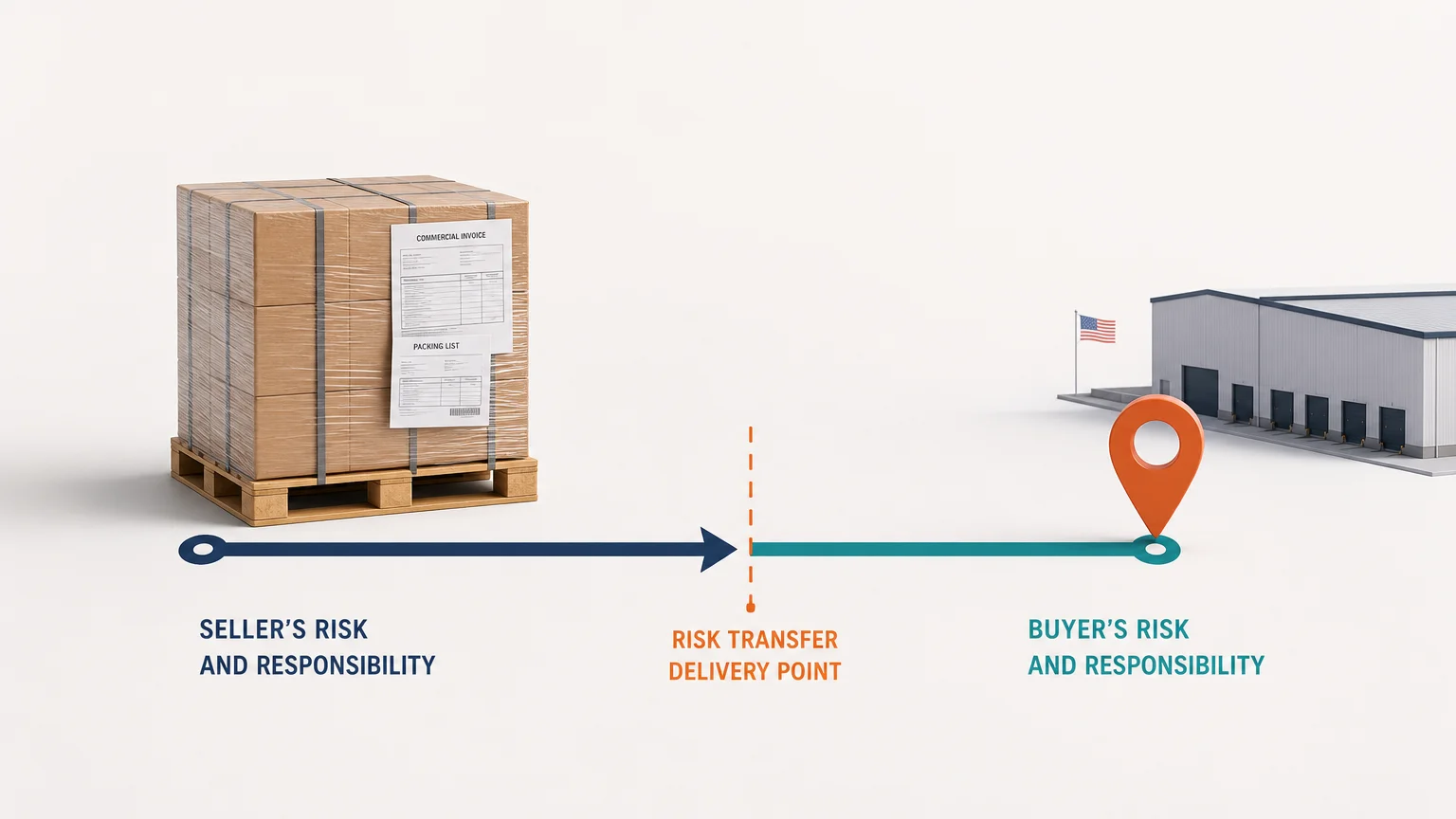
Summary: DAP means Delivered at Place, an Incoterms rule where the seller transports goods to a named destination, ready for unloading. The buyer normally handles unloading, import customs clearance, duties, and taxes. Understanding this division helps you compare supplier quotes, prevent unexpected charges, and choose the right shipping arrangement for US or international deliveries.
Are you reviewing a supplier quote and wondering whether DAP includes every cost through delivery? Before you approve the shipment, our DAP shipping explanation can help you identify which obligations remain with you.
The essential answer is simple, but the details matter. Under DAP, the seller carries the goods to the agreed destination and keeps the risk until the shipment is ready for unloading. The buyer then manages the import side, including customs procedures, duties, taxes, and unloading.
What does DAP mean under Incoterms?
DAP stands for Delivered at Place. It is an Incoterms rule used in international sales contracts to divide transport responsibilities, costs, and risks between the seller and buyer.
The seller delivers when the goods are placed at the buyer’s disposal on the arriving vehicle, ready for unloading, at the named place of destination. This means the seller bears the transport risk until that point. The ICC DAP rule also confirms that DAP can apply to any mode of transport, including air, ocean, road, rail, or a multimodal shipment.
Delivery under DAP is not the same as unloading. The seller usually does not have to remove the goods from the arriving vehicle. Unless the contract says otherwise, the buyer must arrange and pay for unloading after the cargo reaches the named place.
Insurance is another point that often causes confusion. DAP does not require the seller to purchase cargo insurance for the buyer. The parties can agree on insurance separately, but the sales contract should identify the policy scope, claims process, and responsible party.
Who pays what under DAP terms?
Consider a shipment from a Chinese supplier to a warehouse in the United States. Under standard DAP, the seller manages the journey to the named destination, while the buyer prepares for import and unloading.
The seller generally handles:
- Export packaging, marking, and commercial documentation.
- Export licenses and export customs formalities.
- Pickup and transportation from the origin location.
- Main international carriage by the agreed transport mode.
- Delivery to the precisely named destination.
- Risk of loss or damage until the goods are ready for unloading there.
The buyer generally handles:
- Import customs clearance in the destination country.
- Import duties, tariffs, VAT, and other applicable taxes.
- Customs broker charges and inspection-related costs.
- Unloading costs at the named destination.
- Storage, detention, or demurrage caused by an import delay or unavailable receiving facility.
The US Department of Commerce explains that Incoterms define the tasks, costs, and risks assigned to each party in an international transaction. Its Incoterms guidance also lists DAP among the rules that can be used for any mode of transport.
However, DAP does not create one universal price format. A seller may include certain destination charges in the quotation, while another may exclude them because the named place is a terminal rather than a final warehouse. You should ask for a written cost breakdown before comparing offers.
Why does the named place matter so much?
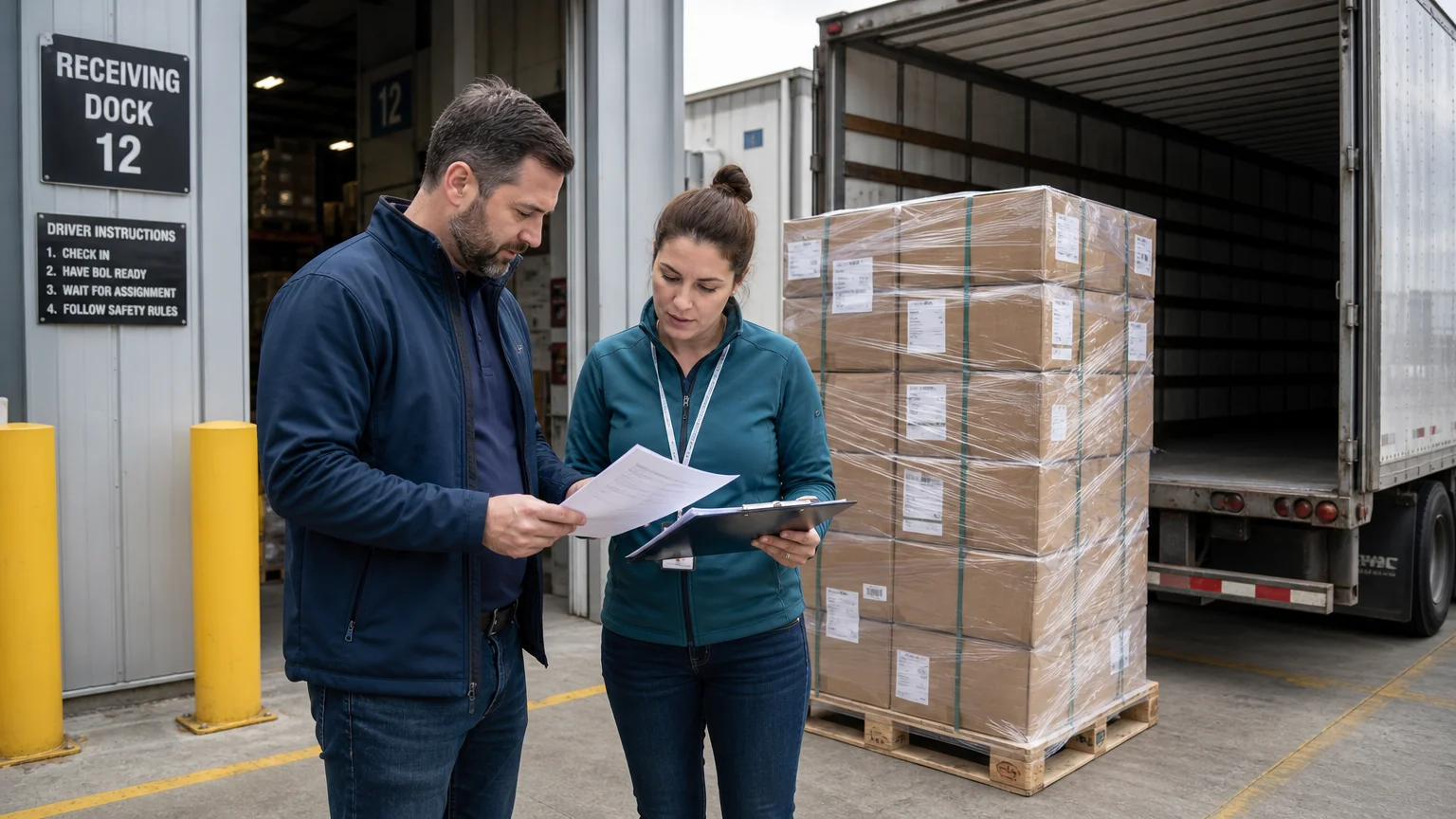
Under DAP, the destination is more than a city or port. It should identify the exact place, and preferably the exact point within that place, where delivery occurs.
For example, “DAP Los Angeles” leaves too much uncertainty. “DAP, receiving dock 4, named warehouse address, Los Angeles, California” creates a clearer delivery point. The difference affects when transfer of risk occurs, which party pays certain local charges, and who must be ready to receive the shipment.
This precision is especially important for Amazon FBA inventory. An Amazon fulfillment center may have appointment rules, delivery restrictions, carton requirements, and receiving procedures. A DAP agreement should therefore identify the actual delivery destination used by the carrier, not simply the marketplace or fulfillment network.
If you are comparing supplier quotations, our DAP terms in shipping resource can help you review the division between transport, customs, taxes, and unloading. For a shipment entering the US market, you should also confirm who will act as importer, who will submit the entry, and how delays will be handled.
The named place also affects practical charges. If cargo is ready for unloading but the buyer cannot receive it, storage or waiting costs may arise. If the delivery point is a port terminal, the buyer may still need to arrange onward movement after customs clearance. DAP is therefore not automatically equivalent to delivery inside a warehouse.
How is DAP different from DDP and DPU?
DAP, DDP, and DPU are all delivery terms, but they place different responsibilities on the parties.
- DAP means the seller delivers the goods ready for unloading. The buyer handles import clearance, duties, taxes, and unloading.
- DDP means the seller delivers the goods cleared for import. The seller generally handles import clearance, duties, and taxes, subject to local legal requirements.
- DPU means the seller delivers the goods after unloading them at the named destination. It differs from DAP because unloading remains the seller’s responsibility.
The UK government’s customs valuation guidance describes DAP as delivery on the arriving means of transport, ready for unloading. It also distinguishes DPU, where the seller is responsible for unloading, and DDP, where the seller handles import formalities and applicable duties.
The central difference between DAP and DDP is not whether the shipment reaches the destination. Both can support delivery to a named place. The key difference is who manages the import process and pays the associated charges.
A quote described informally as “DAP door-to-door” may include additional services beyond the standard Incoterms allocation. Ask whether the provider is offering standard DAP, DDP, or a customized logistics package. The wording on the commercial invoice and sales contract should match the agreed responsibilities.
What does DAP mean for China to Amazon FBA shipments?
For an Amazon seller, DAP can simplify international transportation while leaving several important tasks with the buyer. The seller may collect inventory, arrange export procedures, book international freight, and deliver to the named destination. You may still need to manage the import entry, taxes, customs broker, and unloading arrangements.
Before the goods leave the supplier, verify the following information:
- Product descriptions and harmonized tariff classifications.
- Carton quantities, dimensions, gross weight, and total shipment volume.
- Commercial invoice and packing list details.
- Destination address and receiving requirements.
- Importer of record and customs broker arrangements.
- Applicable duties, taxes, permits, and product restrictions.
- Cargo insurance and procedures for damage claims.
These checks protect your inventory plan. A shipment can arrive at the physical destination while remaining unavailable for Amazon delivery because customs clearance, tax payment, or unloading has not been completed.
If customs administration is not practical for your operation, our DAP delivery terms article provides a useful reference for evaluating the responsibilities in a delivery quotation. At QG Horizon, we also structure Amazon FBA shipments around DDP handling, supplier pickup, freight selection, customs coordination, and delivery to Amazon warehouses.
That distinction matters when you compare logistics providers. A standard DAP shipment may appear less expensive because import charges are outside the seller’s quote. A DDP quotation may show a higher total price, but it can provide more predictable landed-cost planning when the provider is legally able to manage the import process.
What should you confirm before accepting DAP?
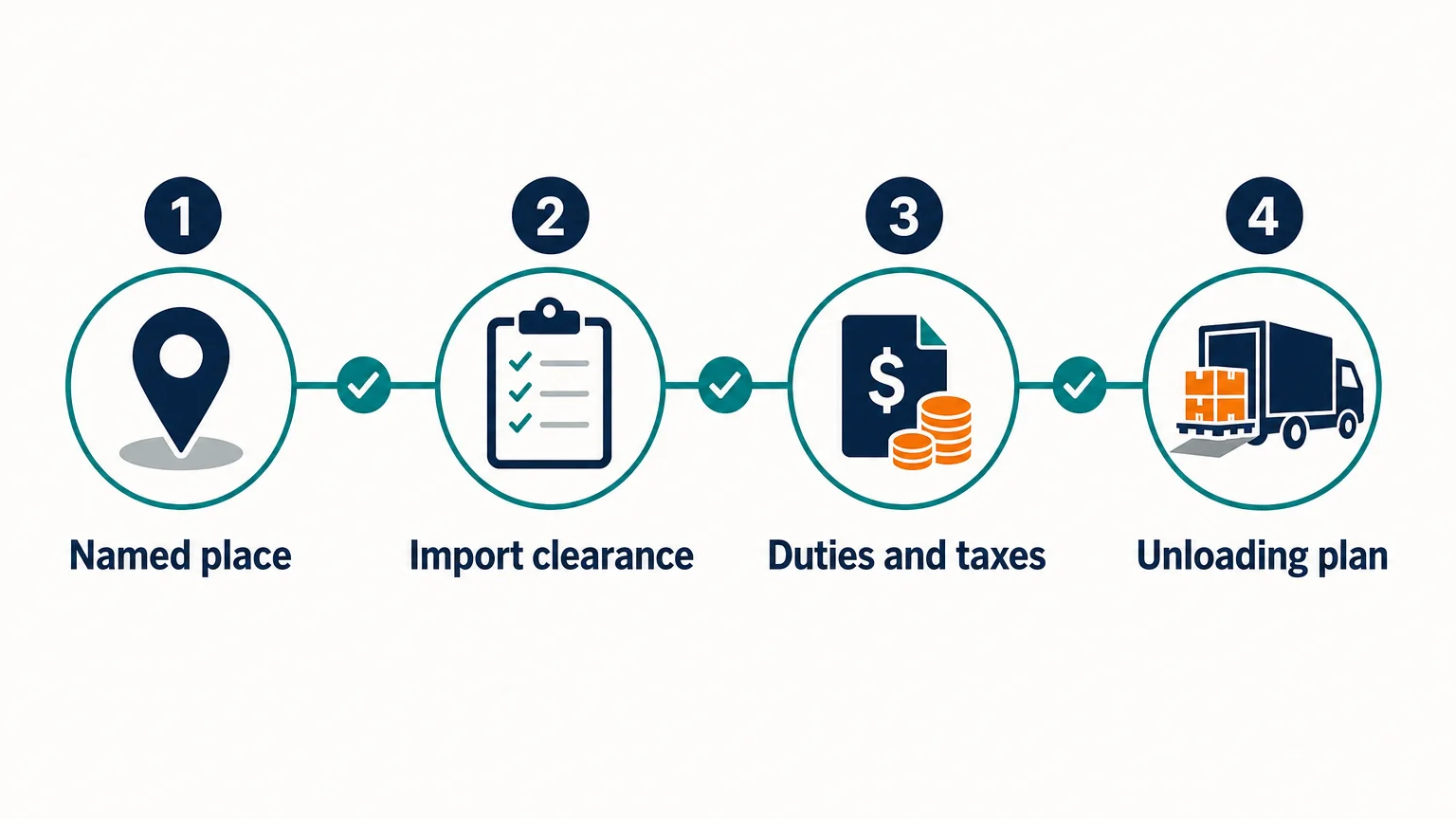
Before signing a purchase order, use a short written checklist. The following questions can prevent most misunderstandings about DAP:
- What is the exact named place? Confirm the complete address, receiving dock, terminal, or warehouse point.
- Who is the importer of record? Identify the party responsible for the customs entry and supporting documents.
- Who pays duties and taxes? Request an estimate based on the product classification and destination rules.
- Who pays unloading charges? Confirm whether the receiving facility requires a liftgate, appointment, labor, or special equipment.
- What happens during a customs delay? Define responsibility for storage, detention, demurrage, inspection, and redelivery.
- Is insurance included? DAP does not require seller-provided insurance, so obtain separate confirmation if coverage is needed.
You should also confirm whether the shipment is being quoted by chargeable weight, actual weight, volume, container size, or another pricing method. The transport mode can change both the total cost and the delivery window, particularly when you compare air, ocean, fast boat, or rail options.
When you request a quotation from us, you can provide product information or upload a packing list. We review the shipment profile and return three route options with estimated timelines, allowing you to compare urgency, budget, shipment scale, and customs handling before selecting a route.
For more detailed contract wording and allocation examples, our DAP Incoterms guide can support your review. You should still confirm the final terms with your seller, freight forwarder, customs broker, and legal or trade compliance adviser when the shipment involves regulated goods.
Choose DAP with a clear cost and risk plan
What DAP terms mean is straightforward: the seller delivers goods to a named destination ready for unloading, while the buyer manages import clearance, duties, taxes, and unloading. The difficult part is applying that division to a precise destination, a real customs process, and the receiving requirements of your shipment.
Before accepting DAP, confirm the named place, importer of record, landed-cost assumptions, insurance, and responsibility for delays. If you need the seller or logistics provider to manage import duties and customs, compare DAP with DDP instead of assuming that “door-to-door” includes every charge.
Take action with QG Horizon
Understanding DAP is useful when you are comparing supplier quotations, but your shipment still needs a practical plan for pickup, transport, customs, delivery, and tracking. For Amazon FBA inventory moving from China to the US or other markets, the right route depends on your product profile, urgency, volume, and import requirements.
We coordinate Amazon FBA freight forwarding with supplier pickup, international freight, DDP customs handling, door-to-door delivery, route comparisons, and shipment tracking. Submit your shipment details to compare practical options through our international shipping services.
Frequently Asked Questions
Does DAP include import duties and taxes?
No. Under standard DAP, the buyer is responsible for import customs clearance, duties, taxes, and related import charges. If the seller is expected to pay those costs, DDP may be the more appropriate term.
Who unloads the goods under DAP?
The buyer normally arranges and pays for unloading because the seller delivers the goods ready for unloading. Any different agreement should be written clearly in the sales contract and transport instructions.
Can DAP be used for air, ocean, road, and rail freight?
Yes. DAP can apply to any mode of transport, including multimodal shipments. The parties must still define the named destination and the precise point where delivery and risk transfer occur.
Is DAP the same as door-to-door shipping?
Not necessarily. DAP can require the seller to deliver to a named warehouse or terminal, but it does not automatically include unloading, import clearance, duties, taxes, or onward delivery beyond that point.
Can QG Horizon help with an Amazon FBA shipment when DAP is not suitable?
Yes. QG Horizon provides DDP Amazon FBA shipping with supplier pickup, international freight, customs coordination, duties and taxes handling, delivery, and tracking. Sellers can compare route options according to urgency, budget, shipment volume, and destination.
Ready to Optimize Your Amazon Shipping?
Get 3 route options tailored to your products and timeline
Get Your Quote→