Ex Works Terms Explained: EXW Incoterms for Importers
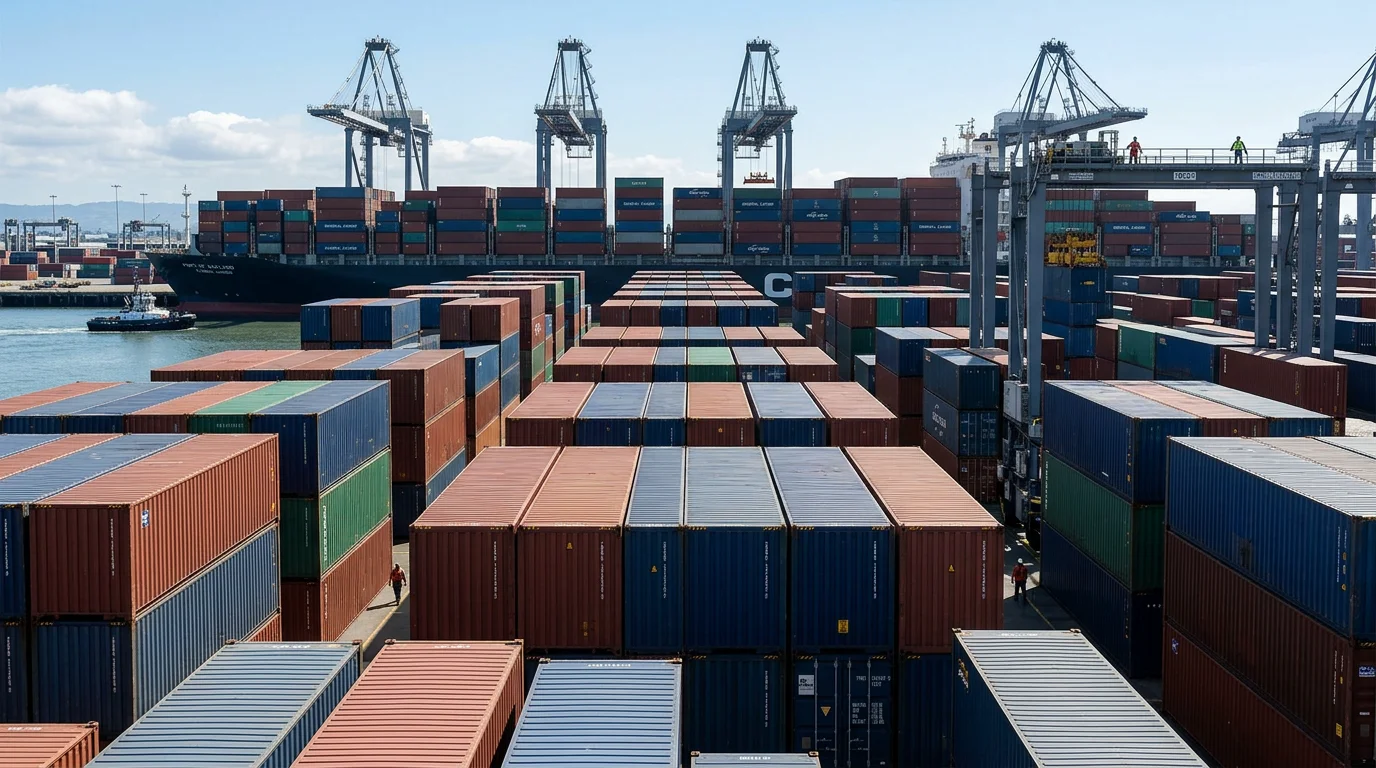
Summary: Ex Works (EXW) is the Incoterms rule that places nearly all responsibility on the buyer. The seller only makes the goods available at a named place, usually a factory or warehouse. From that point, the buyer handles loading, export clearance, transport, insurance, and import duties, and bears the risk of loss throughout the journey.
Among the eleven rules published by the International Chamber of Commerce, one term shifts almost every obligation onto the buyer from the moment goods leave the factory floor. Understanding Ex Works terms is therefore essential before you sign any international purchase order, because a single line in a contract can decide who pays for loading, clearance, and freight. To calculate the true landed cost of a purchase, our guide on What EXW price means breaks down each hidden charge.
EXW is popular precisely because it looks simple, yet that simplicity can be deceptive. Trade Finance Global notes that the seller has no obligation to load the buyer’s means of transport, which introduces practical complications at the pickup point. For importers sourcing from manufacturing hubs such as China, the difference between a smooth delivery and a stalled shipment often comes down to how well these responsibilities are understood in advance.
What the Ex Works terms actually mean under Incoterms 2020
The ex works terms represent the arrangement with the least seller involvement of any Incoterm. The ICC’s Incoterms 2020 rules define eleven trade terms that clarify the transfer of risk and the allocation of costs between buyer and seller in a sale of goods. EXW sits at one extreme of that spectrum.
Under this rule, the seller fulfills the contract simply by placing packaged goods at the buyer’s disposal at an agreed location on an agreed date. According to Export Development Canada, delivery happens at the exporter’s warehouse, factory, or distribution centre, and the seller does not have to load the goods or clear them for export. Everything after that point belongs to the buyer.
The named place of delivery is the pivot of the whole agreement. It is the physical spot where the seller’s duties end and the buyer’s begin, so contracts should state it precisely, for example “EXW Shenzhen factory, Incoterms 2020”. Vague wording here is one of the most common sources of dispute.
Seller and buyer responsibilities at a glance
Consider a straightforward scenario. A US retailer buys electronics from a supplier abroad under EXW. The supplier packs and labels the cartons, then notifies the buyer that they are ready. From that notification onward, the retailer, or the freight forwarder acting on its behalf, carries the operational load.
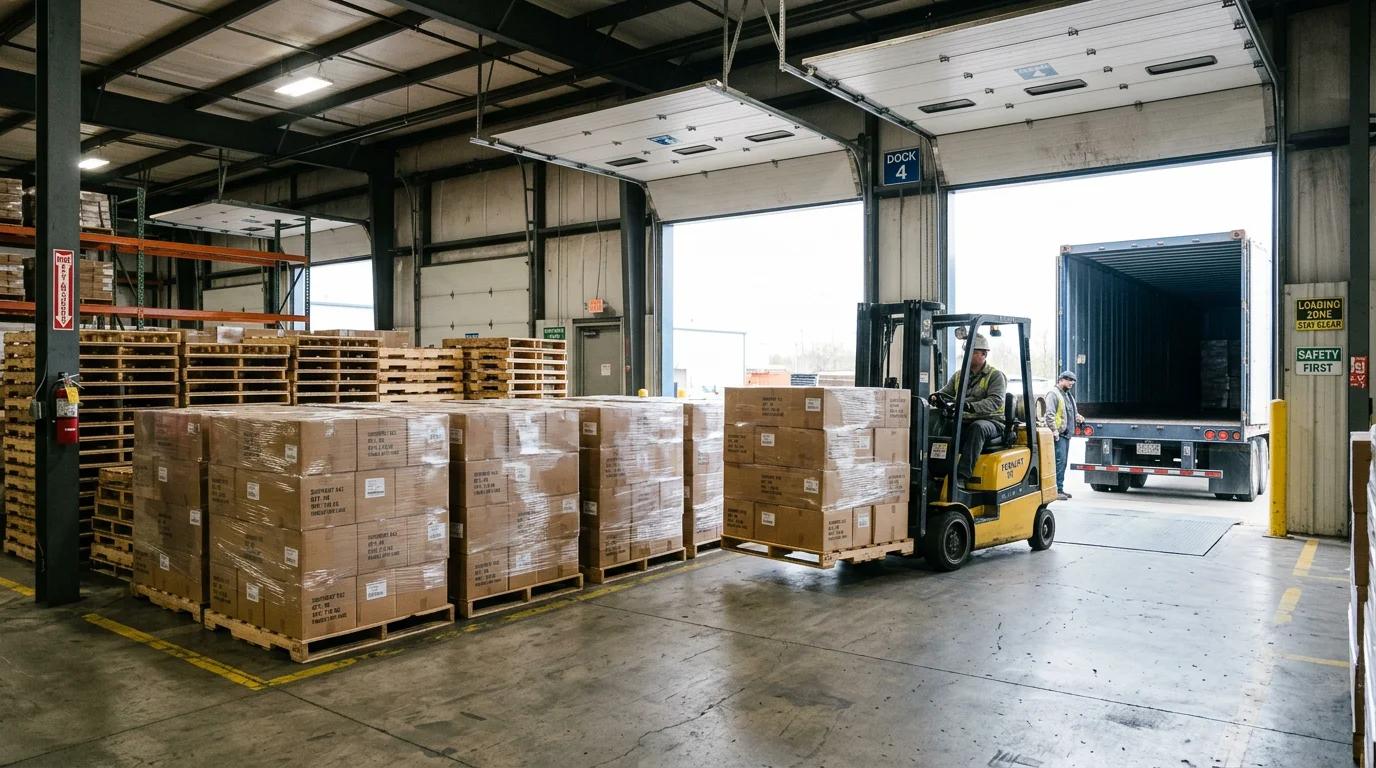
The division of duties is stark. To make the split clear, the table below compares the two parties across the main stages of an international shipment.
| Stage | Seller (EXW) | Buyer (EXW) |
|---|---|---|
| Packaging and labeling | Responsible | – |
| Loading at origin | Not obligated | Responsible |
| Export clearance | Not obligated | Responsible |
| Main carriage and insurance | – | Responsible |
| Import duties and clearance | – | Responsible |
| Risk of loss in transit | Until goods are available | From that point onward |
Because the buyer inherits every downstream task, working with a forwarder that manages the full chain is often the practical answer. Our overview of the Shipment term: EXW (Ex Works) explains how we take over collection, clearance, and delivery on your behalf so that the theoretical burden becomes a single, managed process.
Why the loading and export-clearance gap matters
The trickiest moment under EXW is the handover at the seller’s door. Shipping Solutions observes that EXW remains a controversial choice for US exporters, in part because of rising scrutiny around export compliance and routed transactions. When the buyer is a foreign party, filing export declarations in the seller’s country can be legally awkward.
There is also a physical dimension. A seller who lets an unfamiliar carrier bring a truck, a forklift, and its own crew into a warehouse takes on health, safety, and insurance exposure that the EXW rule does not require it to accept. In practice, many sellers load the goods anyway, but only as a courtesy, at the buyer’s risk unless the contract states otherwise.
This is why the ICC itself recommends that traders consider an alternative. The introduction to Incoterms 2020 advises that a seller would be better served by selling under the FCA rule, which shifts loading and export clearance back to the party best placed to handle them. Our comparison of FCA terms of shipment (contrast with EXW responsibilities) shows exactly where that boundary moves.
EXW compared with FCA, FOB, and DAP
Choosing the right Incoterm is a matter of matching control to capability. If you have a reliable forwarder and want maximum visibility over the chain, EXW gives you that control. If you would rather the seller handle the first mile, other rules fit better.
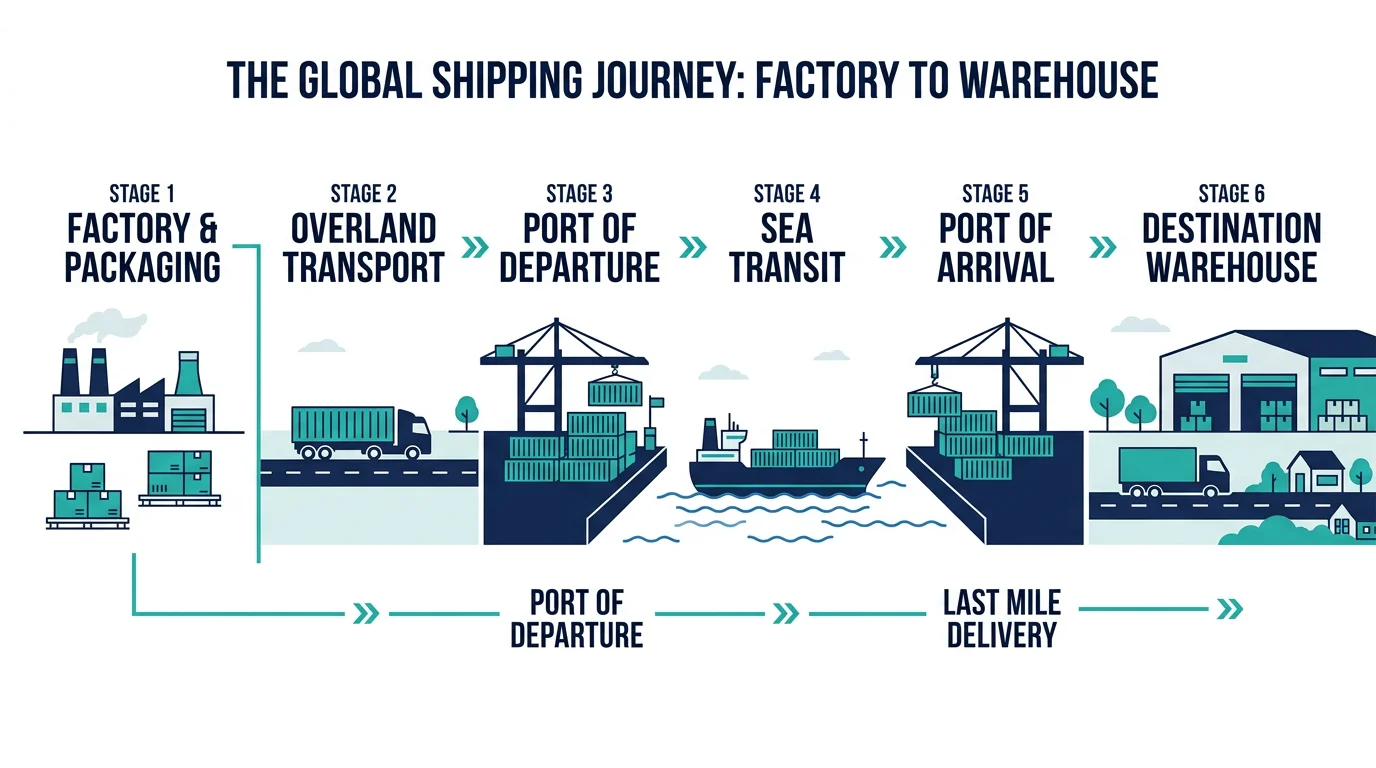
Under FCA, the seller delivers cleared goods to a carrier nominated by the buyer, taking on export formalities. Under FOB, used only for sea and inland waterway transport, the seller loads the goods onto the vessel at the port of shipment. Under DAP, the responsibility swings much further toward the seller, who arranges carriage all the way to a named destination. Our breakdown of DAP delivery terms (contrast with EXW) highlights that mirror-image structure.
The practical takeaway is that EXW and DAP sit at opposite ends, while FCA and FOB occupy the middle ground. Foundational ICC guidance groups the eleven terms so that seller obligations rise steadily from the E group through F and C to the D group, with EXW at the lightest end for the seller.
Making Ex Works work for Amazon FBA and US importers
For US businesses importing from China, EXW is common because many local suppliers do not hold export licenses or prefer not to handle logistics. That leaves the buyer free to consolidate shipments and control routing, which is valuable when goods are bound for Amazon fulfillment centers with strict labeling and appointment requirements.
The risk, however, is real. If packaging or FBA labeling is wrong, or if customs paperwork stalls at the border, the delay lands entirely on you. This is where an experienced partner adds value: we collect from your supplier, manage export and import clearance, and deliver directly to the Amazon warehouse, turning a fragmented EXW obligation into one accountable service with real-time tracking.
Key takeaways on choosing Ex Works
The ex works terms hand you full control of an international shipment, but they also hand you full responsibility, from loading at the factory to final delivery and import duties. Name the place of delivery precisely, confirm in writing whether the seller will assist with loading, and verify that whoever files your export declaration is legally able to do so. When these details are managed well, EXW becomes a transparent, flexible foundation for global sourcing rather than a source of costly surprises.
Take action with QG Horizon
Understanding EXW is the first step; executing it without delays is the real challenge. If you are importing from China to Amazon warehouses, you need a partner who can absorb every buyer obligation the rule places on you, from supplier pickup through customs to final delivery.
As Amazon sellers ourselves for more than five years, we built our shipping and freight services around tested routes, DDP clearance with duties and taxes included, and a 24-hour quote offering three route options. You receive real-time tracking and responsive WhatsApp support seven days a week, so your FBA plans stay on schedule. Request your free quote and let us handle the logistics end to end.
Frequently Asked Questions
Who pays for shipping under Ex Works terms?
The buyer pays for and arranges all transportation, from pickup at the seller’s premises to the final destination. The seller’s cost obligation ends once the goods are made available at the named place. This includes loading, freight, insurance, and both export and import charges.
Is the seller required to load the goods under EXW?
No. Under Incoterms 2020, the seller is not obligated to load the goods onto the buyer’s vehicle. If the seller does load them as a courtesy, it happens at the buyer’s risk and cost unless the sales contract expressly states otherwise.
When does risk transfer from seller to buyer under EXW?
Risk transfers the moment the goods are placed at the buyer’s disposal at the agreed location and date. From that point, the buyer bears any loss or damage during loading, transit, and delivery. Arranging cargo insurance is therefore strongly advised.
Why do experts often recommend FCA instead of EXW?
The ICC suggests FCA because it moves loading and export clearance to the seller, who is usually better placed to handle formalities in their own country. This avoids the legal difficulty a foreign buyer may face when filing export declarations abroad.
How can a freight forwarder simplify Ex Works shipments?
A forwarder absorbs the many tasks EXW assigns to the buyer, coordinating pickup, clearance, carriage, and delivery through a single point of contact. Our end-to-end Amazon FBA service collects from your supplier, manages DDP clearance, and delivers straight to the fulfillment center with live tracking.
Ready to Optimize Your Amazon Shipping?
Get 3 route options tailored to your products and timeline
Get Your Quote→