FCA Pricing Explained: Seller Costs, Buyer Costs, and Freight
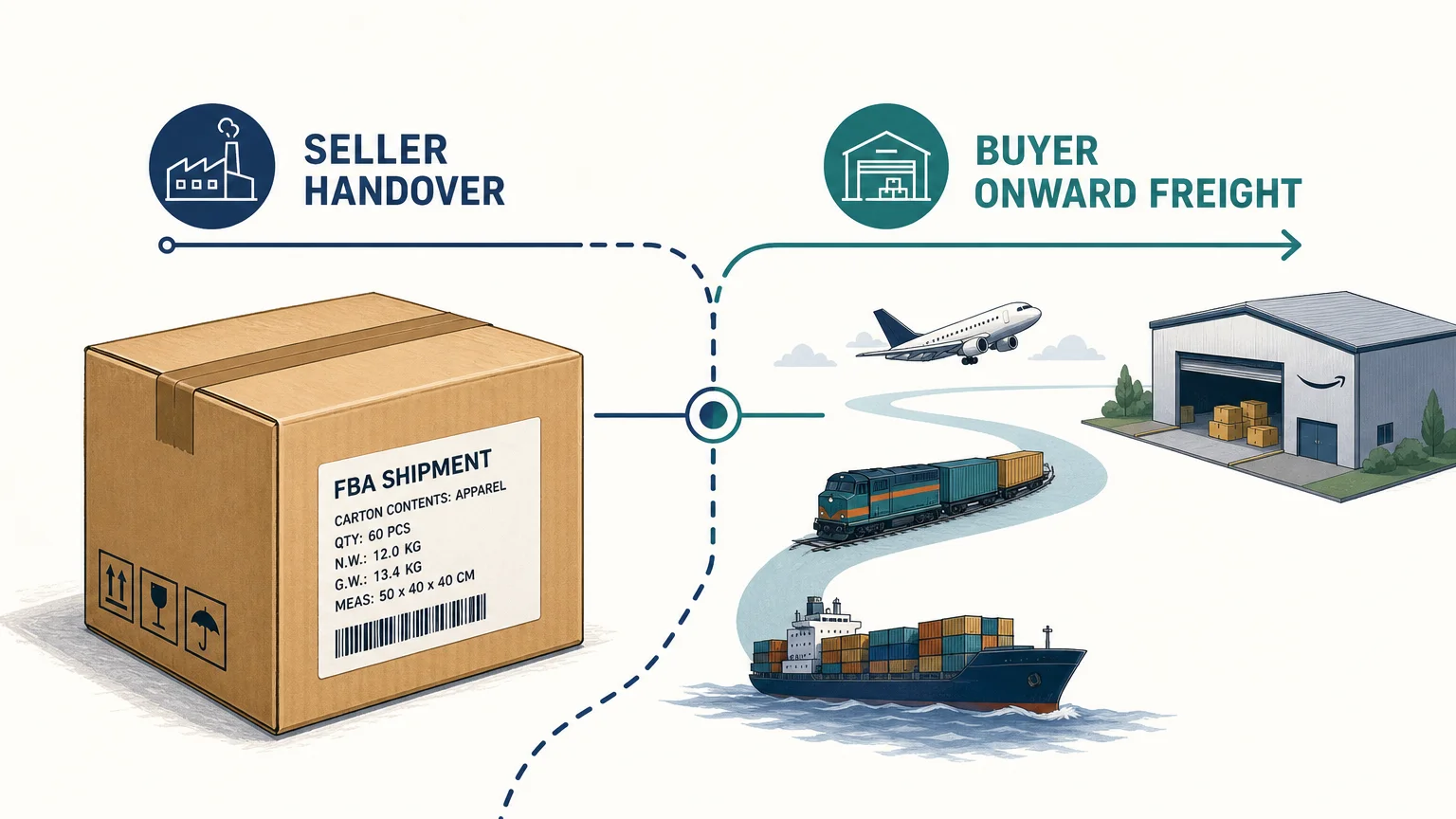
Summary: FCA does not set a freight rate. It allocates delivery, export-clearance, and risk responsibilities up to a named handover point; the buyer usually arranges and pays for main carriage and destination charges. Your landed cost combines the supplier’s FCA goods price with separate freight, insurance decisions, import costs, and handling charges not included in the quote.
A lower FCA line on a purchase order does not necessarily mean a cheaper shipment. The seller’s price generally covers costs up to the agreed delivery point, while you may need to arrange the international freight and destination handling separately. To see how those charges fit together, start with our FCA freight costs explainer.
Free Carrier, or FCA, is a delivery rule, not a set rate or a promise that freight is included. Under the ICC’s Incoterms® 2020 rules, it sets obligations, costs, and risk around delivery at an agreed place. For a US importer, the practical question is how the seller’s quote combines with transport, insurance choices, and destination charges.
What does an FCA price actually include?
Think of FCA as a boundary in the shipment journey. The seller delivers the goods to the buyer’s nominated carrier, or another nominated party, at the agreed place. That delivery point is where risk transfers to the buyer under the rule.
The seller’s quoted goods price may include packaging, export clearance, and delivery to that handover point. These costs might not appear as separate line items. They can be built into the amount you pay the supplier, so ask what the quote includes before comparing it with another seller’s offer.
FCA can apply to any mode of transport, including multimodal shipments. The key distinction is that the seller generally does not pay for the main carriage after FCA delivery. For a concise overview of the terminology, see our FCA shipping term meaning page.
Which costs usually fall to the seller or buyer?
In practice, FCA costs depend on where the goods are delivered and what the sales contract specifies. The seller generally pays costs needed to get the shipment to that point and handle export formalities. The buyer generally arranges and pays for transport beyond it, plus import-related charges.
The Incoterms rules allocate transport-related responsibilities, costs, and risks between the parties. A dataset on Incoterms also summarizes the rules in terms of transport costs, insurance, taxes, duties, and the goods’ journey. Use that allocation as a starting point, then check the quote and contract for charges tied to specific services.
- Seller’s side: export packaging, required export clearance, and delivery to the agreed FCA point. If delivery is at the seller’s premises, the seller loads the goods onto the collecting vehicle.
- Buyer’s side: main carriage after handover, any insurance you choose to purchase, and destination transport, import clearance, duties, and taxes.
- Check separately: terminal handling, storage, loading, and other service charges. Confirm who pays each charge at the named place and after delivery.
Under FCA, neither party is required by the rule to insure the goods. Consider whether separate cargo insurance suits your shipment’s value and risk exposure. Do not assume insurance is included just because a seller or forwarder arranged transport.
Why does the named place change FCA pricing?
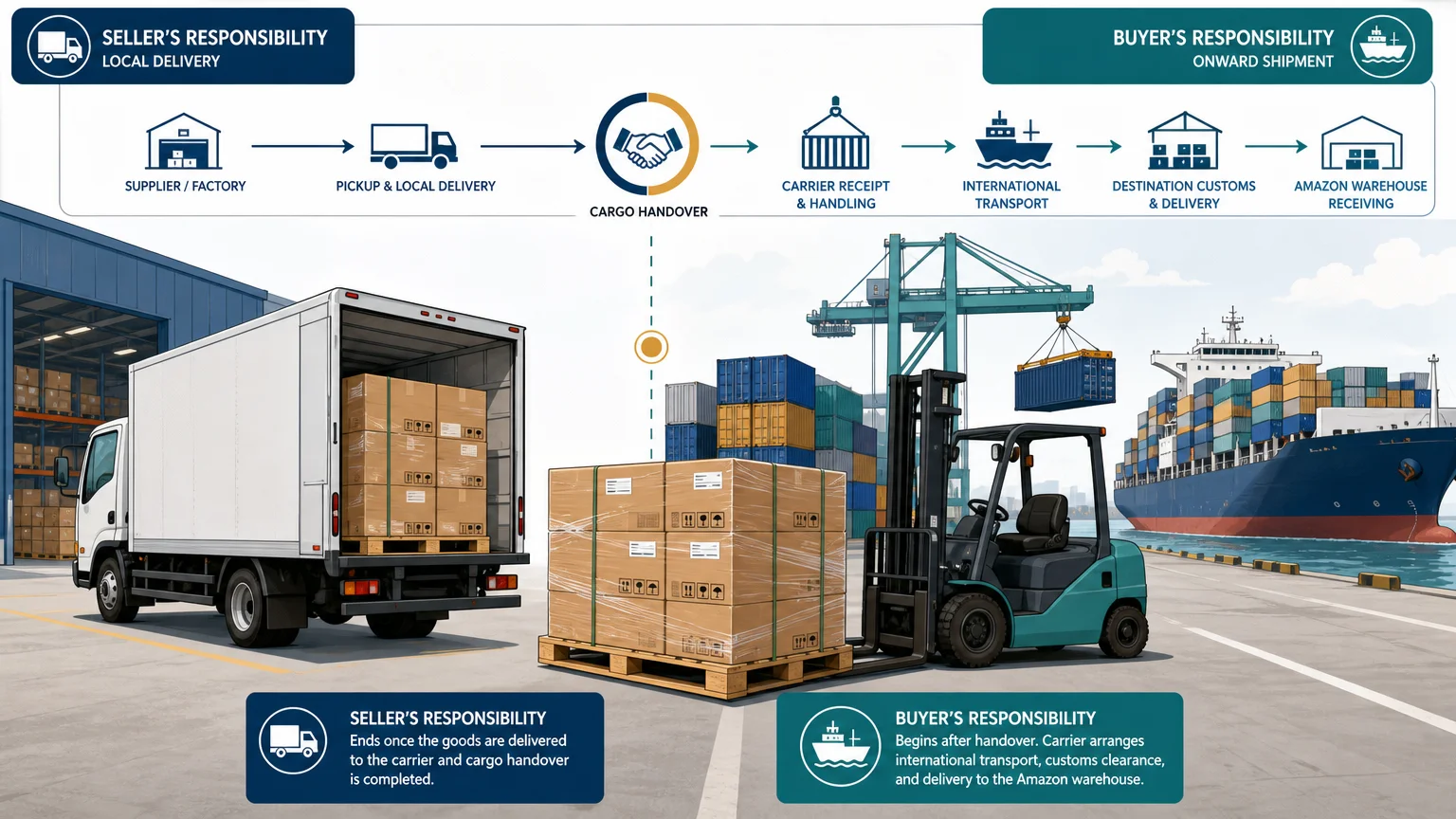
“FCA, seller’s warehouse” and “FCA, container terminal” do not describe the same handover point. When delivery occurs at the seller’s premises, the seller loads the goods onto the collecting vehicle. When delivery occurs elsewhere, the seller brings the goods there on its arriving vehicle, ready for unloading and at the carrier’s disposal.
That difference can affect which local transport and handling costs appear in the supplier’s quote. It also determines when delivery and risk transfer occur. Specify the exact location, and where possible the precise point within it, rather than writing “FCA” alone. Our page on the FCA shipping point explains why the handover location matters.
Ask the seller to identify the included origin services, then confirm which party pays for terminal services and carriage beyond the named point. The rule provides the framework, but a clear, itemized quote helps you see how local charges fit the agreement.
How does FCA compare with EXW and FOB?
Choose between these terms by looking at the seller’s delivery obligation, the handover point, and the mode of transport. They allocate costs and risk differently, so their quoted prices are not automatically comparable.
- EXW: The seller makes the goods available at a named place, often its premises. The buyer generally handles loading and export clearance as well as onward transport. FCA places export clearance with the seller and, at the seller’s premises, requires the seller to load the collecting vehicle.
- FCA: The seller delivers to the buyer’s nominated carrier at the agreed point and clears the goods for export. The buyer generally arranges and pays for the main carriage from there.
- FOB: For sea and inland-waterway transport, the seller delivers the goods on board the buyer-nominated vessel at the named port of shipment. The buyer generally pays for main carriage after that delivery point.
For container shipments moving through a port, the container may be handed to a carrier before it is loaded aboard a vessel. The ICC’s 2024 container guidance discusses FCA and CPT as suitable rules for defining freight cost and risk-transfer points in these situations. Match the term to the actual handover, rather than assuming FOB is the right choice whenever a shipment travels by sea.
How should you compare the full shipment cost?
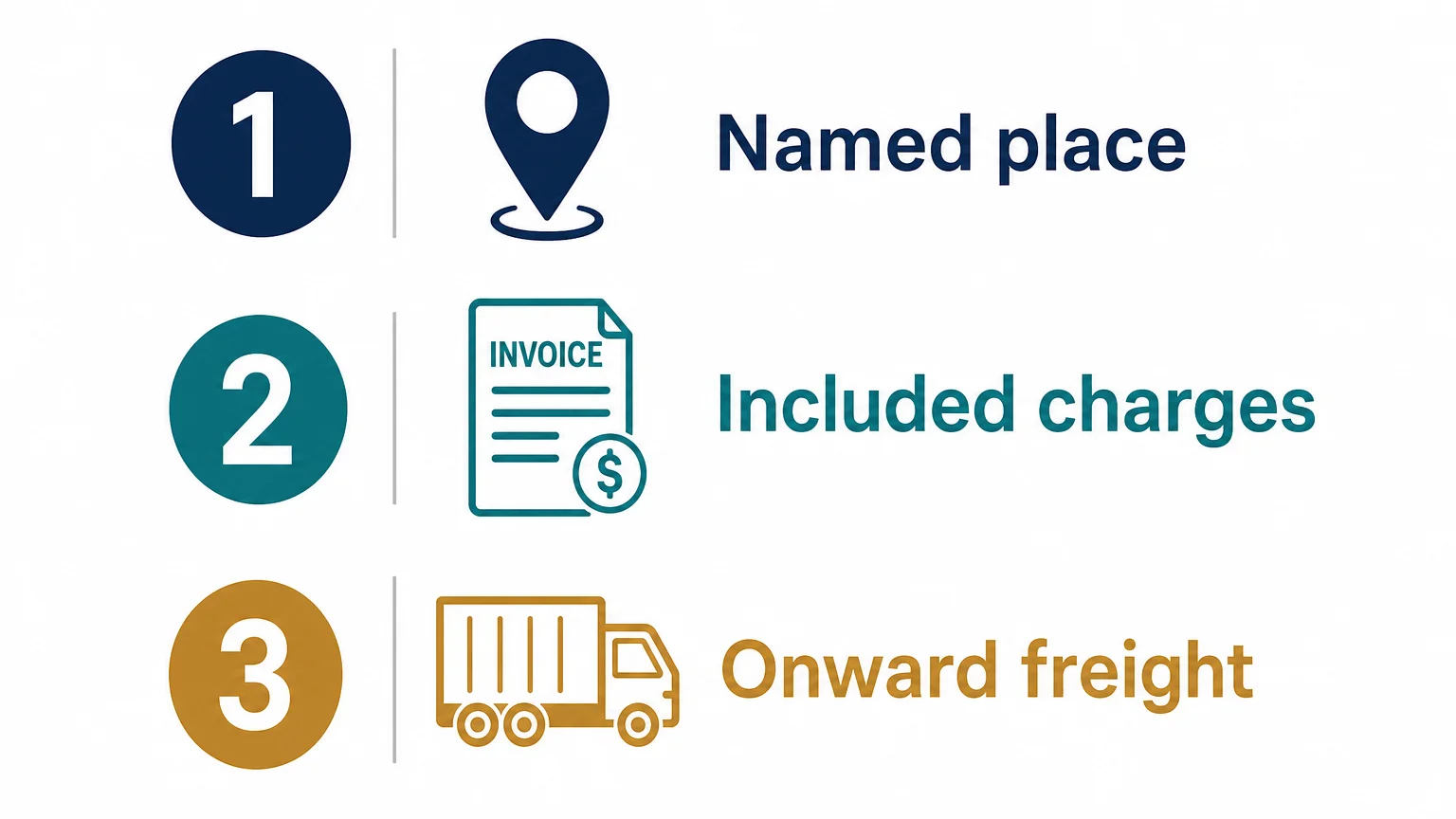
To compare two offers fairly, calculate the cost of getting the goods to the same destination under each option. A lower FCA goods price may be offset by higher onward freight, terminal, or import costs. Conversely, a higher seller price might include local delivery or export services you would otherwise need to arrange.
- Write down the complete FCA delivery point, including the facility or terminal and any specific handover location.
- Ask the supplier to itemize included origin transport, loading, export clearance, and handling charges.
- Request a separate freight quote to your final destination. Confirm the transport mode, transit estimate, and included services.
- Add destination handling, delivery, import clearance, duties, taxes, and any insurance you select.
- Compare the resulting landed cost, the risk-transfer point, and which party coordinates each stage.
For a China shipment, request that the seller and forwarder quote the same handover point and shipment details. Our FCA freight term resource can help you prepare questions about the rule before reviewing transport options.
Make the FCA quote comparable
FCA pricing is not one fixed freight amount. It depends on the named place, the seller’s costs to deliver there, and the transport and destination charges you take on afterward. Confirm the handover point, export responsibilities, and included services in writing, then compare the complete shipment cost to your destination.
Compare a route for your China shipment
If you are shipping inventory from China to an Amazon warehouse, an FCA supplier quote is only one part of the cost picture. We can help you compare door-to-door route options and understand which services are included in a shipment quote.
We coordinate supplier pickup, Chinese export declaration, international freight, destination customs clearance, duties and taxes under DDP, and door-to-door delivery, with shipment tracking and support. Submit product details or a packing list to receive three route options with estimated timelines, generally within 24 hours. Our DDP quotes package duties and taxes into an all-inclusive shipment price. An additional fee applies if the export declaration is made under the supplier’s name for a Chinese export tax refund. Explore our freight forwarding services for China-to-Amazon shipments.
Frequently Asked Questions
What does an FCA price include?
It generally includes the seller’s costs to deliver the goods to the named FCA point and complete export clearance. The quote may incorporate those costs without listing them separately, so confirm its exact scope.
Who pays for export clearance under FCA?
The seller is responsible for export clearance under FCA. The buyer generally arranges and pays for the main carriage after delivery to the agreed point.
Does FCA include cargo insurance?
No, FCA does not require either party to buy cargo insurance. You and the seller should clarify any insurance arrangements separately.
Is FCA cheaper than FOB or EXW?
Not necessarily, because each term assigns different tasks and charges to the seller and buyer. Compare the full cost to the same destination, including local handling, freight, and import costs.
Can you help compare China-to-Amazon shipping costs?
Yes, we provide quote-based DDP freight-forwarding options for shipments from China to Amazon warehouses. Our quote process compares route options using shipment details such as weight, volume, destination, and selected freight mode.
Ready to Optimize Your Amazon Shipping?
Get 3 route options tailored to your products and timeline
Get Your Quote→