FCA Shipping Point: Meaning, Risks, and Costs Explained
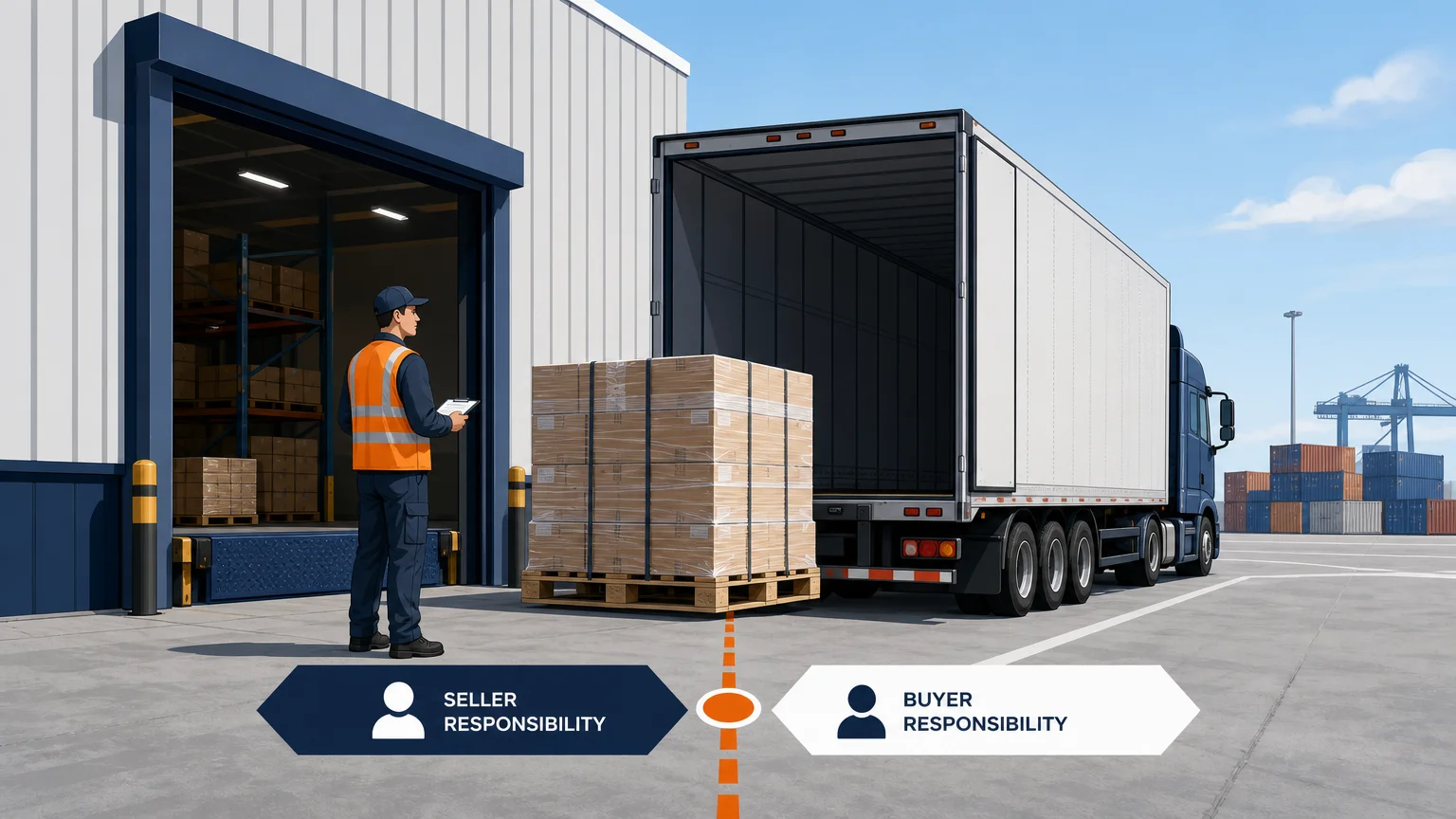
Summary: An FCA shipping point is the precisely named location where the seller delivers export-cleared goods to the buyer’s carrier or nominated party. At that handover, risk and most onward costs move to the buyer. The exact result depends on whether delivery occurs at the seller’s premises or another named location.
What happens when a sales contract says fca shipping point? Our FCA shipping terms explain the central issue: the named handover location determines when the seller’s delivery obligation ends and when the buyer assumes risk for loss or damage.
FCA means Free Carrier under Incoterms 2020. It can apply to road, rail, air, ocean, or multimodal transport. However, “shipping point” is often used informally, so the contract should identify the exact place, loading arrangement, documentation duties, and applicable Incoterms version.
What does an FCA shipping point mean?
FCA shipping point is a practical description of an FCA delivery location. The formal contract wording should normally follow this structure: FCA [precisely named place] Incoterms 2020. The ICC FCA rule defines delivery in 2 possible ways.
First, the named place can be the seller’s premises, such as a factory, warehouse, or distribution center. In that case, the seller delivers the goods when they are loaded onto the vehicle arranged by the buyer.
Second, the named place can be another location, such as a freight forwarder’s warehouse, container freight station, airport terminal, or port facility. The seller transports the goods there and makes them available to the buyer’s carrier, ready for unloading from the seller’s vehicle.
In both cases, the delivery point is important because it identifies when risk transfers from seller to buyer. It also marks the point from which costs are generally charged to the buyer under the FCA rule.
How the 2 FCA delivery scenarios work
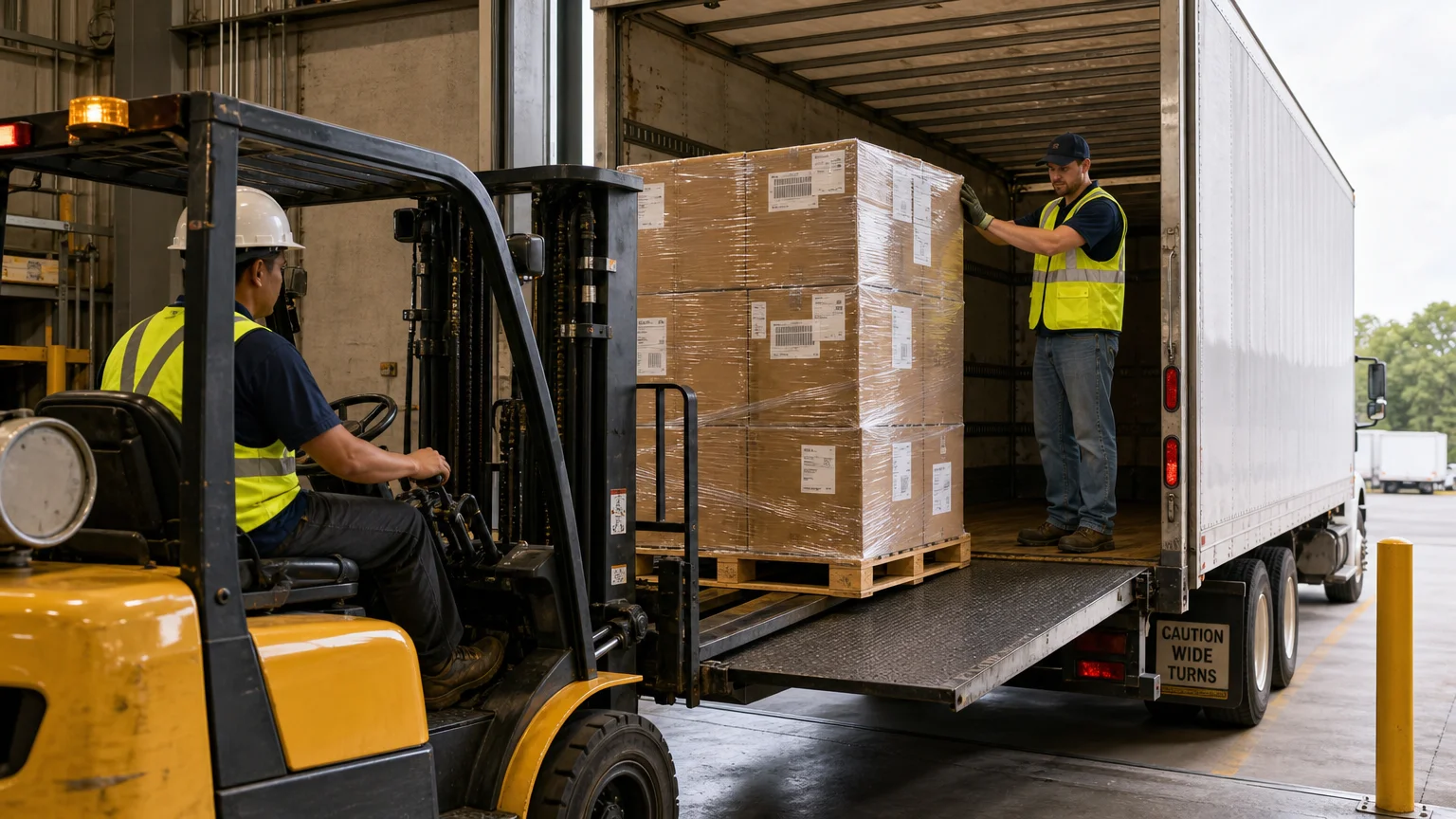
Consider a US importer buying packaged goods from an overseas supplier. The phrase “FCA seller’s warehouse” creates a different handover from “FCA forwarder warehouse.” The seller’s loading responsibility and the exact moment of risk transfer change with the named place.
Delivery at the seller’s premises
When the seller’s factory or warehouse is the named place, the seller must load the goods onto the buyer’s collecting vehicle. The seller remains responsible for the goods during loading. Delivery is complete once the goods have been loaded onto that vehicle.
After loading, the buyer normally assumes responsibility for the main carriage, cargo risk, import procedures, duties, taxes, and onward transport. The buyer should therefore ensure that the carrier arrives with suitable equipment and that insurance begins no later than the agreed handover.
Delivery at another named place
When the named place is a terminal or forwarder warehouse, the seller delivers the goods to that location on the seller’s vehicle. The goods must be ready for unloading and placed at the disposal of the buyer’s carrier or nominated party.
Under this arrangement, the seller does not normally unload the goods from the arriving vehicle. The buyer or the party arranging the carrier must manage unloading and the related charges. This distinction should be written into the sales contract because assumptions about loading and unloading often cause disputes.
Who pays freight under FCA?
Under FCA, the buyer usually pays the main freight after delivery at the named place. The seller pays the costs needed to prepare the goods, clear them for export, and deliver them to the agreed handover point.
If you are reviewing a quotation, our FCA terms of shipment provide a useful way to separate origin obligations from the transport and customs costs that follow delivery.
The seller generally pays for
- Commercial packaging, marking, and preparation of the goods.
- Export licenses and export customs formalities, when required.
- Transport to the named FCA location.
- Loading onto the buyer’s vehicle when the named place is the seller’s premises.
- Proof that delivery occurred under the agreed FCA wording.
The buyer generally pays for
- Main carriage from the FCA delivery point to the destination.
- Unloading when delivery occurs at a location other than the seller’s premises.
- Transit handling, terminal charges, and onward delivery.
- Import customs clearance, duties, taxes, and other destination charges.
- Cargo insurance for the buyer’s risk after delivery.
FCA does not require either party to purchase cargo insurance. Because the buyer assumes risk relatively early, arranging insurance from the delivery point is usually a prudent commercial decision.
Why the exact named point matters
“FCA Los Angeles” or “FCA Shenzhen” may identify a general area, but neither phrase necessarily identifies the operational handover point. A stronger clause names the facility, street address, terminal, warehouse section, or another detail that lets both parties identify the exact delivery location.
The ICC container guidance, published in 2024 and informed by a 2023 worldwide survey, highlights freight cost control and risk clarity as major considerations when traders select Incoterms. A precise FCA shipping point supports both objectives.
For example, compare these clauses:
- Unclear: FCA Houston, Incoterms 2020.
- Clearer: FCA seller’s warehouse, 1250 Example Street, Houston, Texas, Incoterms 2020.
- Terminal-specific: FCA Container Freight Station, named facility and gate number, Houston, Texas, Incoterms 2020.
The clearer wording helps determine who arranged the final origin movement, who unloads the goods, when delivery occurred, and when the buyer’s insurance should begin. It also gives the carrier and warehouse staff a practical instruction instead of a broad geographic reference.
How does FCA compare with EXW, FOB, and CPT?
The right comparison depends on 2 questions: who handles export clearance, and who pays for the main carriage. FCA is often selected because it places export clearance with the seller while allowing the buyer to control the primary transport arrangement.
FCA compared with EXW
Under EXW, the seller generally makes the goods available at its premises. The buyer takes on more origin responsibility, including export procedures in the seller’s country. Under FCA, the seller clears the goods for export and delivers them to the buyer’s carrier or nominated party.
For cross-border purchases, FCA may be more practical when the buyer does not have local export capability. It also provides a clearer loading obligation when the named place is the seller’s premises.
FCA compared with FOB
FOB is limited to sea and inland waterway transport. Risk transfers when the goods are loaded on board the vessel. FCA can be used for any mode and transfers risk at the named delivery point, which may be inland or at a terminal before vessel loading.
For containerized cargo, the physical handover often occurs before the container reaches the vessel. The ICC Incoterms 2020 framework also includes a mechanism allowing the parties to agree that the buyer instructs the carrier to issue an on-board bill of lading to the seller. This can be relevant when a letter of credit requires that document.
FCA compared with CPT
Under CPT, the seller contracts and pays for carriage to the named destination. However, risk transfers when the goods are delivered to the carrier, not when they reach the destination. Under FCA, the buyer normally arranges and pays for the main carriage after the named delivery point.
This means CPT separates the cost point from the risk point, while FCA generally places both the cost and risk transition at the delivery handover. Buyers should not assume that the party paying freight is automatically responsible for transit risk.
How should you write an FCA shipping point clause?
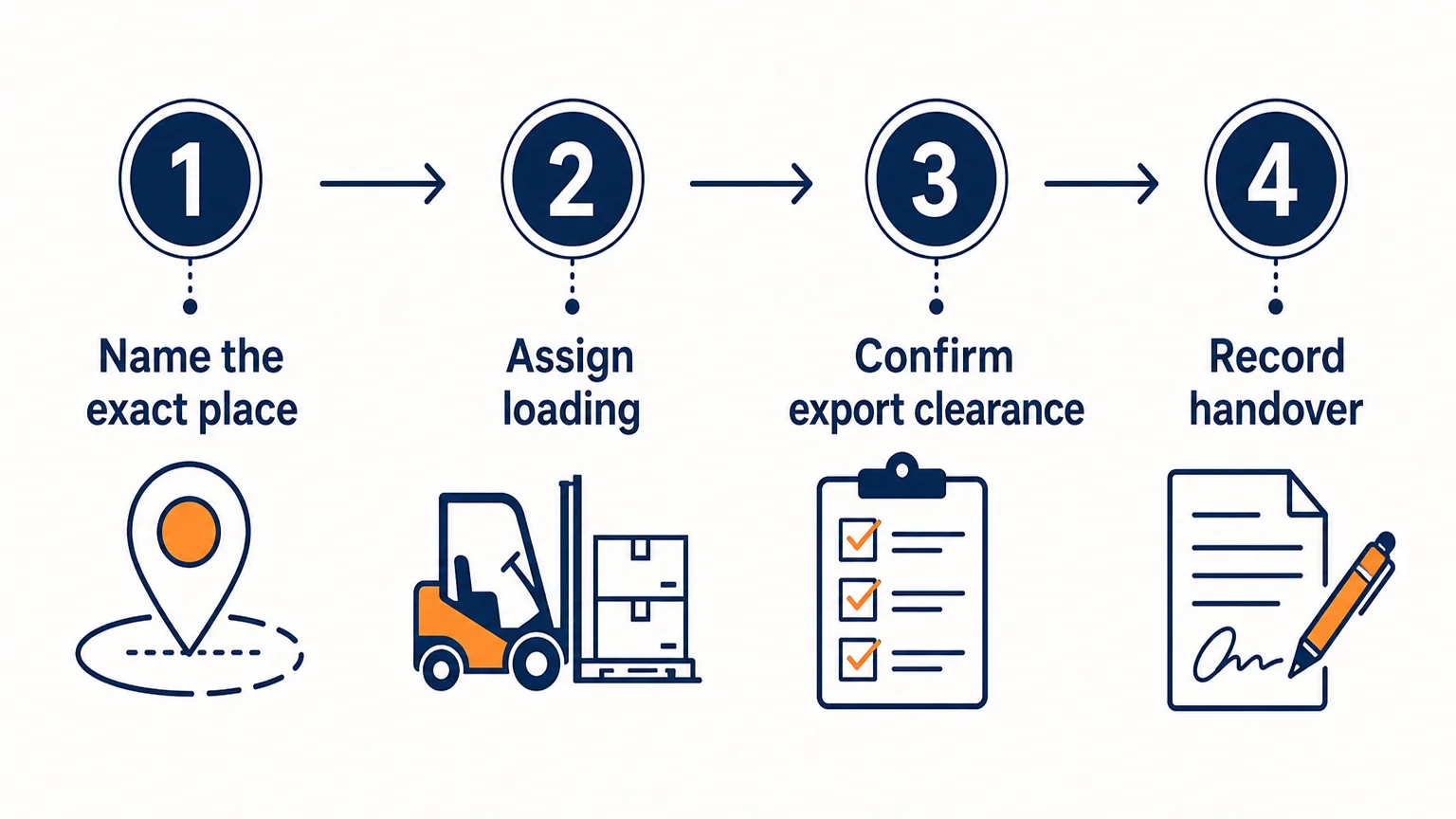
Before signing a sales contract, treat the FCA shipping point as an operational instruction rather than a simple label. Our FCA delivery definition can help you check the handover wording against the practical movement of the goods.
- Name the exact place. Include the facility name, full address, terminal or warehouse details, and any relevant gate or receiving reference.
- State who loads and unloads. Confirm whether the seller loads the buyer’s vehicle or delivers to another place ready for unloading.
- Confirm export clearance. Identify the party responsible for export declarations, licenses, certificates, and supporting documents.
- Assign the main carriage. State who books the carrier, selects the transport mode, and pays for the journey after delivery.
- Record the handover. Use a signed receipt, carrier document, warehouse record, or electronic confirmation to establish when delivery occurred.
- Coordinate insurance. Ensure the buyer’s policy begins at the point where risk transfers under the agreed FCA wording.
You should also identify the applicable rules by year. A contract that simply says “FCA” may leave uncertainty about which edition governs the transaction, especially when the parties have used older templates.
When is FCA practical for US importers?
FCA is practical when the buyer wants control over the main freight, already works with a preferred carrier, or uses a freight forwarder that can manage the origin leg. It also works well when the seller can complete export clearance and the parties can coordinate a clear handover.
For US e-commerce sellers importing from China, the term can support separate control over supplier pickup, international freight, customs planning, and delivery to a fulfillment destination. The buyer must still manage the responsibilities that begin at the FCA shipping point, including freight booking, import clearance, duties, taxes, and risk protection.
If you need help comparing FCA with a door-to-door arrangement, we can review the transport requirements and explain the practical differences through our FCA meaning in shipping resource. The right choice depends on your shipment value, volume, urgency, route, customs capability, and preferred level of control.
Common FCA shipping point mistakes
Most FCA disputes do not come from the phrase Free Carrier itself. They arise because the contract does not explain the physical handover clearly enough.
- Using only a city name: A city does not identify the warehouse, terminal, or gate where delivery occurs.
- Confusing payment with risk: The buyer may pay the main freight while risk has already transferred at origin.
- Assuming the seller handles import: FCA normally leaves import clearance, duties, and destination taxes with the buyer.
- Ignoring unloading responsibility: Delivery at another named place usually means the buyer’s side manages unloading.
- Using FOB for every container shipment: FOB is restricted to sea and inland waterway transport, while FCA is designed for any mode.
- Forgetting documentary needs: A letter of credit may require an on-board bill of lading or another specific transport document.
A written handover procedure should match the contract. It should explain when the carrier arrives, which documents confirm delivery, who pays origin handling, and what happens if the vehicle is delayed.
Make the FCA shipping point unambiguous
The FCA shipping point is not merely a place name. It is the practical boundary between the seller’s delivery obligations and the buyer’s transport risk. Define the exact location, assign loading and unloading duties, confirm export and import responsibilities, and identify the applicable Incoterms edition. These details make the allocation of cost, risk, insurance, and documentation easier to execute.
Take action with QG Horizon
Choosing an FCA shipping point is easier when the origin handover, freight route, customs process, and final delivery are considered together. If you are importing from China into the US, you may need a logistics partner that can coordinate supplier pickup, international transport, customs clearance, and delivery planning.
At QG Horizon, we support Amazon FBA and private-label sellers with route comparisons across air, fast boat, ocean, and rail freight. We also coordinate DDP handling, shipment tracking, and updates through the shipping process. Explore our international shipping services to identify a practical route for your shipment.
Frequently Asked Questions
What is an FCA shipping point?
An FCA shipping point is the named location where the seller delivers export-cleared goods to the buyer’s carrier or nominated party. Risk and onward costs generally transfer to the buyer at that delivery point.
Who pays freight under FCA?
The buyer normally pays the main carriage from the FCA delivery point to the destination. The seller pays for preparation, export clearance, and delivery to the named place.
When does risk transfer under FCA at the seller’s premises?
When the named place is the seller’s premises, risk transfers after the seller loads the goods onto the buyer’s collecting vehicle. When the named place is elsewhere, risk transfers when the goods arrive ready for unloading and are placed at the buyer’s carrier’s disposal.
Is FCA better than FOB for container shipments?
FCA is often more suitable for containerized shipments because it can be used for multimodal transport and identifies delivery before or at the carrier handover point. FOB is limited to sea and inland waterway transport and transfers risk when the goods are on board the vessel.
Can QG Horizon help with shipments using FCA terms?
Yes. At QG Horizon, we can help sellers and importers assess the origin handover, freight mode, customs requirements, and delivery route. We also support China to Amazon warehouse logistics when the shipment needs coordinated forwarding and tracking.
Ready to Optimize Your Amazon Shipping?
Get 3 route options tailored to your products and timeline
Get Your Quote→