FCA Terms in Incoterms: A Complete Guide for US Importers
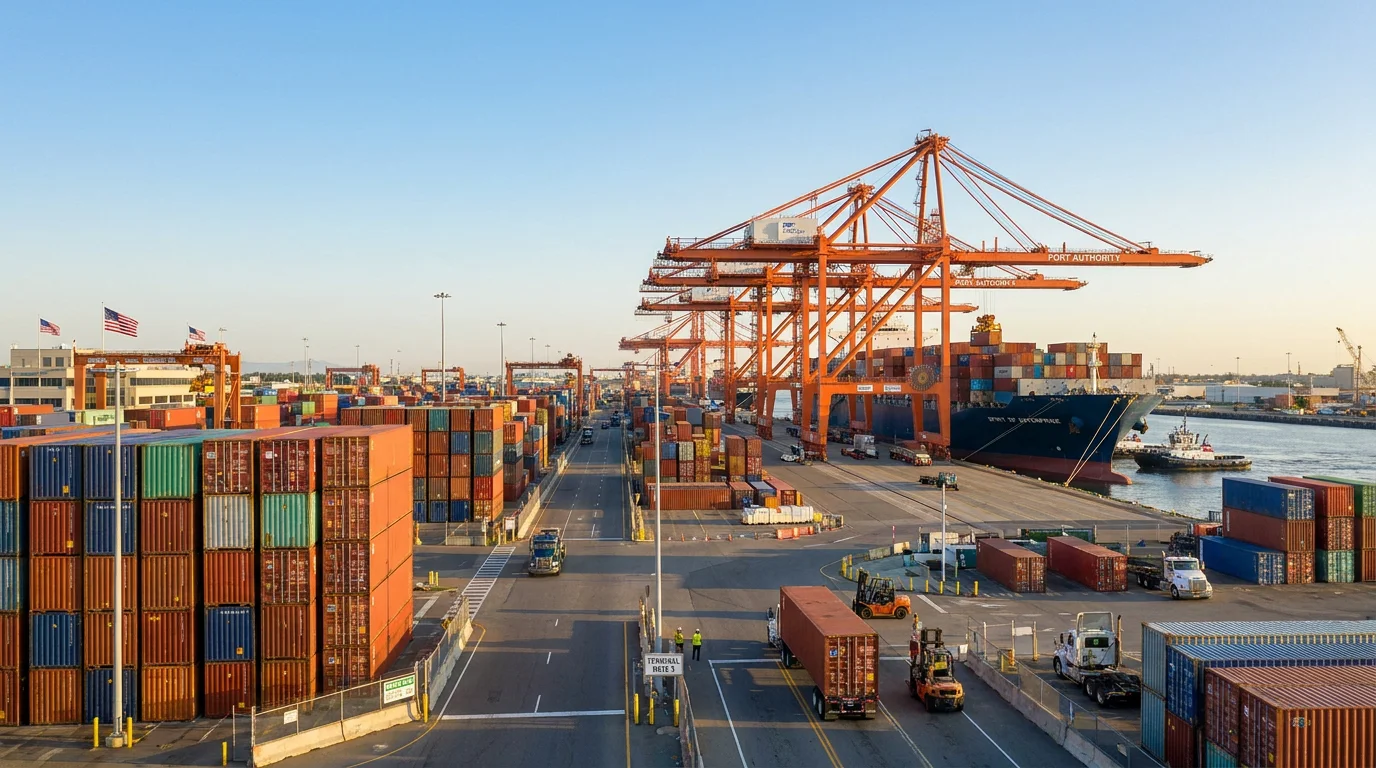
Summary: FCA (Free Carrier) is an Incoterms 2020 rule where the seller delivers goods to a buyer-nominated carrier; risk transfers at the named place of delivery.
A poor choice of trade term can inflate the total cost of an import operation by 15 to 30 percent. For US businesses sourcing products from overseas, understanding FCA terms in Incoterms is not optional; it is a foundational requirement. Whether you are a solo Amazon FBA seller or a growing e-commerce brand, knowing exactly when cost and risk shift from your supplier to you determines how much you truly pay per unit. If you are new to the subject, our guide on FCA Incoterms explained provides a solid starting point.
The standard in force for all shipments in 2026 is Incoterms 2020. The next revision by the International Chamber of Commerce (ICC) is not expected before 2030, as the ICC has historically published a new edition every ten years. This article breaks down every obligation, cost, and risk that the Free Carrier rule assigns to buyers and sellers, compares FCA with other common terms, and shows you how to apply it to real supply chain scenarios in the US market.
What Does FCA Mean in the Incoterms Framework?
Incoterms, short for International Commerce Terms, represent a standardized set of terminology universally recognized in the field of freight forwarding. Established by the ICC in 1936, these terms define crucial aspects of international trade. Within this framework, FCA (Free Carrier) sits in the “F” group, meaning the seller fulfills delivery when goods are handed to a carrier nominated by the buyer.
Under FCA, the seller delivers to a carrier nominated by the buyer, making it highly flexible and recommended for container shipments. The term can be paired with any mode of transport: air, ocean, rail, truck, or multimodal combinations. This versatility is one reason the ICC actively recommends FCA over the more traditional FOB for containerized cargo.
FCA Seller Obligations: What Your Supplier Must Do
Under FCA, the seller carries a defined set of responsibilities that end once the goods reach the agreed handover point. Understanding these obligations protects you from paying for tasks your supplier should handle.
- Export clearance: The seller must complete all export formalities, including licenses, security filings, and customs documentation in the country of origin.
- Packaging and marking: Goods must be packaged appropriately for international transport, or as specified in the sales contract.
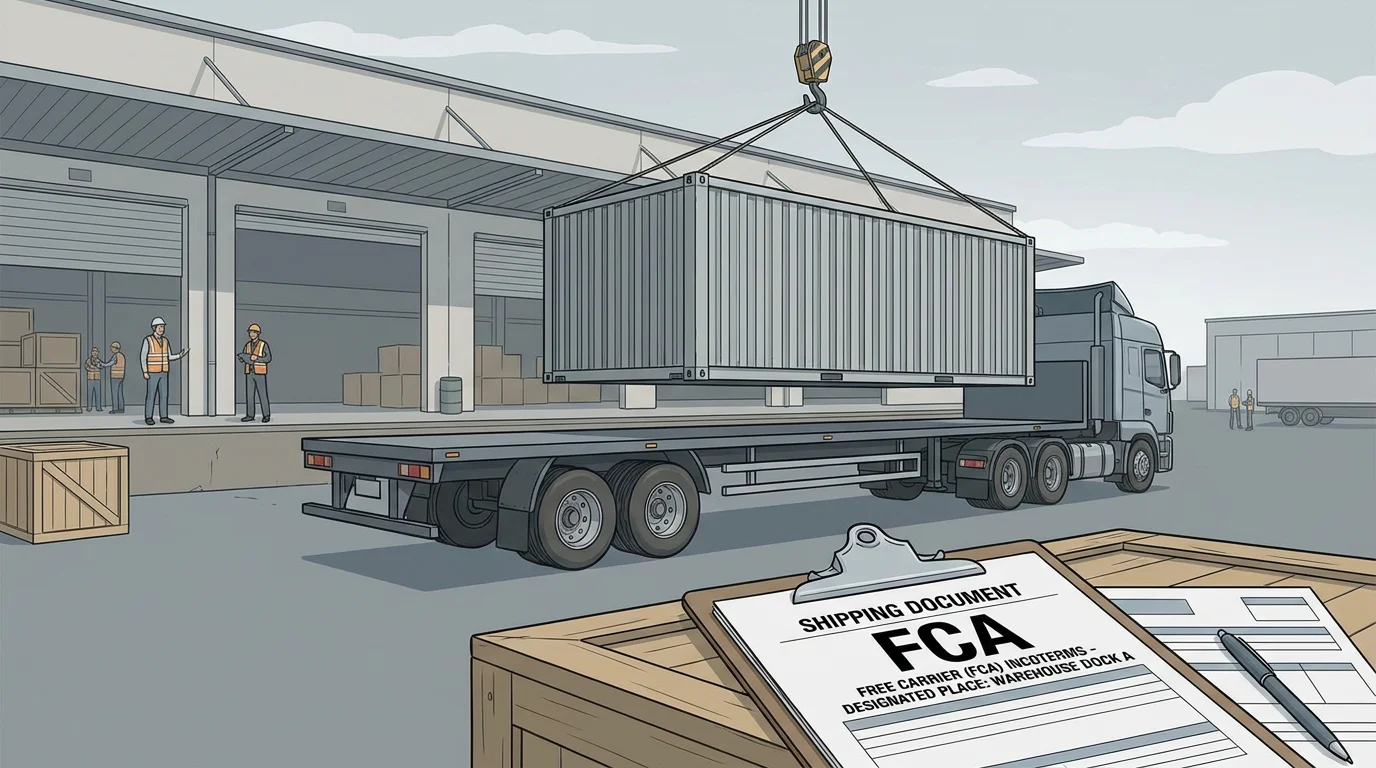
- Delivery to named place: FCA (a) is used when the seller delivers the goods, cleared for export, at a named place which is their own premises. FCA (b) is used when the seller delivers the goods, cleared for export, at a named place which is not their premises.
- Loading (conditional): If the named place is the seller’s own facility, the seller is responsible for loading the goods onto the buyer’s transport. If the named place is elsewhere, the seller merely needs to make the goods available.
- Proof of delivery: The seller must provide documentation proving that goods were delivered as agreed.
For US importers sourcing from China, the seller’s export clearance obligation is particularly valuable. EXW presents significant practical complications because the foreign buyer must handle export customs clearance in the seller’s country, which is frequently impossible or impractical. FCA eliminates this burden by keeping export responsibilities with the party best positioned to fulfill them.
FCA Buyer Obligations: What You Are Responsible For
Once the goods are delivered to the carrier at the named place, the buyer assumes all further costs and risks. Here is a clear breakdown of what falls on your side of the ledger.
- Main carriage: According to FCA, part B4, the buyer must contract or arrange at its own cost for the carriage of the goods.
- Insurance (optional): There is no obligation for either party to insure the goods under FCA. However, since risk transfers to you at the named place, arranging cargo insurance is strongly advisable.
- Import formalities and duties: You must handle customs clearance, pay import duties, and manage all regulatory compliance in the destination country.
- Unloading and onward transport: All costs from discharge at the destination port through final delivery to your warehouse or Amazon fulfillment center are yours.
This cost structure gives experienced importers significant leverage. By controlling the main carriage, you can negotiate freight rates directly, choose your own forwarder, and optimize routes. If you prefer a hands-off approach where duties and taxes are included upfront, you may want to explore the differences outlined in our DDP vs FOB for Amazon FBA from China comparison.
FCA vs. FOB: Why the ICC Recommends FCA for Containers
One of the most common questions in international shipping is whether to use FCA or FOB. Both are “F” group terms where the buyer arranges the main carriage, but the point of risk transfer differs significantly.
The ICC recommends FCA over FOB for containerized goods. FCA transfers risk as soon as the goods are handed to the carrier in the terminal, which matches logistics reality. FOB only transfers risk once the goods are on board the vessel, creating a grey area of responsibility between terminal handover and loading.
| Criteria | FCA (Free Carrier) | FOB (Free on Board) |
|---|---|---|
| Transport modes | Any (air, sea, rail, truck, multimodal) | Sea and inland waterway only |
| Risk transfer point | Named place (seller’s premises or terminal) | On board the vessel at port of origin |
| Export clearance | Seller | Seller |
| Ideal cargo type | Containerized, general, air freight | Bulk and breakbulk sea cargo |
| Bill of lading flexibility | On-board notation available (Incoterms 2020) | Standard on-board B/L |
| QG Horizon recommendation | Preferred for Amazon FBA container shipments from China | Suitable for non-containerized ocean freight |
Using FOB for containerized cargo is technically incorrect. When goods are delivered in containers to a port terminal (not directly to the vessel), FCA should be used. FOB only applies when goods are physically loaded over the ship’s rail, such as bulk or breakbulk cargo. For a deeper look at FOB and its applications, see our article on what FOB means in shipping.
The Incoterms 2020 Bill of Lading Update for FCA
Before 2020, sellers who used FCA with letter-of-credit transactions faced a recurring problem. Banks required an on-board bill of lading (B/L) to release payment, but under FCA, the carrier had no obligation to provide one to the seller.
The Incoterms 2020 FCA extra provision now states that if the parties have so agreed, the buyer must instruct the carrier to issue to the seller, at the buyer’s cost and risk, a transport document stating that the goods have been loaded. This change, documented by Trade Finance Global, was the single most significant update in the 2020 revision.
There is an important caveat. Many exporters still use FOB because banks want a Bill of Lading for Letters of Credit, and the carrier is not legally obligated to comply with the buyer’s instruction. If your transactions involve letters of credit, discuss this provision with your freight forwarder before finalizing the Incoterm in the sales contract.
When Should US Importers Choose FCA?
FCA is not universally the best Incoterm for every situation. Its advantages shine in specific scenarios, and recognizing them helps you avoid unnecessary complexity or cost.
FCA Is Ideal When You Want Control
If you want to manage the main freight segment yourself, an “F” rule like FCA is ideal. Experienced importers with established freight forwarder relationships and volume-based rate agreements benefit most from FCA. You select the carrier, the route, and the transit time, keeping total landed cost under your direct management.
FCA May Not Be the Best Fit for New Importers
For new importers, consider DAP or DDP so the supplier handles logistics. If you do not yet have a trusted freight forwarder or are unfamiliar with customs processes in the US, a “D” group term shifts the operational burden back to the seller. We help many first-time Amazon sellers through exactly this transition with our FOB vs CIF vs DDP Incoterms comparison, which lays out the total cost implications of each option.
FCA and US Compliance Considerations
FCA can put its use in conflict with the US Foreign Trade Regulations (FTR). The FTR calls exports where the buyer arranges the international transportation a routed export transaction and requires the buyer to give written authorization for the Electronic Export Information (EEI) filing through AESDirect to a US party. To comply with both FCA and the FTR, the buyer should provide written authorization to the seller to submit the EEI. This compliance step, documented by Shipping Solutions, is frequently overlooked and can result in penalties if missed.
How to Write an FCA Clause in Your Sales Contract
The full and correct reference to the Incoterms is crucial from both a legal and compliance standpoint. Abbreviated references such as “DAP 2020” or “FCA” are not sufficient because they do not specify the point of delivery or the named destination.
A properly drafted clause should follow this format:
FCA [Seller’s Warehouse Address or Named Terminal], Incoterms 2020
For example, if your Chinese supplier’s factory is in Shenzhen: “FCA 123 Baoan District, Shenzhen, China, Incoterms 2020.” As Trade Treasury Payments emphasizes, once agreed upon and used, Incoterms become legally binding, so precision in your contract language directly affects your legal exposure.
They play a key role in international sale contracts, and their correct use is integral to best practices within customs and trade compliance. Both parties should have a clear understanding of the responsibilities, costs, and risks associated with the agreed Incoterms.
FCA in Context: Comparing Key Incoterms for Amazon FBA Sellers
Most Amazon FBA sellers importing from China consider three to four Incoterms before settling on one. Here is how FCA compares to the most common alternatives.
| Incoterm | Who arranges main carriage? | Risk transfer point | Import duties paid by | Best for |
|---|---|---|---|---|
| FCA | Buyer | Named place in origin country | Buyer | Experienced importers wanting freight control |
| EXW | Buyer | Seller’s premises (before loading) | Buyer | Domestic transactions; risky for international |
| FOB | Buyer | On board vessel at origin port | Buyer | Bulk or breakbulk ocean cargo |
| DDP | Seller | Buyer’s named place in destination country | Seller (included in price) | New importers; all-inclusive pricing |
| QG Horizon DDP | QG Horizon (as forwarder) | Amazon warehouse door | Included in quote | Amazon FBA sellers wanting zero surprises |
For sellers who want a known, all-inclusive cost from factory to Amazon warehouse, our DDP service eliminates the need to manage carriers, customs brokers, and duty payments separately. You can explore the latest rule changes in our overview of FOB Incoterms 2026 updates.
Practical Tips for Using FCA Effectively
Selecting FCA is only the first step. The following practices help you avoid the most common pitfalls.
- Specify the exact named place: “FCA Shenzhen” is vague. Include the full address or terminal name to avoid disputes about where risk transfers.
- Arrange cargo insurance: FCA does not require either party to insure the goods. Since you bear risk from the moment of handover, purchasing transit insurance is a prudent decision.
- Coordinate the bill of lading: If you are paying by letter of credit, include the Incoterms 2020 on-board B/L clause in your sales contract. Confirm with your carrier that they will comply.
- Understand US import security filings: US-bound ocean freight requires the Importer Security Filing (10+2). The ISF importer must submit 10 data elements to US Customs at least 24 hours before loading at the foreign port. Under FCA, the ISF importer is usually the US buyer.
- Align your Incoterm with your experience level: A poor Incoterm choice can lead to unexpected cost overruns of 15 to 30 percent on the total cost of an import-export operation, according to Hayot Expertise.
Choosing the right FCA terms within the Incoterms framework is a strategic decision that shapes your entire supply chain cost structure. For any sales contracts and shipments planned for 2026, businesses must continue to use and reference Incoterms 2020. Whether you opt for FCA to maintain freight control or prefer a DDP arrangement for predictable, all-inclusive pricing, the key is matching the Incoterm to your operational capacity and risk tolerance. With our Shenzhen-based team handling pickup, international freight, customs clearance, and final delivery to Amazon warehouses, we take the complexity out of the equation. To get a clear price for your next shipment, request a free quote through our Incoterms advisory page and let us handle the logistics from factory to fulfillment center.
Frequently Asked Questions
Is there a new version of Incoterms for 2026?
No new version of Incoterms has been published for 2026. The official reference in force remains Incoterms 2020, published by the ICC. The next revision is expected around 2030.
Can FCA be used for air freight shipments from China to the US?
Yes. FCA is approved for any mode of transport, including air, ocean, rail, and multimodal. It is one of the most flexible Incoterms available, and we regularly handle FCA air freight shipments for Amazon FBA sellers through our express 5-to-9-day service.
What is the main risk of using FCA as a buyer?
The primary risk is that you assume liability for the goods from the moment they are handed to the carrier at the named place. If damage or loss occurs during transit and you have not arranged cargo insurance, the financial loss falls entirely on you. Always confirm insurance coverage before the goods leave the seller’s location.
Ready to Optimize Your Amazon Shipping?
Get 3 route options tailored to your products and timeline
Get Your Quote→