FCA Transport Terms Explained: Buyer and Seller Guide
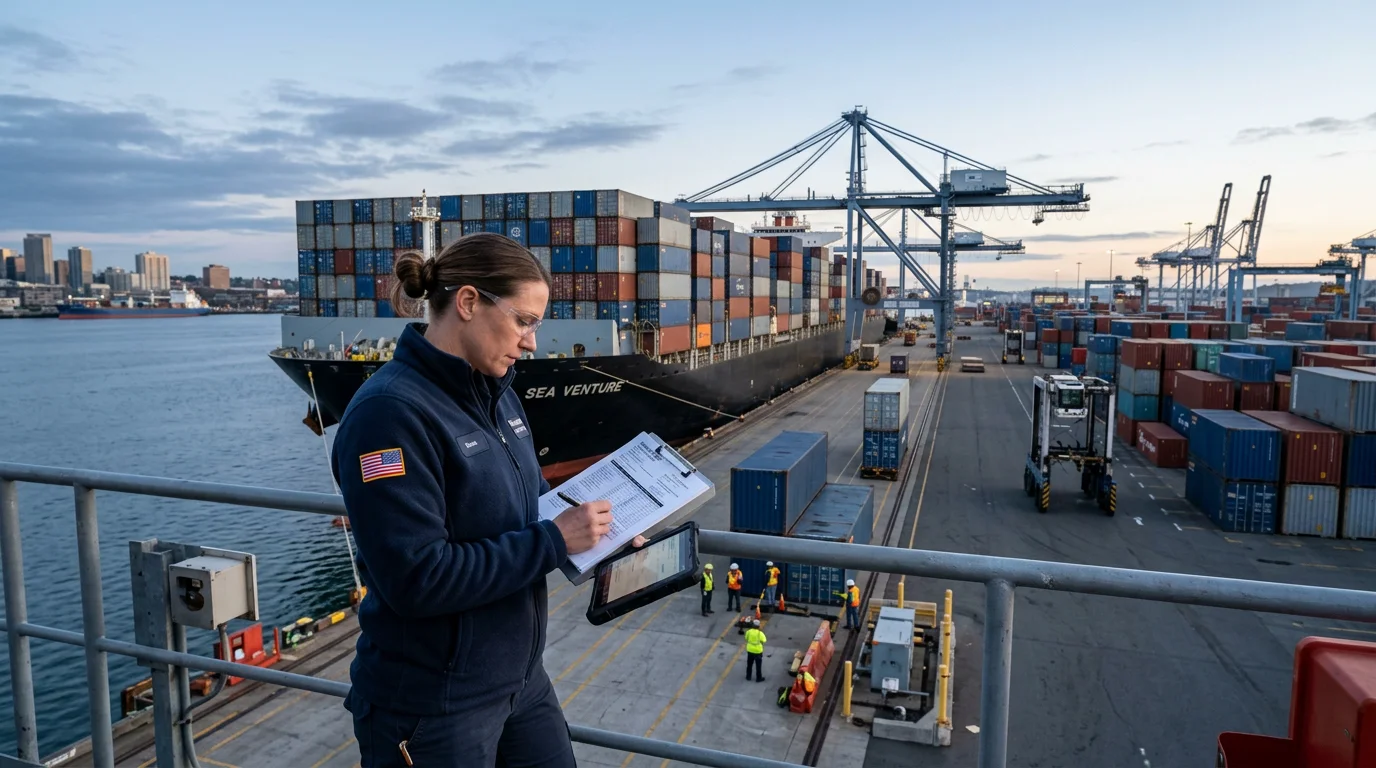
Summary: Free Carrier (FCA) is an Incoterms 2020 rule under which the seller clears goods for export and delivers them to a carrier named by the buyer at an agreed place. Risk and cost transfer at that handover. FCA works for any mode of transport, which makes it a flexible choice for containerized and air freight shipments.
Nearly every cross-border sales contract hinges on one small acronym printed next to a location. Choose the wrong one, and a container can sit at a port with nobody clearly liable for it. The FCA transport terms, short for Free Carrier, define exactly where a seller’s job ends and a buyer’s begins. Our guide to FCA terms of shipment breaks the mechanics down for shippers who cannot afford ambiguity.
FCA belongs to the family of standardized rules published by the International Chamber of Commerce. According to EDC, these terms were drafted to eliminate confusion in global sales contracts and to define the roles of buyers and sellers of export goods. For US businesses importing from Asia or shipping abroad, that clarity translates directly into fewer disputes and cleaner customs handling.
What the FCA Free Carrier rule actually means
Under Free Carrier, the seller delivers goods, cleared for export, to a carrier or another party nominated by the buyer at a named place. From that moment, both risk and cost pass to the buyer, who pays for all onward freight. The seller is responsible for export packaging, marking, licenses and customs formalities up to the point of delivery. The buyer arranges and finances the main carriage.
The named place drives everything. If it is the seller’s premises, the seller loads the goods onto the buyer’s collecting vehicle. If it is a forwarder’s warehouse, terminal or container yard, the seller delivers there but is not responsible for unloading. Precision matters here: a city name alone is ambiguous, so a full street address should always appear in the contract. This is a recurring theme across our explainer on FCA terms in Incoterms.
Seller and buyer obligations at a glance
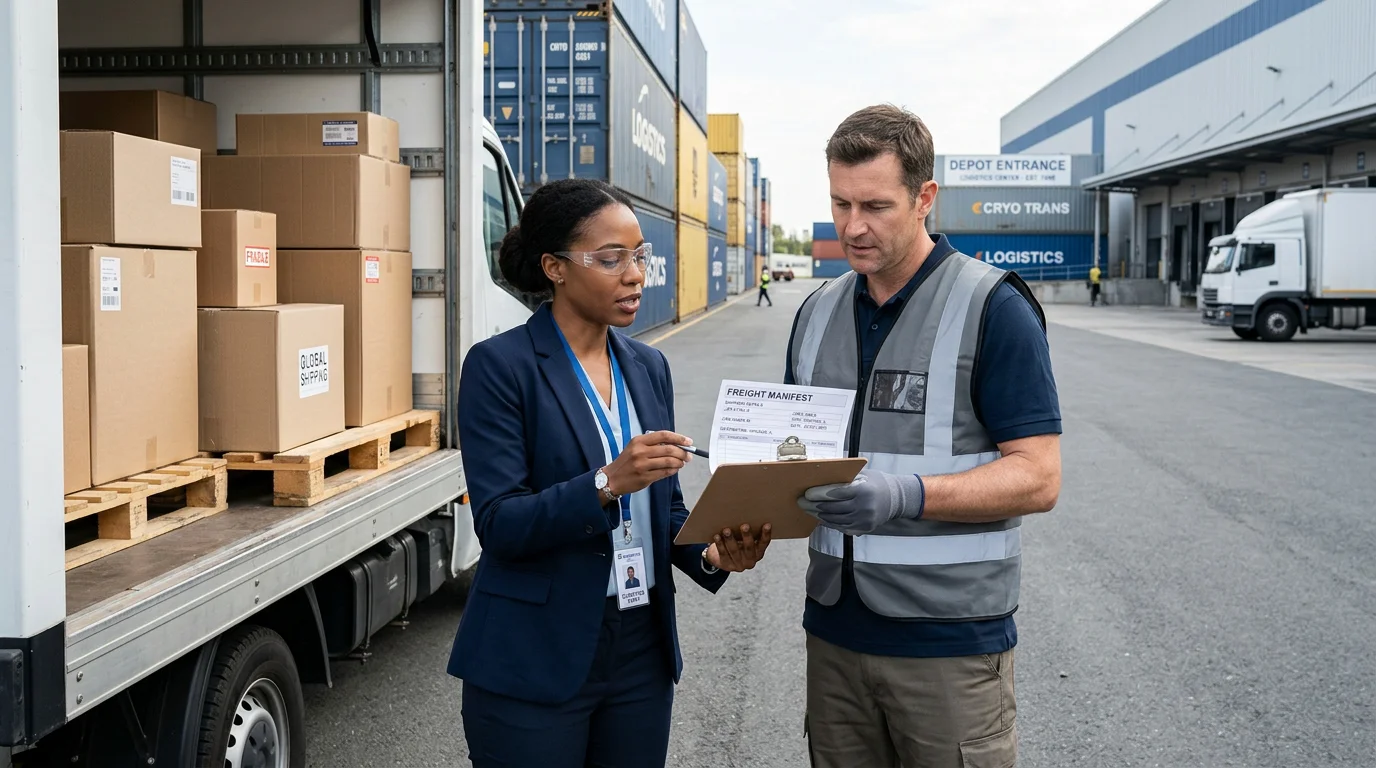
The value of the free carrier rule lies in a clear split of duties. The seller carries responsibility on the origin side up to delivery, while the buyer controls the international leg. The table below summarizes who does what, and where an experienced forwarder can absorb the buyer’s burden.
| Task | Seller | Buyer | With our DDP FBA service |
|---|---|---|---|
| Export packaging and marking | Yes | No | Coordinated at pickup |
| Export clearance and licenses | Yes | No | Handled for you |
| Delivery to named place | Yes | No | Supplier collection included |
| Main carriage and freight | No | Yes | Air, sea or rail options |
| Import duties and taxes | No | Yes | Included under DDP |
| Delivery to final warehouse | No | Yes | Up to the Amazon warehouse |
Trade Finance Global notes that the seller is generally responsible for loading charges, delivery to the port and export duties, though the exact contract can adjust these details even within an FCA transaction. Reading the fine print is not optional.
When risk transfers, and why the point matters
Imagine goods damaged in a warehouse fire the night before pickup versus the night after. Under FCA, that single day decides who absorbs the loss. Risk transfers at the named place, at the exact moment of delivery to the buyer’s carrier, not when the goods reach the destination port. This early cut-off gives the buyer clarity about when insurance responsibility begins.
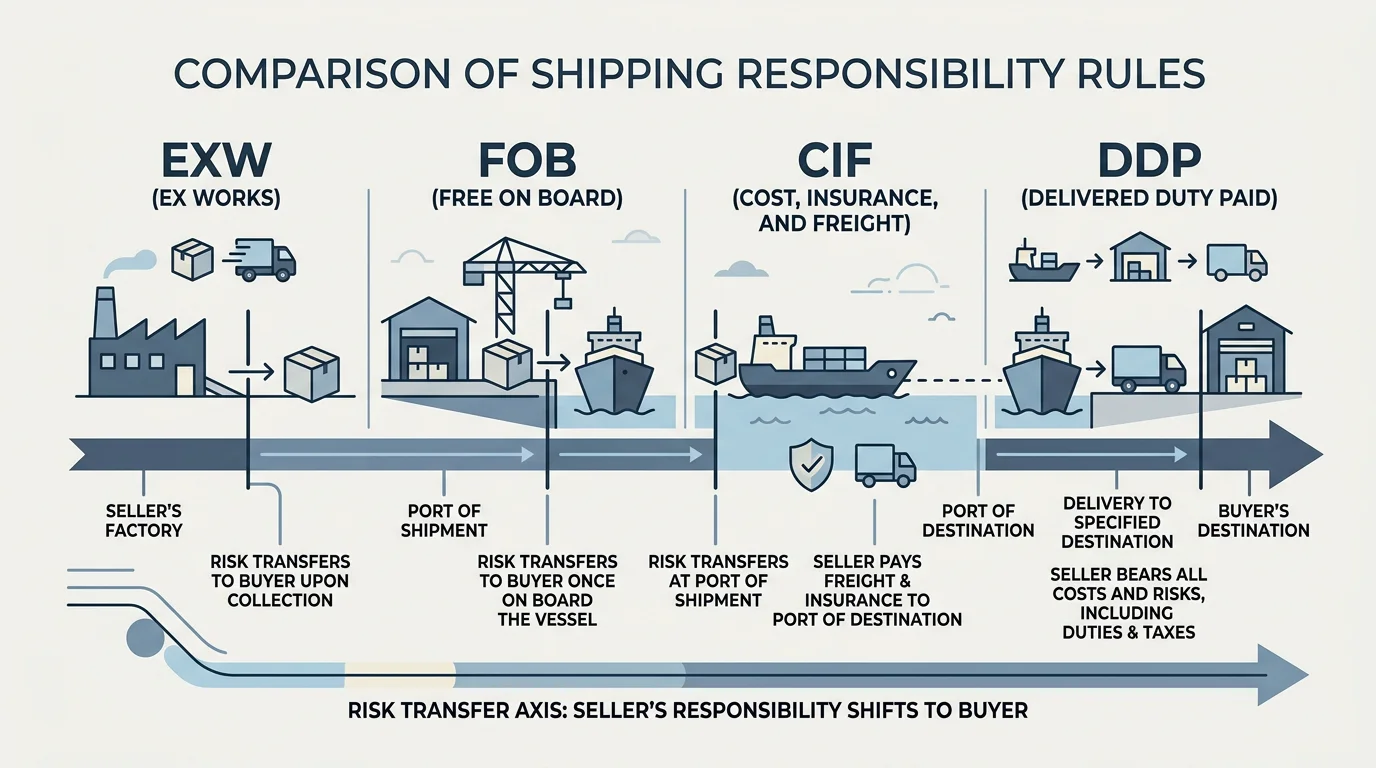
For containerized cargo, this early handover is precisely why the rule is often preferred over FOB. FOB works only for ocean transport and transfers risk once goods are loaded on board the vessel, a point the buyer rarely controls. The Free Carrier rule closes that coverage gap by fixing the transfer at origin, which is a cleaner arrangement for modern multimodal freight.
FCA compared to EXW, FOB and DDP
Choosing an Incoterm is really about choosing how much responsibility you want to hold. FCA is frequently described as a more balanced alternative to Ex Works. Under EXW, the buyer handles export clearance and takes the goods before loading; under FCA, the seller handles export clearance and loads. That difference protects a foreign buyer who is unfamiliar with the seller country’s export procedures.
At the other end of the spectrum sits Delivered Duty Paid, where the seller manages nearly everything, including import duties. Our Incoterms FCA definition resource maps these trade-offs in detail. According to SeaRates, FCA is among the most common rules used in international contracts because it is universal and easy to apply across any transport mode.
The Incoterms 2020 change every seller should know
The most significant update in the latest revision concerns Free Carrier and letters of credit. Historically, sellers using FCA struggled to obtain a bill of lading with an on-board notation, because the carrier hired by the buyer had no obligation toward the seller. That gap could stall payment under a letter of credit.
The ICC explains that FCA now allows the parties to agree that the buyer will instruct the carrier to issue an on-board bill of lading to the seller once goods are loaded, for the seller to then tender to the buyer. One caution remains: the carrier is still not legally compelled to comply, so timing delays can persist. Sellers who rely on documentary credits should confirm this arrangement in writing.
Using FCA for Amazon FBA imports from China
For sellers moving inventory from Chinese suppliers into US fulfillment centers, FCA is a practical starting point. It places export clearance on the supplier side while leaving you in control of the main carriage and final delivery. The challenge is that controlling that leg means managing forwarders, customs and import duties yourself, which is where delays tend to accumulate.
This is the exact handoff we manage. We collect goods at your supplier, arrange the route and clear customs, so the theoretical clarity of the FCA shipping terms becomes a single, tracked shipment. Our breakdown of what FCA covers shows how the rule maps onto a real FBA journey from factory floor to Amazon warehouse.
Making FCA work in practice
The FCA transport terms reward precision. Name the exact place of delivery, confirm who loads and unloads, and settle the bill of lading arrangement before signing. Handled well, Free Carrier gives you an early, predictable risk transfer and full command of the international leg. The rule itself is simple; the discipline lies in the details of your contract and in the strength of the logistics partner who takes the baton once goods leave your supplier.
Take action with QG Horizon
Understanding who owns risk at each step is only useful if the onward journey runs smoothly. If you are importing from China into US Amazon warehouses, you need a partner who turns Incoterm theory into a delivered, tracked shipment without customs surprises.
As a freight forwarder run by Amazon sellers, we collect goods at your supplier, clear customs under DDP with duties and taxes included, and deliver up to the Amazon warehouse. You receive a quote within 24 hours with three route options, real-time tracking and responsive WhatsApp support. Request your free FBA shipping quote and choose the route that fits your budget and timeline.
Frequently Asked Questions
What does FCA mean in shipping?
FCA stands for Free Carrier. The seller clears the goods for export and delivers them to a carrier named by the buyer at an agreed place. Risk and cost then transfer to the buyer, who arranges the main carriage.
Who pays for freight under FCA terms?
The buyer pays for the main carriage and all onward transport once the goods are handed to the nominated carrier. The seller only covers costs up to delivery at the named place, including export clearance and, usually, loading.
Is FCA better than EXW?
FCA places export clearance and loading on the seller, whereas EXW leaves both to the buyer. For a foreign buyer unfamiliar with the seller country’s export rules, FCA generally offers a cleaner and safer arrangement.
Can FCA be used for Amazon FBA shipments?
Yes. FCA suits FBA imports because the supplier handles export clearance while you control the route and final delivery. Our DDP service manages that international leg for you, from supplier collection through customs to the Amazon warehouse.
What changed for FCA in Incoterms 2020?
The main change lets the buyer and seller agree that the buyer will instruct the carrier to issue an on-board bill of lading to the seller. This helps sellers satisfy letter of credit requirements, though carrier compliance is not guaranteed.
Ready to Optimize Your Amazon Shipping?
Get 3 route options tailored to your products and timeline
Get Your Quote→