FOB Delivered Meaning: What It Covers and Why It Matters
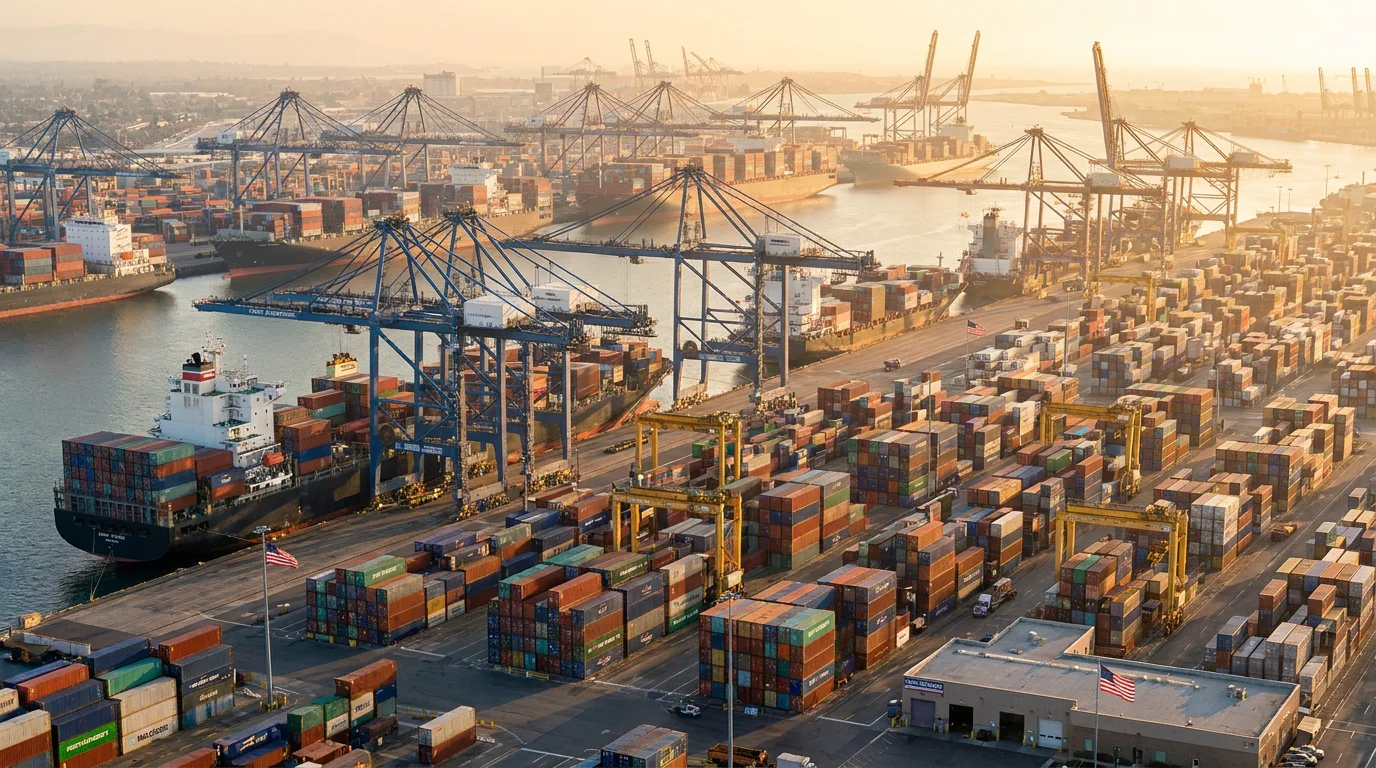
Summary: FOB delivered means the seller retains ownership, liability, and freight cost responsibility until goods reach the buyer’s location.
When a supplier quotes you a price with “FOB delivered” or “FOB destination” terms, a single detail determines who bears the risk if a container is damaged mid-transit: the point where responsibility shifts from seller to buyer. Misunderstanding that point has led US importers to absorb thousands of dollars in losses they never agreed to carry. If you are new to trade terms, our guide on what FOB means in shipping is a solid starting point.
The phrase fob delivered meaning comes up frequently because FOB (Free On Board) is one of the most widely used, yet most often confused, trade terms in both domestic and international commerce. FOB is one of the most misused terms in global trade, precisely because it means different things depending on where and how it is used. This article breaks down exactly what “FOB delivered” covers, how it differs from FOB origin, who pays for what, and how to choose the right term for your next shipment.
What Does FOB Stand For?
FOB stands for Free On Board. It is a term in international commercial law specifying at what point respective obligations, costs, and risk involved in the delivery of goods shift from the seller to the buyer under the Incoterms standard published by the International Chamber of Commerce. In plain terms, FOB answers one essential question: at which physical point does the buyer start bearing the cost and risk of the shipment?
It is worth noting that although FOB has long been stated as “Freight On Board” in sales contract terminology, this should be avoided as it does not precisely conform to the meaning of the acronym as specified in the UCC. The correct expansion is always “Free On Board.”
FOB Delivered (FOB Destination) Explained
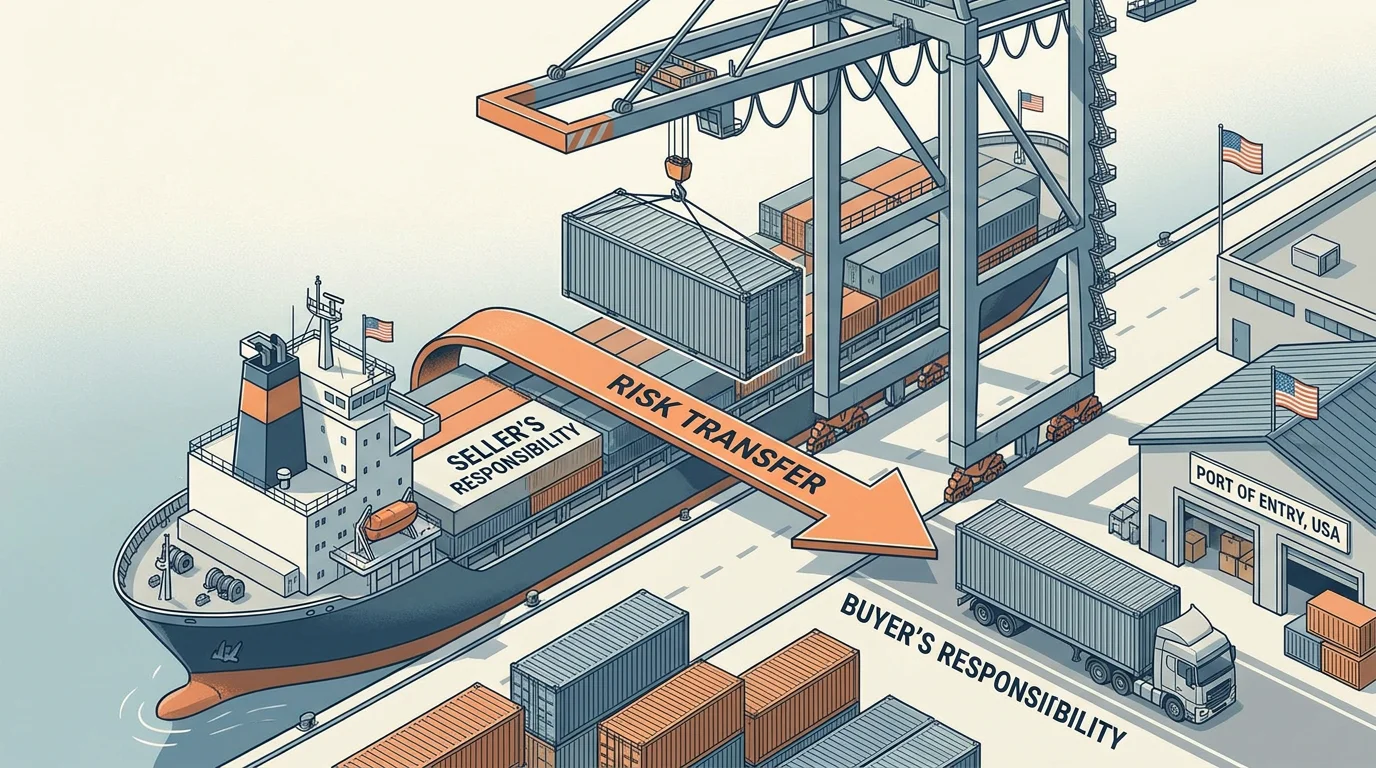
“FOB delivered” is the colloquial way many US businesses refer to FOB destination. Under this arrangement, the seller retains ownership and liability for the goods throughout transit. Risk and ownership pass to the buyer only when the shipment arrives at the destination; the seller bears any loss or damage during transit.
In practical terms, this means:
- The seller arranges and typically pays for freight.
- The seller is responsible for filing insurance claims if goods are lost or damaged before arrival.
- The buyer records the goods as inventory only upon receipt at the designated location.
FOB destination is commonly used when the seller wants to guarantee delivery as part of the sale. For buyers, this is often the more convenient option because it removes the burden of coordinating transportation and absorbing transit risk.
FOB Delivered vs. FOB Origin: Key Differences
The distinction between FOB destination and FOB origin (also called FOB shipping point) is the single most important variable in any FOB agreement. There are two possibilities: “FOB origin” means the transfer occurs as soon as the goods are safely on board the transport, while “FOB destination” means the transfer occurs the moment the goods are removed from the transport at the destination.
| Criteria | FOB Destination (Delivered) | FOB Origin (Shipping Point) |
|---|---|---|
| Risk transfer point | Buyer’s location | Seller’s dock / carrier pickup |
| Who pays freight | Seller (typically) | Buyer (typically) |
| Insurance claims filed by | Seller | Buyer |
| Inventory recorded by buyer | Upon delivery | Upon shipment |
| Best suited for | Buyers wanting turnkey delivery | Buyers wanting logistics control |
| QG Horizon DDP service | Full coverage: freight, duties, taxes included to Amazon warehouse | Not applicable; risk shifts too early for FBA sellers |
For a deeper comparison of how these two models affect your margins, see our breakdown of FOB shipping point vs FOB destination.
Freight Payment Variations Under FOB
The FOB designation alone does not always settle who writes the check for freight. A secondary qualifier, either “freight prepaid” or “freight collect,” determines payment responsibility. These four combinations are standard in US domestic shipping:
- FOB Origin, Freight Collect: the buyer assumes ownership at pickup and pays freight.
- FOB Origin, Freight Prepaid: the buyer assumes ownership at pickup, but the seller pays freight.
- FOB Destination, Freight Collect: the seller retains ownership until delivery, yet the buyer pays freight.
- FOB Destination, Freight Prepaid: the seller retains ownership until delivery and pays freight.
“FOB delivered” most commonly maps to the fourth combination: FOB Destination, Freight Prepaid. This is the arrangement closest to a true “delivered” experience because the seller handles both risk and cost from start to finish.
Domestic US Usage vs. International Incoterms
One of the most frequent sources of confusion is that FOB carries a different legal basis depending on context. In US domestic shipping, FOB refers to where ownership and risk transfer from the seller to the buyer. In international trade, under Incoterms 2020, it means the seller delivers goods on board a vessel at a named port, and risk transfers to the buyer at that point. The two definitions are not interchangeable.
In the United States, FOB terms derive from the Uniform Commercial Code (UCC), the National Motor Freight Classification (NMFC), and industry customs; they are not defined by a single source or authoritative body like Incoterms. According to the International Trade Administration, Incoterms are internationally recognized terms that clarify the tasks, costs, and risks for buyers and sellers in transactions.
For international ocean freight, the Incoterms FOB rule applies strictly to non-containerized sea freight or inland waterway transport. Due to potential confusion with domestic North American usage, it is recommended that the use of Incoterms be explicitly specified, along with the edition of the standard, for example, “FOB New York (Incoterms 2000).”
Why FOB Delivered Matters for Amazon FBA Sellers
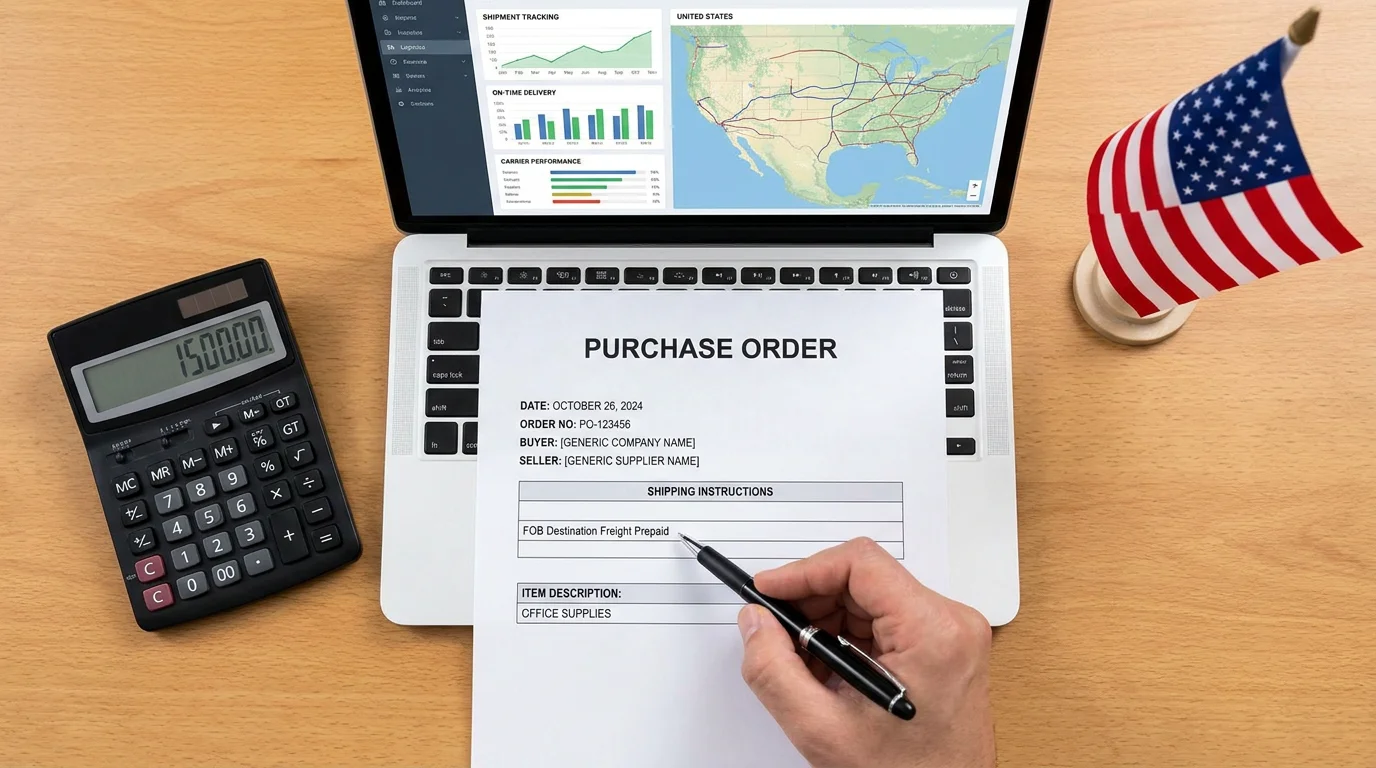
If you sell on Amazon from China, the term you see on a supplier’s proforma invoice shapes your entire landed cost. Under FOB origin, you must independently arrange ocean freight, customs brokerage, duties, and last-mile delivery to the Amazon fulfillment center. Under FOB delivered (destination), the supplier theoretically covers transit risk, but rarely handles US customs clearance or final delivery to an FBA warehouse.
This is where many sellers discover a gap: standard FOB terms, whether origin or destination, do not include duty payment or Amazon-specific labeling compliance. A common mistake is to use FOB Incoterms for containerized goods instead of a rule designed for all transport modes, which exposes the exporter to unnecessary risks. For containerized shipments from China, FCA (Free Carrier), CPT (Carriage Paid To), and CIP (Carriage and Insurance Paid To) are the correct alternatives as they are meant for containerized freight.
For FBA sellers who want true end-to-end coverage (factory pickup through to Amazon warehouse delivery, with duties and taxes included), a DDP (Delivered Duty Paid) arrangement is typically the better fit. You can compare these options in our detailed analysis of FOB vs CIF vs DDP Incoterms.
Accounting Implications of FOB Delivered
The FOB point affects when goods appear on a company’s balance sheet. Under FOB destination (delivered), the buyer does not record the shipment as inventory until it physically arrives. Conversely, the seller cannot recognize revenue until delivery is confirmed. This distinction is especially relevant at period-end or year-end cut-offs.
For US businesses following Generally Accepted Accounting Principles (GAAP), the timing of revenue recognition and inventory valuation hinges on the contractual FOB point. Goods shipped FOB destination on December 30 but arriving on January 3 remain on the seller’s books for the prior fiscal year. Misclassifying the FOB term can lead to misstated financial statements and audit adjustments.
How to Choose the Right FOB Term for Your Shipment
Selecting between FOB delivered and FOB origin depends on three factors: your logistics expertise, your appetite for risk, and your cost structure.
- Choose FOB Destination (Delivered) when you prefer the seller to manage transit risk and freight. This suits buyers who lack in-house logistics teams or who want a simpler purchasing process.
- Choose FOB Origin when you want full control over carrier selection, routing, and insurance. This suits experienced importers who can negotiate better freight rates independently. For more on this model, see our explanation of FOB origin definition.
- Consider DDP or DAP when shipping internationally from China to US Amazon warehouses. These Incoterms go beyond FOB by covering customs clearance and, in DDP’s case, duties and taxes. As noted by Trade Finance Global, the delivery point in the FOB Incoterms 2020 rule is when the goods are delivered on board the vessel by the seller, and this is almost always impossible for the seller to do when the goods are containerized.
If you ship containerized goods from China, the GoFreight Incoterms guide (2026) recommends confirming “who pays” explicitly in every purchase agreement because domestic FOB is not standardized across all US contracts.
Turning FOB Knowledge Into a Cost Advantage
Understanding the meaning of FOB delivered is not merely an academic exercise. It directly influences your landed cost, your insurance exposure, and the accuracy of your financial reporting. For US importers sourcing from China, standard FOB terms often leave critical gaps in customs clearance and last-mile delivery. A DDP arrangement fills those gaps by bundling freight, duties, and taxes into one predictable quote.
We built our service around eliminating exactly those surprises: a single point of contact from factory pickup to Amazon warehouse delivery, with real-time tracking and a quote delivered within 24 hours. To see how this works for your next shipment, explore our DDP vs DAP shipping comparison and request a free quote.
Frequently Asked Questions
Does FOB delivered mean the seller pays all shipping costs?
In most cases, yes. “FOB delivered” typically corresponds to FOB Destination, Freight Prepaid, where the seller covers both transit risk and freight charges until the goods reach the buyer’s location. However, there are variations (such as FOB Destination, Freight Collect) where the buyer still pays freight even though the seller retains risk. Always confirm the full designation in your purchase agreement.
Is FOB delivered the same as DDP?
No. FOB delivered (FOB destination) means the seller covers freight and risk to the buyer’s door, but it does not include customs clearance, import duties, or taxes. DDP (Delivered Duty Paid) goes further by including all of those costs. For Amazon FBA sellers importing from China, our DDP freight forwarding service bundles duties, taxes, and delivery into a single all-inclusive rate.
Can I use FOB terms for containerized international shipments?
Technically, many businesses do. However, the ICC’s Incoterms 2020 guidelines recommend using FCA (Free Carrier) instead of FOB for containerized cargo, because the FOB delivery point (goods loaded on board the vessel) is difficult to verify once a container is sealed. If you are shipping full or partial containers from China, consider FCA or a delivered term like DDP for clearer risk allocation.
Ready to Optimize Your Amazon Shipping?
Get 3 route options tailored to your products and timeline
Get Your Quote→