FOB Delivery Means: What It Is and Why It Matters
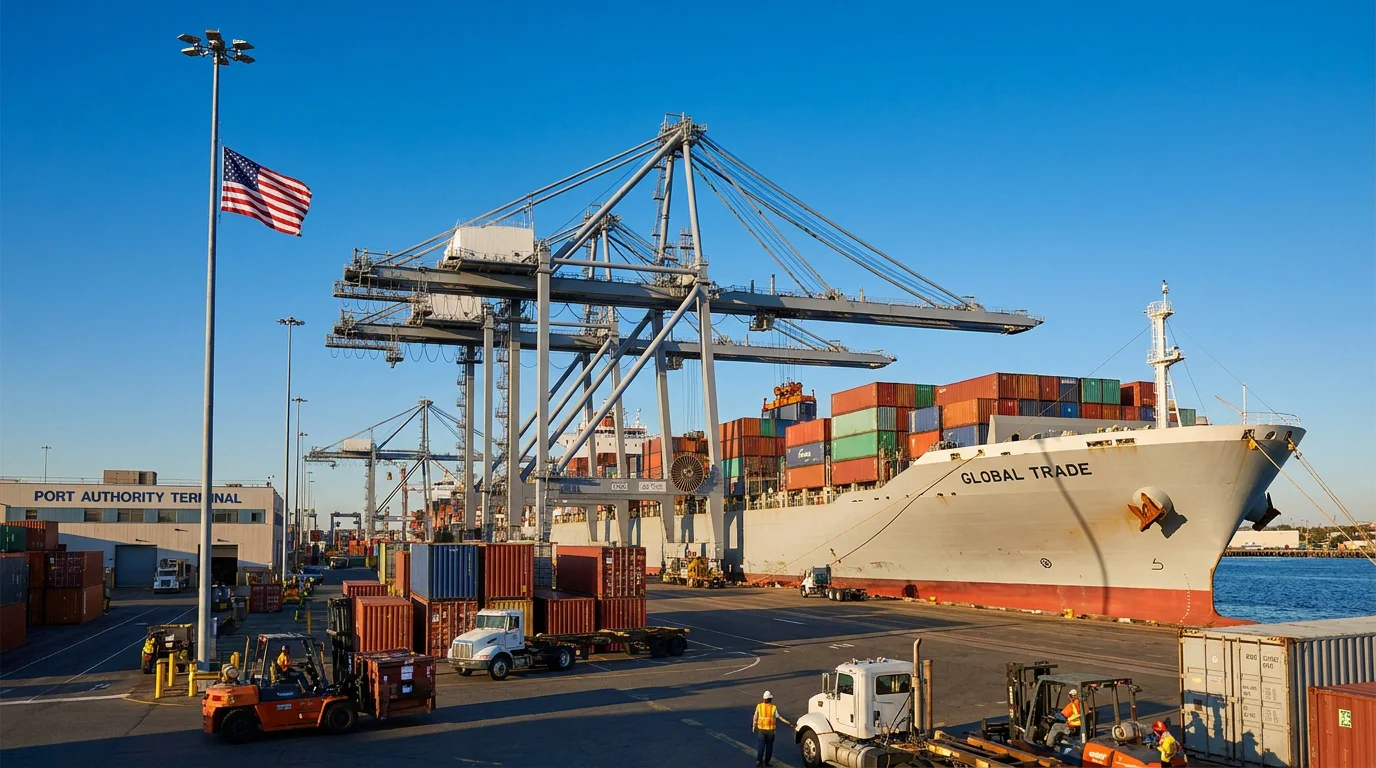
Summary: FOB delivery means the seller fulfills their obligation once goods are loaded on board the vessel; risk and cost then transfer to the buyer at the named port.
Every year, billions of dollars in merchandise move across oceans under a three-letter abbreviation that many importers still misunderstand. If you have ever received a supplier quote stamped “FOB Shenzhen” and wondered exactly what you are paying for, you are not alone. Understanding what FOB delivery means is the first step toward controlling landed costs, avoiding disputes, and protecting inventory while it is in transit. For a broader overview, explore our guide to FOB delivered meaning and how it applies to e-commerce supply chains.
The term FOB, which stands for “Free On Board,” is one of the most widely used Incoterms in global trade. The Incoterms 2020 rules, published by the International Chamber of Commerce (ICC), are grouped into two categories reflecting modes of transport: seven rules for any mode and four exclusively for sea or inland waterway transport. FOB belongs to that second group, and its specific rules determine who bears the cost, risk, and responsibility at each stage of a shipment. This article breaks down how FOB delivery works, who pays for what, and how you can use these terms to your advantage.
What Does FOB Stand For in Shipping?
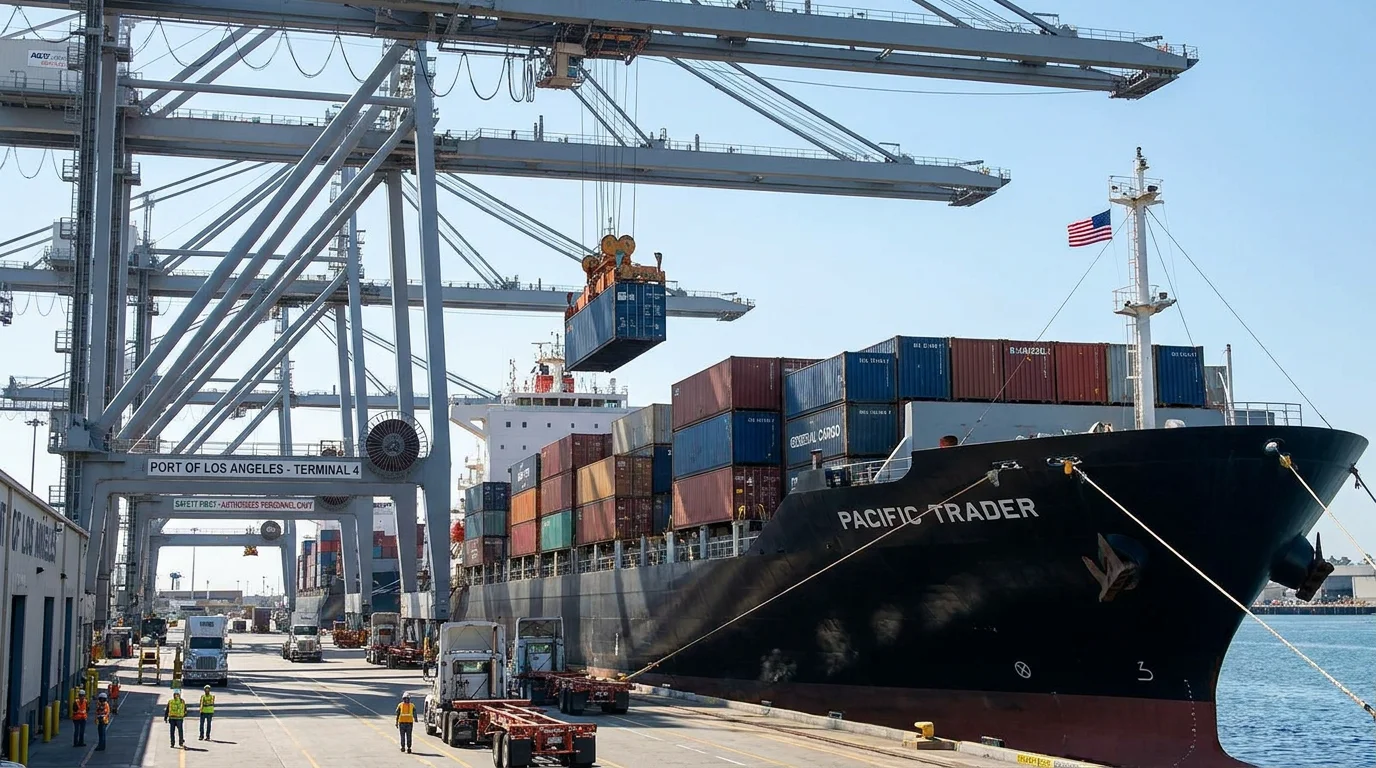
FOB stands for “Free On Board.” Under the Incoterms 2020 framework, it is formally designated as “FOB (insert named port of loading).” The term communicates a precise point in the shipping journey where responsibility shifts from seller to buyer. When a supplier quotes “fob delivery means” or writes “FOB Shanghai” on an invoice, they are stating that their obligations end once the goods are loaded on board the vessel at that port.
The FOB Incoterm is exclusively used for maritime transport or inland waterways. Under FOB, the seller must load the goods on board the vessel designated by the buyer at the agreed port of shipment, and risk transfers to the buyer at that point. It is worth noting that, according to the International Trade Administration (ITA), each Incoterm rule specifies the seller’s obligations for cargo delivery and clarifies when the risk of loss or damage passes from the seller to the buyer.
In the United States, however, FOB also carries a domestic meaning that differs from the international Incoterm. Domestically, “FOB origin” and “FOB destination” are common designations used to set the point at which title and liability transfer, without necessarily referring to a seaport. This dual usage can create confusion, so specifying “Incoterms 2020” in your contracts is essential.
How FOB Delivery Allocates Costs and Risk
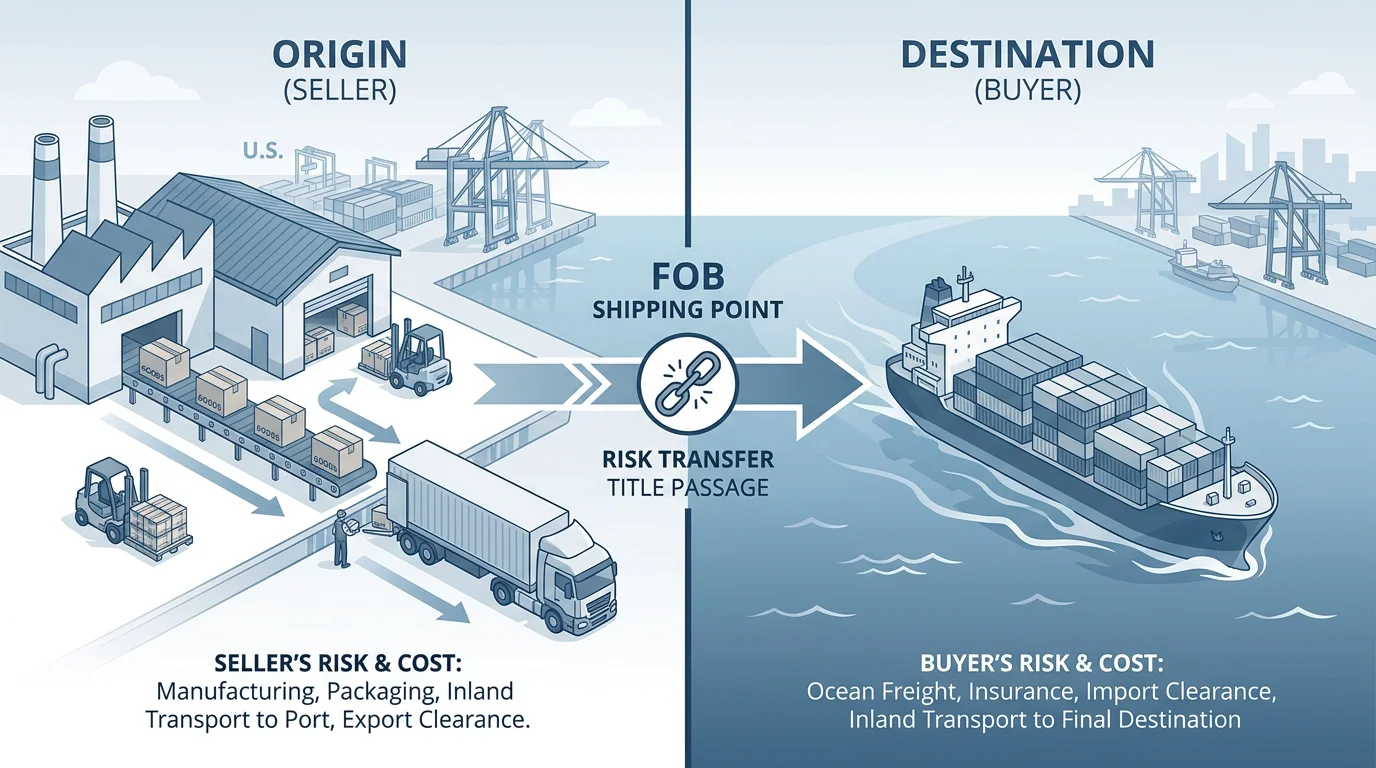
The core value of FOB lies in its clear division of financial and legal responsibilities. Under an FOB agreement, the seller covers all costs up to and including the loading of goods onto the vessel. The buyer then pays the main sea freight and all costs after loading, including insurance, destination port charges, import duties, and inland delivery, while the seller covers inland transport to the port, export clearance, and loading on board.
Here is a simplified breakdown:
| Cost or Responsibility | Seller | Buyer |
|---|---|---|
| Inland transport to port of origin | Yes | No |
| Export customs clearance | Yes | No |
| Loading onto vessel | Yes | No |
| Ocean freight | No | Yes |
| Cargo insurance | No | Yes (recommended) |
| Import duties and customs | No | Yes |
| Inland delivery to final destination | No | Yes |
In a FOB transaction, the buyer needs to nominate the correct type of ship, organize a suitable contract of carriage with the most suitable carrier, and neither party is obliged to insure the goods unless separately agreed in the sales contract. This means that if you are importing goods under FOB terms, arranging marine cargo insurance is strongly recommended even though the Incoterm does not mandate it.
FOB Origin vs. FOB Destination: Key Differences
While the international Incoterms definition of FOB always references a port of loading, North American commercial practice splits the concept into two variations that apply to both domestic and cross-border trade.
- FOB Origin (FOB Shipping Point): The buyer assumes title and risk the moment the carrier picks up the goods. The buyer also typically pays freight charges. This is functionally similar to the international FOB Incoterm.
- FOB Destination: The seller retains title and risk until the goods arrive at the buyer’s location. The seller generally pays freight charges.
For a deeper comparison, see our article on FOB shipping point vs FOB destination and how each option impacts your margins. The distinction matters enormously for accounting purposes as well: goods shipped FOB Origin appear on the buyer’s balance sheet while in transit, whereas goods shipped FOB Destination remain on the seller’s books until delivery is complete.
FOB and the Incoterms 2020 Framework
The concept of FOB shipment terms dates back to 1812, when British courts first established rules indicating who is liable for damage in shipping. Over two centuries later, the ICC codified FOB into its formal Incoterms system. The ninth and current version, Incoterms 2020, was officially released in September 2019 and came into effect on January 1, 2020.
One important update in the 2020 revision concerns containerized cargo. FOB was designed for non-containerized bulk and break-bulk cargo. For containerized shipments, Incoterms guidance usually recommends using FCA, which lets risk transfer at the actual handover point, such as a terminal. According to iContainers, FOB is not recommended for containerized cargo because containers are usually delivered to the terminal days before loading, creating a gray area of responsibility if damage occurs before loading.
Despite this recommendation, many exporters still use FOB for containers because banks issuing Letters of Credit required a Bill of Lading. To resolve this, Incoterms 2020 introduced a provision allowing the buyer to instruct the carrier to issue a transport document with an “on board” notation to the seller. This makes FCA a more viable alternative without sacrificing documentary credit compliance. Understanding this nuance can help you select the right term for your specific shipment type. For additional context, read our explanation of FOB origin definition and how it impacts your risk profile.
FOB vs. Other Common Incoterms
Choosing the right Incoterm depends on your risk tolerance, budget, and supply chain expertise. Below is a concise comparison of FOB against three other terms frequently used by US importers sourcing from overseas suppliers.
| Incoterm | Risk Transfers To Buyer | Seller Pays Freight? | Seller Handles Import Customs? | Best For |
|---|---|---|---|---|
| FOB | When goods loaded on vessel | No | No | Experienced buyers who want freight control |
| EXW | At seller’s premises | No | No | Buyers with local presence near seller |
| CIF | When goods loaded on vessel | Yes (freight + insurance) | No | Buyers wanting a single origin price |
| DDP (via QG Horizon) | At final destination | Yes | Yes | Sellers wanting all-inclusive pricing |
Notice that with DDP, the seller handles everything up to the buyer’s door, including duties and taxes. This is the model we offer through our freight forwarding services, giving you a single known price from factory to Amazon warehouse. For a full breakdown, consult our comparison of FOB vs CIF vs DDP Incoterms to find the best fit for your business.
Practical Tips for US Importers Using FOB Terms
Selecting FOB as your Incoterm gives you greater control over the ocean freight leg, but it also places several obligations squarely on your shoulders. Here are actionable steps to manage them effectively.
- Always specify the port name. Writing “FOB China” is not sufficient. State the exact port, such as “FOB Shenzhen, Incoterms 2020,” so that both parties know precisely where risk transfers.
- Arrange cargo insurance early. Neither buyer nor seller is obliged to insure the goods under FOB unless separately agreed. Do not leave this to chance.
- Vet your freight forwarder. Under FOB, the buyer selects the carrier. A reliable forwarder with tested routes can reduce transit times and avoid costly delays at customs.
- Confirm export clearance responsibilities. The seller is responsible for clearing the goods for export, and the buyer is responsible for the goods from the port onwards. Verify that your supplier handles all origin-side paperwork.
- Review US customs requirements. US-bound ocean freight requires the Importer Security Filing (ISF 10+2), which the ISF importer must submit to US Customs at least 24 hours before loading at the foreign port. Under FOB, the ISF importer is usually the US buyer.
For sellers shipping to Amazon FBA warehouses, FOB offers visibility into freight costs but requires you to coordinate customs, last-mile delivery, and compliance on your own. If that complexity feels overwhelming, working with a specialized freight forwarder who handles the entire chain, from factory pickup to warehouse delivery, can eliminate surprises.
When FOB Delivery May Not Be the Best Choice
FOB is a powerful tool, but it is not always the optimal Incoterm. Since Incoterms 1980 introduced FCA, FOB should only be used for non-containerized seafreight and inland waterway transport. However, FOB is commonly used incorrectly for all modes of transport despite the contractual risks this can introduce. If your goods travel by air or rail, or if they are packed in sealed containers, FCA may offer clearer risk allocation.
Additionally, if you are a small or mid-sized seller with limited logistics expertise, bearing the full weight of ocean freight booking, insurance procurement, customs brokerage, and last-mile coordination can stretch your resources. In such cases, a DDP arrangement, where duties, taxes, and freight are bundled into a single quote, provides predictability. According to IncoDocs, the most commonly used Incoterms are EXW, FCA, FOB, CIF, and DDP, favored due to their clear guidelines and suitability for different modes of transport and shipping scenarios.
We provide DDP solutions specifically designed for Amazon FBA sellers shipping from China. Our single-quote model includes duties and taxes upfront, so you know your total cost before the shipment leaves the factory.
FOB Delivery and Your Bottom Line
Understanding what FOB delivery means is not merely an academic exercise; it directly affects your profit margins, your risk exposure, and the reliability of your supply chain. By choosing FOB terms wisely, specifying the exact port, arranging adequate insurance, and partnering with a knowledgeable freight forwarder, you can retain control over a critical segment of your logistics without absorbing unnecessary cost. FOB has evolved over more than 200 years from its origins in British maritime law into one of the most recognized standards in global trade. Whether you are sourcing goods for resale on Amazon or stocking a warehouse in the US, mastering FOB terms protects your inventory and your investment.
At QG Horizon, we specialize in taking the complexity out of international shipping from China, offering real-time tracking, tested routes, and a single point of contact from factory to fulfillment center. To get a clear picture of your total shipping costs, explore our insights on what FOB means in shipping and request a personalized quote within 24 hours.
Frequently Asked Questions
Does FOB mean the seller pays for shipping?
No. Under FOB terms, the seller pays only for inland transport to the port and loading onto the vessel. Once the goods are on board, the buyer assumes all freight, insurance, and import costs. This is why understanding the FOB point is critical for budgeting.
Is FOB the same in domestic US shipping and international trade?
Not exactly. In international trade, FOB always refers to a named port of loading under the Incoterms 2020 rules published by the ICC. In North American domestic shipping, “FOB origin” and “FOB destination” are used more broadly to indicate where title and liability transfer, regardless of transport mode. Always specify the Incoterms version in your contract to avoid ambiguity.
Can I use FOB for containerized shipments from China?
While many exporters still quote FOB for container cargo, the ICC recommends using FCA instead, because containers are typically handed over at the terminal before loading. If you are an Amazon FBA seller looking for a hassle-free alternative, our DDP freight service from China handles containerized shipments end to end, including customs clearance and delivery to your Amazon warehouse.
Ready to Optimize Your Amazon Shipping?
Get 3 route options tailored to your products and timeline
Get Your Quote→