FOB Freight Explained: Costs, Risks and Terms for 2026
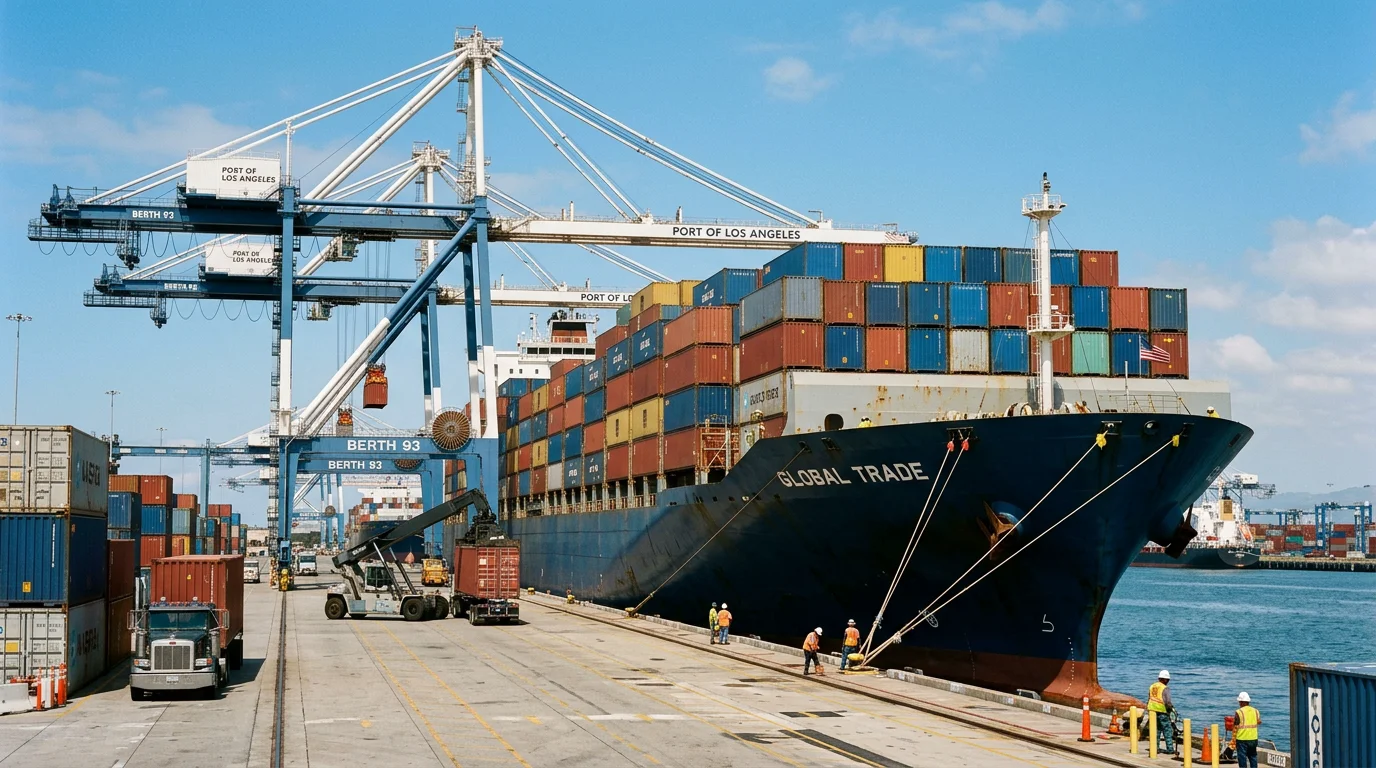
Summary: FOB (Free On Board) is an Incoterms 2020 rule for sea and inland waterway shipping. The seller delivers and loads goods onto the vessel at the named port, and risk passes to the buyer at that moment. From loading, the buyer pays ocean freight, insurance, import duties, and delivery. Choosing FOB correctly protects your margins.
In 2025, the United States imported goods worth roughly 3,438 billion dollars, and the vast majority of that volume crossed an ocean before reaching a warehouse. Behind almost every one of those shipments sits a small set of letters that decides who pays and who carries the risk. If you import from Asia, understanding how FOB freight works is not paperwork trivia; it is margin protection. For a deeper reference on definitions, our guide to FOB freight meaning and terms breaks the vocabulary down step by step.
The stakes are large because the freight environment is anything but stable. According to the BEA, imports of goods rose by 143.2 billion dollars in 2025 alone. When volumes and rates move this fast, the party responsible for transport under your contract can gain or lose real money on a single container.
What FOB Means in Freight Shipping
You will encounter the phrase fob freight on supplier quotes, purchase orders, and bills of lading. FOB stands for Free On Board, one of the eleven Incoterms rules published by the International Chamber of Commerce. Under this rule, the seller clears the goods for export and loads them onto the vessel that you have nominated at the named port of loading. Once the goods are on board, responsibility becomes yours.
The critical concept is the risk transfer point. Before loading, the seller carries the risk of loss or damage. After loading, you carry it for the entire ocean transit. This single line in your contract determines who files an insurance claim if a container is damaged at sea, so it deserves careful attention rather than a quick signature.
One point is frequently misread. FOB applies to sea and inland waterway transport only. It was designed for cargo loaded across the side of a ship, so it does not suit air, road, or rail movements. When your goods travel by another mode, a different Incoterm is the correct choice.
Who Pays What, and When Risk Transfers
The clearest way to read any FOB quote is to split the journey at the vessel. Everything up to and including loading belongs to the seller. Everything after loading belongs to you as the buyer. The table below sets out the standard division of duties under Incoterms 2020.
| Responsibility | Seller | Buyer |
|---|---|---|
| Goods, invoice, export packaging | Yes | No |
| Export licenses and customs clearance | Yes | No |
| Delivery and loading onto the vessel | Yes | No |
| Ocean freight and marine insurance | No | Yes |
| Import duties and destination delivery | No | Yes |
This division explains why many importers prefer FOB. Because you arrange the main carriage, you keep control of the forwarder, the routing, and the price of ocean freight. That control can be valuable, but it also means the coordination burden shifts onto you the moment the container leaves the ship’s side at origin.
FOB Shipping Point vs FOB Destination
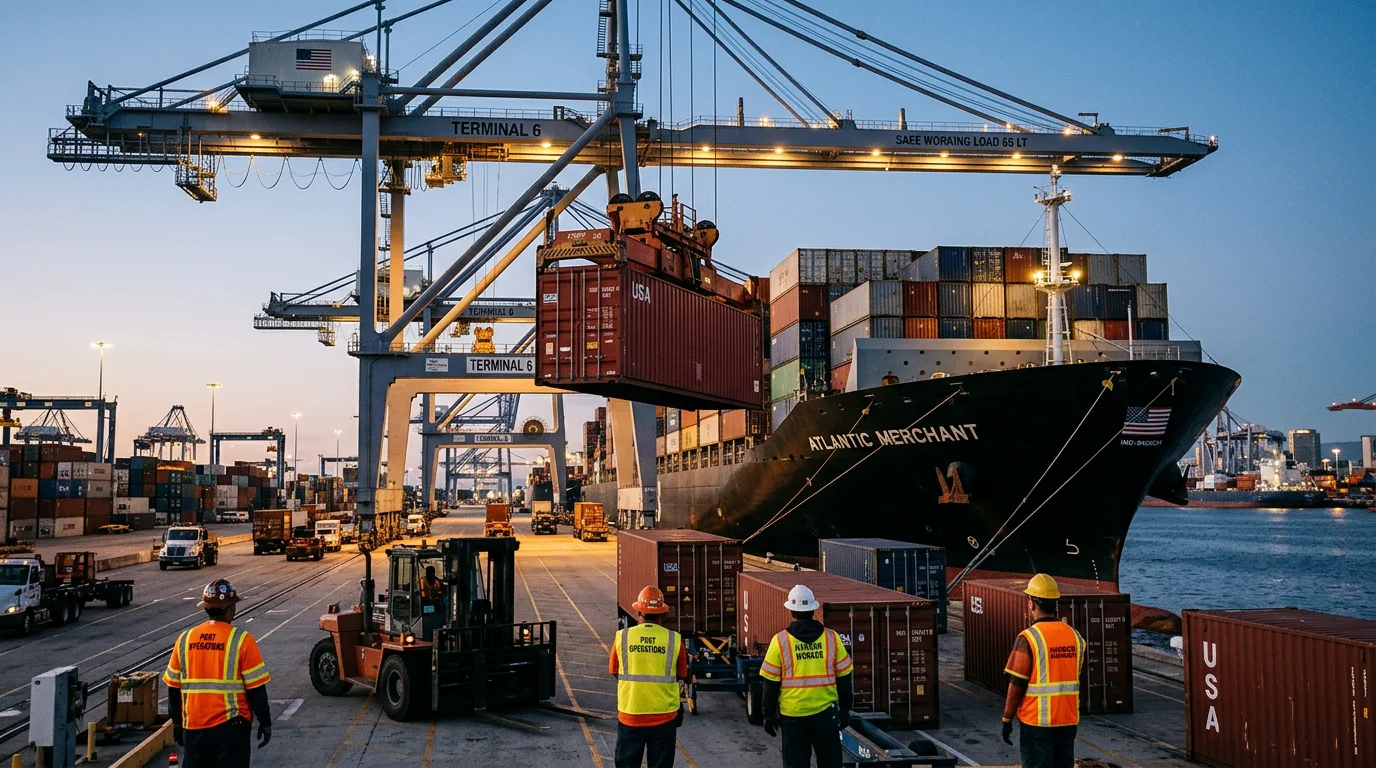
North American contracts add a wrinkle that confuses many first time importers. Domestic US usage of FOB is not identical to the international Incoterms definition. Here, the term describes where liability for the goods passes from seller to buyer during inland movement.
Under FOB shipping point, the sale is treated as complete at the seller’s dock, so you assume risk and freight costs as soon as the carrier collects the goods. Under FOB destination, the seller retains responsibility until the goods arrive at your location. The difference affects insurance, accounting, and who absorbs a loss in transit. For a practical walkthrough aimed at sellers, our comparison of FOB shipping point vs FOB destination shows how each choice touches your bottom line.
Because the same three letters carry two meanings, you should always specify the standard you are using. Writing “FOB Ningbo (Incoterms 2020)” removes ambiguity that a domestic reader might otherwise import from US practice.
FOB Compared With CIF, FCA, and EXW
FOB rarely travels alone on a quote sheet. Suppliers often present it beside CIF, CFR, FCA, or EXW, and the right pick depends on how much of the journey you want to manage. The comparison below focuses on the two variables that matter most: who arranges the main carriage and where risk transfers.
| Incoterm | Main carriage arranged by | Risk passes to buyer at |
|---|---|---|
| EXW | Buyer | Seller’s premises |
| FCA | Buyer | Named place or carrier at origin |
| FOB | Buyer | On board the vessel at origin port |
| CIF | Seller | On board the vessel at origin port |
Notice that FOB and CIF share the same risk transfer point, yet CIF asks the seller to buy the freight and minimum insurance. FOB gives you control; CIF gives you convenience at a price you cannot easily audit. For containerized cargo loaded at a factory, many forwarders now recommend FCA, because risk under FOB stays with the seller until the box reaches the port even though you already control the container.
The Hidden Costs Behind an FOB Price
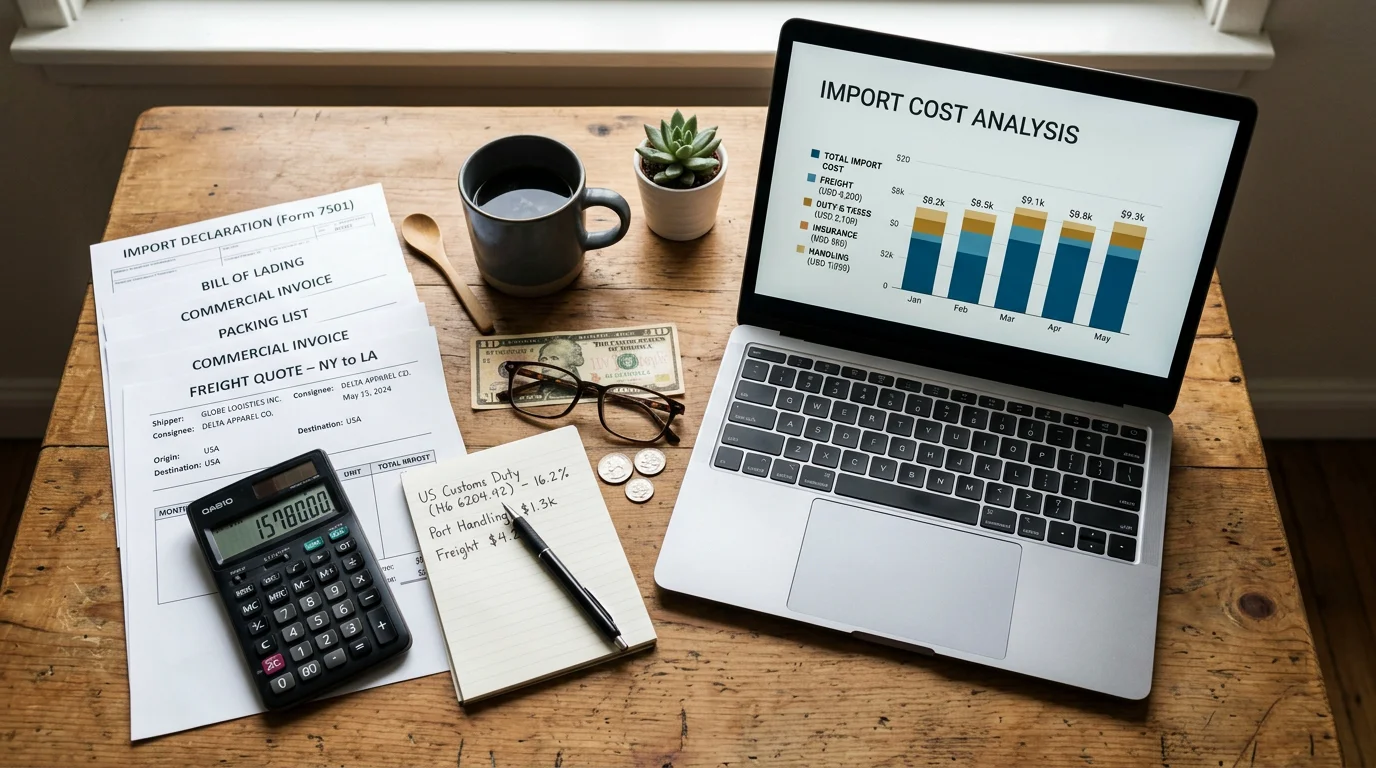
An FOB price is not your total cost, and treating it as one is a common way to erode a margin. The number your supplier quotes covers the goods up to loading at the named port. Your true landed cost adds ocean freight, insurance, import duties, terminal handling, and final delivery on top of that figure.
Freight itself has become a moving target. UNCTAD data notes that around 80 percent of world merchandise trade by volume moves by sea, which keeps ocean capacity and pricing sensitive to disruption. When rates swing, an attractive FOB unit price can be swallowed whole by the transport bill you are responsible for. Our breakdown of the hidden costs behind FOB pricing details the line items that surprise Amazon FBA sellers most often.
Looking ahead, the pressure is unlikely to disappear. UNCTAD projects that seaborne trade volumes will grow at an average annual rate of about 2 percent between 2026 and 2030. Steady demand against volatile routing means you should budget your post loading costs with a margin for surprises, not a best case number.
Negotiating Stronger FOB Terms With Your Supplier
Because FOB hands you the main carriage, the terms you negotiate at origin directly shape your risk. Ask your supplier to confirm export clearance, terminal handling charges at the port of loading, and the exact named port before you accept a quote. Small ambiguities at origin become expensive claims at destination.
Related party relationships make this discipline even more valuable. Census Bureau figures show that related party trade accounted for 42.8 percent of total US goods trade in 2025, which means many importers negotiate with connected suppliers where clear terms prevent internal disputes. When you want a structured approach, our tips to negotiate better FOB terms give you a checklist to bring to the table.
Above all, insist that the contract states the Incoterms edition and the full port name. A precise term today prevents the “who was responsible” argument that surfaces only after a container is damaged or delayed.
The Most Common FOB Mistake in 2026
The single most frequent error is applying FOB to a container loaded at the seller’s factory. Under FOB, the seller carries risk until the box is on board at the origin port. In practice, however, you often control that container from the factory gate onward, which creates a gap where nobody clearly holds the risk.
For factory loaded, containerized cargo, FCA is the cleaner fit, because risk transfers when the goods are handed to the carrier at the named origin point. Reserving FOB for genuinely non containerized or bulk cargo keeps your contracts aligned with how the goods actually move. This distinction is small on paper and large in a claims dispute, so it is worth confirming with your forwarder before you commit.
When you would rather delegate this judgment entirely, we handle collection at your supplier and delivery all the way to the Amazon warehouse under DDP, with duties and taxes included in one all inclusive price.
Turning FOB Knowledge Into Margin
Understanding how FOB freight works comes down to one habit: read every quote at the vessel line. The seller loads and clears for export; you own the ocean freight, insurance, duties, and final delivery from that point. Confirm the named port, state the Incoterms edition, and calculate landed cost rather than trusting the unit price alone. When the cargo is a factory loaded container, weigh FCA against FOB before you sign. Applied consistently, these checks convert a confusing acronym into a reliable lever for protecting your margins on every shipment.
Take action with QG Horizon
Reading FOB terms correctly is the first step; executing the shipment without customs delays is the harder one. If you sell on Amazon FBA and ship from China, you need a single partner who can turn a supplier quote into a warehouse delivery without surprises along the way.
We are Amazon sellers ourselves, with a team based in Shenzhen, and we manage collection at your supplier through to delivery at the Amazon warehouse. You receive a quote within 24 hours with three route options, DDP clearance with duties and taxes included, real time tracking, and responsive WhatsApp support seven days a week. Explore our Amazon FBA freight service to move your next shipment with confidence.
Frequently Asked Questions
Does FOB mean the seller pays for shipping?
No. Under FOB, the seller pays only to deliver and load the goods onto the vessel at the origin port. You, as the buyer, pay for ocean freight, insurance, import duties, and delivery to the final destination.
When does risk transfer under FOB terms?
Risk transfers the moment the goods are loaded on board the vessel at the named port of loading. Before that point the seller is responsible; after it, any loss or damage during ocean transit is yours to manage.
Can FOB be used for air or courier shipments?
No. FOB applies only to sea and inland waterway transport under Incoterms 2020. For air, road, or rail movements, and often for factory loaded containers, FCA is the more suitable term.
What is the difference between FOB price and landed cost?
The FOB price covers your goods up to loading at the named port. Your landed cost adds ocean freight, insurance, duties, terminal charges, and final delivery, and it is the figure you should use to set your retail price.
How can QG Horizon help me manage FOB shipments to Amazon?
We collect goods at your supplier and deliver them to the Amazon warehouse under DDP, so duties and taxes are included in one price. You also receive a 24 hour quote with three route options and real time tracking throughout transit.
Ready to Optimize Your Amazon Shipping?
Get 3 route options tailored to your products and timeline
Get Your Quote→