FOB in Logistics: Meaning, Costs, and Risk Transfer

Summary: International FOB means the seller delivers goods aboard a vessel at a named port, where delivery and transit risk pass to the buyer. The buyer generally arranges main carriage, while ownership remains a separate contract question. U.S. domestic “FOB shipping point” and “FOB destination” language can follow a different framework, so specify the applicable term, location, and contract version.
A quote marked FOB can seem decisive until loss, a loading delay, or an unexpected freight bill raises a harder question: which FOB meaning governs? For a starting definition, our FOB Incoterm meaning page explains the international trade term. The phrase FOB in logistics matters because the named delivery point divides responsibilities, not merely the quoted price.
Under Incoterms 2020, FOB applies to sea and inland waterway transport, while U.S. domestic documents can use similar wording differently. The distinction affects who books freight, when transit risk moves, and whether the seller’s price includes delivery beyond the port. A precise term is especially important for importers forecasting landed costs or coordinating goods from overseas suppliers.
What does FOB mean under Incoterms 2020?
In international trade, FOB means “Free On Board.” The seller delivers when goods are loaded on the vessel nominated by the buyer at the named port of shipment. At that point, delivery is complete and transit risk passes to the buyer.
The buyer generally arranges and pays for main carriage from the port of shipment, along with import clearance and onward delivery. The seller handles export clearance and the costs required to deliver goods on board. Insurance is not required by the FOB rule, although a buyer carrying transit risk may choose to arrange cargo cover.
As of October 2, 2026, the ICC identifies Incoterms 2020 as its current published edition, with 11 standardized rules. You can consult the ICC Incoterms 2020 page for the rules and selection guidance. FOB is for sea and inland waterway transport, not a general-purpose term for every shipping mode.
FOB allocates delivery obligations, costs, and risk; it does not itself determine when legal ownership transfers or when the buyer must pay. Those matters belong in the sale contract and its governing terms. For a plain-language explanation of the shipping usage, see our page on what FOB means in shipping.
How does FOB allocate delivery, risk, and freight costs?
Suppose a U.S. buyer purchases goods from a supplier overseas under “FOB Port of Shanghai, Incoterms 2020.” The supplier must deliver the goods on board the vessel at that named port. The buyer carries the risk from that delivery point, even while the cargo is still traveling across the ocean.
This distinction matters because risk transfer and payment for carriage are related but separate responsibilities. Under FOB, the buyer generally contracts and pays for the main sea transport. If goods are damaged after loading, the buyer bears the risk under the Incoterm, subject to any separate obligations or remedies in the sale and carriage contracts.
For a usable estimate, look beyond the supplier’s quoted FOB price. Add the buyer’s expected freight, insurance if desired, destination handling, customs charges, duties, and delivery to the final location. This broader view of landed cost makes it easier to compare offers on the same basis.
Do not assume that FOB settles every charge at the origin port. State who pays for loading, terminal handling, documents, and any other agreed costs. A clear breakdown reduces the chance that buyer and seller interpret a port charge differently.
What does FOB mean in U.S. domestic shipping?
In U.S. domestic commercial documents, you may encounter “FOB shipping point” and “FOB destination.” These labels generally distinguish a handoff at the seller’s shipping point from delivery at the buyer’s named destination. Their effect depends on the specific contract and applicable law, so do not assume they have the same meaning as FOB under Incoterms 2020.
For example, federal procurement rules define specific U.S. government delivery terms. The Federal Acquisition Regulation describes FOB destination in terms of delivery to a specified destination point, with delivery costs assigned to the contractor. That government framework illustrates why context matters, but it should not be treated as a universal definition for every private sale.
In international contracts, write the rule and its version rather than relying on “FOB” alone. In domestic transactions, state the intended handoff point and who carries transit responsibility. Explicit wording helps prevent confusion between separate trade and contract frameworks.
Why can FOB create confusion for container shipments?
Containerized cargo can be handed to a carrier at a terminal before it is loaded onto a vessel. That physical handoff may happen well before the on-board delivery point required by FOB. The buyer and seller should therefore check whether the chosen rule matches the actual movement of the goods.
In 2024 guidance drawing on a 2023 worldwide survey, the ICC highlighted the mismatch that can arise when traditional sea terms are used for containers. Its ICC container guidance identifies FCA or CPT as rules that can better match container handoffs through ports. The appropriate choice still depends on the agreed carriage arrangement and precise delivery point.
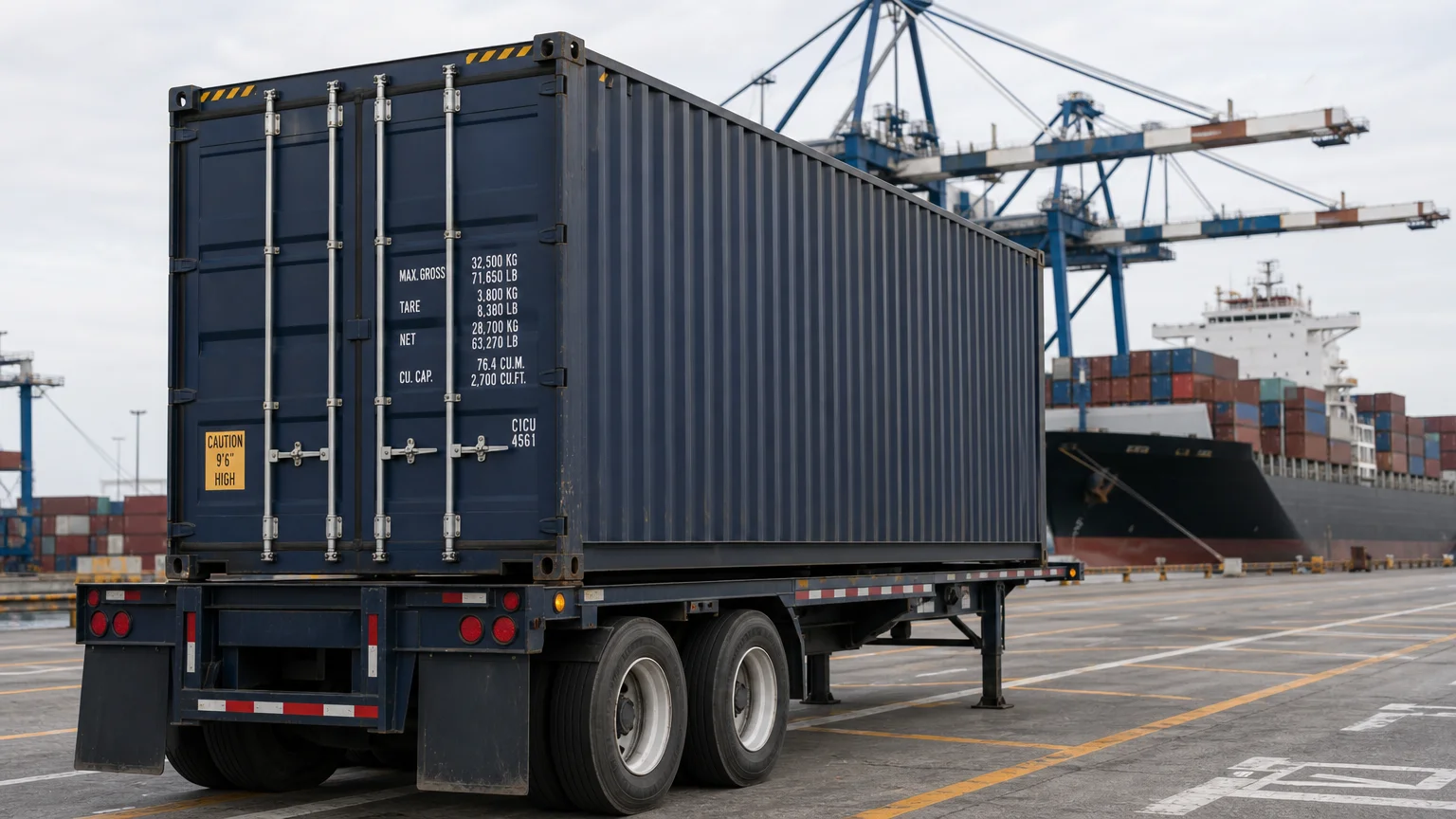
This does not mean that FOB is automatically wrong for every container movement. It means you should identify exactly when the seller hands the goods to the carrier and when the contract says delivery occurs. If those events differ, consider whether a rule designed for delivery to a carrier better reflects the real handoff.
How can you write clearer FOB shipping terms?
Before accepting an FOB quote, check whether it identifies the applicable trade framework, named port, version, and agreed delivery point. Then compare those details with the physical shipment plan. Our advice on how to negotiate better FOB terms can help you prepare questions for your supplier.
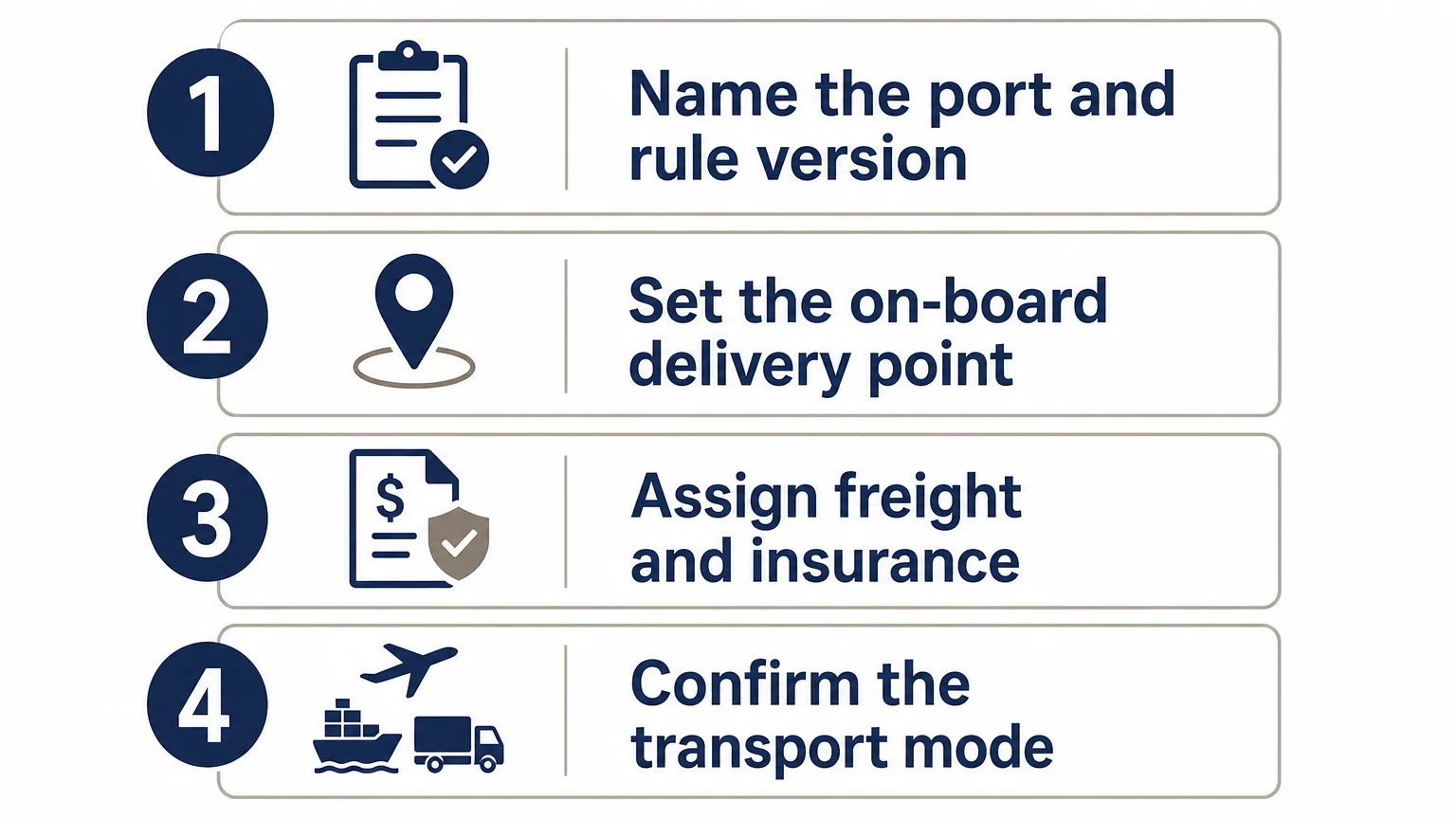
Use these checks when reviewing a quote or purchase order:
- Name the place: Identify the port of shipment and, where useful, the loading point.
- State the edition: Specify Incoterms 2020 or the domestic contract framework you intend to use.
- Define the handoff: Confirm what event completes delivery and transfers transit risk.
- Allocate charges: Record who pays for export handling, loading, main carriage, insurance, import clearance, and final delivery.
- Match the mode: Check that the selected rule fits the actual sea, inland waterway, container, air, or multimodal movement.
Ask the supplier to confirm the shipment plan and charges in writing. Where container cargo is handed to a carrier before vessel loading, examine whether the agreed delivery point fits that sequence. Clear documentation helps each party understand its obligations before goods move.
Should you choose FOB or a door-to-door arrangement?
FOB may suit a buyer who wants to select the main ocean carrier and already has the capacity to coordinate destination clearance and delivery. It also leaves the buyer responsible for important shipment stages after the goods are loaded. Compare that structure with FOB vs. CIF vs. DDP when reviewing alternatives.
For sellers shipping from China to Amazon warehouses, our freight-forwarding service coordinates supplier pickup, international transport, export declaration, destination customs clearance, duties under DDP, door-to-door delivery, and shipment tracking. We operate from Shenzhen, and our team grew from an Amazon private-label selling operation. We have tested dozens of routes and provide three route options with estimated timelines within 24 hours after receiving shipment information.
Our DDP service is a freight arrangement, not a replacement for clear sale-contract terms. The quote is shipment-specific and presented as all-inclusive for DDP. The standard Chinese export declaration is included; an additional fee applies when a declaration is made under the supplier’s name for a Chinese export tax refund.
Set the delivery point before booking
FOB can make the seller’s and buyer’s responsibilities clearer, but only when the parties agree on the right framework, named place, transport mode, and delivery event. Confirm which costs sit outside the goods price, distinguish risk transfer from ownership, and check that the written term matches the real shipment handoff. A clearly defined FOB delivery point gives both parties a more reliable basis for planning freight and managing exposure.
Plan Your Shipment from China With Confidence
If you want to coordinate freight, customs, and delivery rather than manage each stage separately, we can help assess a route around your destination, shipment dimensions, and timing. From Shenzhen, we specialize in B2B freight forwarding for Amazon FBA sellers shipping from Chinese suppliers to Amazon warehouses worldwide.
We coordinate supplier pickup, air, fast-boat, ocean, or rail freight, Chinese export declaration, destination customs clearance, DDP duties, door-to-door delivery, tracking, and shipment support. Review our freight forwarding services to request route options. Quotes depend on shipment details and destination. DDP quotes are all-inclusive, with an additional fee when the export declaration is made under the supplier’s name for a Chinese export tax refund.
Frequently Asked Questions
Does FOB transfer ownership of the goods?
No. Incoterms allocate delivery responsibilities, costs, and risk, but do not determine legal title. Your sale contract and applicable law address ownership transfer.
Who pays for ocean freight under FOB?
The buyer generally arranges and pays for main carriage from the named port of shipment. The seller is responsible for delivering the goods on board and completing export clearance.
Can you use FOB for air freight?
FOB under Incoterms 2020 is for sea and inland waterway transport, not air freight. Consider a rule designed for any mode of transport and specify the actual handoff point.
Does FOB require either party to buy cargo insurance?
FOB does not require either party to obtain insurance under the rule. Because the buyer carries transit risk after on-board delivery, the buyer may choose to arrange suitable coverage.
How does QG Horizon’s DDP service differ from FOB?
FOB places post-loading freight and transit risk on the buyer under the international rule. We coordinate DDP shipping from China to Amazon warehouses, including destination customs, duties, door-to-door delivery, and shipment tracking.
Ready to Optimize Your Amazon Shipping?
Get 3 route options tailored to your products and timeline
Get Your Quote→