FOB Incoterm Meaning: Costs, Risks, and Buyer Duties
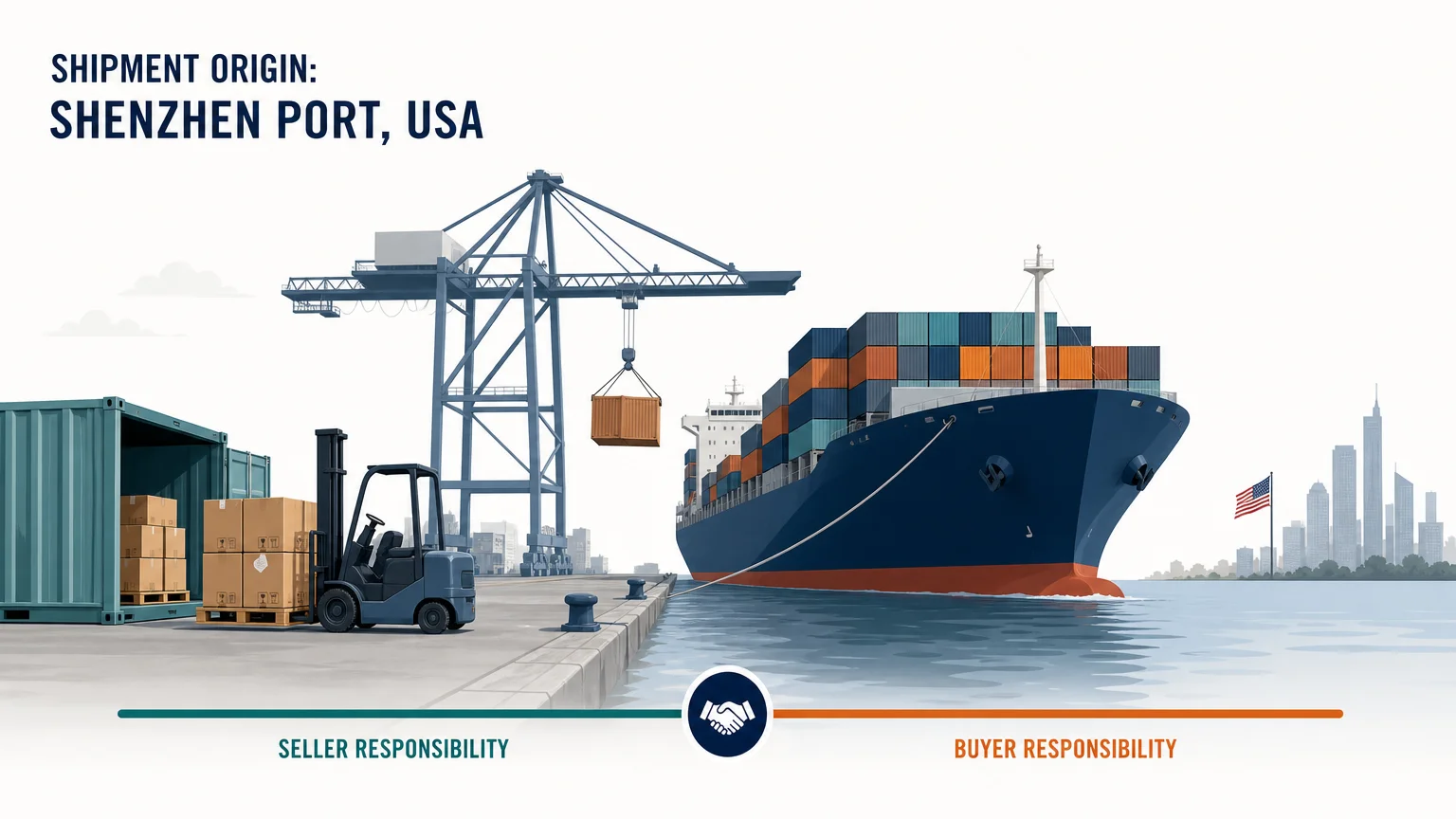
Summary: FOB means Free On Board. The seller clears the goods for export, transports them to the named port, and loads them onto the buyer’s vessel. Risk and most costs transfer to the buyer once the goods are on board. The buyer then arranges main freight, insurance if desired, import clearance, duties, and onward delivery.
If you searched for fob incoterm meaning, the practical answer is that FOB divides responsibility at the origin port. The seller gets the goods onto the nominated vessel, while the buyer takes control after loading. For a concise explanation, you can also consult our FOB Incoterm guide.
That division sounds simple, but the details affect freight bills, cargo insurance, customs work, and delivery to an Amazon warehouse. FOB is also frequently confused with United States domestic terms such as FOB shipping point and FOB destination. Understanding the difference helps you choose the right contract wording before your supplier releases the goods.
What does FOB mean in shipping?
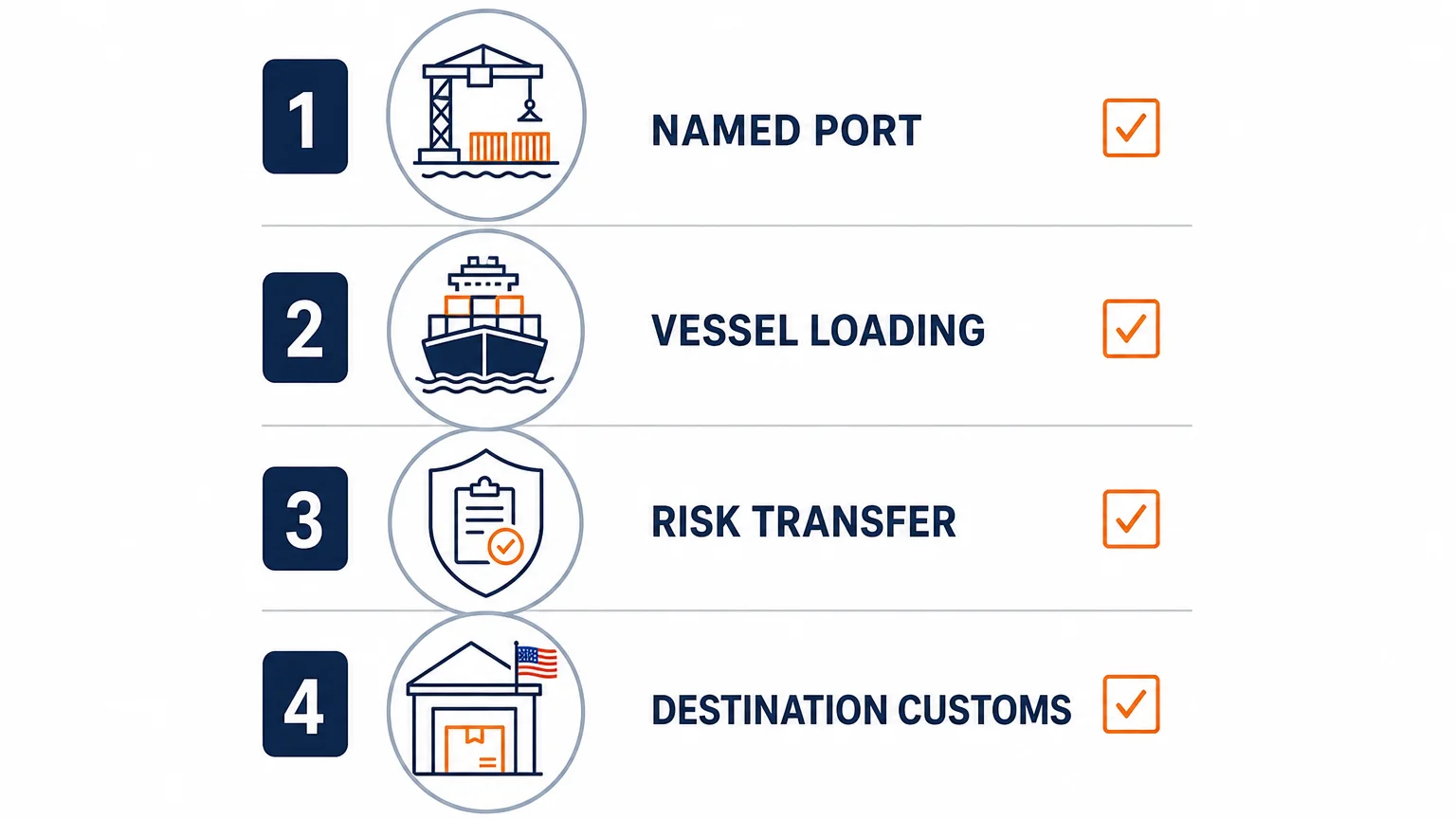
FOB stands for Free On Board. Under the international rule, the seller delivers the goods loaded onto the vessel nominated by the buyer at the agreed port of shipment. The risk transfer point is the moment the goods are on board.
FOB applies only to sea and inland waterway transport. The UN trade definition also limits FOB to these transport modes. Therefore, FOB is not the correct international rule for air freight, road transport, rail freight, or a multimodal shipment that only includes a sea leg.
The named location should identify the port where loading takes place. A contract might state “FOB Shanghai, Incoterms 2020,” for example. The named port is not the final delivery address, and FOB does not mean that the seller delivers the goods to the buyer’s warehouse.
FOB also does not determine ownership by itself. The sales contract and applicable law determine when title passes. FOB primarily defines delivery, cost allocation, customs obligations, and the transfer of risk between the parties.
Who pays what under FOB?
Imagine a supplier in China selling goods to a US importer under FOB Ningbo. The seller’s responsibility continues through export preparation, transport to Ningbo, and loading onto the vessel. Once loading is complete, the buyer manages the remaining journey.
The seller’s responsibilities
- Provide the goods and the commercial invoice required by the sales contract.
- Package and mark the goods appropriately for export and transport.
- Arrange inland transport to the named port of shipment.
- Complete Chinese export clearance and related export formalities.
- Pay the agreed origin costs required to load the goods onto the vessel.
- Provide proof that delivery has occurred, such as an agreed transport document.
The buyer’s responsibilities
- Nominate the vessel and provide the seller with the required loading details.
- Arrange and pay for the main carriage from the origin port.
- Carry the risk of loss or damage after the goods are loaded.
- Arrange cargo insurance if protection is required.
- Complete import customs clearance and pay duties, taxes, and related charges.
- Pay destination port handling, inland transport, and final delivery costs.
FOB does not require either party to purchase insurance. However, the buyer normally evaluates insurance because the buyer carries the risk during the main international journey. Without suitable coverage, a loss after loading can become the buyer’s financial responsibility.
Why does FOB popularity not prove it fits your shipment?
FOB appears frequently in international trade, but its popularity does not make it suitable for every cargo type. A 2026 transaction study examined 230,781 Colombian export transactions recorded in 2023. FOB represented 48.9% of transactions and 56.8% of export value in that dataset.
Those figures describe Colombian trade, not the US market. They nevertheless show why buyers and sellers encounter FOB so often during negotiations. A commonly used term can still create problems when the physical handover does not match the rule.
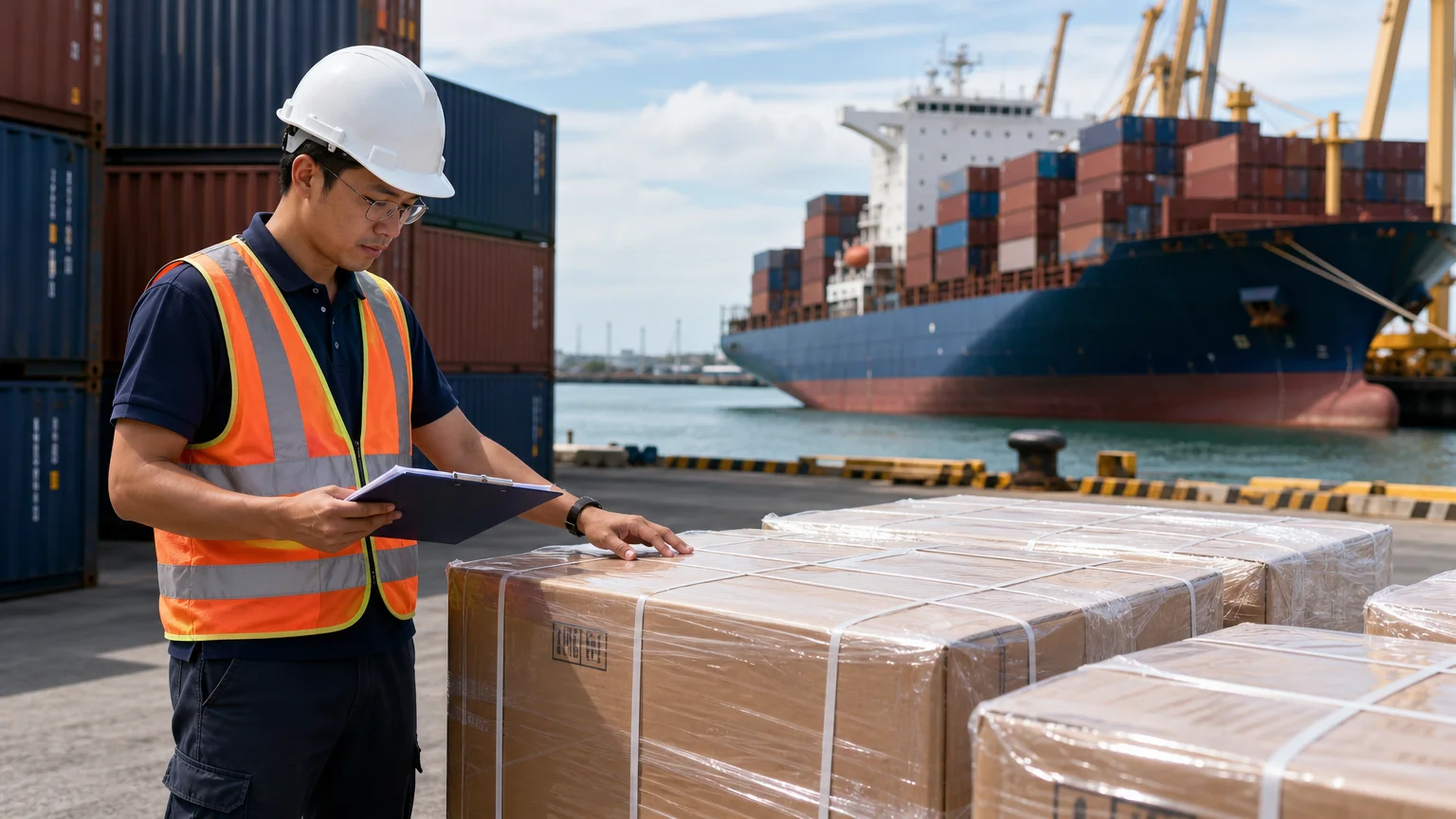
The main issue concerns containerized cargo. A container is often packed at the supplier’s premises and handed to a carrier or terminal before the vessel arrives. Under FOB, risk transfers when the goods are loaded on board, which can leave uncertainty during the terminal waiting period.
For container shipments, FCA often provides a clearer handover point. FCA can transfer risk when the seller delivers the goods to the carrier at an agreed location, such as a container terminal. This better reflects how many container movements operate in practice.
FOB may still be appropriate for suitable non-containerized cargo or an arrangement where the seller genuinely loads the goods directly onto the nominated vessel. The parties should assess the physical movement, not simply copy the term from a supplier quotation.
How is FOB different from FCA, CIF, and EXW?
Choosing between Incoterms requires more than comparing the quoted unit price. You should compare the delivery point, the risk transfer point, who controls freight, and which costs are included.
FOB versus FCA
Under FOB, the seller delivers the goods on board a vessel at the named port. Under FCA, the seller delivers the goods to the carrier at a named location, and FCA can be used with any transport mode. FCA is usually easier to align with container, air, road, rail, and multimodal shipments.
FOB versus CIF
FOB requires the buyer to arrange the main sea freight. Under CIF, the seller arranges and pays for ocean freight to the destination port and provides the insurance required by the rule. Risk still transfers at the origin vessel under both rules, so paying freight does not necessarily mean the seller carries transit risk.
FOB versus EXW
Under EXW, the seller generally makes the goods available at the seller’s premises. The buyer takes on more responsibility at the origin, including transport and export formalities in many practical arrangements. FOB places export clearance and transport to the origin port with the seller before vessel loading.
For Amazon FBA sellers, the difference matters because the supplier’s price is only one part of the landed cost. Ocean freight, destination handling, customs, duties, drayage, insurance, and delivery to the Amazon warehouse may all sit outside the FOB quotation.
What does FOB mean for Amazon FBA shipments to the US?
For an Amazon FBA seller shipping inventory from China to the United States, FOB normally ends at the origin vessel. It does not include delivery to an Amazon warehouse, destination customs clearance, import duties, or domestic transport after arrival.
You must therefore coordinate several stages after loading. These can include ocean freight booking, cargo insurance, import documentation, customs entry, duty payment, port release, drayage, warehouse delivery, and inventory receiving coordination.
If you are comparing supplier quotations, our explanation of what FOB means in shipping can help you separate the supplier’s origin obligations from your buyer-side logistics responsibilities.
FOB can work for an experienced US importer with a trusted forwarder and established customs process. It may be less convenient if you want one party to coordinate supplier pickup, international freight, customs, duties, delivery, and tracking through to the Amazon destination.
How should you write FOB in a sales contract?
A clear contract should include more than the three-letter abbreviation. At minimum, specify the named port, the applicable Incoterms edition, the delivery period, the nominated vessel process, and the documents each party must provide.
- Write the rule as “FOB [named port], Incoterms [edition].”
- Identify who nominates the vessel and how much notice the seller must receive.
- Define the loading location and the evidence of delivery.
- List origin charges included in the seller’s price.
- Confirm who pays destination charges, customs costs, duties, taxes, and inland delivery.
- State insurance expectations and the procedure for handling cargo claims.
- Confirm whether the goods are containerized and whether FCA should be considered instead.
Do not use “FOB China” or “FOB USA” without a specific port. A country is too broad to identify the delivery point, the local charges, or the party responsible for the relevant port operation.
It is also useful to distinguish international FOB from US domestic wording. In American purchase agreements, “FOB shipping point” and “FOB destination” can describe different transfer points. They are not interchangeable with the international FOB rule, so the contract should state the intended framework explicitly.
For Amazon sellers reviewing current supplier quotations, our FOB Incoterms updates for 2026 provides a practical checkpoint for reviewing terminology, shipment mode, and FBA responsibilities before booking.
How can you reduce FOB cost and responsibility gaps?
The first step is to request a complete cost breakdown rather than comparing only the supplier’s FOB unit price. Ask whether origin terminal handling, export documentation, loading, and local trucking are included. Request separate estimates for ocean freight, destination charges, customs, duties, insurance, and final delivery.
The distinction between the goods value and international transport costs also matters in trade analysis. The OECD transport-cost research examines CIF and FOB margins across international trade data and shows why transport and insurance costs should be analyzed separately from the FOB value of merchandise.
You should also confirm how export declarations are handled. A standard export declaration may be included, while a declaration made under the supplier’s name for a specific tax refund process may involve an additional charge. This point should appear in writing before shipment.
For regular FBA replenishment, a managed service can reduce the number of separate handoffs. We can collect products from the Chinese supplier, compare air, fast boat, ocean, and rail options, manage DDP customs handling, and provide tracking through delivery to the Amazon warehouse.
Our approach begins with the shipment details, including product type, quantities, dimensions, and weights. We then provide route options with estimated timelines so you can choose according to urgency, budget, shipment scale, and destination requirements. You can also compare our FOB shipping point versus FOB destination guide when reviewing US domestic terminology.
Make the FOB decision from the delivery point outward
The essential FOB Incoterm meaning is a defined handover at the named origin port. The seller pays and carries risk until the goods are loaded onto the buyer’s vessel. The buyer then manages the main carriage, insurance choice, import clearance, duties, destination charges, and final delivery. Before accepting FOB, confirm that the rule matches the actual cargo movement, especially for containers and Amazon FBA shipments. A precise port, Incoterms edition, cost list, insurance arrangement, and document process can prevent avoidable disputes.
Take action with QG Horizon
FOB can be useful when you already control ocean freight and customs coordination. If you need a clearer path from a Chinese supplier to a US Amazon warehouse, you may prefer one logistics partner to coordinate pickup, freight, customs, duties, delivery, and tracking.
We compare route options according to your shipment weight, volume, urgency, and destination. Our service structure covers air, fast boat, ocean, and rail freight, with DDP handling and milestone visibility available across the shipment journey. To discuss your inventory flow, request our shipping and freight services.
Frequently Asked Questions
What is the simplest FOB Incoterm meaning?
FOB means Free On Board. The seller delivers the goods loaded onto the buyer’s nominated vessel at the named port, then risk and most further costs transfer to the buyer.
Who pays ocean freight under FOB?
The buyer usually arranges and pays the main ocean freight under FOB. The seller pays the costs required to move the goods to the named origin port and load them onto the vessel.
Does FOB include insurance?
No, FOB does not require the seller or buyer to purchase insurance. Because the buyer carries risk after loading, the buyer should evaluate whether marine cargo insurance is appropriate.
Is FOB suitable for Amazon FBA containers?
FOB may create uncertainty when a container is handed to a terminal before it is loaded onto the vessel. FCA is often worth considering for containerized cargo because its delivery point can match the carrier handover more closely.
Can QG Horizon manage an FBA shipment beyond FOB?
Yes, we can coordinate supplier pickup, international freight, customs clearance, DDP handling, delivery, and tracking for shipments to Amazon warehouses. We can also compare route options based on your timing, budget, product characteristics, weight, and volume.
Ready to Optimize Your Amazon Shipping?
Get 3 route options tailored to your products and timeline
Get Your Quote→