FOB Shipment Meaning: A Complete Guide for US Importers
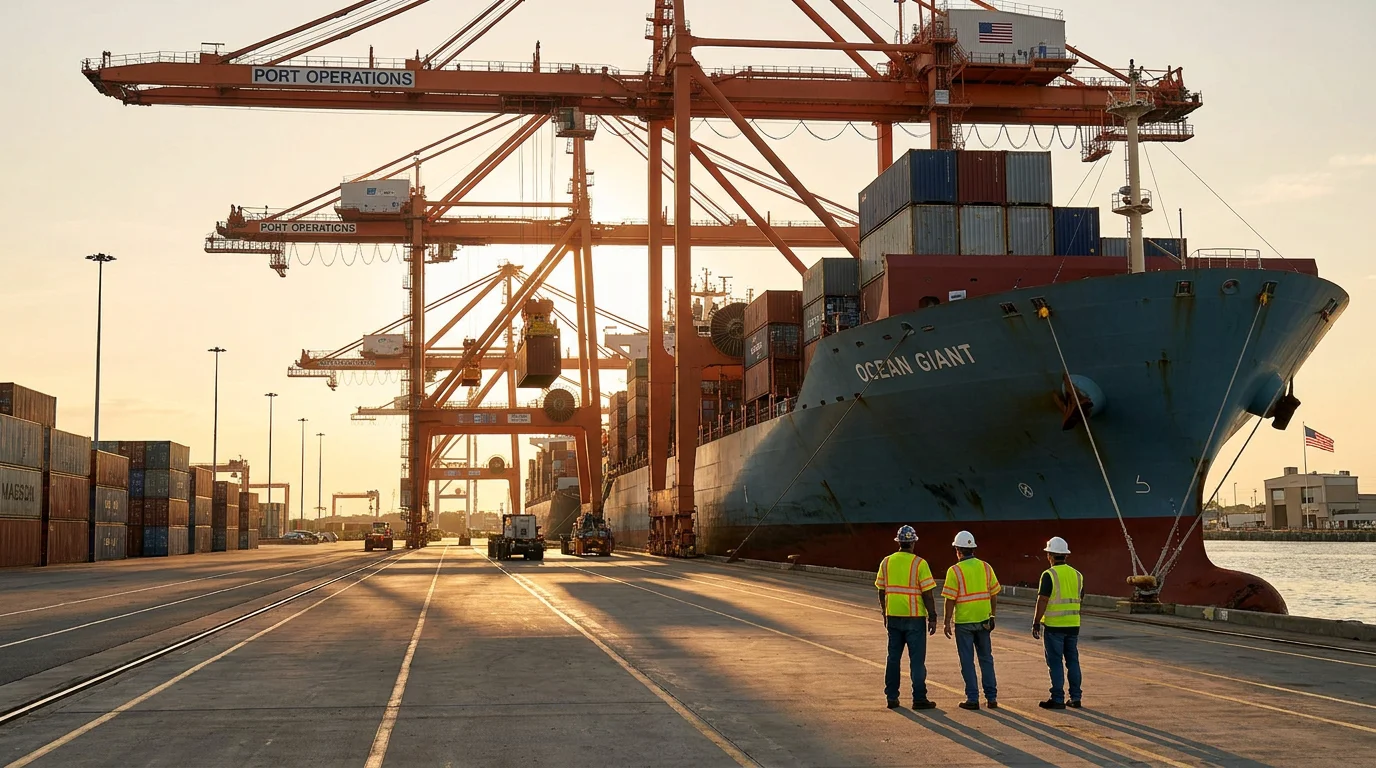
Summary: FOB (Free on Board) defines the point at which shipping risk and cost shift from seller to buyer, making it one of the most widely used Incoterms for ocean freight.
Every purchase order that crosses an ocean carries a hidden question: who pays if something goes wrong between the factory and your warehouse? The answer almost always lives in three letters printed on the commercial invoice. Understanding the meaning of an FOB shipment is not optional for any US business importing goods by sea. If you are new to the concept, our overview of what does FOB mean is a useful starting point.
FOB, or Free on Board, is one of the 11 rules published under the Incoterms 2020 framework by the International Chamber of Commerce. It governs who bears the cost, who carries the risk, and exactly when responsibility changes hands during a maritime shipment. Whether you source consumer electronics from Shenzhen or furniture from Ho Chi Minh City, grasping the fob shipment meaning will help you negotiate better deals, avoid surprise fees, and protect your margins from port to warehouse.
What Does FOB Actually Stand For?
Under the Incoterms 2020 standard published by the International Chamber of Commerce, FOB is only used in sea freight and stands for “Free On Board,” and the term is always used in conjunction with a port of loading. On a contract or invoice, you will see it written as FOB [Named Port of Shipment], for example “FOB Shanghai” or “FOB Shenzhen.”
Some documents refer to “Freight on Board” instead. Although FOB has long been stated as “Freight On Board” in sales contract terminology, this should be avoided as it does not precisely conform to the meaning of the acronym as specified in the UCC. Using “Free on Board” in your contracts removes ambiguity and aligns with internationally recognized standards.
How Risk and Cost Transfer Under FOB
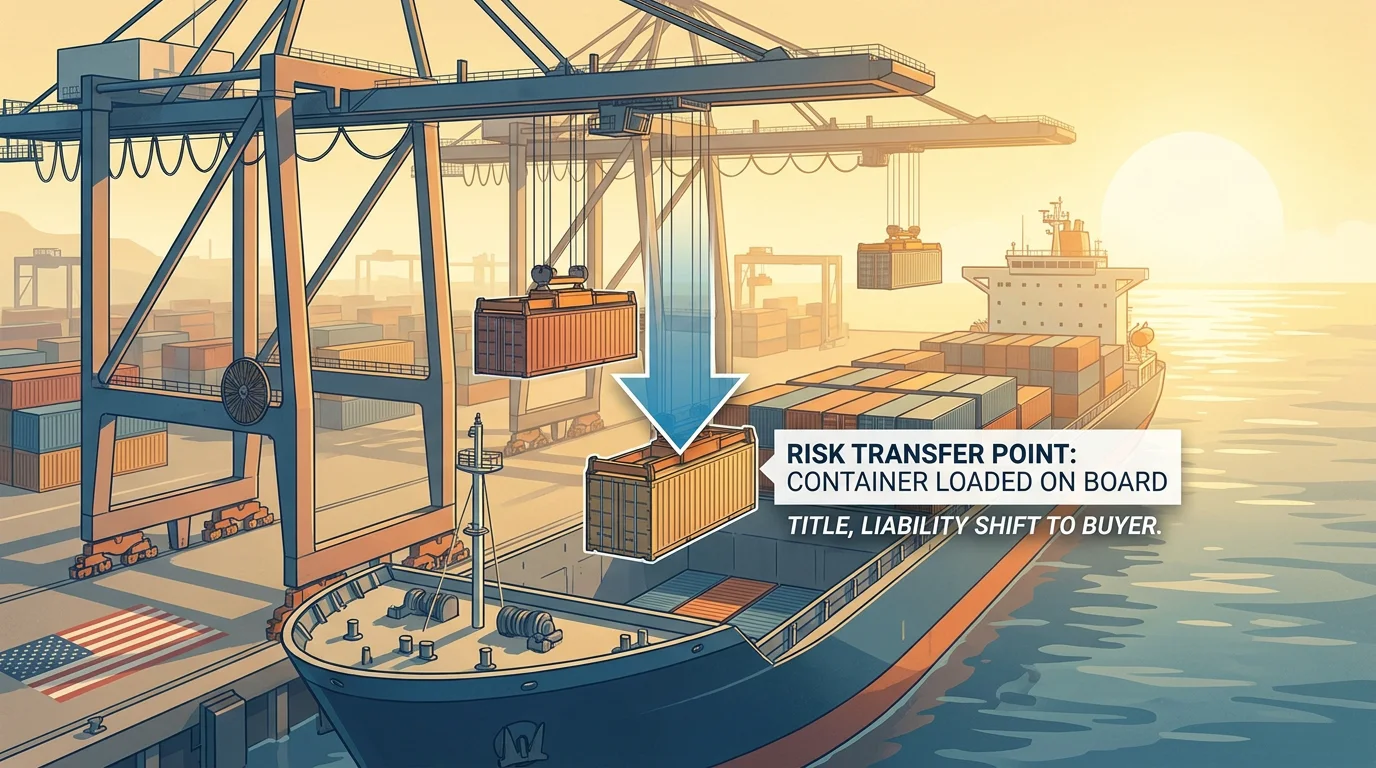
The core purpose of FOB is to draw a clear line between the seller’s obligations and the buyer’s obligations. That line is the vessel’s deck at the port of shipment.
Under Free on Board, the seller is responsible for delivering the goods to the port of departure, clearing them for export, and loading the goods on the vessel. Once the goods are on the vessel, the risk transfers from the seller to the buyer, who from that point is responsible for all costs thereafter. For a deeper explanation of how each party’s duties break down, see our guide on FOB shipping explained.
In practical terms, the seller covers:
- Inland transport from factory to the origin port
- Export customs clearance and documentation
- Loading charges at the port of shipment
The buyer then assumes:
- Ocean freight from origin port to destination port
- Marine cargo insurance (not automatically included)
- Destination port handling and unloading
- Import customs clearance, duties, and taxes
- Inland delivery to the final warehouse
The buyer is responsible for arranging insurance under FOB; the seller has no insurance obligation once cargo is on board the vessel. If the buyer does not arrange insurance, there is no coverage during ocean transit. This is a critical point that many first-time importers in the US overlook.
FOB Origin vs. FOB Destination: The North American Distinction
If you operate domestically in the US, you will encounter a second, distinct use of the FOB acronym that does not follow the international Incoterms framework. The term FOB is also used in modern domestic shipping within North America to describe the point at which a seller is no longer responsible for shipping costs.
There are two possibilities: “FOB origin” or “FOB destination.” “FOB origin” means the transfer occurs as soon as the goods are safely on board the transport. “FOB destination” means the transfer occurs the moment the goods are removed from the transport at the destination.
| Term | Risk Transfers | Who Typically Pays Freight |
|---|---|---|
| FOB Origin, Freight Collect | At seller’s dock | Buyer |
| FOB Origin, Freight Prepaid | At seller’s dock | Seller |
| FOB Destination, Freight Collect | At buyer’s location | Buyer |
| FOB Destination, Freight Prepaid | At buyer’s location | Seller |
For a thorough comparison of how these terms affect your profit margins, especially if you sell on Amazon, take a look at our breakdown of FOB shipping point vs FOB destination.
Why FOB Is the Default for International Ocean Freight
FOB (Free On Board) is the most common Incoterm for ocean freight shipments. In practice, FOB and EXW dominate product sourcing from Vietnam and China. There are several reasons why importers across the US prefer FOB over alternatives such as EXW or CIF.
First, FOB keeps export logistics with the seller. The practical issue with EXW is that the buyer becomes responsible for export procedures in a foreign country, which can be complicated. For most importers, FOB is a better starting point because it keeps the export-side logistics with the seller, who is better positioned to handle them.
Second, FOB gives the buyer control over ocean freight. Because you select the carrier and negotiate the rate, you can optimize transit times, consolidate shipments, and choose your own insurance coverage. This level of control is especially valuable for e-commerce sellers shipping inventory to fulfillment centers.
Third, FOB pricing from the supplier is transparent. When a supplier quotes you a price with an Incoterm attached, they are telling you exactly what that price covers and where their obligations stop. A clear FOB price lets you compare suppliers on an equal footing.
FOB vs. FCA: The Containerization Nuance
One important detail often overlooked by importers is that the ICC Academy and many logistics experts recommend using FCA (Free Carrier) instead of FOB for containerized cargo. A common mistake is to use FOB Incoterms for containerized goods instead of using a rule for all transport modes. This exposes the exporter to unnecessary risks. Under FOB, the risk is officially transferred when the cargo is loaded onboard the vessel. However, it is common practice for the shipper to hand over the cargo to the carrier at the terminal where it awaits to be loaded onto the vessel. Instead, use FCA, CPT, or CIP, which are the correct alternatives as they are meant for containerized freight.
Despite this recommendation, many exporters still use FOB because banks want a Bill of Lading for Letters of Credit. To address this, Incoterms 2020 updated FCA to allow the seller to receive a Bill of Lading with an “on board” notation, bridging the gap between containerized trade and LC requirements. Even so, FOB remains dominant in daily sourcing practice.
How FOB Appears on Your Documents
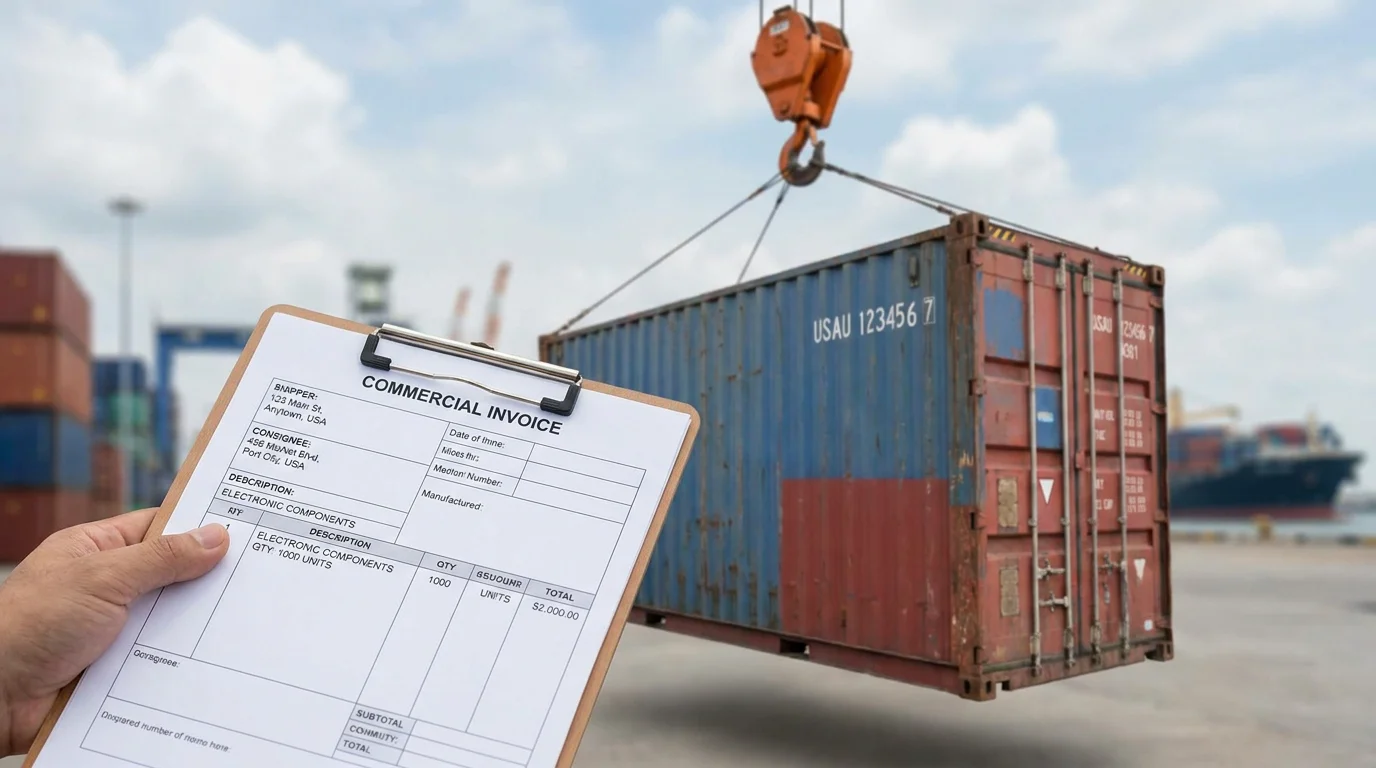
On a typical import transaction, the FOB designation shows up in several places:
- Purchase order: States the agreed Incoterm and named port (e.g., “FOB Ningbo, Incoterms 2020”).
- Commercial invoice: Reflects the FOB value, which customs authorities use as the basis for calculating import duties.
- Bill of lading: Confirms the port of loading and identifies the shipper and consignee.
- Insurance certificate: The buyer arranges and holds the marine cargo insurance policy under FOB terms.
Getting these documents right is essential. US Customs and Border Protection uses the transaction value declared on the commercial invoice to assess duties. According to Wikipedia’s overview of FOB shipping, ownership of a cargo is independent of Incoterms, which relate to delivery and risk; in international trade, ownership of the cargo is defined by the contract of sale and the bill of lading or waybill.
Practical Tips for US Importers Using FOB
Choosing FOB is only the first step. Executing it well requires attention to several operational details.
Always Specify the Incoterms Edition
Due to potential confusion with domestic North American usage of “FOB,” it is recommended that the use of Incoterms be explicitly specified, along with the edition of the standard, for example “FOB New York (Incoterms 2000).” In 2026, writing “FOB Shenzhen (Incoterms 2020)” removes all ambiguity. For the latest adjustments, review our summary of FOB Incoterms 2026 updates.
Arrange Insurance Before the Vessel Sails
Under FOB, insurance is your responsibility from the moment cargo is on board. Do not wait until after departure to secure a policy. A single container of consumer goods can easily exceed $50,000 in value; self-insuring that risk is rarely worth it.
Inspect Goods Before They Reach the Port
Once the seller loads the goods onto the vessel, risk is yours. Conducting a pre-shipment inspection at the factory or warehouse ensures you catch quality issues while the seller is still liable. This is particularly important for Amazon FBA sellers, where receiving defective inventory can trigger account-level penalties.
Work with a Freight Forwarder Who Understands FOB
A knowledgeable freight forwarder coordinates the ocean leg, arranges customs clearance, and delivers directly to your warehouse or fulfillment center. We handle every step from the Chinese port of origin through DDP delivery to Amazon warehouses, giving you a single point of contact and an all-inclusive quote within 24 hours.
Common Mistakes to Avoid with FOB Shipments
Even experienced importers can stumble over FOB terms. Here are the most frequent errors and how to prevent them.
- Confusing international FOB with US domestic FOB. International shipments typically use “FOB” as defined by the Incoterms standards. Domestic shipments within the United States or Canada often use a different meaning, specific to North America, which is inconsistent with the Incoterms standards.
- Skipping insurance. Many buyers assume the carrier’s liability covers full cargo value. It does not. Carrier liability is usually capped well below actual goods value.
- Not verifying the port of loading. An ambiguous port name on the purchase order can shift hundreds of miles of inland freight cost to the wrong party.
- Using FOB for air freight. FOB is for sea and inland waterway transport only. For air shipments, FCA is the correct Incoterm.
For a closer look at how FOB origin specifically affects your risk profile, read our article on FOB origin definition and risk.
Conclusion
The meaning of an FOB shipment comes down to one clear principle: the seller covers all costs and risks until cargo is loaded on the vessel, and the buyer takes over from that point forward. This single rule shapes your freight budget, your insurance obligations, and your exposure to loss for every ocean order you place. Getting it right means specifying the exact port, the Incoterms edition, and your insurance coverage before any goods leave the factory floor.
As one of the most used Incoterms in global trade, according to GoFreight’s 2026 shipping guide, for sea freight between independent parties, FOB remains the default choice in 2026. Partnering with a freight forwarder that specializes in China-to-US ocean shipments, offers DDP pricing with duties included, and provides real-time tracking can eliminate most of the operational headaches that FOB places on the buyer’s side. To simplify your next import, request a free quote through our Amazon FBA freight service and let us handle the complexity from port to warehouse.
Frequently Asked Questions
Who pays for ocean freight under FOB terms?
Under international FOB (Incoterms 2020), the buyer pays for ocean freight, insurance, unloading, and all costs from the origin port onward. The seller only covers costs up to and including loading the goods on the vessel at the named port of shipment.
Can FOB be used for air shipments?
No. FOB applies exclusively to sea and inland waterway transport. For air freight or multimodal shipments, the correct Incoterm is FCA (Free Carrier). Using FOB on an air shipment contract creates legal ambiguity and should be avoided.
How does FOB benefit Amazon FBA sellers importing from China?
FOB gives you full control over your ocean freight rate, carrier selection, and transit routing, which directly impacts your landed cost per unit. At QG Horizon, we pair FOB sourcing with all-inclusive DDP delivery to Amazon fulfillment centers, so you know your total cost before the shipment leaves the port.
Ready to Optimize Your Amazon Shipping?
Get 3 route options tailored to your products and timeline
Get Your Quote→