FOB Shipment Explained: A Complete Guide for US Importers
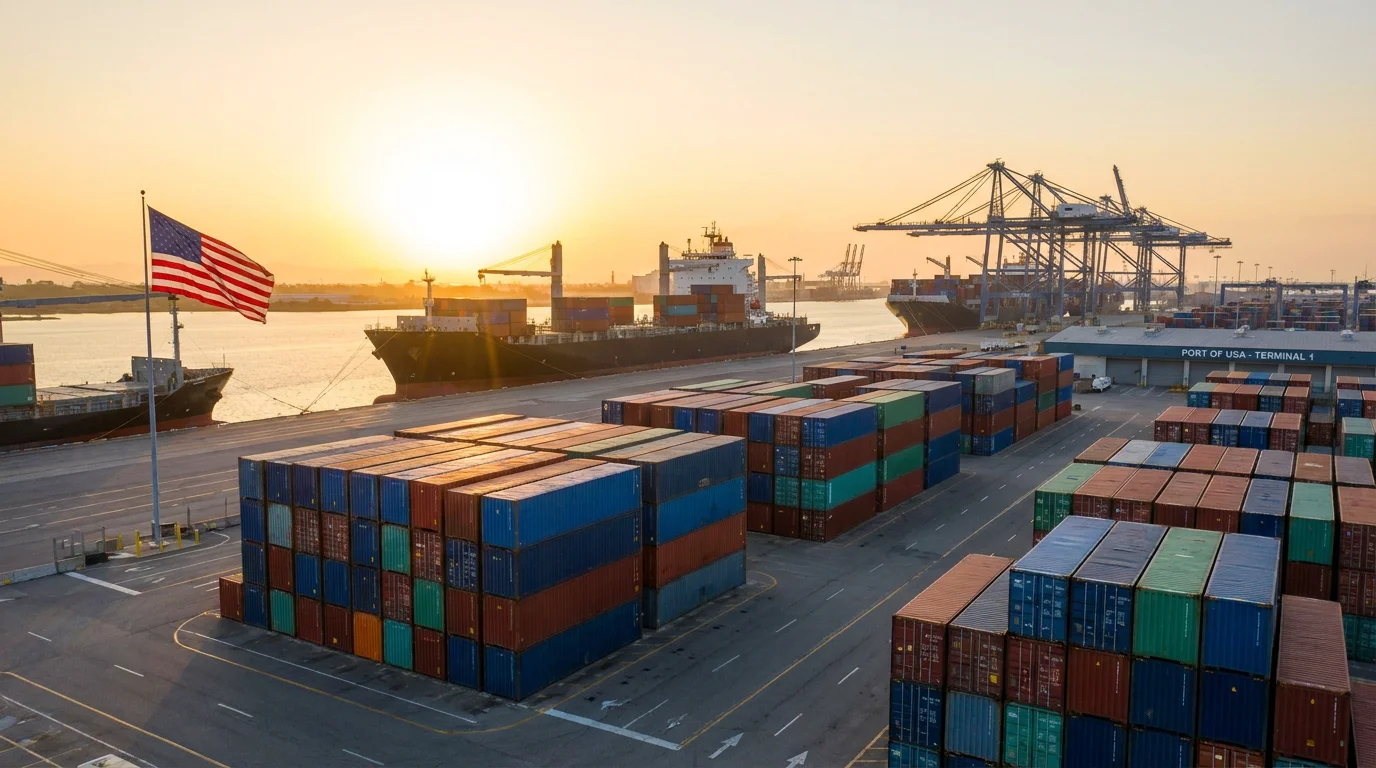
Summary: An FOB shipment transfers risk and cost to the buyer once goods are loaded onto the vessel at the origin port, with pre-shipment logistics adding 5 to 15 percent to goods value.
Every year, billions of dollars in merchandise cross international borders under Free on Board terms. According to an OECD working paper published in 2024, transport costs represent around 30 percent of total trade costs, making the choice of trade term a decisive factor in profitability. For US sellers sourcing products from China, understanding FOB shipments is not optional; it is a prerequisite for protecting margins and avoiding costly surprises. If you are new to the concept, our guide on what FOB means in shipping provides essential background.
Whether you run a solo Amazon FBA business or manage procurement for a growing e-commerce brand, the way you structure your FOB agreement determines who bears the risk during transit, who arranges insurance, and who controls ocean freight costs. This article walks through every element of a free on board shipment, from the precise moment risk transfers to the hidden costs many importers overlook. It is written for professionals who need clarity, not jargon.
What Does FOB Mean and Why Does It Matter?
FOB stands for Free on Board. It is one of the most widely used Incoterms published by the International Chamber of Commerce. Under FOB terms, the seller is responsible for delivering goods to the named port of shipment and loading them onto the vessel. Once the goods are on board, responsibility shifts to the buyer. This single transition point governs who pays for ocean freight, who arranges cargo insurance, and who files claims if goods are damaged in transit.
The term “fob shipment” appears on invoices, purchase orders, and bills of lading around the world. In the United States, it also carries a domestic meaning under the Uniform Commercial Code (UCC), where it can refer to either an origin or destination point. This dual usage sometimes creates confusion when US buyers negotiate with overseas suppliers who follow the international Incoterms definition. Clarity in the contract language is therefore essential.
How Risk and Cost Transfer Under FOB Terms
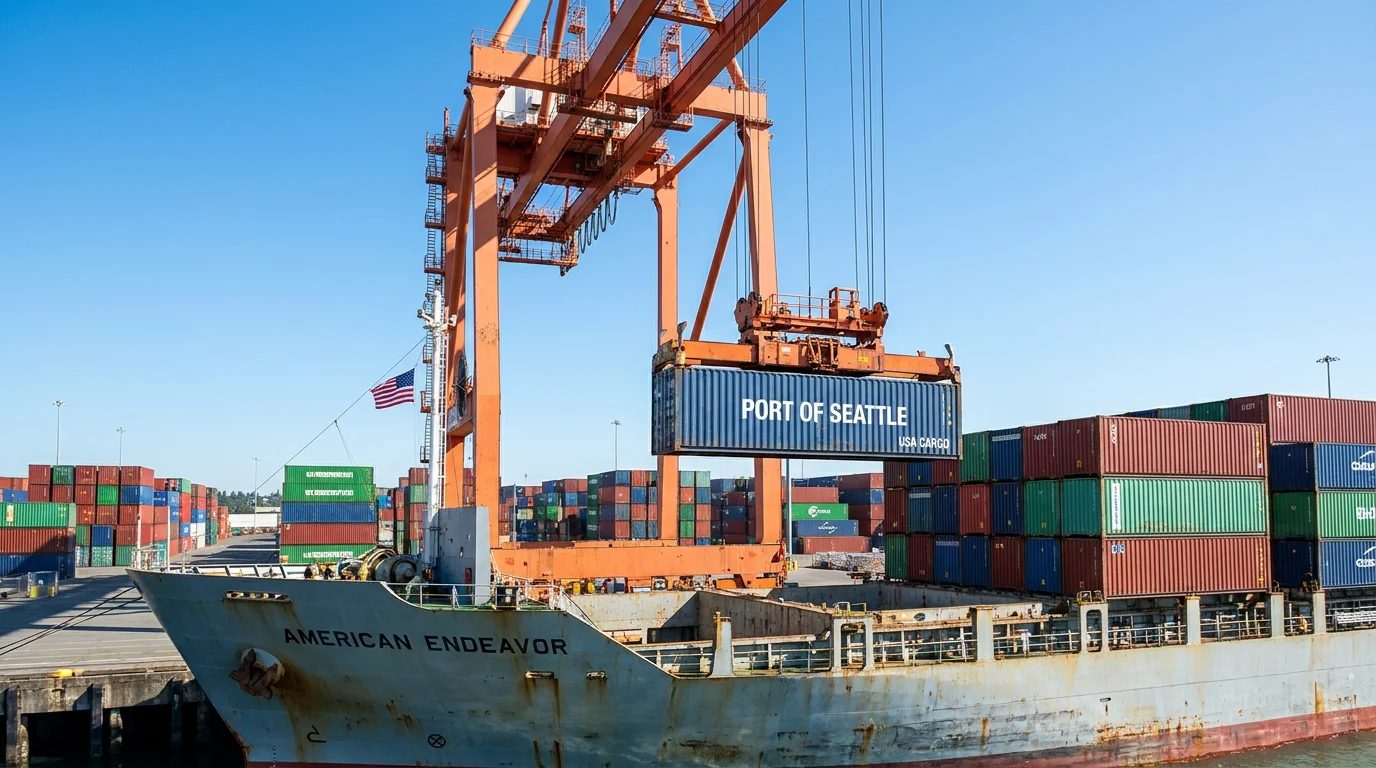
The defining characteristic of an FOB agreement is the transfer point. Under Incoterms 2020, risk passes from the seller to the buyer at the moment the goods are loaded on board the vessel at the named port of origin. Before that moment, the seller bears every cost and risk, including inland trucking from the factory, export customs clearance, documentation, and port handling charges.
After loading, the buyer assumes all further responsibilities. These include ocean freight, marine cargo insurance, import customs duties, and inland transportation to the final warehouse or fulfillment center. For a deeper look at how this split works, see our article on FOB shipping point vs FOB destination.
It is important to note that FOB, as defined by the ICC, applies strictly to non-containerized sea freight or inland waterway transport. When goods move in sealed containers, the FCA (Free Carrier) term is technically more appropriate because there is no way to verify the condition of goods at the exact moment they cross the ship’s rail. Despite this, FOB remains the dominant term in China-to-US trade by convention.
FOB Origin vs. FOB Destination: Key Differences
In North American domestic commerce, FOB has two primary variants that differ from the international Incoterms definition. Understanding both is critical for US importers who handle domestic redistribution after goods arrive at port.
| Term | Ownership Transfer Point | Freight Responsibility | Risk During Transit |
|---|---|---|---|
| FOB Origin, Freight Collect | Seller’s shipping dock | Buyer | Buyer |
| FOB Origin, Freight Prepaid | Seller’s shipping dock | Seller | Buyer |
| FOB Destination, Freight Collect | Buyer’s receiving dock | Buyer | Seller |
| FOB Destination, Freight Prepaid | Buyer’s receiving dock | Seller | Seller |
The first component (Origin or Destination) determines where the buyer assumes title and risk. The second component (Collect or Prepaid) determines who pays the freight charges. Mixing these up can expose a buyer to liability they did not anticipate or create disputes when goods arrive damaged.
Breaking Down FOB Costs: What Sellers and Buyers Actually Pay
One of the most common mistakes importers make is assuming that the FOB price on a supplier’s invoice represents the total landed cost. In reality, the FOB price covers only what happens before and during loading at the origin port. According to FreightAmigo, FOB costs typically add 5 to 15 percent to the goods value, covering pre-shipment logistics such as inland trucking and port handling.
Here is what the seller typically covers under FOB:
- Product manufacturing cost
- Inland transportation from the factory to the port of shipment
- Export packaging and labeling to meet international standards
- Export customs clearance and documentation fees
- Port handling and loading charges (Terminal Handling Charges at origin)
Here is what the buyer covers after loading:
- Ocean freight from origin port to destination port
- Marine cargo insurance
- Destination port handling and unloading
- Import customs duties, taxes, and brokerage fees
- Inland transportation from the destination port to the final warehouse
In 2026, origin port Terminal Handling Charges (THC) average $200 to $400 per TEU. Inland trucking within China can add $300 to $500 per twenty-foot container depending on the distance from factory to port. These costs are real, and many first-time importers underestimate them. To avoid this, read our detailed guide on hidden costs behind FOB pricing.
FOB in International Trade: Why It Remains the Preferred Term
Despite the ICC recommending FCA for containerized shipments, FOB continues to dominate trade between China and the United States. The reason is straightforward: FOB gives the buyer control over the most expensive leg of the journey, ocean freight. By selecting their own freight forwarder and negotiating rates directly with carriers, experienced importers can reduce shipping costs by 10 to 20 percent compared to CIF arrangements where the seller bundles freight and insurance into the price.
The OECD International Transport and Insurance Costs of merchandise trade (ITIC) dataset expresses costs as CIF/FOB margins, interpreted as the difference between the Cost, Insurance, and Freight valuation and the Free-On-Board valuation for the same import flow. This gap varies significantly by trade route. In the case of the United States, the lowest CIF/FOB margins across 1995 to 2022 were associated with geographical neighbors: Canada at an average of 2 percent and Mexico at 1.1 percent. For long-haul routes from Asia, margins are considerably higher, reinforcing the importance of controlling freight costs under FOB.
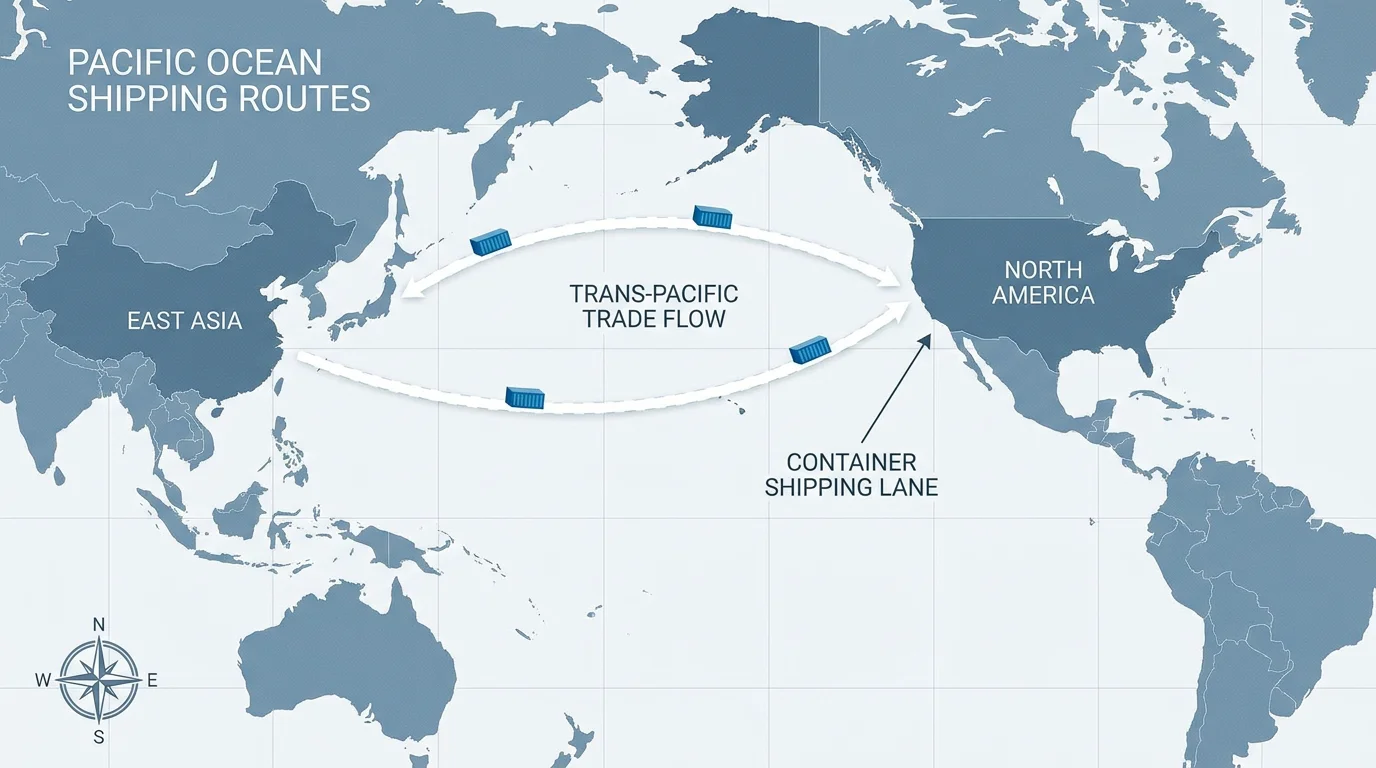
The WTO’s Global Trade Outlook (April 2025) projected that world merchandise trade volume would grow by only 0.2 percent in 2025 before posting a modest recovery of 2.5 percent in 2026, partly due to tariff uncertainty. For importers operating under FOB terms, this environment of shifting trade policy makes it even more important to maintain direct control over freight logistics and insurance.
FOB vs. CIF vs. DDP: Choosing the Right Incoterm
FOB is not the only option. Two other terms appear frequently in China-to-US trade: CIF (Cost, Insurance, and Freight) and DDP (Delivered Duty Paid). Each allocates risk and cost differently.
| Criteria | FOB | CIF | DDP | QG Horizon (DDP Service) |
|---|---|---|---|---|
| Buyer controls freight | Yes | No | No | Managed by QG Horizon on buyer’s behalf |
| Insurance arranged by | Buyer | Seller (minimum cover) | Seller | Included in all-in quote |
| Import duties paid by | Buyer | Buyer | Seller | Included (no surprises) |
| Best for | Experienced importers | Beginners wanting simplicity | Full peace of mind | Amazon FBA sellers seeking a single point of contact |
| Price transparency | Moderate | Low (seller markup on freight) | High | Full visibility with 24-hour quotes |
For sellers who prefer complete cost certainty, our FOB vs CIF vs DDP comparison explains the trade-offs in detail. Many Amazon FBA sellers start with FOB and transition to DDP as they scale, because a DDP arrangement eliminates the risk of unexpected duty assessments and customs delays at destination.
How to Negotiate FOB Terms With Your Chinese Supplier
Negotiating FOB terms is about more than agreeing on a price. It requires specifying the exact port of shipment (for example, FOB Shenzhen or FOB Ningbo), confirming which party arranges and pays for export formalities, and clarifying how Terminal Handling Charges are allocated. A vague contract that simply states “FOB China” without naming a port invites disputes.
Here are five steps to strengthen your FOB negotiation:
- Name the port explicitly. Write “FOB Shenzhen (Incoterms 2020)” on every purchase order and invoice.
- Request a cost breakdown. Ask your supplier to itemize inland freight, export clearance, packaging, and THC separately from the unit price.
- Verify insurance coverage. Under FOB, the buyer arranges insurance from loading onward. Confirm your marine cargo policy covers the full CIF value plus 10 percent, as recommended by the ICC.
- Set inspection terms. Agree on a pre-shipment inspection (PSI) before goods reach the port. This reduces the risk of discovering defects after title has transferred.
- Align payment milestones. Link payment releases to verified loading confirmation (the on-board bill of lading) rather than to the supplier’s invoice date.
When working with a specialized freight forwarder, you gain an additional layer of oversight. We coordinate pickup from the supplier’s factory, verify documentation before loading, and provide real-time tracking so you know exactly when risk transfers to you.
Common Mistakes US Importers Make With FOB Shipments
Even experienced buyers fall into recurring traps with FOB transactions. Avoiding these mistakes can save thousands of dollars per shipment and prevent costly delays at US customs.
Mistake 1: Confusing FOB Incoterms with domestic FOB. The US domestic definition under the UCC differs from the ICC Incoterms standard. Always specify “Incoterms 2020” (or the applicable edition) in your contract. For the latest on this topic, review our summary of FOB Incoterms 2026 updates.
Mistake 2: Skipping marine cargo insurance. Under FOB, the buyer is responsible for arranging insurance from the moment goods are loaded. Some importers assume the carrier’s liability is sufficient, but carrier liability is typically capped at $500 per shipping unit under the Carriage of Goods by Sea Act (COGSA). For a $50,000 container of consumer electronics, that coverage is negligible.
Mistake 3: Not verifying the FOB value for customs purposes. For importers, knowing the FOB value is vital for duties calculation, as many customs authorities use it as the dutiable base. The US Census Bureau defines import value as the price paid for merchandise for export to the United States, excluding import duties, freight, insurance, and other charges incurred in bringing merchandise to the United States. If your declared FOB value is inaccurate, you risk under-payment penalties or overpayment of duties.
Mistake 4: Ignoring inland cost volatility. In 2026, with volatile fuel prices, inland FOB costs have risen 15 percent year over year per industry reports. Locking in inland freight quotes early in the sourcing cycle helps protect your budget.
Conclusion: Take Control of Your FOB Strategy
A well-structured FOB shipment gives US importers the power to choose their own carriers, negotiate competitive ocean freight rates, and maintain direct oversight of their supply chain from port to warehouse. The data supports this approach: transport costs represent roughly 30 percent of total trade costs according to OECD research, and controlling the freight leg under FOB can yield savings of 10 to 20 percent compared to seller-arranged alternatives. In a 2026 trade environment shaped by tariff uncertainty and rising inland logistics costs, that level of control is not a luxury; it is a competitive necessity.
For Amazon FBA sellers and e-commerce brands importing from China, partnering with a freight forwarder that specializes in this exact corridor simplifies every step, from factory pickup to customs clearance and final delivery to Amazon fulfillment centers. To get started, explore our DDP and FOB freight solutions and request a personalized quote within 24 hours.
Frequently Asked Questions
Who pays for ocean freight in an FOB shipment?
Under FOB terms, the buyer pays for ocean freight, marine insurance, and all costs from the moment goods are loaded onto the vessel at the origin port. The seller covers everything up to and including loading. This allocation gives the buyer direct control over carrier selection and freight negotiation.
Is FOB the best Incoterm for Amazon FBA sellers?
FOB is an excellent choice for sellers who want to control freight costs and have a reliable freight partner in place. However, many Amazon FBA sellers prefer DDP arrangements because duties and taxes are included upfront, eliminating surprises at customs. QG Horizon offers both FOB coordination and all-inclusive DDP services to match each seller’s experience level and risk tolerance.
What is the difference between FOB and FCA?
FOB applies only to sea freight and transfers risk when goods are loaded on board the vessel. FCA (Free Carrier) transfers risk when goods are handed to the carrier at a named place, which can be inland. For containerized shipments, FCA is technically more appropriate, but FOB remains widely used by convention in Asia-to-US trade.
Ready to Optimize Your Amazon Shipping?
Get 3 route options tailored to your products and timeline
Get Your Quote→