FOB Shipping Term Explained: Costs, Risk, and Ownership
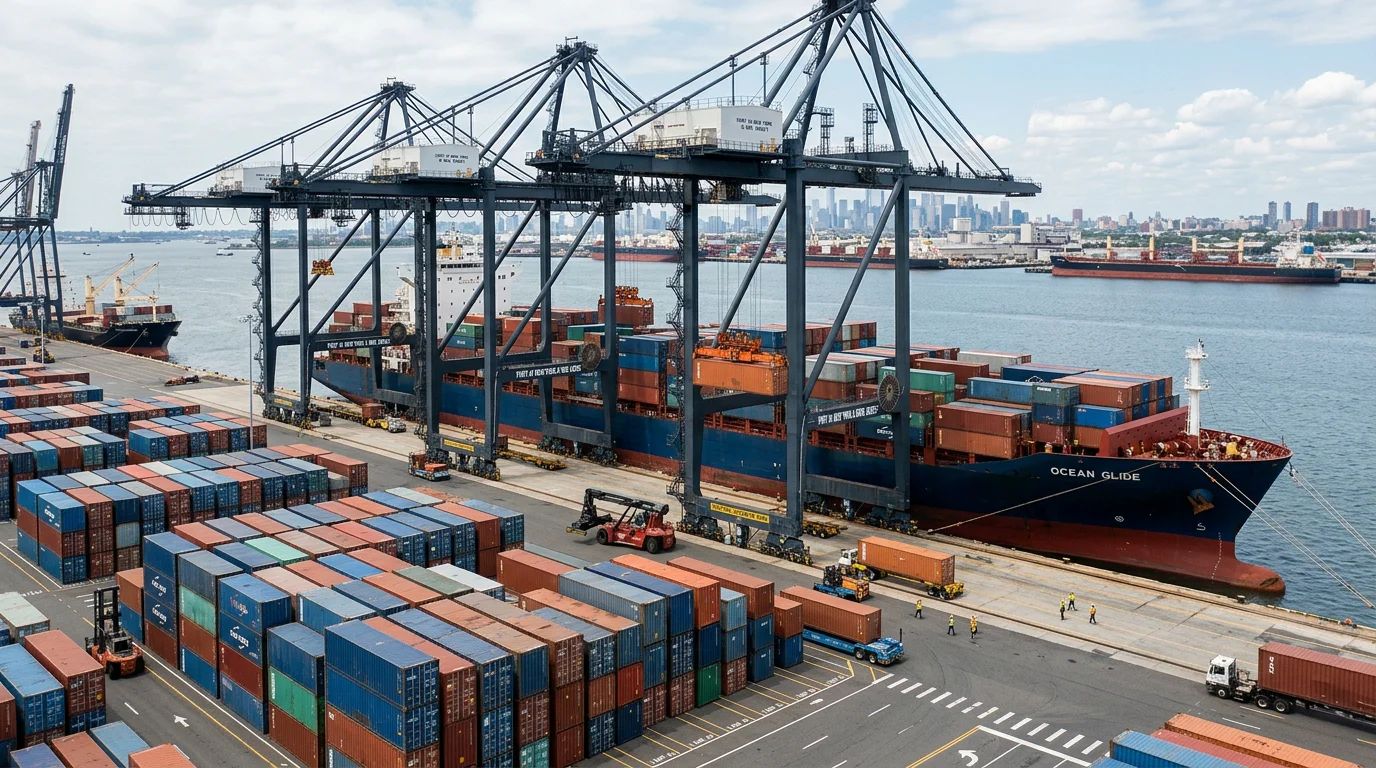
TL;DR: FOB, or Free On Board, defines the exact point where responsibility, cost, and risk pass from seller to buyer during shipping. In international trade it means the seller loads goods onto the vessel; in North American domestic sales it signals where liability shifts. Choosing FOB Origin or FOB Destination directly affects who pays freight and who bears loss.
Three letters on an invoice can decide who absorbs thousands of dollars in freight and who files the insurance claim when a container is damaged at sea. The FOB shipping term sits at the center of that decision, yet it is one of the most misread abbreviations in global commerce. Many US exporters assume the domestic meaning travels abroad unchanged, and that assumption creates costly disputes. For a plain-language breakdown of the acronym, our FOB shipping term meaning guide is a useful companion.
FOB stands for “Free On Board,” and its interpretation splits sharply between US domestic practice and the international Incoterms standard. According to the ICC Academy, the Incoterms rules were created in 1936 and are revised roughly every decade, with Incoterms 2020 the version currently in force. Understanding which framework applies to your contract is the difference between a smooth shipment and a stalled one.
What the FOB Shipping Term Actually Means
At its core, FOB identifies the moment when ownership, liability, and the obligation to pay freight move from one party to another. Define FOB in shipping and the answer always returns to a single question: at which physical point does the seller stop being responsible?
Under Incoterms 2020, the definition is precise. The seller delivers the goods on board the vessel at the named port of shipment, clears them for export, and ensures proper packaging. Trade Finance Global notes that FOB is the most commonly used trade term, though it is frequently applied without reference to any specific Incoterms version, which invites ambiguity. Once the cargo is loaded, the buyer assumes ocean freight, insurance, and every cost beyond that point.
FOB Origin vs FOB Destination
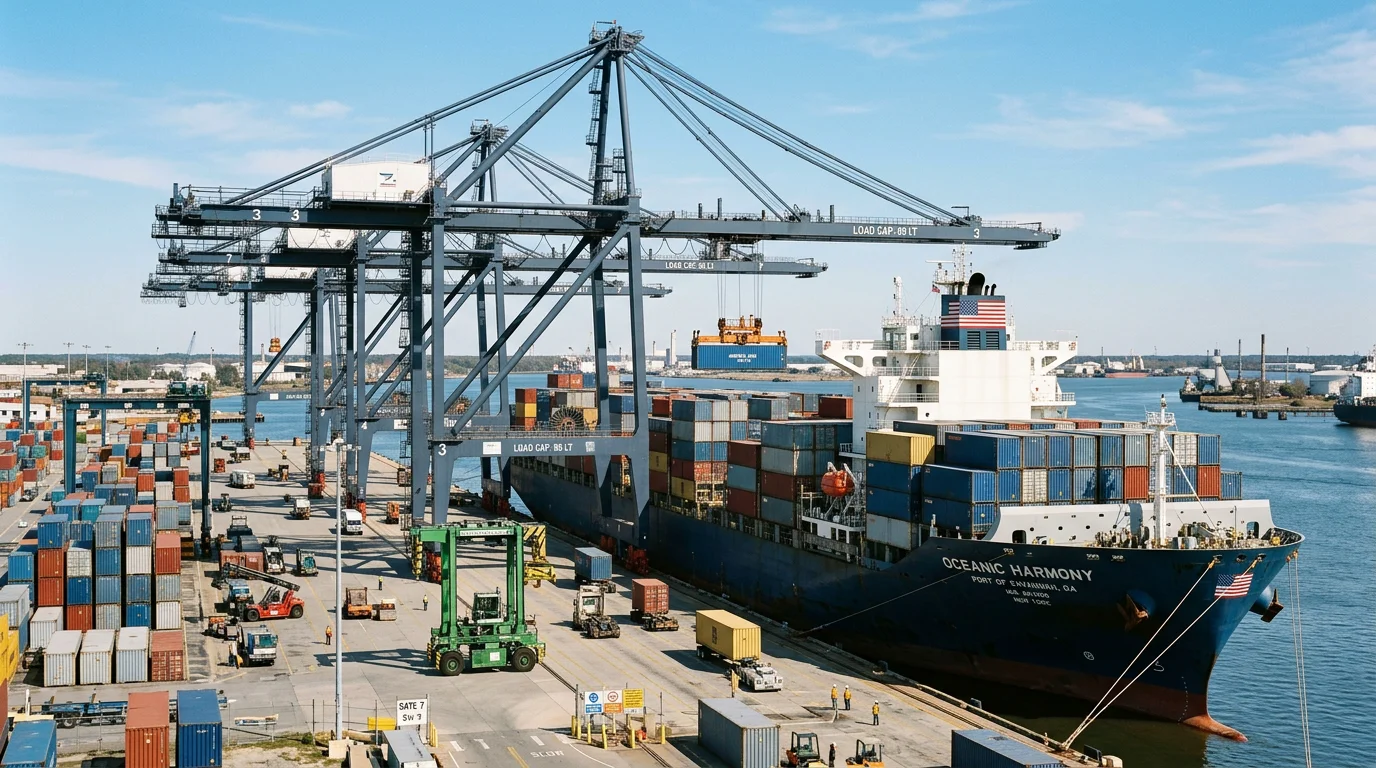
Imagine you purchase 1,000 units from a supplier. Where the risk sits depends entirely on which FOB variant appears in the contract. In North American domestic usage, two options dominate, and each carries distinct consequences.
FOB Origin means the buyer takes ownership and liability the moment the goods are loaded onto the carrier at the seller’s dock. FOB Destination means the seller retains ownership and risk until the goods reach the buyer’s location. These are then paired with freight payment indicators that clarify who actually pays the carrier.
| Term | Owns goods in transit | Pays freight | Files claims for loss |
|---|---|---|---|
| FOB Origin, Freight Collect | Buyer | Buyer | Buyer |
| FOB Origin, Freight Prepaid | Buyer | Seller | Buyer |
| FOB Destination, Freight Collect | Seller | Buyer | Seller |
| FOB Destination, Freight Prepaid | Seller | Seller | Seller |
These pairings determine both cash flow and accounting timing. Goods in transit under FOB Destination remain on the seller’s balance sheet, while FOB Origin shifts them to the buyer’s inventory the instant they are picked up.
Domestic and International FOB Are Not the Same
Here is where confusion becomes expensive. In the US, FOB terms derive from the Uniform Commercial Code, the National Motor Freight Classification, and industry custom, and they can apply to any transport mode while also transferring title. Under Incoterms 2020, FOB applies only to sea or inland waterway transport and defines the point of risk transfer, not ownership.
The mismatch is not theoretical. An exporter accustomed to “FOB Destination” domestically might list the same term for a shipment to Europe, unintentionally agreeing to deliver only to the US port rather than to the overseas buyer. The two definitions are simply not interchangeable, and treating them as such can leave a container stranded at the wrong dock. If you sell into Amazon warehouses abroad, our comparison of FOB vs other Incoterms for Amazon FBA can help you weigh the trade-offs before committing.
Why FOB Is Rarely Right for Container Cargo
A common misconception persists that FOB suits any ocean shipment. It does not. Because containers are typically handed to the carrier at a container yard or the seller’s premises rather than loaded directly onto a vessel, the seller never places them “on board” in the literal sense the term requires.
For this reason, Free Carrier (FCA) is generally the more appropriate rule for containerized freight, since it assigns export clearance and inland handling more cleanly. The archaic “ship’s rail” concept that once defined the FOB transfer point was removed in the Incoterms 2010 revision, and “on board” is now understood to mean the goods are safely on the deck or in the hold. When your goods move in containers, insisting on FOB out of habit can create gaps in risk coverage.
The Real Cost Behind FOB Terms
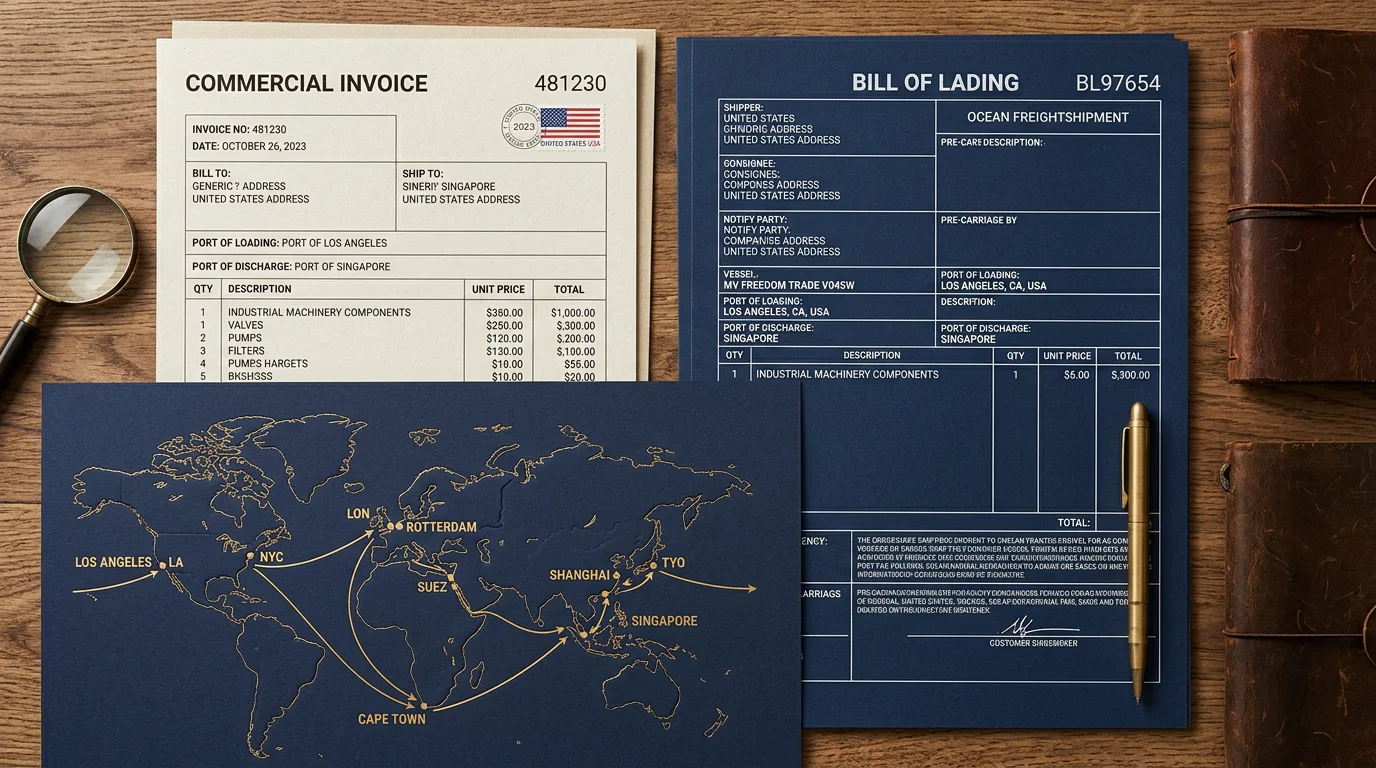
Freight and insurance costs are not a rounding error; they materially change the landed price of goods. According to an OECD working paper, global CIF/FOB margins reached 4.9% in 2022, compared with an average of 4.3% in the years immediately before the pandemic. That margin represents the share of import value consumed purely by international transport and insurance.
For a US business importing from Asia, that spread decides whether a shipment stays profitable. When you shoulder freight under an FOB Origin arrangement, controlling route selection and consolidation directly protects your margin. This is precisely where our FOB Incoterms explanation and hands-on route planning help sellers keep costs predictable rather than reactive.
Writing FOB Correctly in Contracts
Precision in wording prevents disputes. Because interpretations differ between publications, the Incoterms year should always be stated alongside the named place. Shapiro recommends a full statement such as “FOB Houston, Texas, USA, Incoterms 2020,” which leaves no room for the domestic-versus-international ambiguity that trips up so many first-time exporters.
Avoid the phrase “Freight On Board.” It is not recognized in any Incoterms version, is not defined by the Uniform Commercial Code, and US courts have found it is not an established industry term. Naming the port, the version, and the exact FOB variant is the simplest insurance against a misunderstanding that could cost far more than the freight itself.
Final Thoughts on Getting FOB Right
The FOB shipping term is deceptively simple: three letters that reallocate cost, risk, and ownership in one stroke. The practical challenge is remembering that the domestic US meaning and the international Incoterms 2020 meaning diverge, that FOB is unsuited to container cargo, and that clarity in contract wording matters more than habit. Name the port, cite the Incoterms year, choose the correct variant, and confirm who pays freight before goods ever move. Those few disciplines protect both your margin and your relationships with suppliers and carriers.
Take action with QG Horizon
If you sell on Amazon FBA and ship from China, the gap between FOB, CIF, and delivered pricing is where budgets quietly leak. Choosing the wrong term can leave you exposed to freight surprises, customs holds, and unclear liability at exactly the wrong moment.
We are a freight forwarder specialized in Amazon FBA shipping from China to destinations worldwide, handling collection at your supplier, DDP customs clearance with duties and taxes included, and delivery all the way to the Amazon warehouse. With our door-to-warehouse DDP shipping service, you receive three route options with estimated rates and transit times within 24 hours, real-time tracking and WhatsApp support seven days a week, and announced savings of 10 to 20% per shipment. Request a free quote and ship with predictable pricing.
Frequently Asked Questions
Does FOB determine who owns the goods?
In US domestic usage, FOB terms do transfer title along with risk at the named point. Under international Incoterms 2020, however, FOB defines only the transfer of risk and cost, not ownership, which the contract of sale and the bill of lading establish separately.
Who pays for shipping under FOB Origin?
It depends on the freight indicator paired with the term. Under FOB Origin, Freight Collect the buyer pays and bears the freight, while under FOB Origin, Freight Prepaid the seller pays the carrier even though the buyer still owns the goods in transit.
Can I use FOB for container shipments?
It is not recommended. Because containers are handed to the carrier at a yard rather than loaded directly onto a vessel, Free Carrier (FCA) is generally more appropriate and assigns export clearance and inland handling more cleanly.
What is the difference between FOB and DDP for Amazon sellers?
Under FOB you take on freight, insurance, and import duties once goods are loaded, whereas DDP means the seller delivers with duties and taxes already paid. For FBA sellers wanting predictable landed costs, our DDP shipping service handles clearance and delivery to the Amazon warehouse in one all-inclusive quote.
How should FOB be written in a contract?
Always pair the term with a named port and the Incoterms year, such as “FOB Houston, Texas, USA, Incoterms 2020.” Avoid the phrase “Freight On Board,” which is not recognized in any Incoterms version or by the Uniform Commercial Code.
Ready to Optimize Your Amazon Shipping?
Get 3 route options tailored to your products and timeline
Get Your Quote→