FOB Shipping Explained: Terms, Costs, and Key Rules
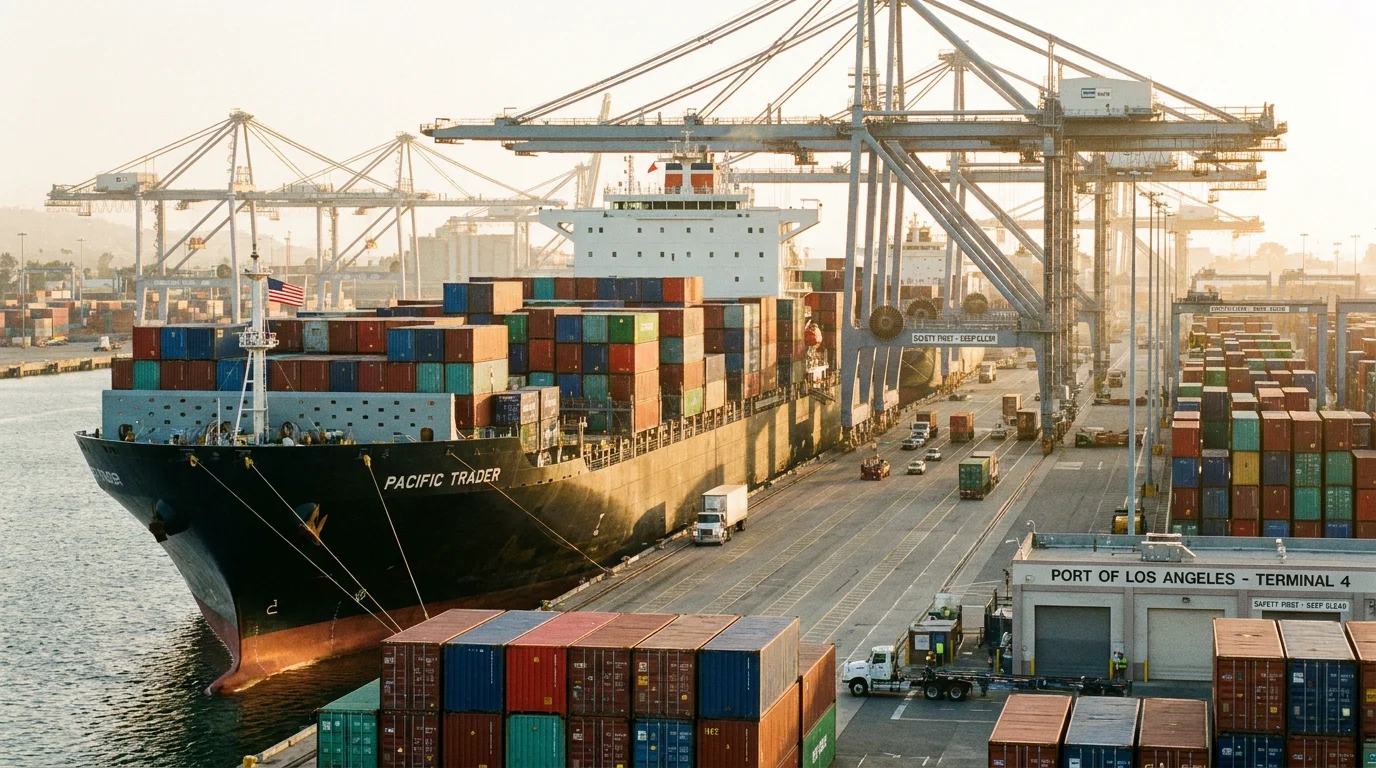
Summary: FOB (Free on Board) shipping defines where risk and cost responsibility shift from seller to buyer, with origin port handling charges averaging $200–$400 per TEU in 2026.
Global merchandise trade volume is projected to grow by 1.9 percent in 2026, according to WTO data reported by Statista. Behind every cross-border shipment sits a contract term that quietly determines who pays, who bears the risk, and who files the insurance claim. That term is FOB shipping, and misunderstanding it can cost US importers thousands of dollars on a single container. Whether you source finished goods from Shenzhen or raw materials from Ho Chi Minh City, mastering FOB shipping point vs FOB destination is essential for protecting your margins.
Yet many sellers and buyers confuse FOB with CIF, overlook terminal handling charges, or assume the term covers ocean freight. In practice, the obligations are precise and, when ignored, financially punishing. This article breaks down every element of free on board shipping, from legal definitions and Incoterm rules to cost structures and practical strategies for US businesses importing from Asia in 2026.
What Does FOB Mean in Shipping?
FOB stands for “Free on Board.” It is a trade term published by the International Chamber of Commerce (ICC) within the Incoterms framework. In international trade, FOB is a standard Incoterm defined by the ICC in Incoterms 2020. The term specifies the exact moment when cost, risk, and responsibility for goods transfer from the seller to the buyer.
The FOB price refers to the total value of goods at the point when they are loaded onto the departing vessel at the named port of shipment. Once the cargo crosses that threshold, the buyer assumes all obligations, including freight, insurance, and customs clearance at the destination port. The seller’s duty is fulfilled the moment loading is complete.
It is worth noting a common source of confusion: FOB shipping cost specifically refers to pre-loading logistics, not ocean freight. Misinterpreting this leads to confusion where buyers assume it includes sea carriage. If you are new to these trade terms, our guide on what FOB means in shipping provides a detailed primer.
FOB Shipping Point vs. FOB Destination: Core Differences
The two most common variants of FOB determine exactly where ownership and liability shift. Understanding the distinction is critical for accounting, insurance planning, and dispute resolution.
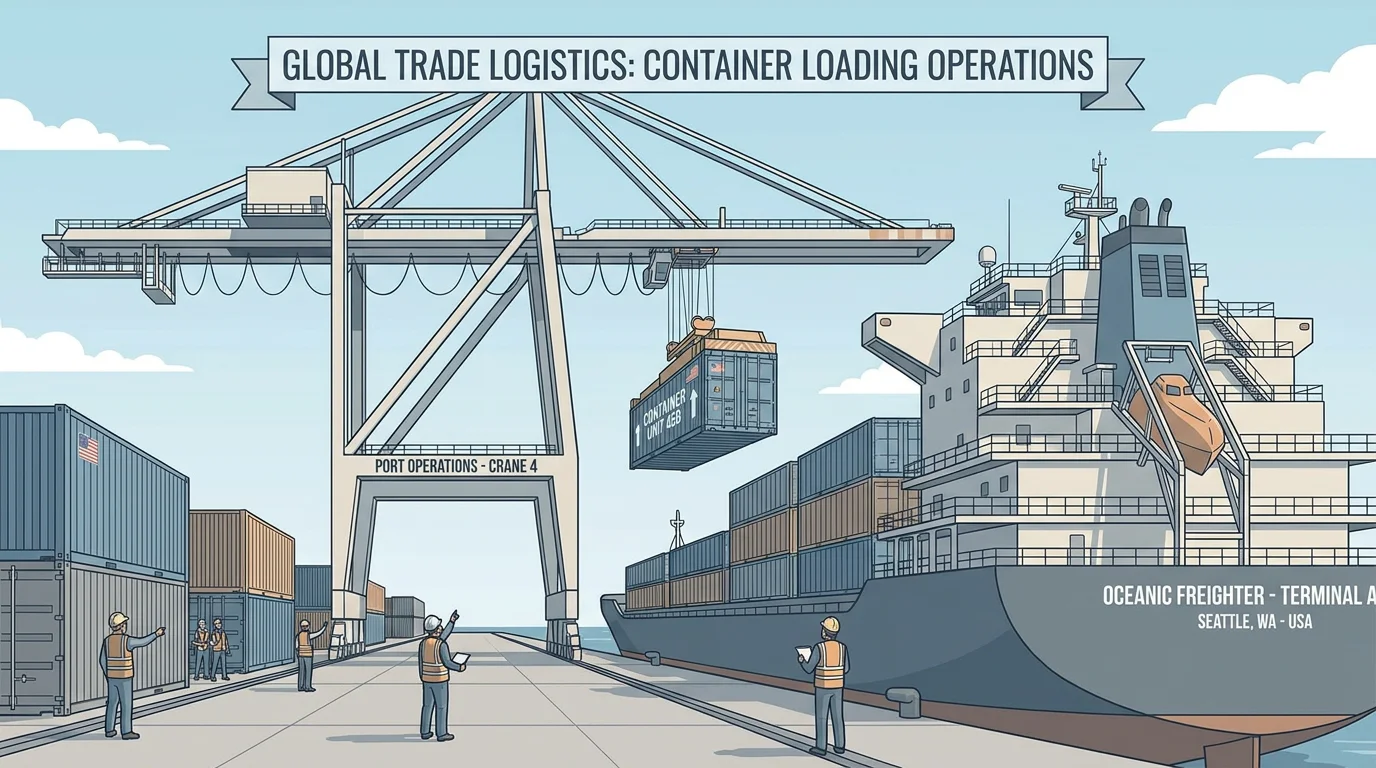
FOB shipping point (also called FOB origin) means the buyer takes ownership the moment the goods leave the seller’s dock or are loaded onto the carrier. From that instant, the buyer bears the risk of loss, pays freight charges, and files any insurance claims. FOB destination reverses the equation: the seller retains ownership and risk until the goods arrive at the buyer’s specified location.
| Criterion | FOB Shipping Point (Origin) | FOB Destination |
|---|---|---|
| Ownership transfer | At seller’s shipping dock | At buyer’s receiving location |
| Risk of loss in transit | Buyer | Seller |
| Freight cost default | Buyer (unless “freight prepaid”) | Seller (unless “freight collect”) |
| Insurance responsibility | Buyer | Seller |
| Revenue recognition timing | At shipment | At delivery |
For Amazon FBA sellers in the US, the choice between these two structures can shift thousands of dollars per shipment. To dive deeper into the margin impact, explore our comparison of FOB vs CIF vs DDP.
Key Variations: Freight Collect, Freight Prepaid, and Hybrids
Within each FOB type, a second layer of terms governs who actually pays the freight bill. These sub-designations are where many importers encounter surprises.
- FOB Origin, Freight Collect: The buyer assumes both ownership at the origin and freight payment. This is the most common structure for experienced importers who negotiate their own carrier rates.
- FOB Origin, Freight Prepaid: The buyer still takes ownership at origin, but the seller covers freight charges. Risk transfers early; cost transfers later.
- FOB Destination, Freight Collect: The seller retains risk until delivery, yet the buyer pays freight. This hybrid is less common and often leads to disputes.
- FOB Destination, Freight Prepaid: The seller owns the goods until delivery and pays freight. This is the most seller-heavy arrangement.
Each of these four structures creates a different allocation of cost and risk. Before signing any purchase order, confirm that the FOB sub-designation matches your intended responsibilities.
FOB Under Incoterms 2020: What Applies in 2026
The ICC reviews Incoterms approximately once per decade. Incoterms 2020 clarifies the cost-sharing in global trade between the seller, the buyer, and other parties involved. The next revision is expected in 2030, so the current rules will govern international FOB contracts for several more years.
Under Incoterms 2020, FOB applies exclusively to non-containerized sea freight and inland waterway transport. Strictly for sea freight per Incoterms 2020, the equivalent for air shipments is FCA. This distinction matters for US businesses importing containerized goods from China: technically, the ICC recommends using FCA (Free Carrier) for containers. In practice, however, FOB remains dominant in purchase orders across the Asia-to-US trade lane.
With FOB, sellers must provide export papers, and buyers must manage import clearance. For sellers who want to stay current with how these rules affect Amazon FBA logistics, we recommend reviewing FOB Incoterms 2026 updates.
The True Cost Behind an FOB Price in 2026
An FOB quotation from a Chinese supplier may look straightforward, but several cost layers are embedded within it, and several more are deliberately excluded.
Origin port terminal handling charges (THCs) average $200 to $400 per TEU in 2026. These fees cover stevedoring, wharfage, and documentation at the port of export. They are typically included in the FOB price, but not always. In addition, in 2026, with volatile fuel prices, inland FOB costs have risen 15 percent year over year per industry reports.
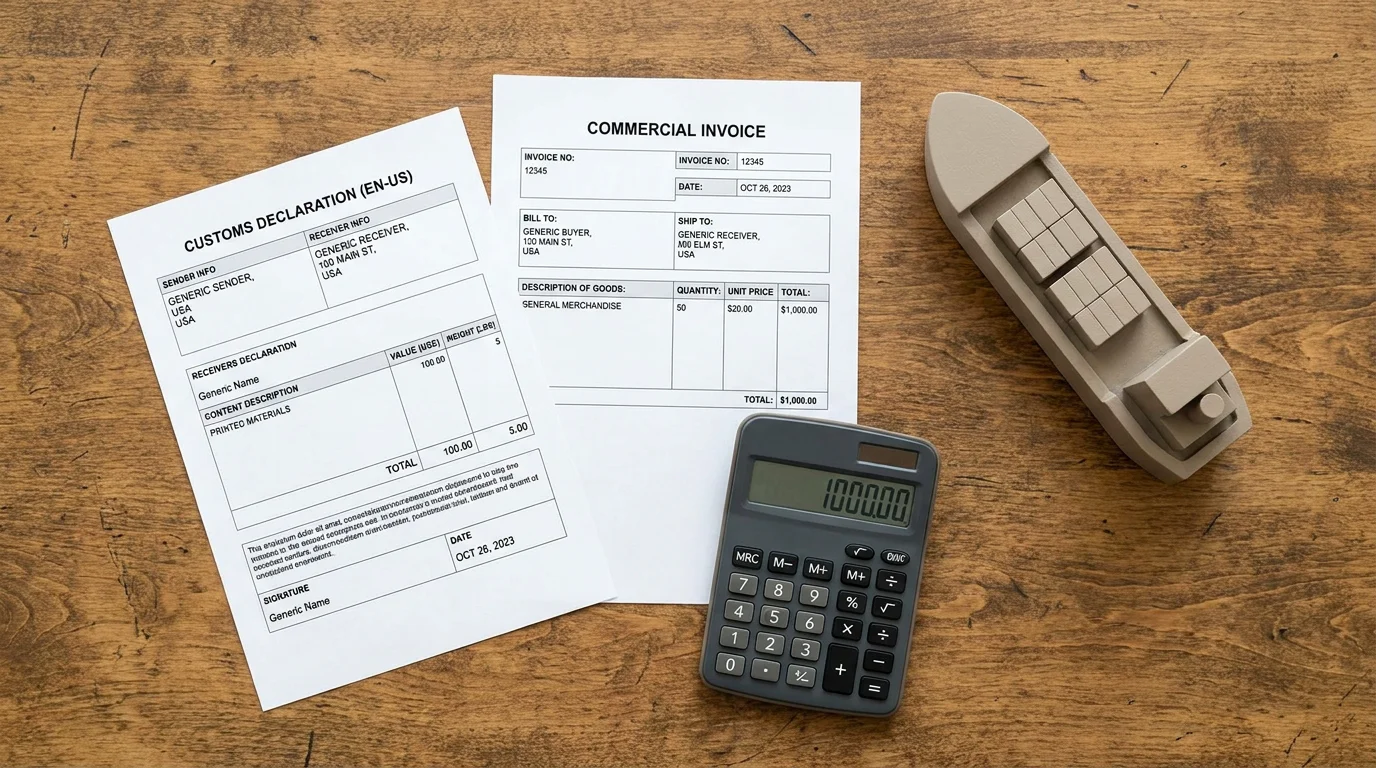
Beyond the FOB line item, the buyer is responsible for ocean freight, marine cargo insurance, destination port unloading, customs duties, and last-mile delivery. Common pitfalls include underestimating THC variations between ports and ignoring origin export taxes. For importers, knowing the FOB value is vital for duties calculation, as many customs authorities use it as the dutiable base. If you source from China, understanding the hidden costs behind FOB pricing can save you from margin erosion.
How Market Conditions in 2026 Affect FOB Strategies
The global freight environment in 2026 presents a mixed picture for importers negotiating FOB terms. The outlook going into 2026 sees a more favorable environment for shippers due to ample capacity and weaker demand. That generally means buyers have greater leverage when negotiating ocean freight rates separately from the FOB price.
However, geopolitical disruptions continue to inject volatility. Current 2026 rates show 5 to 10 percent fluctuations due to fuel costs and Red Sea rerouting. The Bertling ocean freight market report notes that carriers are using blank sailings to manage overcapacity, which can cause short-term rate spikes even in a generally bearish environment.
For US importers, container import volumes at major US ports are expected to remain below year-ago levels through at least May 2026, as slowing global trade growth and ongoing policy uncertainty weigh on demand. This softness can benefit FOB buyers who book freight independently, as spot rates trend lower when ports are underutilized.
FOB vs. Other Incoterms: When to Choose What
FOB is not always the ideal Incoterm. The right choice depends on your shipping volume, port expertise, and risk tolerance.
| Incoterm | Seller’s Responsibility Ends | Best For |
|---|---|---|
| EXW (Ex Works) | Seller’s premises | Buyers with full logistics control |
| FOB (Free on Board) | Loaded on vessel at origin port | Experienced importers who negotiate freight |
| CIF (Cost, Insurance, Freight) | Destination port (freight and insurance paid) | Buyers wanting seller-managed freight |
| DDP (Delivered Duty Paid) | Buyer’s door (all costs included) | Sellers wanting a turnkey price; QG Horizon specializes in this |
Many Amazon FBA sellers in the US find that DDP offers the simplest cost structure because duties and taxes are included upfront. We provide a DDP all-inclusive service from China to Amazon warehouses, bundling freight, customs clearance, and delivery into a single known cost. This eliminates the surprise charges that often surface with FOB or CIF when buyers manage post-loading logistics on their own.
Five Practical Tips for US Importers Using FOB Terms
Whether you are a solo entrepreneur or an established e-commerce brand, these guidelines will help you use FOB terms more effectively.
- Clarify the sub-designation in writing. “FOB Shenzhen” alone is incomplete. Specify “FOB Shenzhen, Freight Collect” or the relevant variant so that freight payment responsibility is unambiguous.
- Verify what the FOB price includes. Ask your supplier whether inland transport to the port, THC, and export documentation fees are embedded. If not, request an itemized breakdown.
- Secure marine cargo insurance early. Under FOB Origin, you bear the risk from the moment goods are loaded. Purchase insurance before the vessel departs, not after.
- Negotiate freight rates quarterly. Negotiating FOB prices quarterly helps hedge volatility in an environment where rates fluctuate 5 to 10 percent.
- Consider DDP for simplicity. If managing ocean freight, insurance, and customs clearance feels overwhelming, a DDP arrangement with a specialized freight forwarder removes that complexity entirely.
Conclusion: Making FOB Work for Your Business
Free on board shipping remains one of the most widely used trade terms for goods moving from Asia to the US. It gives buyers direct control over ocean freight selection and insurance, which experienced importers can leverage to reduce costs. However, that control comes with responsibility: ownership, risk, and the obligation to manage every logistics step after loading. In 2026, with origin port handling charges averaging $200 to $400 per TEU and inland FOB costs up 15 percent year over year, a clear understanding of every cost layer is not optional.
For Amazon FBA sellers who prefer a predictable, all-inclusive cost from factory to warehouse, working with a specialized freight forwarder that handles pickup, international freight, DDP customs clearance, and final delivery simplifies the entire chain. To get a personalized cost estimate within 24 hours, request a free quote from our logistics team and let us handle the complexity so you can focus on selling.
Frequently Asked Questions
Is FOB the same in domestic US shipping and international trade?
No. In US domestic shipping under the Uniform Commercial Code, FOB covers all transport modes and primarily determines where title transfers. Internationally, FOB under Incoterms 2020 applies only to non-containerized sea freight. Always specify which framework governs your contract to avoid confusion.
Who pays customs duties under FOB terms?
Under FOB, the buyer is responsible for import customs clearance and duties at the destination country. Many customs authorities use the FOB value as the dutiable base, which means the declared price at the port of origin directly affects how much duty you owe. If you prefer duties included upfront, QG Horizon offers a DDP service that bundles duties and taxes into a single all-inclusive rate.
Can I use FOB for air freight shipments?
Technically, Incoterms 2020 restricts FOB to sea and inland waterway transport. For air freight, the ICC recommends FCA (Free Carrier), which operates on a similar principle but applies at any named place of delivery, not just a port. Many suppliers still write “FOB” on air freight invoices out of habit, so clarify the governing Incoterm explicitly in your purchase order.
Ready to Optimize Your Amazon Shipping?
Get 3 route options tailored to your products and timeline
Get Your Quote→