FOB Terms Explained: A Practical Guide for US Importers
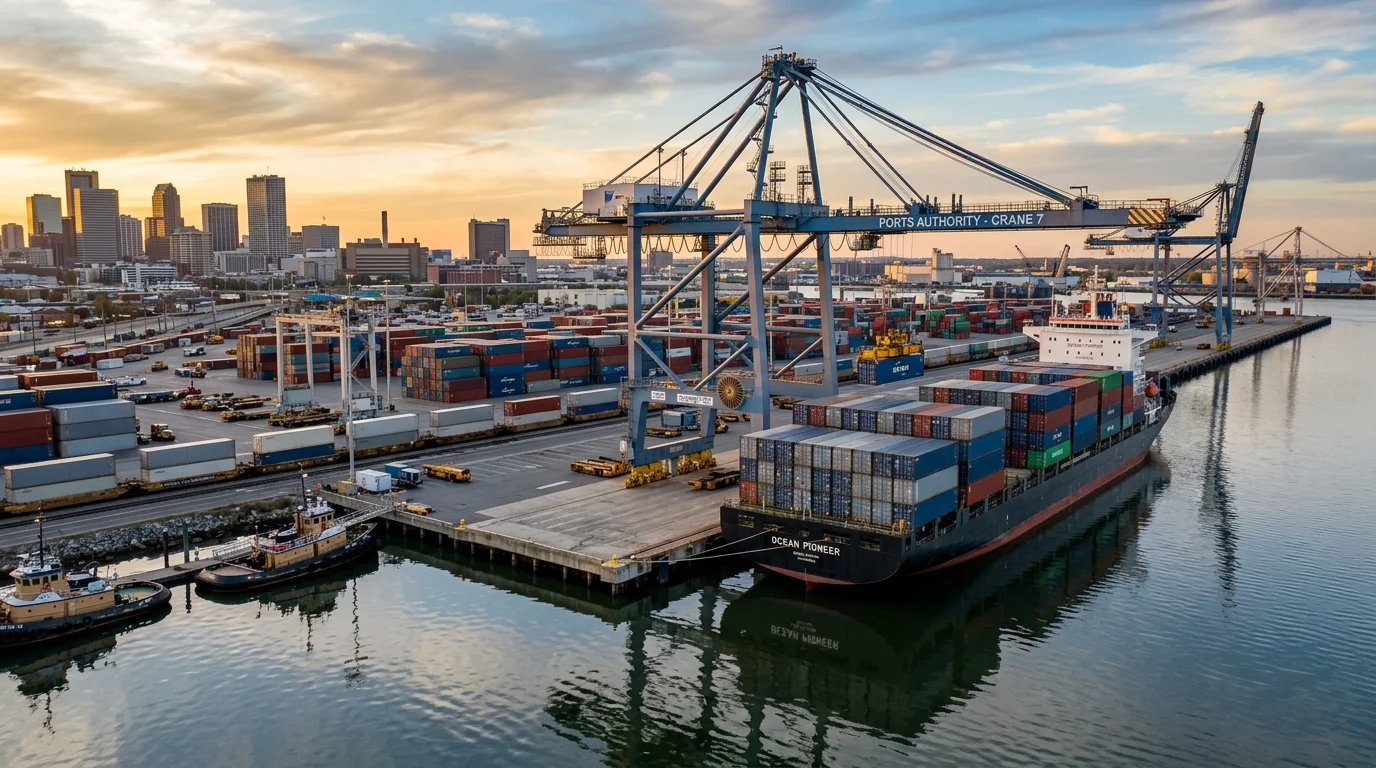
Summary: FOB, or Free on Board, is a shipping term that sets the exact point where cost and risk pass from seller to buyer: the moment goods are loaded on board the vessel. The seller covers export handling and loading at the origin port, while the buyer pays ocean freight, insurance, and import costs from that point forward.
Who is responsible if a container is damaged halfway across the Pacific? The answer often comes down to three letters printed on your invoice. The terms of an FOB agreement decide who pays freight, when risk transfers, and who files the claim when a shipment goes wrong. For many US importers sourcing from Asia, that single line item quietly shapes their margins. If the concept is new to you, our guide to what FOB means in shipping breaks down the fundamentals.
Getting these terms right is not a back-office formality. It determines your control over carriers, your insurance exposure, and your total landed cost. Misreading them can turn a competitive supplier quote into an expensive surprise once the goods reach the port.
What FOB Means in Shipping
FOB stands for Free on Board. It identifies the precise point at which obligations, costs, and risk pass from the seller to the buyer. Under this arrangement, the seller delivers goods to the named port of shipment, clears them for export, and loads them onto the vessel. Once the goods are on board, responsibility shifts entirely to the buyer.
Every purchase order and freight quote should spell out its fob terms clearly. Leaving them undefined creates uncertainty that frequently leads to disputes when shipments are delayed, damaged, or lost. A quote such as “FOB Ningbo” tells you the supplier will move the goods to Ningbo and load them, after which the ocean freight, marine insurance, and import duties become your responsibility. For a deeper walkthrough, see our breakdown of the FOB Incoterm and how it works.
International FOB Versus US Domestic Usage
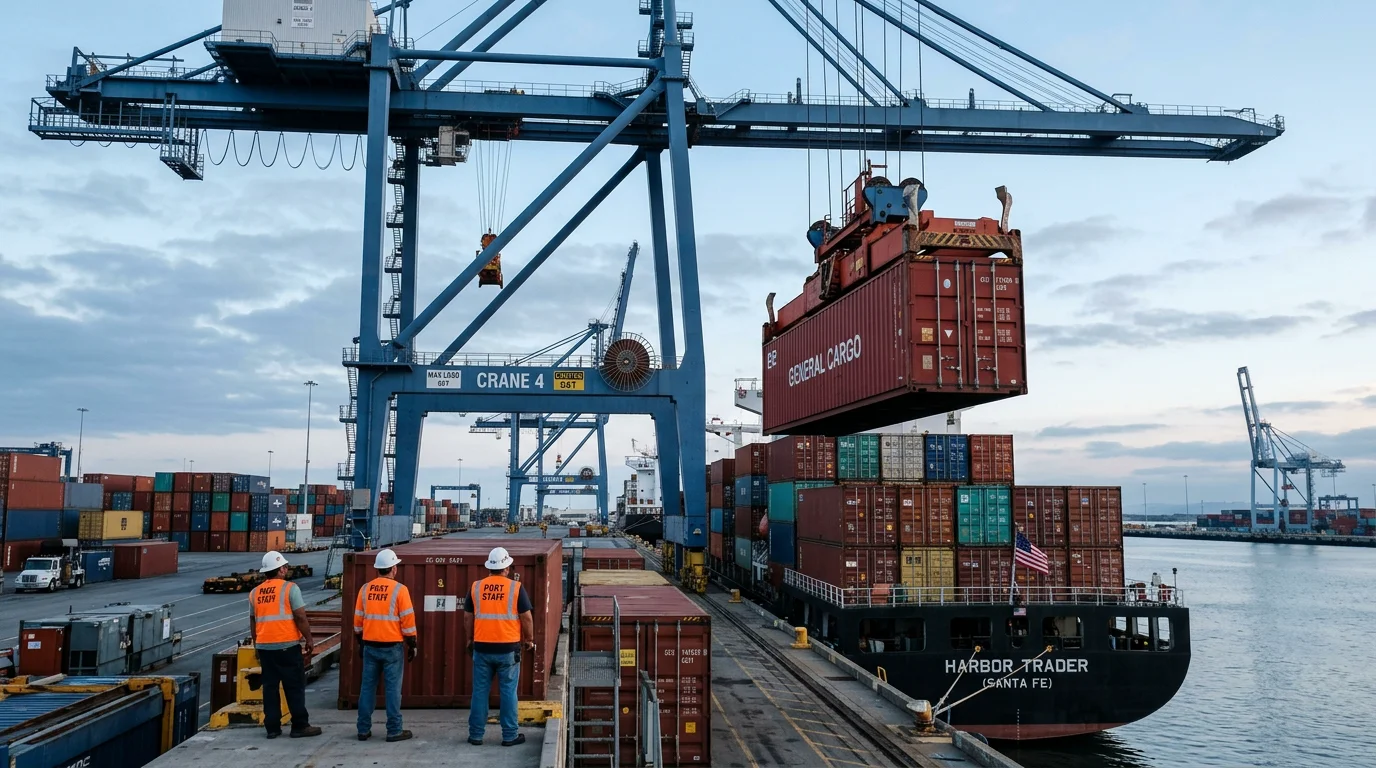
One term, two meanings. This is where many importers stumble. In international trade, FOB is one of eleven Incoterms published by the International Chamber of Commerce. According to the US trade authority, of the eleven rules, seven apply to any mode of transport and four are reserved for sea or inland waterway transport, with FOB among the latter.
Domestic shipments within the United States are different. Here, FOB terms derive from the Uniform Commercial Code rather than from Incoterms, and they address both risk and title:
- FOB Origin (shipping point): the buyer takes ownership and liability as soon as the goods leave the seller’s location, and pays freight during transit.
- FOB Destination: the seller retains ownership and liability until the goods reach the buyer’s location, bearing freight costs throughout.
These designations pair with a payment indicator. “Freight prepaid” means the seller pays the carrier; “freight collect” means the buyer pays. Applying domestic phrasing such as “FOB Destination” to an international invoice can backfire, because those North American concepts carry no standing under Incoterms. If you sell across US warehouses, our comparison of FOB shipping point versus FOB destination shows how the choice affects your margins.
Who Pays for What Under FOB
The clearest way to read an FOB agreement is to split the journey into two halves at the ship’s side. The seller’s responsibilities end at loading; the buyer’s responsibilities begin there.
The seller covers export packaging, inland transport to the port, origin terminal handling, export customs clearance, and loading on board. The buyer then covers ocean freight, marine insurance, destination terminal handling, import duties and taxes, and final delivery. These freight costs are not a rounding error. The OECD’s ITIC database tracks transport and insurance costs across more than 200 countries and their trading partners, underlining how much of the total trade bill sits precisely in the leg that FOB hands to the buyer.
Because the buyer controls the main journey, FOB gives cost-conscious importers room to negotiate carriers, consolidate shipments, and manage their own insurance. That control is the reason many experienced buyers prefer it. If your goal is a stronger deal at the origin, our tips to negotiate better FOB terms with your supplier are a useful starting point.
Why FOB Is Not Ideal for Containers
Here is the nuance most guides skip: FOB was designed for bulk and non-containerized cargo, not for the sealed containers that dominate modern trade. Under FOB, risk transfers only when goods are physically loaded on board. Yet containers routinely sit at the terminal for days before loading, creating a gray zone of responsibility if damage occurs beforehand.
For this reason, the ICC recommends FCA (Free Carrier) for containerized shipments, where risk transfers at the actual point of handover to the carrier. FCA closes the terminal gap that FOB leaves open. Despite this, FOB remains widely quoted by suppliers, partly because banks often expect a bill of lading with an on-board notation for letters of credit. If your supplier quotes FOB for a container moving by multiple modes, it is worth asking whether FCA better reflects the real handover.
FOB From China to the US: What FBA Sellers Should Know
For Amazon sellers importing from China, FOB is the term you will encounter most on factory quotes. It typically shows the unit price, the Incoterm, and a Chinese port such as Shenzhen or Ningbo. From that port onward, the freight, customs clearance, and delivery to the Amazon warehouse are yours to organize.
That responsibility carries real weight in the current market. According to the UNCTAD maritime review, global maritime trade grew by 2.4% in 2023, while freight rates surged in 2024 due to rerouting and port congestion; by mid-2024 the Shanghai Containerized Freight Index had more than doubled from late 2023. When the ocean leg belongs to you, volatility on that leg lands directly on your landed cost. Managing carriers, DDP customs clearance, and the final mile to Amazon is exactly where a specialized forwarder earns its place. Because we handle pickup, freight, duties and taxes, and delivery straight to the Amazon warehouse as a single point of contact, you trade uncertainty for a known, all-inclusive price.
Comparing Shipping Arrangements for FBA Sellers
FOB is not the only way to structure a China to US shipment. Sellers commonly weigh a self-managed FOB import against a supplier’s CIF quote or a turnkey DDP service. The table below compares the practical differences for an Amazon FBA workflow.
| Criterion | FOB (self-managed) | CIF from supplier | QG Horizon DDP service |
|---|---|---|---|
| Freight control | Buyer chooses carrier | Seller books freight | Managed for you across sea, air, express, and rail |
| Duties and taxes | Buyer arranges | Buyer arranges at destination | Included (DDP), known in advance |
| Delivery to Amazon warehouse | Buyer organizes | Buyer organizes | Handled from factory to FBA warehouse |
| Tracking and support | Buyer coordinates | Limited visibility | Real-time updates via WhatsApp, 7 days a week |
| Price transparency | Variable after port | Freight often marked up | All-inclusive quote within 24 hours |
The right choice depends on your volume, your urgency, and how much of the process you want to manage yourself. FOB rewards importers who value control; a DDP service suits sellers who prefer a single fixed price from the supplier’s door to the Amazon shelf.
Putting FOB to Work for Your Business
Mastering the terms of an FOB agreement is a margin decision, not a paperwork detail. Confirm the Incoterms version, name the port precisely, and never assume that domestic and international FOB carry the same meaning. Remember that FOB hands you the costly ocean leg, so control over carriers and insurance is an advantage only when you use it deliberately. For containerized cargo, question whether FCA fits your handover better. Read every quote with the transfer point in mind, and you will avoid the surprises that erode profit long after the goods have shipped.
Take action with QG Horizon
Understanding FOB is the first step; executing a shipment from a Chinese factory to a US Amazon warehouse is the harder part. Once the goods leave the port, the freight, the customs clearance, and the final mile all become your responsibility, and any misstep can stall your inventory.
As a freight forwarder specialized in Amazon FBA shipping from China, we manage pickup, freight, DDP customs clearance, and delivery straight to the Amazon warehouse, with real-time WhatsApp updates and a quote within 24 hours. Compare routes across sea, express boat, air, and China to Europe rail, then ship with a known, all-inclusive price. Explore our door-to-Amazon DDP shipping service to plan your next shipment with confidence.
Frequently Asked Questions
Does FOB stand for Free on Board or Freight on Board?
FOB stands for Free on Board. “Freight on Board” is a common misreading that appears in some contracts, but it is not recognized under Incoterms or the Uniform Commercial Code. Using the incorrect phrasing can create ambiguity, so it is best avoided.
Who pays for shipping under FOB terms?
Under international FOB, the seller pays only to bring the goods to the origin port and load them on board. The buyer then pays ocean freight, insurance, destination handling, and import duties. This split is why the transfer point matters so much to your total cost.
Can I use FOB for a containerized shipment?
Generally, no. FOB was designed for bulk and non-containerized sea freight, and the ICC recommends FCA for containers so that risk transfers at the actual point of handover. Many suppliers still quote FOB for containers, so it is worth confirming the term matches your cargo.
How does FOB affect my Amazon FBA landed cost?
Because FOB assigns the ocean leg and import costs to you, your landed cost depends on carrier rates, duties, and delivery to the warehouse. A DDP service like ours folds those elements into one all-inclusive price known in advance. That makes budgeting for FBA replenishment far more predictable.
What is the difference between FOB and FCA?
FOB transfers risk when goods are loaded on board the vessel, while FCA transfers risk when goods are handed to the carrier at a named place. FCA works for any mode of transport and suits containerized cargo better. FOB remains common for bulk sea freight and full container loads.
Ready to Optimize Your Amazon Shipping?
Get 3 route options tailored to your products and timeline
Get Your Quote→