Freight Cost Calculation Simplified for Amazon FBA Sellers


Are you losing profits because you don’t understand how to calculate freight costs for your Amazon FBA business? Many sellers underestimate this crucial aspect of their operations, leading to budget miscalculations and reduced margins. Accurate freight cost calculation is not just a financial necessity; it’s a strategic advantage that can significantly impact your bottom line. This post will demystify the process, guiding Amazon FBA sellers through the essential steps of freight cost calculation, ensuring effective budgeting and more informed financial planning.
Freight Cost Calculation Simplified for Amazon FBA Sellers
Accurate freight cost calculation is crucial for Amazon FBA sellers to maximize profit margins and ensure effective budgeting. The shipping costs can significantly impact the overall cost structure of selling on Amazon. Understanding these costs allows sellers to make informed decisions regarding pricing, inventory management, and supplier negotiations.
Key considerations for calculating freight costs include:
- Shipping Method: Choose between air freight, sea freight, or express courier services based on urgency and budget.
- Weight and Dimensions: Calculate both actual weight and volumetric weight to identify the applicable charges. Carriers often charge based on the greater of the two.
- Freight Classifications: Understand the classification of products, as different categories may have varying rates.
- Additional Fees: Account for customs duties, taxes, and other potential surcharges that may arise during the shipping process.
For effective financial planning, sellers should consider the following formula for calculating freight costs:
| Factor | Description |
|---|---|
| Base Freight Cost | Cost per weight unit or container (FCL/LCL) |
| Additional Charges | Customs duties, taxes, handling fees, insurance, etc. |
| Total Freight Cost | Base Freight Cost + Additional Charges |
By accurately assessing these factors, Amazon FBA sellers can optimize their freight costs, improving profitability and cash flow management. Calculating freight costs effectively leads to better pricing strategies and competitive advantages in the marketplace.
Steps to Calculate Freight Costs for Amazon FBA
Calculating freight costs accurately is essential for Amazon FBA sellers to maintain profitability. This section outlines a straightforward, step-by-step guide to simplify the freight cost calculation process.
- Step 1: Gather Required Information
Sellers need to collect specific details before calculating freight costs:
- Product weight (in pounds or kilograms)
- Dimensions (length, width, height)
- Shipping destination (including any specific regional considerations)
- Chosen shipping method (air, sea, or express courier)
- Any additional services required (insurance, handling, etc.)
- Step 2: Understand Freight Classifications
Freight classification directly impacts shipping rates. Different products belong to specific classifications based on factors like density, value, and risk. Sellers should:
- Research the applicable freight class for their products, as this can vary by carrier.
- Consult with shipping providers to confirm classifications and related costs.
- Be aware of any surcharges associated with specific classifications, such as hazardous materials or oversized items.
- Step 3: Use the Right Formula for Calculation
To calculate freight costs, sellers should apply the following formula:
| Factor | Description |
|---|---|
| Base Freight Cost | Cost per weight unit or container (FCL/LCL) |
| Additional Charges | Customs duties, taxes, handling fees, insurance, etc. |
| Total Freight Cost | Base Freight Cost + Additional Charges |
For example, if a seller has a base freight cost of $200 for a shipment and incurs an additional $50 in customs duties and handling fees, the total freight cost would be:
Total Freight Cost = $200 (Base Freight Cost) + $50 (Additional Charges) = $250
By following these steps, Amazon FBA sellers can simplify the freight cost calculation process, enabling them to make informed decisions that enhance their profitability.
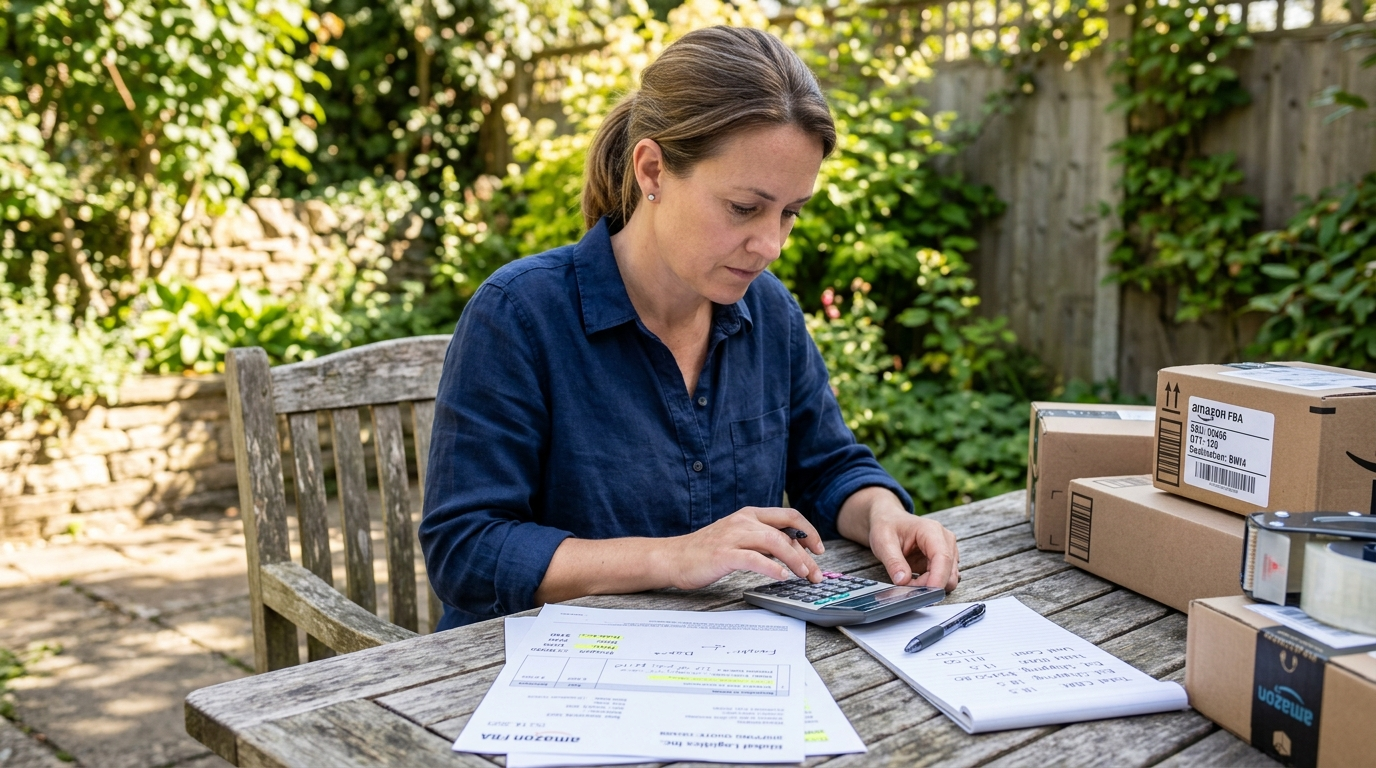
Example Calculations for Amazon FBA
Understanding how to calculate freight costs is vital for Amazon FBA sellers. Here are two practical examples that illustrate the freight cost determination process.
Example 1: Standard Freight Calculation
Consider a shipment of 100 units of a product that weighs 10 pounds each and measures 12 x 8 x 6 inches. The seller opts for sea freight to ship from China to the US.
- Calculate Total Weight:
Total weight = 100 units x 10 pounds/unit = 1,000 pounds
- Determine Freight Rate:
Assume the freight rate is $0.80 per pound.
Freight cost = Total weight x Freight rate
Freight cost = 1,000 pounds x $0.80/pound = $800
- Total Freight Cost:
The total freight cost for this shipment would be $800.
Example 2: Calculating Costs with Additional Fees
Suppose a seller is shipping 50 units of a product weighing 5 pounds each from China to the US via air freight. The shipment also incurs several additional fees.
- Calculate Total Weight:
Total weight = 50 units x 5 pounds/unit = 250 pounds
- Determine Freight Rate:
Assume the freight rate for air shipping is $1.50 per pound.
Freight cost = Total weight x Freight rate
Freight cost = 250 pounds x $1.50/pound = $375
- Identify Additional Fees:
Common additional fees may include:
- Customs duties: $50
- Insurance: $30
- Handling fees: $20
- Total Additional Fees:
Total additional fees = $50 + $30 + $20 = $100
- Total Freight Cost:
Total freight cost = Freight cost + Total additional fees
Total freight cost = $375 + $100 = $475
By using these examples, Amazon FBA sellers can visualize how to calculate their freight costs effectively. Understanding the breakdown allows for better budgeting and financial planning for their operations.
Cost-Saving Strategies for Amazon FBA Sellers
Optimizing shipping costs is essential for Amazon FBA sellers to enhance their shipping budget and improve profit margins. Here are effective strategies to achieve cost savings:
- Negotiating with Carriers
Negotiation can significantly reduce shipping costs:
- Request quotes from multiple carriers to compare rates and services.
- Leverage shipping volume to negotiate better rates; consistent shipping patterns can lead to discounts.
- Inquire about loyalty programs or long-term contracts that may offer cost reductions.
- Discuss specific needs with carriers to identify potential cost-saving options tailored to your business.
- Utilizing Freight Forwarders
Freight forwarders can streamline the shipping process and reduce costs:
- Partnering with experienced freight forwarders can provide access to better shipping rates and routing options.
- They can manage logistics, documentation, and customs clearance, saving time and reducing errors.
- Many freight forwarders offer consolidation services, allowing sellers to combine shipments for lower per-unit costs.
- Assess the freight forwarder’s reputation and service offerings to ensure they align with your shipping needs.
- Leveraging Amazon’s Shipping Discounts
Amazon provides shipping discounts for FBA sellers:
- Enroll in the FBA program to access discounted shipping rates through Amazon’s partnered carriers.
- Use Amazon’s own logistics services, which may offer competitive pricing for FBA shipments.
- Regularly review Amazon’s updated shipping policies and promotions to take advantage of available discounts.
- Monitor shipping costs through Amazon Seller Central to evaluate potential savings and adjust strategies accordingly.
By implementing these cost-saving strategies, Amazon FBA sellers can effectively manage their freight expenses, resulting in enhanced profitability and a more competitive edge in the marketplace.

Tools and Resources for Freight Cost Calculation
Amazon FBA sellers can leverage various tools and resources to accurately calculate freight costs, enhancing efficiency and financial planning. Here are some recommended options:
- Freight Cost Calculators
Several online calculators can provide instant freight cost estimates based on input parameters. Notable tools include:
- Freightos: Offers a user-friendly interface to compare rates across multiple carriers for different shipping methods.
- ShipBob: Provides a shipping calculator that factors in dimensions, weight, and shipping routes.
- Easyship: Includes an interactive tool that estimates shipping costs and delivery times for various carriers.
- Infographics for Quick Reference
Infographics can simplify complex freight calculations into digestible visuals. Useful resources include:
- Shipping Cost Breakdown Infographic: Illustrates the various components that contribute to total shipping costs, helping sellers understand what to include.
- Dimensional Weight Guide: Provides a visual representation of how to calculate volumetric weight, essential for cost assessments.
- Links to Additional Resources
Access to comprehensive guides and resources can further assist sellers:
- Amazon Seller Central: Offers shipping guidelines and resources specifically for FBA sellers, including rate charts and best practices.
- Freight Forwarder Websites: Many freight forwarders provide educational content regarding shipping costs, customs requirements, and regulatory compliance.
Utilizing these tools and resources enables Amazon FBA sellers to streamline their freight cost calculations, leading to more informed decision-making and improved profitability.
Final Words
Final Words
Understanding freight cost calculation is crucial for Amazon FBA sellers aiming to boost their profit margins. By following a structured approach, including gathering necessary information and utilizing the right formulas, sellers can simplify the process.
Real-life examples illustrate the calculations involved, while cost-saving strategies demonstrate how to enhance shipping budgets. Leveraging tools and resources like freight cost calculators streamlines these tasks, making them more manageable.
With accurate calculations and effective strategies, Amazon FBA sellers can optimize their logistics. Freight cost calculation simplified is essential for achieving financial success in a competitive market.
FAQ
Q: Why is freight cost calculation important for Amazon FBA sellers?
A: Understanding freight cost calculation is crucial for Amazon FBA sellers to maximize profit margins and ensure effective budgeting and financial planning.
Q: What are the steps to calculate freight costs for Amazon FBA?
A: The steps include gathering required information, understanding freight classifications, and using the appropriate formula for calculation.
Q: Can you provide an example of freight cost calculation for Amazon FBA?
A: Yes, examples include standard freight calculations with a breakdown of costs and situations involving additional fees, illustrating different scenarios.
Q: What are some cost-saving strategies for Amazon FBA sellers?
A: Effective strategies include negotiating with carriers, utilizing freight forwarders, and leveraging Amazon’s shipping discounts to optimize costs.
Q: What tools can help with freight cost calculation for Amazon FBA?
A: Recommended tools include freight cost calculators, infographics for quick reference, and links to additional resources that assist in accurate calculations.
Ready to Optimize Your Amazon Shipping?
Get 3 route options tailored to your products and timeline
Get Your Quote→