Freight FCA Explained: Free Carrier Terms, Costs, and Risk
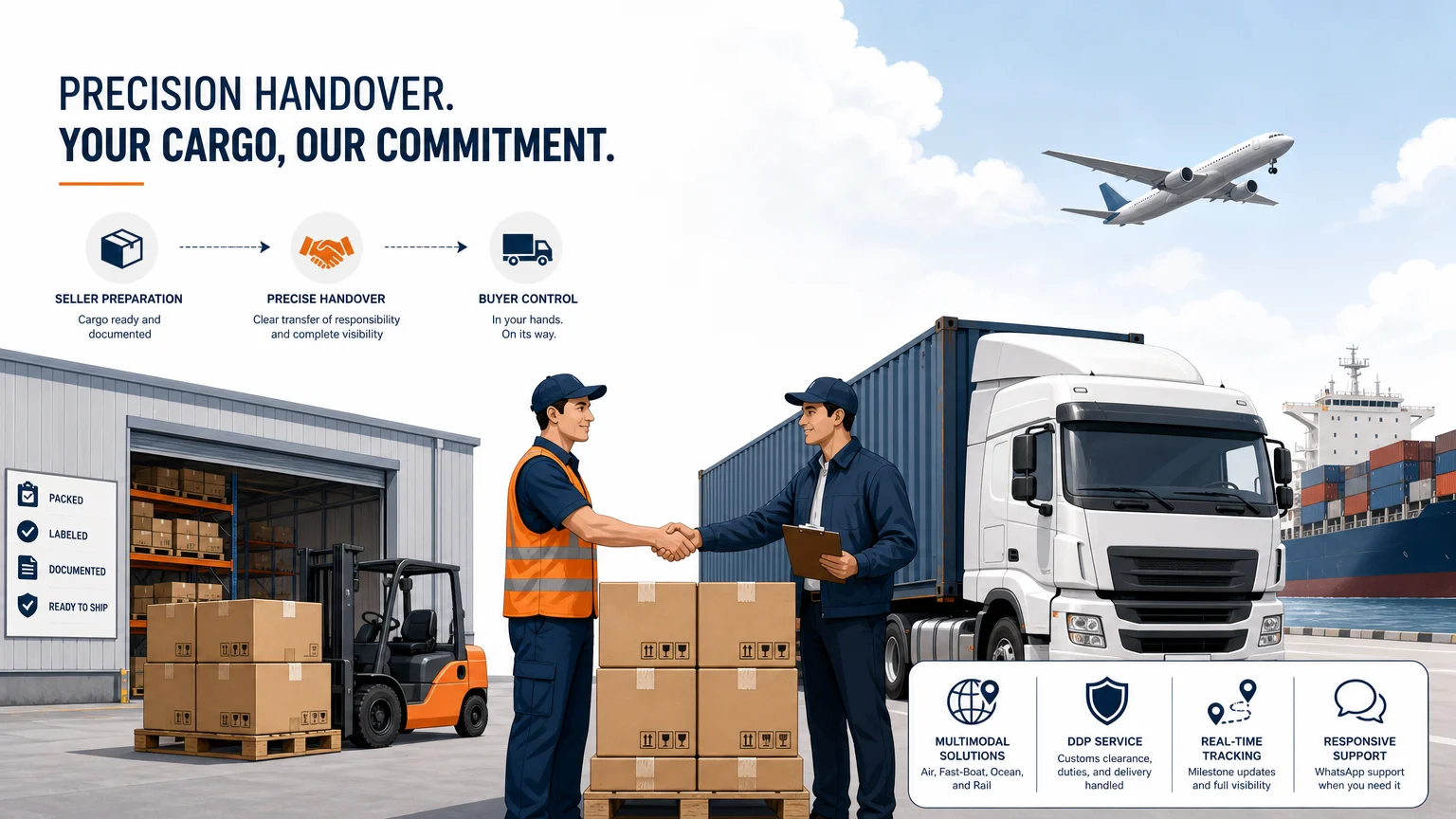
Summary: FCA, or Free Carrier, means the seller delivers export-cleared goods to a carrier or named location selected by the buyer. The buyer then assumes the main freight, transit risk, insurance decision, import clearance, duties, and onward delivery. The exact named place determines when delivery occurs, who loads or unloads, and when risk transfers.
If you searched for freight fca, you are likely trying to determine who controls transportation after the supplier hands over the goods. The answer depends on the precise delivery point written into the sales contract. For example, our guide to the FCA shipping point explains why a warehouse, terminal, and carrier depot can produce different obligations.
FCA is an Incoterms 2020 rule for international sales. It can support air, ocean, road, rail, and multimodal freight, making it practical when the buyer wants to arrange the main carriage. It also gives the seller responsibility for export clearance, which can make cross-border transactions easier to administer than EXW.
What does FCA mean in freight shipping?
FCA stands for Free Carrier. Under this rule, the seller delivers the goods, cleared for export, to a carrier or another party nominated by the buyer at an agreed named place. Once delivery is completed under the selected FCA variant, the buyer takes the risk and arranges the main transportation.
The ICC lists FCA among the Incoterms rules that can be used for any mode or combination of transport. Its official guidance also explains that Incoterms 2020 revised FCA to address situations where a party or bank requires an on-board bill of lading for a sea shipment. You can review the framework in the ICC Incoterms 2020 rules.
In practical terms, FCA divides the shipment into two stages. The seller manages preparation, export compliance, and delivery to the agreed handover point. The buyer manages the carrier relationship, main freight, import procedures, and transportation after handover.
FCA should not be written only as “FCA China” or “FCA Shenzhen.” The contract should identify the precise facility, terminal, warehouse, or address, followed by the applicable edition, such as “FCA Seller’s Warehouse, Shenzhen, Incoterms 2020.”
Where does delivery and risk transfer under FCA?
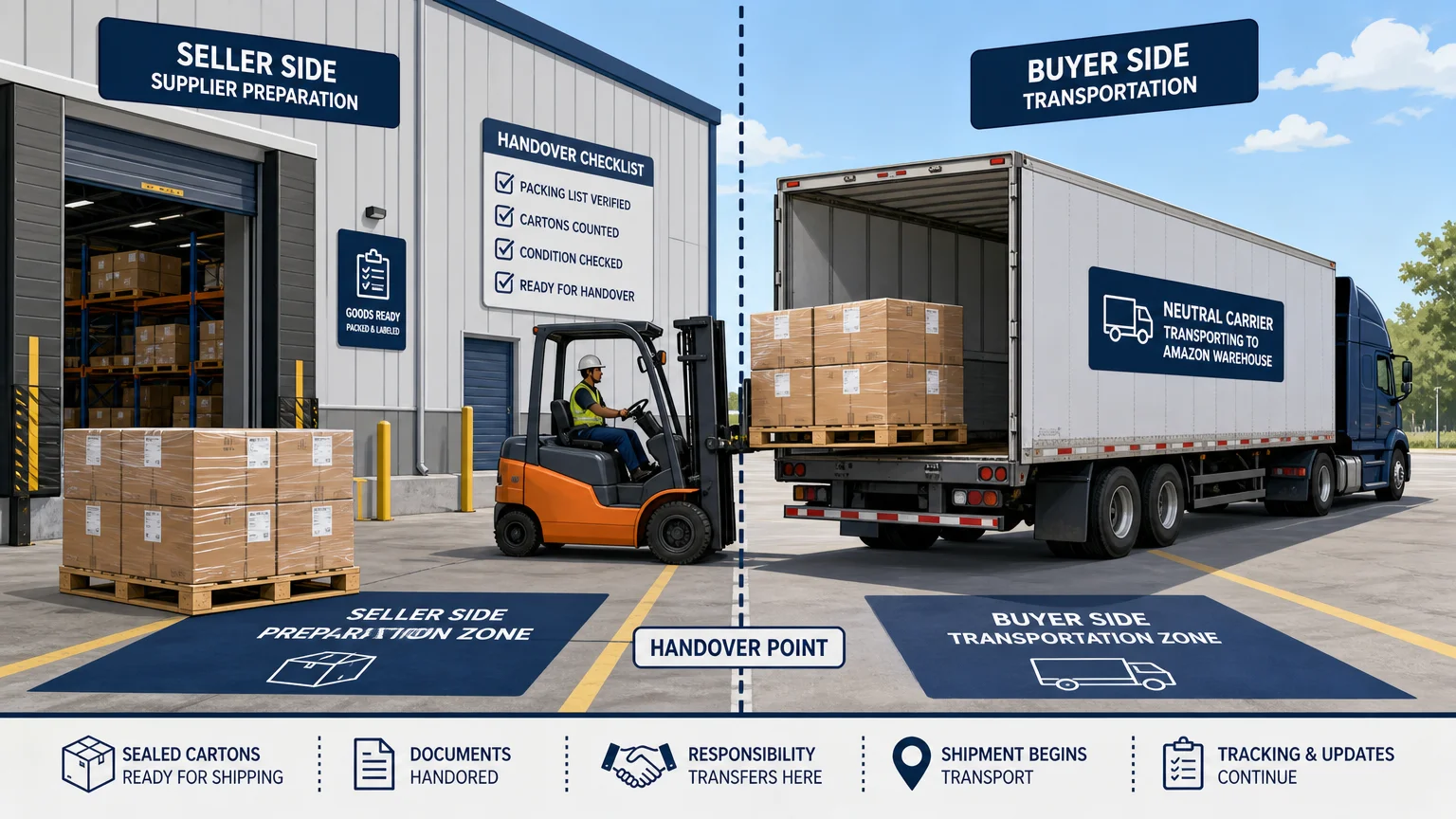
Consider two common FCA delivery scenarios. If the named place is the seller’s own premises, the seller loads the goods onto the collecting vehicle arranged by the buyer. Risk transfers when loading is complete.
If the named place is another location, such as a freight forwarder’s warehouse, container freight station, or terminal, the seller transports the goods there. The seller places them at the disposal of the buyer’s carrier, ready for unloading. The buyer’s carrier is generally responsible for unloading at that external location.
This distinction is central to the FCA delivery definition. The UK government’s customs guidance advises parties to specify the point within the named place as clearly as possible because risk passes to the buyer at that point. That guidance is especially relevant when a named site has several gates, loading bays, warehouses, or operating companies.
For example, “FCA Los Angeles” leaves too much room for disagreement. “FCA Supplier Warehouse, 123 Example Street, Los Angeles, California, Incoterms 2020” identifies the place more accurately. If the parties intend delivery at a forwarder’s facility, they should name the facility and clarify whether delivery occurs before or after unloading.
Our explanation of the FCA delivery definition can help you connect the contract wording with the physical handover. The goal is to prevent a later dispute about whether damage occurred before delivery, during loading, or after the carrier took control.
Who pays freight, insurance, and customs costs?
Under FCA, the seller generally pays costs up to the named delivery point. These costs may include export packaging, marking, export clearance, export licenses when required, and transportation to the agreed handover location.
The buyer generally pays for the main carriage from the named place to the destination. The buyer also manages transit arrangements, import clearance, import duties, taxes, destination handling, and onward delivery unless the sales contract allocates a specific cost differently.
FCA does not require either party to purchase cargo insurance. However, the buyer usually needs to arrange coverage from the moment risk transfers. The insurance start point should match the exact delivery point, particularly when goods move through several warehouses or terminals before international departure.
It is also useful to distinguish the sales term from the freight contract. FCA does not automatically mean that the seller books the international carrier. The buyer normally selects and contracts the main carrier, although the seller may provide practical assistance if the contract requires it.
For US importers, landed cost planning should include the product price, origin handling, main freight, insurance, customs brokerage, import duties, taxes, destination charges, and domestic delivery. A low FCA purchase price can still produce a high landed cost if the buyer underestimates post-handover charges.
How does FCA compare with EXW, FOB, and DDP?
The most useful comparison is not simply which term appears cheaper. You should compare the delivery point, transport mode, customs responsibility, risk transfer, and the party that controls the carrier.
- FCA versus EXW: Under FCA, the seller clears the goods for export and delivers them to the named carrier or place. Under EXW, the seller mainly makes the goods available at its premises, while the buyer handles loading and export formalities. FCA is often more workable for cross-border trade because the seller is located in the exporting country.
- FCA versus FOB: FCA works for any transport mode. FOB is limited to sea and inland waterway transport, with risk transferring when the goods are loaded on board the vessel. FCA is generally better aligned with containerized or multimodal freight because the handover can occur at a factory, container yard, or forwarder facility.
- FCA versus DDP: FCA gives the buyer more control over the main carriage and import process. DDP places substantially more responsibility on the seller, including import clearance, duties, and delivery to the agreed destination. DDP may be simpler for buyers that do not want to manage international logistics directly.
Our article on FCA terms meaning provides a useful reference when you are reviewing a supplier quotation. In every comparison, confirm what the quoted price includes and where the seller’s responsibility ends.
When is FCA practical for containerized and multimodal freight?
FCA is practical when the buyer already has a freight forwarder, carrier agreement, or internal logistics team. It can also work well when the shipment moves by truck to a port, then by ocean, rail, or another transport mode.
The US Department of Transportation’s 2026 National Freight Strategic Plan describes the American freight system as a multimodal network involving different modes, infrastructure, and supply chain participants. FCA fits this operating environment because it allows the parties to define a handover before the main international movement begins. This is an application of FCA’s flexibility, not a claim that the plan recommends a particular Incoterm.
FCA may suit the following situations:
- Containerized goods collected from a supplier’s factory.
- Air freight where the buyer wants to choose the forwarder and service level.
- Rail or road shipments involving several transport legs.
- Consolidated cargo delivered to a forwarder’s warehouse.
- US import programs with established customs and carrier procedures.
- Shipments where the buyer wants clearer control over freight pricing and routing.
FCA may be less convenient when the buyer lacks export-country logistics knowledge or cannot manage import clearance. In those cases, a managed door-to-door service can reduce coordination work, although the buyer should still review the customs, tax, importer-of-record, and insurance arrangements.
For sellers, FCA can reduce the need to arrange the main international freight. However, the seller remains responsible for accurate export documentation and must coordinate with a carrier selected by the buyer. This makes timing, pickup instructions, and document delivery important operational points.
What documents and contract details should you confirm?
A well-prepared FCA shipment should connect the commercial contract, freight booking, customs filing, and proof of delivery. The exact document set depends on the product, origin, destination, transport mode, and regulatory requirements.
- Commercial invoice with the FCA term and named place.
- Packing list showing quantities, weights, dimensions, and package details.
- Export declaration and any required export license.
- Certificate of origin or product certificates when required.
- Carrier receipt, forwarder receipt, air waybill, rail document, or bill of lading.
- Insurance certificate or policy details if the buyer arranges cargo coverage.
- Import documents, customs instructions, and tax information for the destination.
The contract should state the exact FCA named place, delivery date or period, loading responsibility, document requirements, carrier nomination process, and treatment of additional charges. It should also clarify who pays origin terminal handling, inspection fees, storage, demurrage, and other charges that may arise from a missed pickup.
Incoterms 2020 includes an optional mechanism for FCA sea shipments involving an on-board bill of lading. The buyer and seller can agree that the buyer instructs the carrier to issue the document to the seller after loading on board. This may support letter of credit requirements, but it should be written into the contract and coordinated with the carrier and banks.
What are the most common FCA mistakes?
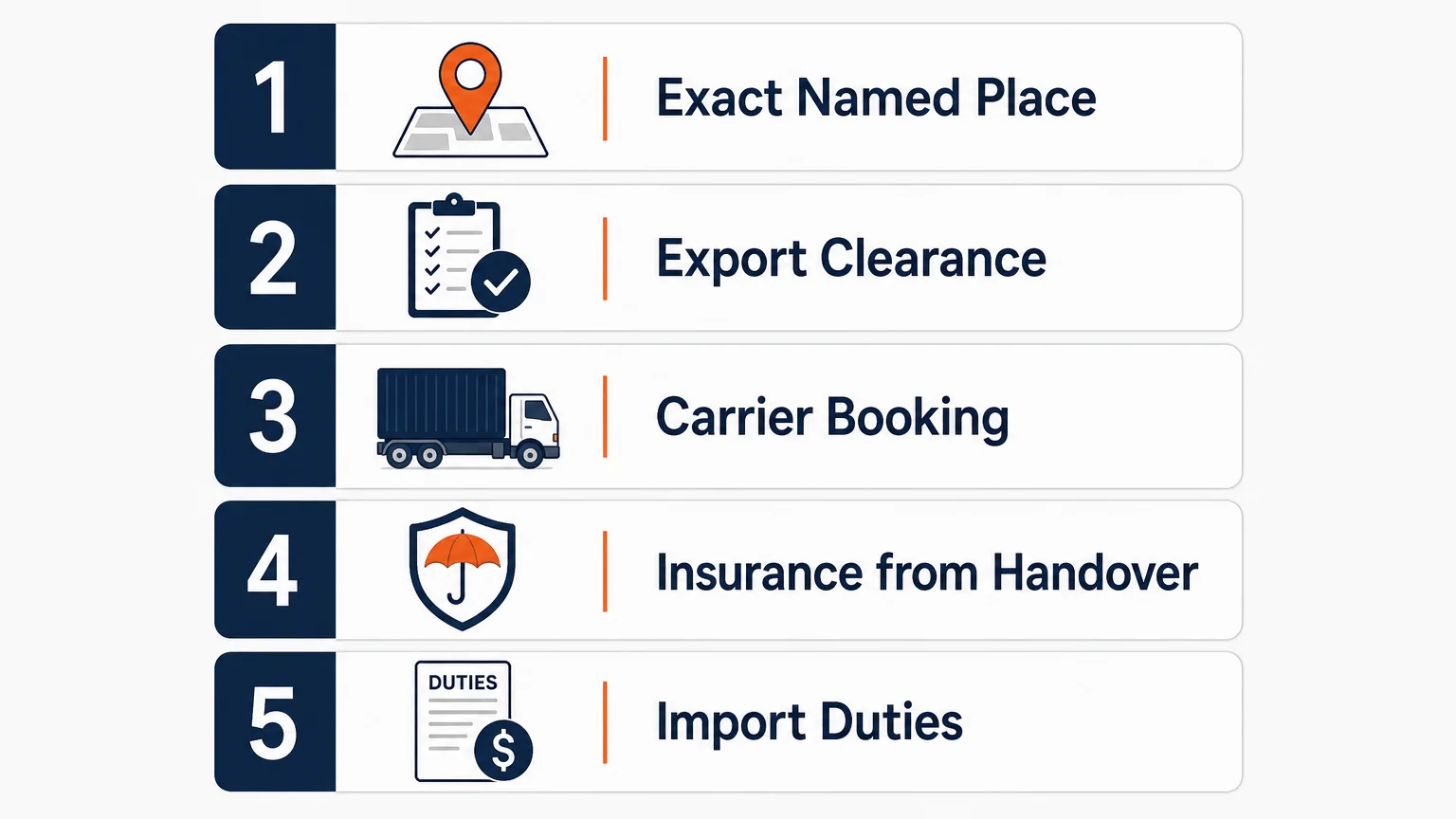
Most FCA disputes begin with an unclear handover rather than with the three-letter term itself. The following checks can reduce avoidable delays and cost disputes:
- Name the exact place: Include a full warehouse address, terminal name, or carrier facility instead of only naming a city.
- Confirm the FCA variant: Establish whether delivery occurs at the seller’s premises or at another location.
- Define loading and unloading: State who loads the buyer’s vehicle and who unloads at an external named place.
- Align insurance: Arrange cargo coverage from the risk transfer point, not from the vessel departure date.
- Check customs roles: Confirm who files export and import declarations, pays duties, and provides required data.
- Coordinate the carrier: Ensure the buyer’s nominated carrier arrives within the agreed pickup window.
- Record handover evidence: Keep receipts, delivery confirmations, photographs, and transport documents.
Another frequent mistake is assuming that FCA includes international freight because the supplier has provided a shipping quote. Ask whether the price covers only delivery to the named place or also includes the main carriage, destination handling, customs, and final delivery.
For Amazon FBA shipments, the distinction is particularly important. Inventory must reach the correct Amazon warehouse under the required appointment, labeling, customs, and receiving arrangements. Our explanation of FCA in shipping can help you evaluate where an FCA handover fits within a broader FBA logistics plan.
When the buyer does not want to coordinate each stage, we can compare a managed route with buyer-controlled FCA freight. This allows you to assess whether carrier control, lower quoted origin responsibility, or simpler door-to-door administration is more valuable for the shipment.
Choose the FCA structure that matches your shipment
The practical meaning of FCA freight terms depends on one critical detail, the named place of delivery. From that point, the buyer generally carries the transit risk, main freight, insurance decision, import clearance, duties, and onward delivery. Before signing, specify the exact handover location, confirm loading responsibilities, align insurance, and document every customs obligation. FCA can be an efficient choice for containerized, air, road, rail, and multimodal freight when the buyer has the expertise and partners to manage the journey after handover.
Take action with QG Horizon
When FCA leaves you responsible for coordinating carriers, customs, and delivery milestones, you may need a clearer route from the supplier to the final receiving point. A shipment-specific review can help you compare buyer-controlled freight with a managed alternative.
We coordinate supplier pickup in China, international freight, customs clearance, DDP handling, delivery to Amazon warehouses, and shipment tracking. You can submit product details or a packing list and receive route options based on weight, volume, urgency, destination, and budget. Explore our freight forwarding services to discuss the most suitable structure for your shipment.
Frequently Asked Questions
What does FCA mean in freight shipping?
FCA means Free Carrier. The seller delivers export-cleared goods to a carrier or named place selected by the buyer, and the buyer generally arranges the main carriage from that handover point.
Who pays freight under FCA?
The buyer normally pays the main freight after the FCA delivery point. The seller pays costs required to prepare the goods, clear them for export, and deliver them to the named place.
When does risk transfer under FCA?
Risk transfers when delivery is completed at the named place. At the seller’s premises, this usually occurs after the seller loads the goods onto the buyer’s collecting vehicle; at another location, it occurs when the goods are placed at the buyer’s carrier’s disposal, ready for unloading.
Does FCA include insurance?
No. FCA does not require either party to purchase cargo insurance. The buyer usually arranges coverage from the moment risk transfers, because the buyer controls the main carriage and bears the later transit risk.
Is FCA suitable for Amazon FBA shipments?
FCA can suit Amazon FBA shipments when the buyer has a capable freight forwarder and can manage import clearance, delivery timing, and Amazon receiving requirements. If you prefer one partner to manage pickup, freight, customs, duties, delivery, and tracking, QG Horizon can structure a managed route around those needs.
Ready to Optimize Your Amazon Shipping?
Get 3 route options tailored to your products and timeline
Get Your Quote→