FOB Meaning in Freight Shipping: A Complete US Guide
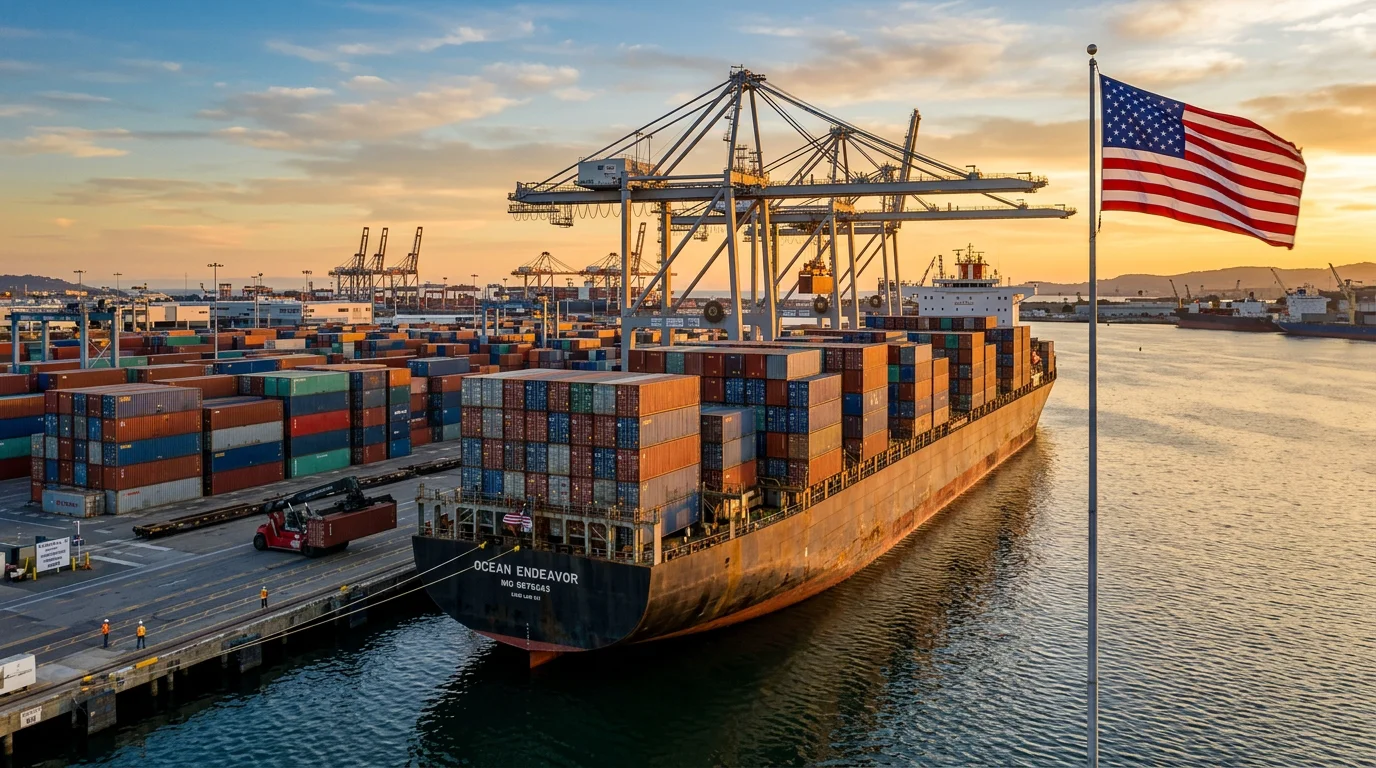
Summary: FOB stands for “Free On Board,” a shipping term that defines the exact moment responsibility, cost, and risk pass from the seller to the buyer. In international sea freight it points to the loading of goods onto the vessel, while in US domestic trade it separates FOB origin from FOB destination. Knowing which applies protects your margins.
One misread abbreviation on a purchase order can decide who absorbs the loss when a pallet is crushed in transit. Few three-letter terms carry as much financial weight, which is why understanding the meaning of FOB in freight shipping matters for every importer and small business. If you want a plain-language primer first, read our explainer on what does FOB mean in shipping.
The confusion is real because FOB means two different things depending on context. In the US, it is a domestic accounting convention. Internationally, it is a formal Incoterms rule. According to Trade Finance Global, the North American concepts of “FOB shipping point” and “FOB destination” have no equivalent in international trade, a gap that trips up first-time exporters every day.
What the freight FOB meaning actually covers
At its core, the freight fob meaning describes a single decision point: where does the seller stop being responsible and the buyer take over? FOB is an abbreviation of “Free On Board.” It settles three things at once: who pays the freight, who bears the risk of damage or loss, and where that handover occurs.
Many people assume FOB only decides who pays the shipping bill. In reality, its larger purpose is establishing who carries the risk while the goods are moving. That distinction determines who files a freight claim, whose insurance responds, and whose balance sheet the goods sit on at the end of a reporting period. For a deeper walkthrough of the term, our guide on what does FOB mean breaks down each responsibility in order.
FOB under Incoterms 2020: the international meaning
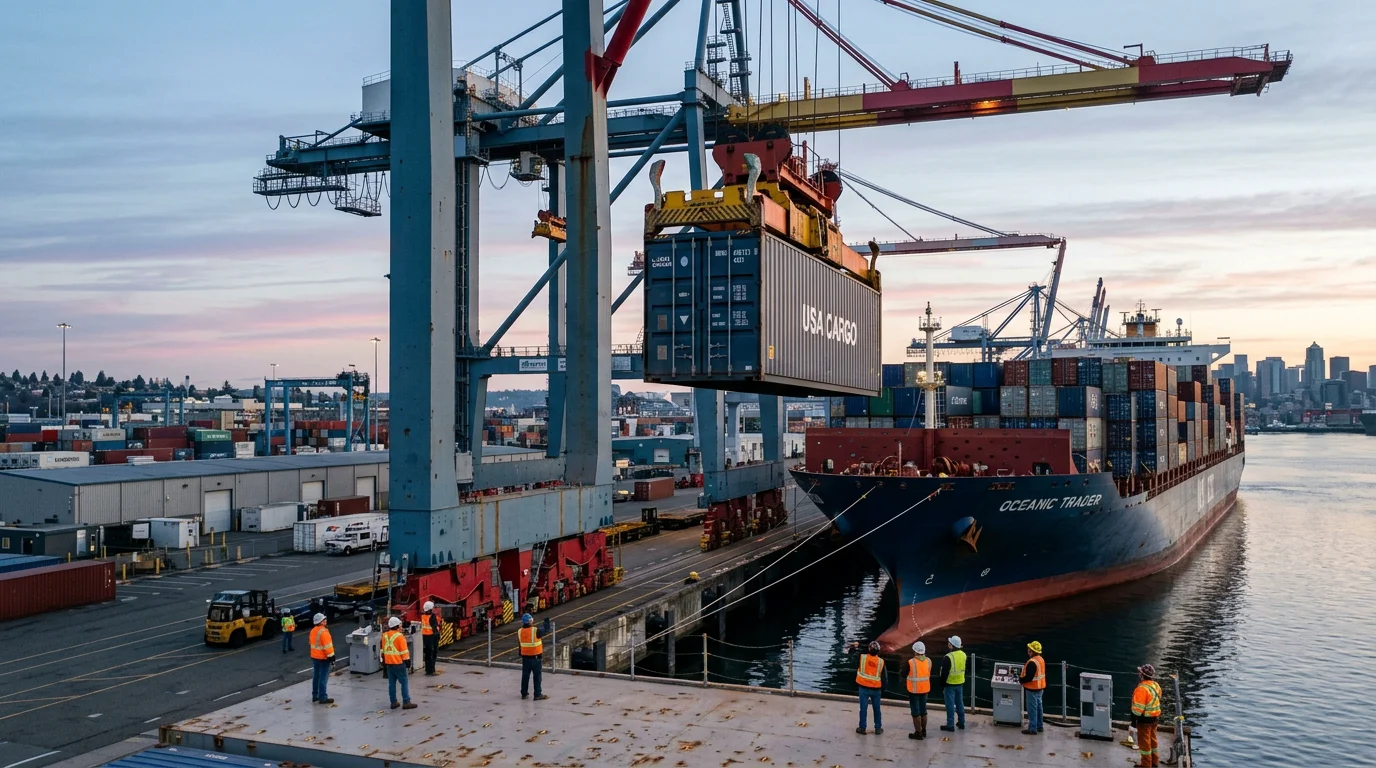
In cross-border trade, FOB is one of the eleven official rules published by the International Chamber of Commerce. SeaRates notes that FOB is designed for the transport of bulk and heavy goods by sea, always paired with a named port of shipment, such as “FOB Shanghai.”
Under this framework, the seller delivers the goods, clears them for export, and loads them onto the vessel the buyer has nominated. The moment the cargo is on board, the risk transfers. From there the buyer pays ocean freight, marine insurance, import clearance, duties, and inland delivery at destination. Trade Finance Global stresses that Incoterms 2020 restricts FOB to sea and inland waterway transport only, and that it remains in force through the rest of the decade.
There is an important caveat. FOB was built for the era of loose cargo swinging over a ship’s rail. For modern containerized shipments, where the seller hands goods to a carrier at a yard well before loading, guidance now favors FCA (Free Carrier) instead. If you ship from China to Amazon warehouses, our overview of FOB origin definition and risk profile explains how this affects your exposure.
FOB origin vs FOB destination in US domestic freight
Within the United States, FOB is written into sales agreements to fix where liability shifts, and it splits into two familiar phrasings. FOB origin, also called FOB shipping point, means the transfer happens the moment the goods are safely on the carrier at the seller’s dock. FOB destination means the transfer happens only when the goods are removed from the transport at the buyer’s location.
The practical consequence is a matter of who owns the risk in transit. Under FOB origin, the buyer assumes ownership at pickup and typically files any freight claim. Under FOB destination, the seller stays responsible until delivery is completed. A price quoted “$5,000 FOB Chicago” tells a Miami buyer that they cover freight from Chicago onward.
Freight collect vs freight prepaid
FOB terms decide ownership; payment terms decide who pays the carrier. “Freight prepaid” means the seller pays the carrier directly, and it often accompanies FOB destination. “Freight collect” means the buyer pays, and it frequently pairs with FOB origin. The two are negotiated independently, so you should never assume one dictates the other. Review both lines on every purchase order before the shipment leaves the dock.
Comparing FOB with CIF, EXW, and FCA
FOB rarely stands alone in a supplier negotiation. Understanding the neighboring Incoterms helps you compare quotes accurately and avoid unexpected charges. The difference between FOB and CIF is that under FOB both cost and risk transfer at the port of export, whereas under CIF the seller arranges and pays for carriage and insurance to the destination port.
| Term | Who arranges main freight | Where risk transfers | Best suited for |
|---|---|---|---|
| EXW (Ex Works) | Buyer | Seller’s premises | Buyers wanting full control |
| FOB (Free On Board) | Buyer | On board the vessel | Bulk and non-containerized sea freight |
| FCA (Free Carrier) | Buyer | Handover to carrier | Containerized and multimodal cargo |
| CIF (Cost, Insurance, Freight) | Seller | On board the vessel | Buyers new to importing |
| QG Horizon (DDP) | We arrange end to end | At the Amazon warehouse | FBA sellers wanting duties and taxes included |
For Amazon sellers, the choice between FOB terms directly shapes landed cost. Our comparison of FOB shipping point vs FOB destination shows how a single term can move your FBA margin by several percentage points per shipment.
Why the wrong FOB term costs US businesses money
Consider a manufacturer in Chicago shipping a $25,000 pallet to a distributor in Dallas. Under FOB origin, the buyer owns the transit risk and files any damage claim. Under FOB destination, the seller does. The physical shipment is identical; only the agreed term changes who absorbs a loss.
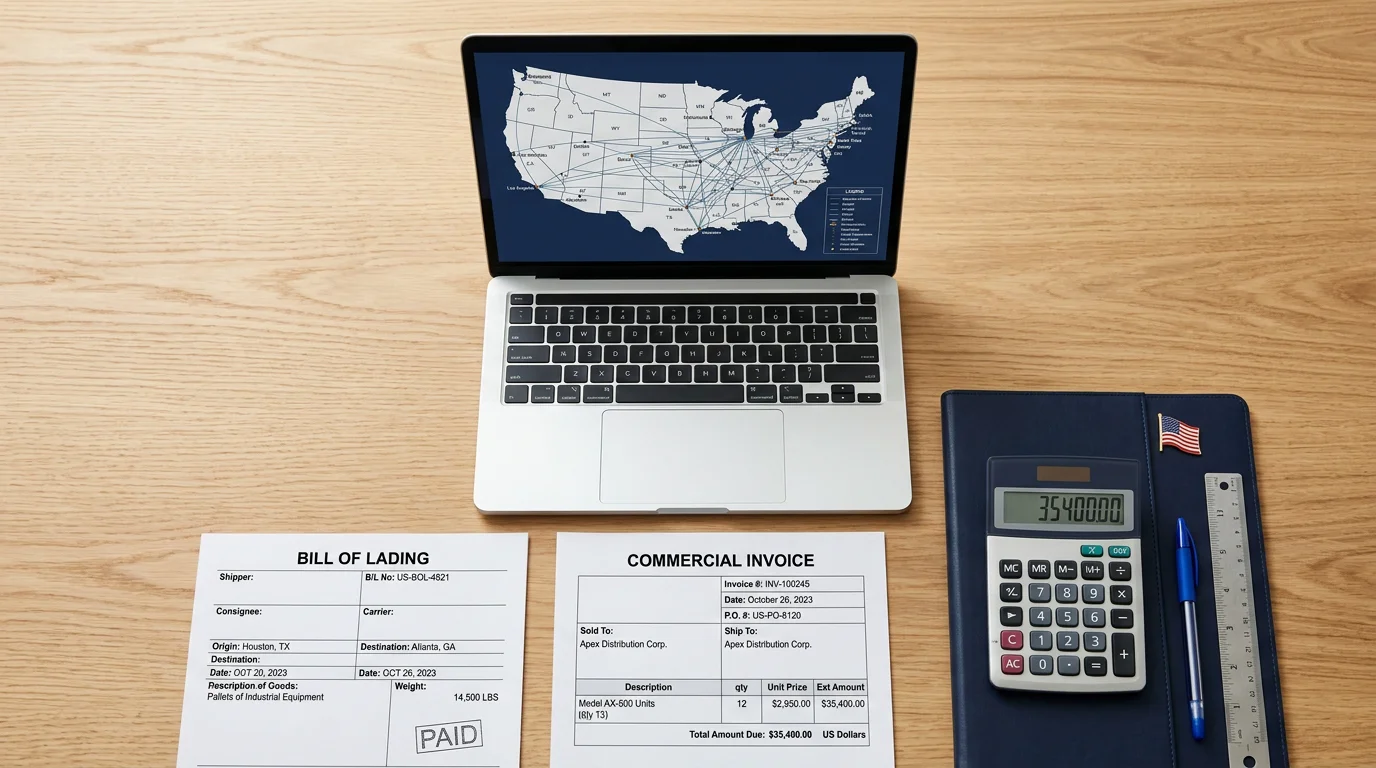
Across the American market, the most frequent mistake is treating FOB as a mere price point rather than a legal allocation of risk. As export documentation specialists point out, US companies new to exporting often carry their domestic FOB habits into international contracts, where the term means something different. The safeguard is simple: state the Incoterms edition explicitly, for example “FOB New York (Incoterms 2020),” and keep every delivery receipt, inspection report, and bill of lading in case a claim arises.
Making FOB work for your shipments
The meaning of FOB in freight comes down to one question you should answer before every order: at what point do cost and risk pass to you? Confirm whether you are operating under US domestic FOB origin and destination logic or the international Incoterms 2020 rule, and specify the standard in writing. For containerized cargo, weigh FCA as a cleaner alternative. Handled deliberately, FOB stops being a source of disputes and becomes a lever you use to control landed cost and protect your margins.
Take action with QG Horizon
If parsing FOB, FCA, and DDP for every China-to-Amazon shipment feels like a distraction from growing your catalog, you do not have to manage it alone. Choosing the right term is only the first step; the real work is moving goods from the factory to the warehouse without customs delays derailing your plans.
We are a freight forwarder specialized in Amazon FBA shipping from China, handling collection, freight, and customs in DDP so duties and taxes are included in one all-in price known in advance. You receive three route options with estimated rates and transit times within 24 hours, plus real-time tracking and support over WhatsApp. Request your free DDP shipping quote and ship with clear costs from the start.
Frequently Asked Questions
Does FOB stand for “Free On Board” or “Freight On Board”?
The correct and recognized meaning is “Free On Board.” “Freight On Board” is a common but unofficial phrasing that appears in neither the Incoterms rules nor the US Uniform Commercial Code. Using it in a contract can create avoidable confusion.
Is FOB suitable for containerized shipments?
Generally no. FOB was designed for bulk and break-bulk cargo loaded directly onto a vessel. For container traffic, where goods are handed over at a yard or terminal, the Incoterms guidance recommends FCA because risk transfers at the actual point of handover.
What is the difference between FOB origin and FOB destination?
FOB origin transfers responsibility to the buyer the moment the carrier collects the goods, while FOB destination keeps responsibility with the seller until delivery is completed. The distinction decides who carries the risk in transit and who files any freight claim.
Who pays the freight under FOB?
Payment depends on the freight terms attached to the FOB agreement, not on FOB alone. “Freight collect” means the buyer pays the carrier, and “freight prepaid” means the seller pays. These are negotiated separately, so always check both lines on your purchase order.
Can QG Horizon handle shipping if I do not want to manage FOB myself?
Yes. We arrange collection at your supplier, freight, and customs clearance in DDP so you avoid dividing responsibilities across FOB, FCA, or CIF terms. You receive an all-in price with duties and taxes included and delivery to the Amazon warehouse.
Ready to Optimize Your Amazon Shipping?
Get 3 route options tailored to your products and timeline
Get Your Quote→