Freight on Board Origin: What US Importers Must Know
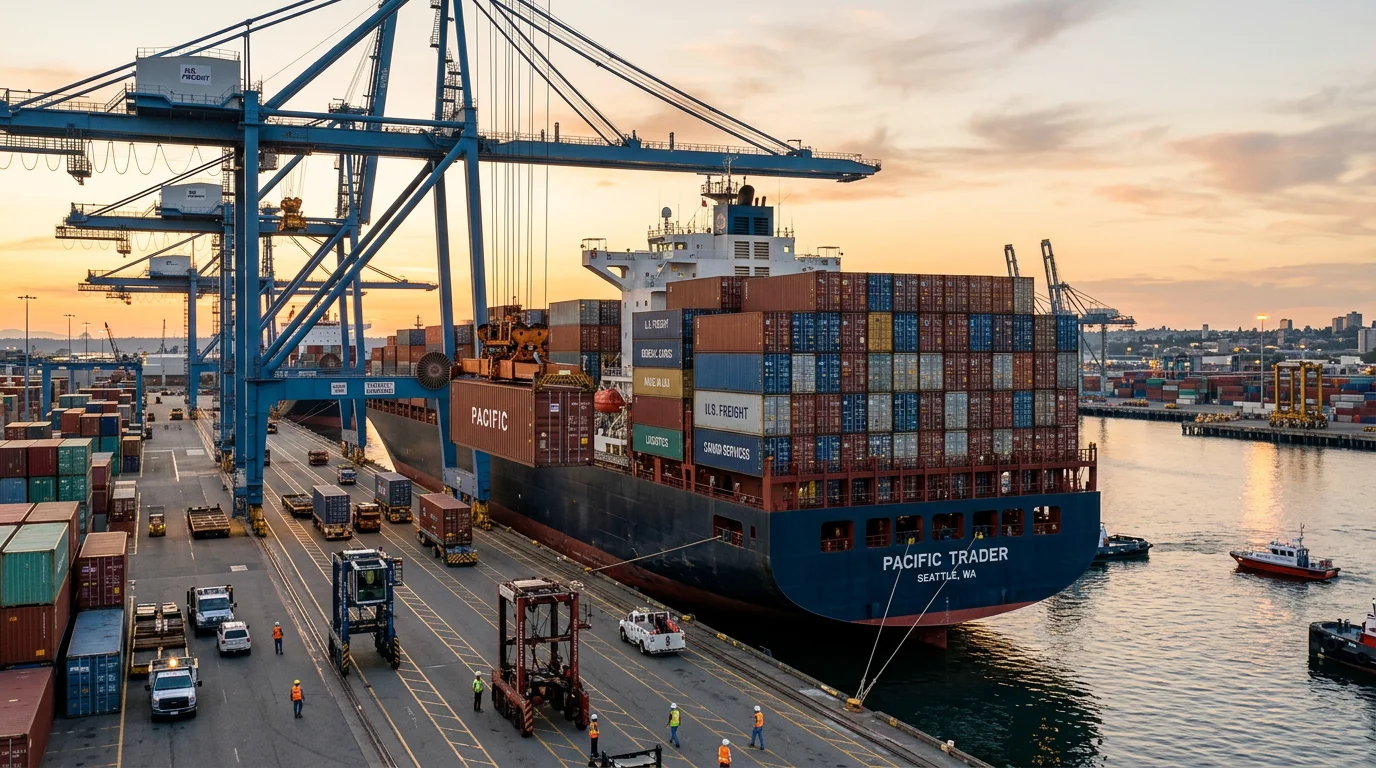
Summary: Under freight on board origin terms, ownership and risk transfer to the buyer the moment goods are loaded, making the buyer responsible for freight, insurance, and duties.
Ask ten importers who owns a container the instant it leaves a factory in Shenzhen, and you may hear ten different answers. The confusion almost always traces back to a single clause. The freight on board (FOB) origin term dictates that ownership and risk pass to you, the buyer, the second your goods are loaded, which is why our FOB origin risk profile guide treats it as a defining factor in every shipment.
This distinction is not academic. It determines who files an insurance claim when a pallet is crushed mid-ocean, who absorbs a delay at customs, and who carries the goods on their balance sheet at quarter close. For US businesses sourcing from Asia, misreading these three letters can quietly erode margins on an entire purchase order.
What Freight on Board Origin Actually Means
At its core, the term freight on board origin identifies the precise point where responsibility shifts from the seller to the buyer. The seller loads the goods onto the transport at the point of departure, and from that instant the buyer assumes title transfer, liability, and cost. The seller can mark the sale complete; everything downstream belongs to you.
Two common phrasings describe the same idea: “FOB origin” and “FOB shipping point.” Both indicate that the sale is considered final at the seller’s dock. Consequently, the buyer bears freight charges and any risk of loss or damage during transit. This is the opposite of FOB destination, where the seller retains ownership until the goods arrive at the buyer’s premises.
FOB Origin vs FOB Destination: Who Pays and Who Owns
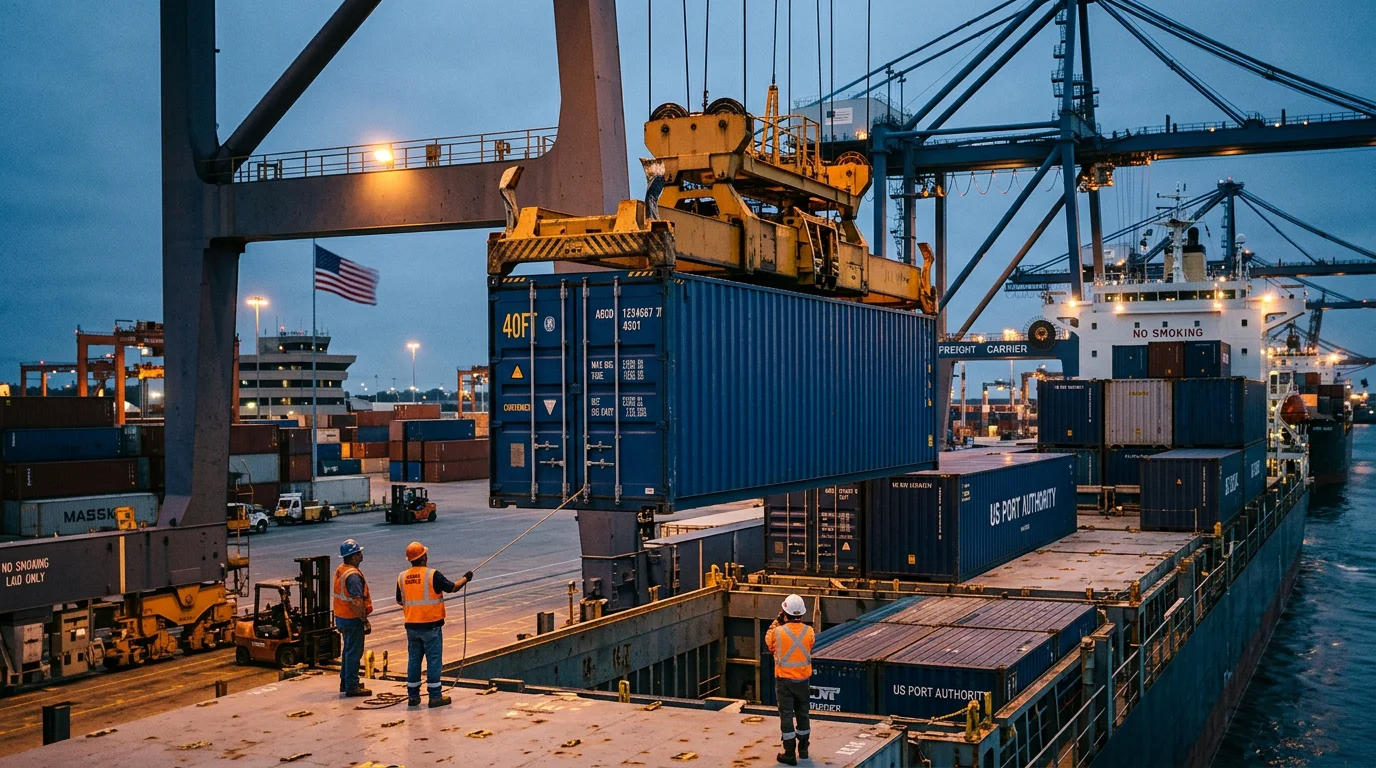
Imagine you purchase 1,000 units from a supplier. Under FOB origin, you own those units the moment the carrier signs for them at the factory. Under FOB destination, the supplier remains liable until the boxes reach your warehouse. That single difference reshapes your insurance planning, your accounting, and your negotiating position.
The picture becomes clearer when you add the second half of the term, which specifies who settles the freight bill. “Prepaid” means the seller pays the carrier; “collect” means you do. Combining ownership and payment produces four standard arrangements.
| FOB term | Who pays freight | Who owns goods in transit | Who files claims |
|---|---|---|---|
| FOB Origin, Freight Collect | Buyer | Buyer | Buyer |
| FOB Origin, Freight Prepaid | Seller | Buyer | Buyer |
| FOB Destination, Freight Collect | Buyer | Seller | Seller |
| FOB Destination, Freight Prepaid | Seller | Seller | Seller |
The most frequently encountered arrangement is FOB origin, freight collect. Here the buyer takes ownership and liability the instant the carrier collects the goods, and the buyer also pays every downstream charge. It offers the lowest base price, but it places the full weight of transit risk squarely on your shoulders.
Incoterms Rules Versus North American Usage
A crucial nuance trips up many first-time importers. The exact meaning of FOB depends on whether you are reading an international contract or a domestic US purchase order. The two systems use the same letters with materially different scope.
Under the International Chamber of Commerce framework, FOB stands for “Free On Board” and applies only to sea or inland waterway transport, always paired with a named port of shipment. According to Trade Finance Global, the current Incoterms 2020 rules require the seller to place the goods on board the vessel nominated by the buyer, at which point risk transfer occurs. The phrase “across the ship’s rail,” a fixture of older versions, has been retired.
North American domestic usage is different. There, “FOB origin” and “FOB destination” are written into sales agreements to fix where liability changes hands on any mode of transport, not only ships. To understand how this dual meaning evolved, our deep dive on the origin of FOB traces the term back to the age of sailing vessels. When negotiating with a Chinese supplier, always specify the Incoterms edition, for example “FOB Ningbo (Incoterms 2020),” to remove all ambiguity.
Why FOB Origin Carries More Weight in 2026
The financial consequences of accepting FOB origin terms have grown considerably. Because you own the cargo from the port of shipment onward, you also inherit every duty, tax, and clearance obligation at the US border, and those obligations changed dramatically last year.
In 2025, the US removed a long-standing shortcut that many small importers relied upon. According to US Customs and Border Protection, the regulations now indefinitely suspend duty-free de minimis treatment for low-value imports valued at $800 or less. Shipments that once entered duty-free are now subject to applicable duties, taxes, and fees regardless of value.
This shift is not temporary. As documented in the Federal Register, the One Big Beautiful Bill Act, enacted in July 2025, terminated the de minimis exemption outright effective July 1, 2027. For anyone buying FOB origin, this means the landed cost of every parcel must now be modeled with duties baked in from the first calculation.
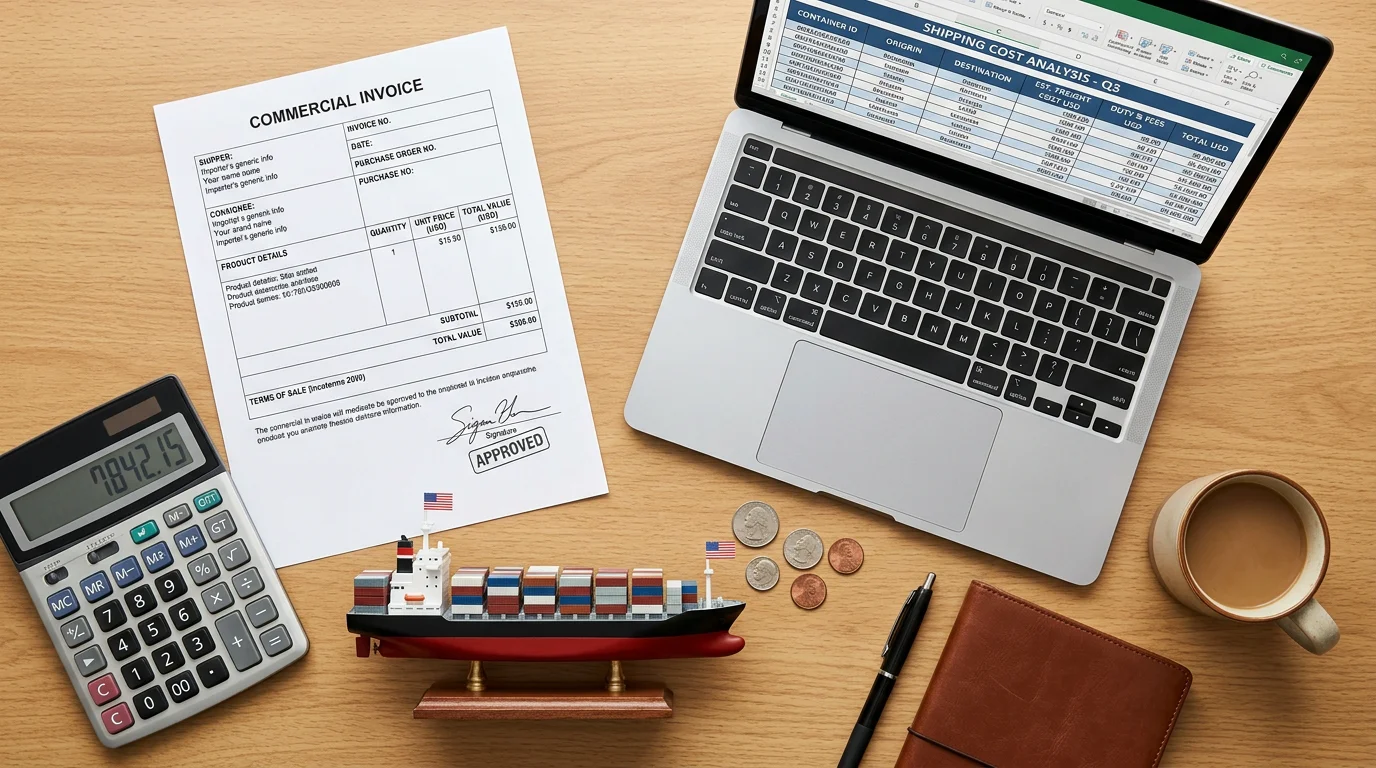
The practical takeaway is straightforward. An FOB price that looks attractive on a supplier quotation is only the starting figure. You must layer on ocean freight, insurance, destination handling, and duties to know your true cost. Our breakdown of hidden FOB pricing costs details the charges that suppliers routinely leave out of an initial number.
What FOB Origin Means for Amazon FBA Sellers From China
For a seller shipping into Amazon warehouses, FOB origin offers genuine control. You choose your own freight forwarder, you compare routes, and you track your cargo directly. Yet that control comes bundled with every complication that once sat with the supplier, from marine insurance to customs paperwork.
The regulatory tightening makes this heavier. The White House confirmed in 2026 that the suspension of duty-free de minimis treatment continues, with duties collected across all modes of entry. A missed classification or an unfunded duty can now strand inventory at the border and disrupt your FBA replenishment schedule.
This is where a single accountable partner changes the equation. We manage the entire journey from your factory to the Amazon warehouse under DDP terms, meaning duties and taxes are included in one all-in price known in advance. We collect from your supplier, handle customs clearance, and deliver to the fulfillment center, with real-time updates on WhatsApp. Before you sign, our guide to negotiating better FOB terms helps you secure a stronger position with the factory itself.
Conclusion
Freight on board origin is not a minor line in a contract; it is the moment your money starts carrying risk. Because ownership passes the instant goods are loaded, you become responsible for freight, insurance, and, since the de minimis exemption ended for imports of $800 or less, duties on nearly every shipment. Modeling that full landed cost before you commit protects your margins and your Amazon inventory flow. Handing the origin-to-warehouse leg to a specialist who prices duties, freight, and delivery in one transparent DDP quote removes the guesswork that undermines so many first-time importers. To move forward with confidence, explore our FOB negotiation playbook and set your next order up for success.
Frequently Asked Questions
Does FOB origin mean I pay for shipping?
In the most common arrangement, freight collect, yes. Ownership transfers at the loading point, so you pay ocean freight, insurance, and destination charges. If the term is freight prepaid, the seller pays the carrier, but you still own the goods and file any claims during transit.
Who is responsible if goods are damaged under FOB origin?
You are. Because title and risk pass to you the moment the goods are loaded, any loss or damage in transit is your responsibility to claim, typically through your cargo insurance and the carrier.
Should Amazon FBA sellers use FOB origin or DDP?
FOB origin gives control but leaves you managing freight, customs, and duties. Many sellers prefer a DDP solution instead, where we handle collection, clearance, and delivery to the Amazon warehouse at one all-in price with duties and taxes included.
Ready to Optimize Your Amazon Shipping?
Get 3 route options tailored to your products and timeline
Get Your Quote→