Freight Terms CPT: Costs, Risks, and Buyer Duties Explained
Summary: CPT, or Carriage Paid To, means that the seller arranges and pays for carriage to a named destination, while the buyer assumes risk when the goods are handed to the first carrier. The buyer also manages insurance, import clearance, duties, and onward delivery. Clear contract wording is essential because cost and risk transfer at different points.
When you compare international shipping options, the phrase CPT freight terms can appear straightforward while hiding an important risk distinction. The seller pays for carriage to the agreed destination, but the buyer may assume responsibility much earlier. Our our CPT Incoterm definition explains the basic rule in practical terms.
For US importers and sellers, CPT belongs to the seven Incoterms 2020 rules that can apply to any mode of transport. The U.S. trade guidance also places CPT alongside air, road, rail, sea, and multimodal shipping options. Understanding the rule helps you allocate freight costs, customs tasks, insurance, and delivery responsibilities before the shipment moves.
What do freight terms CPT mean?
CPT stands for Carriage Paid To. Under this rule, the seller contracts and pays for carriage from the agreed delivery point to the named place of destination. That destination could be an airport, terminal, warehouse, distribution center, or another specified location.
The seller also completes export formalities where required. The seller must provide the goods, commercial invoice, export packaging, and relevant transport documents. The seller arranges the carrier and pays the transport costs needed to reach the destination stated in the sales contract.
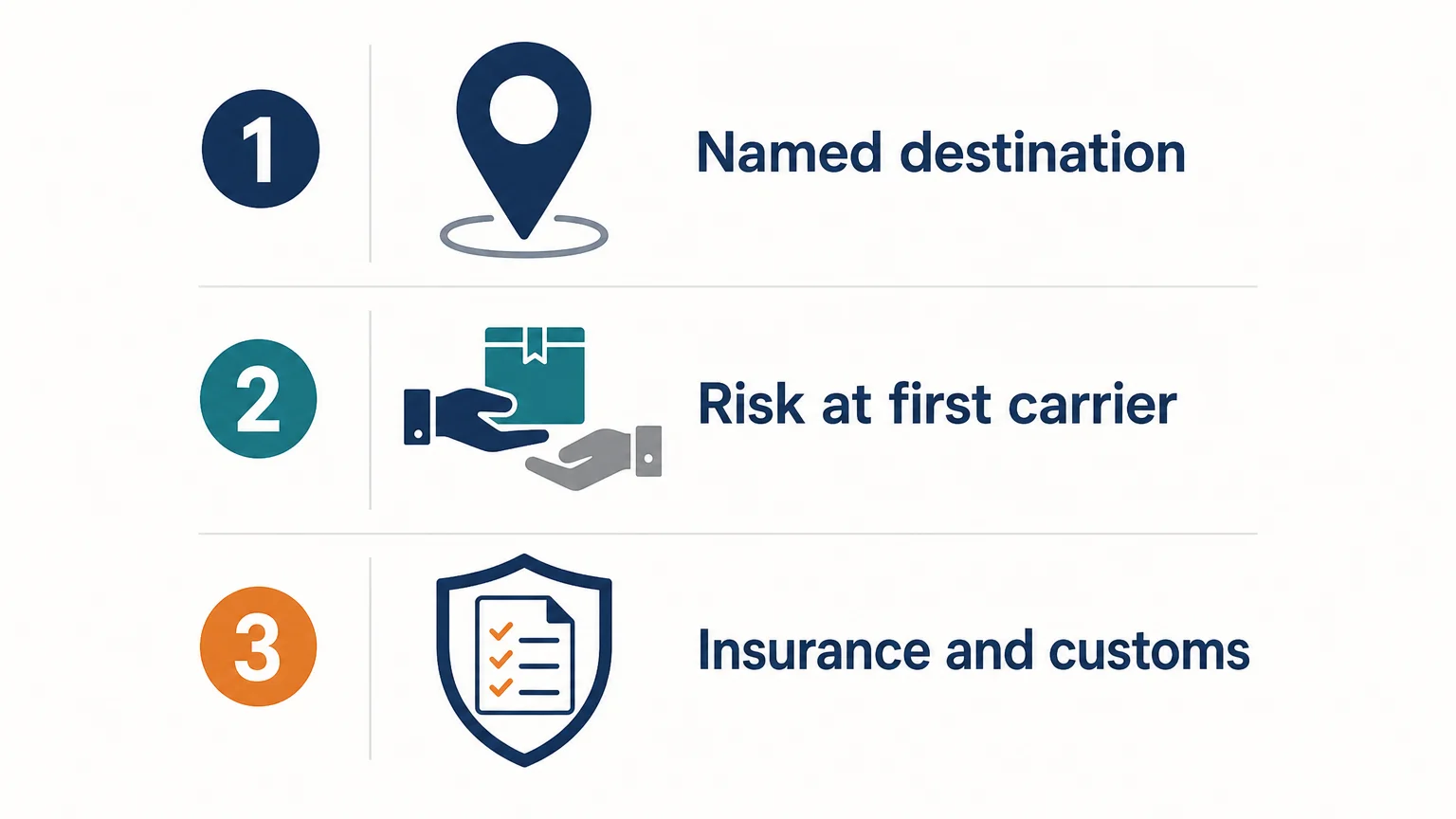
However, CPT does not mean that the seller carries the goods’ risk until arrival. Risk usually transfers when the seller hands the goods to the first carrier. The official CPT rule distinguishes delivery to the carrier from the later destination to which the seller pays for carriage.
This distinction is the central point of CPT. The seller pays beyond the risk transfer point, which means the buyer may bear the risk of loss or damage during the main journey. For that reason, the contract should identify both the delivery point and the final destination as precisely as possible.
Who pays freight under CPT, and when does risk transfer?
Imagine that a supplier collects cartons from a factory and delivers them to a freight forwarder in Shenzhen. Under CPT, that handover to the first carrier can complete the seller’s delivery obligation. The seller may still pay for transport to Los Angeles, New York, or another named destination, but the buyer may already carry the transit risk.
The main responsibilities usually divide as follows:
- Seller pays carriage: The seller contracts for transport to the named destination.
- Seller handles export clearance: The seller completes export procedures and provides required export documents.
- Buyer assumes risk early: Risk transfers when the goods are delivered to the first carrier.
- Buyer arranges cargo insurance: CPT does not require the seller to insure the goods.
- Buyer manages import formalities: Import clearance, duties, taxes, and permits generally remain the buyer’s responsibility.
- Buyer pays onward costs: Costs after the named destination may include unloading, import handling, storage, and final delivery.
Risk and cost therefore do not transfer at the same moment. This is different from a simple “seller pays until arrival” arrangement. If the goods are damaged during air transit, ocean transit, or rail transport, the buyer may need to claim against its own insurance or the carrier.
What does CPT include for insurance, customs, and documents?
CPT includes the seller’s transport arrangement and export responsibilities. It does not automatically include cargo insurance, import clearance, import duties, or destination taxes. You should treat these items as separate responsibilities unless the sales contract adds different arrangements.
Cargo insurance deserves particular attention. Because the buyer may assume risk at the first carrier handover, the buyer should evaluate coverage from that point onward. If you want the seller to arrange insurance, CIP may be more appropriate because CIP adds a seller-provided insurance obligation.
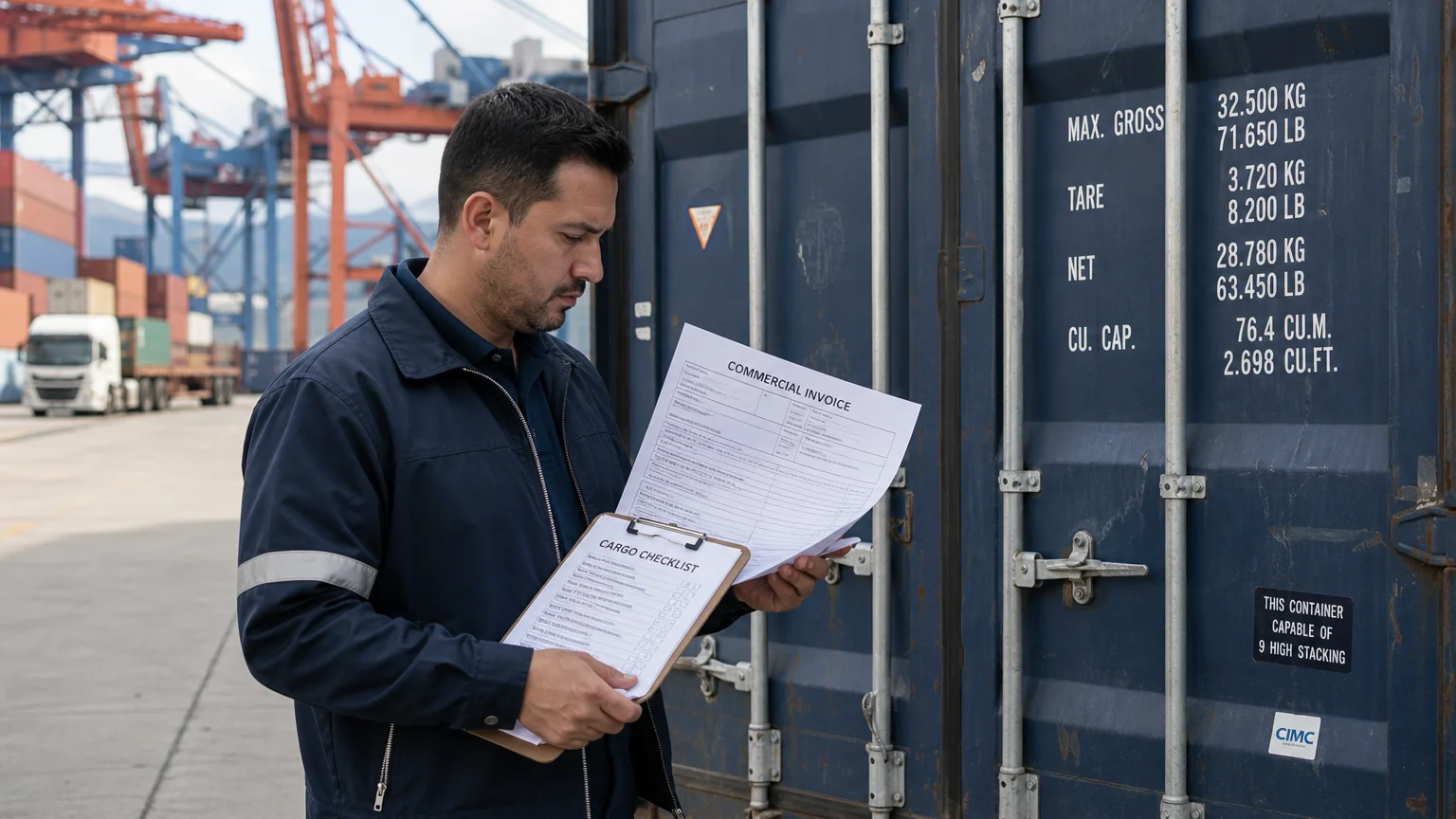
The seller normally provides a commercial invoice, packing list, transport document, and export clearance evidence. The specific transport document depends on the route. Examples include an air waybill for air freight, a bill of lading for ocean freight, or a rail document for rail transport.
The buyer remains responsible for import formalities in the destination country. These may include customs entry, product classification, duty payment, taxes, permits, and compliance with local import rules. Goods moving through another country may also require transit customs procedures.
If you need a clearer explanation of the commercial meaning behind the rule, you can review our CPT Incoterm meaning. For shipments from China to US warehouses, it is also important to confirm whether the quoted service uses CPT, DDP, or another delivery structure.
Do not assume that a freight quotation is all-inclusive simply because it states CPT. Ask whether the price includes origin handling, terminal charges, destination handling, customs brokerage, duties, taxes, storage, and final delivery. The named destination should also be specific enough to identify where the seller’s paid carriage ends.
When is CPT a practical freight choice?
CPT can work well when the seller has stronger access to carriers or better freight rates. It is also suitable when the buyer wants the seller to arrange the main transport but prefers to control insurance separately.
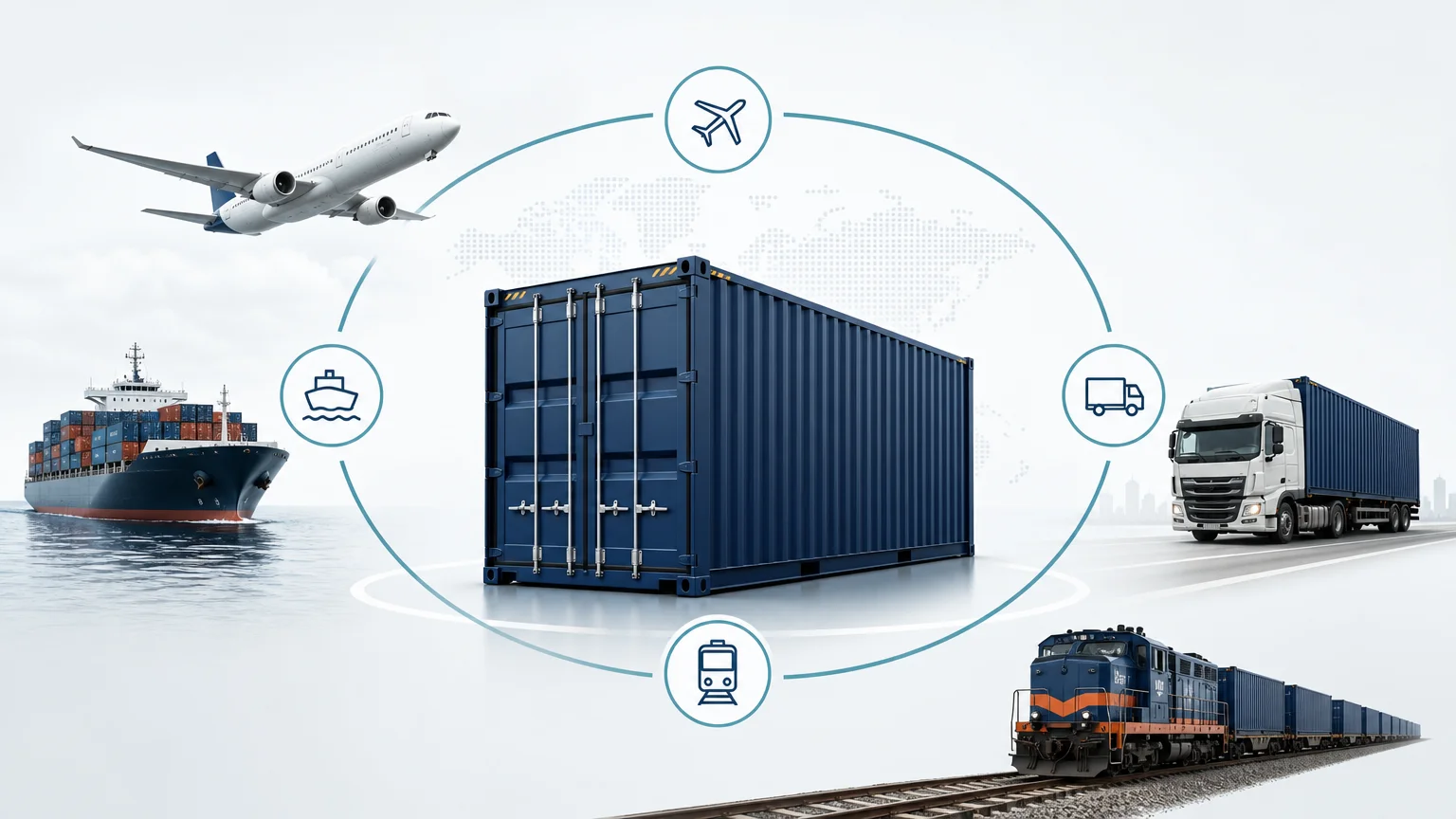
The rule applies to any mode of transport, including:
- Air freight for urgent or lightweight shipments.
- Ocean freight for containerized cargo.
- Rail freight for cross-border or China to Europe movements.
- Road freight for domestic or regional transport.
- Multimodal freight involving several connected transport legs.
CPT is often practical when the seller manages export operations efficiently. It can reduce coordination work for the buyer because the seller books the main carriage. The buyer still needs a plan for insurance, import clearance, duties, and delivery after the named destination.
For Amazon FBA sellers, the choice depends on the required delivery point. A CPT quotation may end at an airport, seaport, terminal, or warehouse. It may not cover the full process of customs clearance and delivery into an Amazon facility unless those services are separately agreed.
We help sellers compare the cost and timing implications of different routes through our CPT shipping terms. Our process can include supplier pickup, route evaluation, customs coordination, and delivery planning, depending on the selected service structure.
How does CPT compare with CIP, FCA, DAP, and DDP?
The most suitable Incoterm depends on who should control freight, insurance, customs, and delivery. CPT is not automatically better or worse than another rule. It creates a specific allocation of responsibilities that must match the transaction.
CPT versus CIP
Both CPT and CIP require the seller to arrange and pay for carriage to a named destination. Under both rules, risk transfers when the goods are handed to the first carrier. The main difference is insurance, because CIP requires the seller to arrange cargo insurance while CPT does not.
Choose CPT when the buyer wants to arrange insurance independently. Consider CIP when the buyer wants the seller to include insurance in the transport arrangement.
CPT versus FCA
FCA transfers risk at delivery to the carrier, but the buyer generally arranges and pays for the main carriage. CPT keeps main carriage with the seller. FCA may suit a buyer that has a preferred freight forwarder or negotiated carrier rates, while CPT may suit a seller that controls the route.
CPT versus DAP
Under DAP, the seller carries the goods to the named destination and bears risk until arrival, subject to the rule’s delivery conditions. Under CPT, risk transfers much earlier, even though the seller pays for carriage to the destination.
CPT versus DDP
DDP places more responsibility on the seller. The seller generally manages import clearance, duties, taxes, and delivery to the agreed destination. CPT leaves import responsibilities and transit risk with the buyer, so DDP may be more suitable when the buyer wants a more complete door-to-door structure.
For sellers who need to understand the terminology before requesting a quote, our our Carriage Paid To Incoterm resource provides another practical reference point.
How should you write CPT in a sales contract?
Writing only “CPT” creates avoidable uncertainty. The contract should state the rule, the named destination, the version of the Incoterms rules, and the specific delivery point where risk transfers.
A clearer example would be:
CPT Los Angeles International Airport, Cargo Terminal, United States, Incoterms 2020.
This wording identifies the destination, but it may still be useful to define the exact first-carrier handover point separately. For example, the contract could state that risk transfers when the goods are delivered to a named carrier at the seller’s warehouse or at a specified origin terminal.
You should also confirm the following details before shipment:
- The exact named place of destination.
- The first carrier and delivery location.
- Which party pays origin handling and loading charges.
- Whether unloading at destination is included.
- Who purchases cargo insurance.
- Who handles import clearance, duties, and taxes.
- Which documents the seller must provide.
- Whether onward delivery to the final warehouse is included.
For operational shipments, keep the commercial contract consistent with the freight quotation. If the quotation promises customs clearance or final delivery that CPT does not normally assign to the seller, document those additional services separately.
What should US importers ask before accepting CPT?
US importers should ask where risk transfers and where the seller’s paid carriage ends. These are not necessarily the same place. A shipment may reach a US airport or port while import clearance, duties, storage, and final delivery remain outstanding.
Ask for a written cost breakdown rather than relying on the Incoterm alone. The breakdown should show freight, origin charges, destination charges, customs brokerage, duties, taxes, insurance, and any delivery fees.
You should also confirm the importer of record. Under standard CPT, the buyer usually handles import formalities. If a freight forwarder will coordinate customs or provide a DDP service, the commercial documents should state that arrangement clearly.
For inventory shipped from China to US fulfillment destinations, route selection can affect both cash flow and stock availability. Air freight may support urgent replenishment, while ocean freight may suit planned large-volume shipments. The right choice depends on product value, shipment size, delivery urgency, customs requirements, and margin targets.
Final considerations for CPT freight terms
CPT freight terms make the seller responsible for arranging and paying carriage to a named destination, but they transfer risk to the buyer when the goods reach the first carrier. The buyer should therefore arrange suitable insurance, prepare for import formalities, and confirm every charge beyond the destination. Before signing, define the delivery point, named destination, documents, customs responsibilities, and any additional door-to-door services in writing.
Take action with QG Horizon
Choosing between CPT, DDP, air, ocean, fast boat, and rail can be difficult when your inventory must move from a Chinese supplier to a fulfillment warehouse. A clear route comparison helps you balance delivery timing, freight cost, customs handling, and shipment visibility.
We coordinate supplier pickup, international freight, customs handling, duties and taxes under DDP where selected, delivery, and tracking for Amazon FBA shipments. You can submit product details or a packing list and receive three route options with estimated timelines. Explore our freight and shipping services to discuss your shipment requirements.
Frequently Asked Questions
What does CPT stand for in freight shipping?
CPT stands for Carriage Paid To. It means that the seller arranges and pays for carriage to a named destination, while risk transfers when the goods are handed to the first carrier.
Who pays freight under CPT?
The seller pays the carriage costs needed to bring the goods to the named destination. The buyer normally pays import costs, insurance, and expenses that arise after the destination stated in the contract.
Does CPT include insurance?
No, CPT does not require the seller to purchase cargo insurance. The buyer should arrange coverage from the point where the goods are handed to the first carrier, or consider CIP if seller-arranged insurance is preferred.
Who handles customs under CPT?
The seller generally handles export clearance. The buyer normally handles import clearance, duties, taxes, permits, and any required customs procedures in transit countries.
Is CPT suitable for Amazon FBA shipments?
CPT can be suitable when the seller arranges carriage but the buyer can manage insurance, import clearance, and onward delivery. If you need customs, duties, and delivery coordinated through one service, a DDP freight arrangement may be more appropriate.
Ready to Optimize Your Amazon Shipping?
Get 3 route options tailored to your products and timeline
Get Your Quote→