FOB Full Form: Shipping Meaning, Costs, and Risk Guide
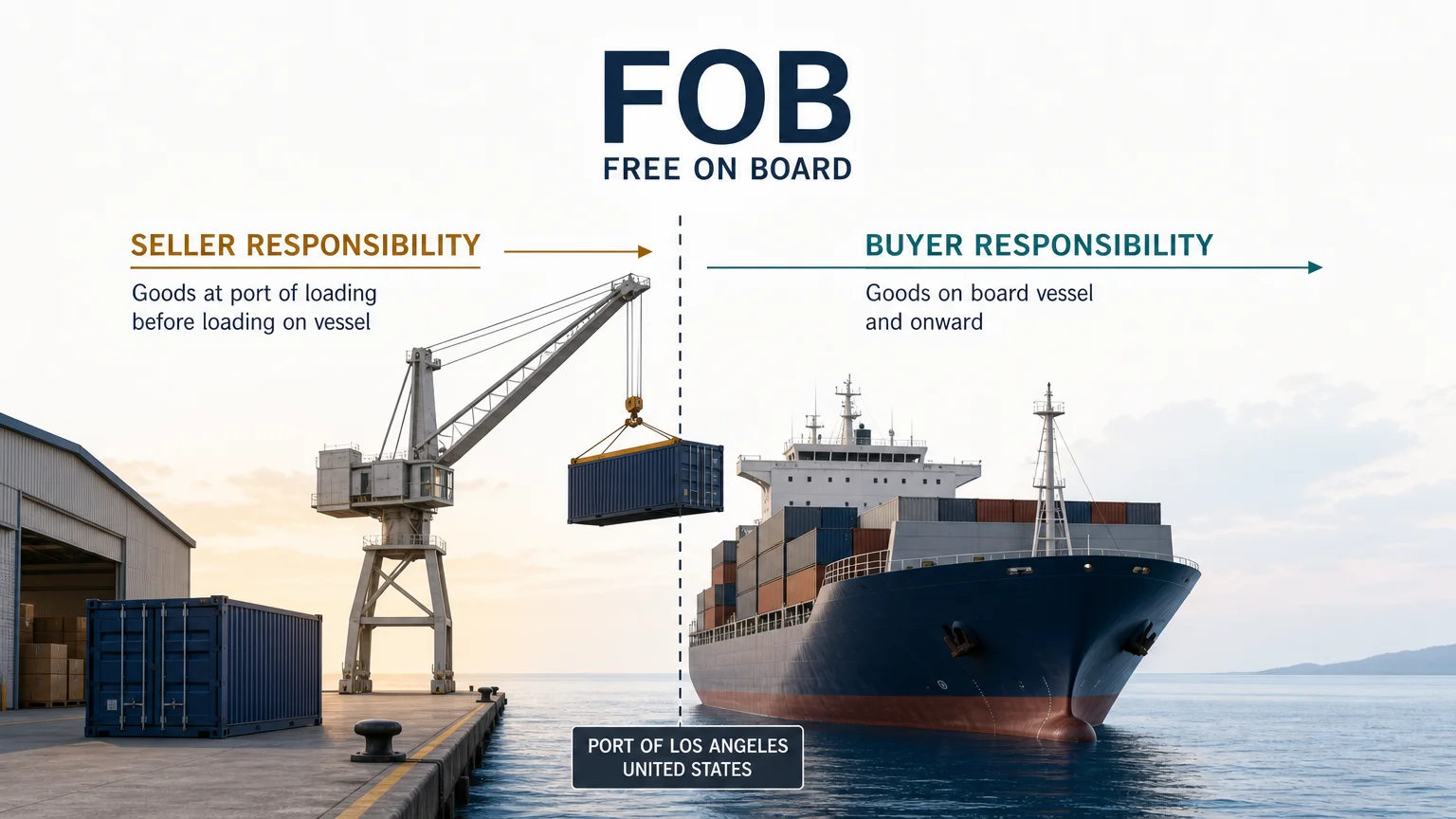
Summary: FOB means Free On Board. In international trade, it identifies the point where the seller completes delivery and the buyer assumes risk after the goods are loaded onto the vessel at the named port. The term does not automatically transfer ownership, cover destination costs, or include customs and delivery to an Amazon warehouse.
If you searched for full form fob, the direct answer is Free On Board. When you compare supplier quotes, our guide to what FOB stands for in shipping helps you read the term as a transfer point, not as a complete delivery promise.
FOB can also appear outside purchase contracts. The BIS 2026 report uses FOB labels in crude oil pricing tables, showing that the acronym can describe a valuation point as well as a shipping obligation. For US importers and Amazon sellers, the surrounding words, named place, transport mode, and contract language determine the practical meaning.
What is the FOB full form in shipping?
FOB full form means Free On Board. Under the international Incoterms meaning, the seller delivers the goods when they are loaded onto the vessel at the named port of shipment. At that moment, the buyer generally assumes the risk of loss or damage and becomes responsible for the main ocean transport.
The seller normally handles export packaging, origin transport to the port, export clearance, and loading onto the vessel. The buyer usually arranges the main carriage, import clearance, duties, unloading, insurance if required, and transport from the arrival port to the final destination.
FOB does not automatically decide who owns the goods. Ownership, payment conditions, and title transfer depend on the sales contract, applicable law, and related documents such as the commercial invoice and bill of lading.
How does FOB work under Incoterms 2020?
Consider a supplier quote that states “FOB Shenzhen.” The seller must move the goods to the named port, complete the required export formalities, and load the cargo onto the vessel. Once loading is completed, the buyer takes responsibility for the next stage of the shipment.
The named place is essential because it identifies the delivery point. “FOB” without a named port is incomplete for an international contract. You should also confirm which edition of the Incoterms rules applies, since the term must be interpreted together with the contract and its stated version.
FOB is intended for sea and inland waterway transport. It is not a general term for air freight, rail freight, or road freight. For containerized cargo, FCA is often considered more suitable because the seller can deliver the goods to the carrier or another agreed point before the container reaches the vessel.
For a clearer explanation of seller and buyer responsibilities, our FOB Incoterm meaning guide provides a practical breakdown. This distinction matters when you are importing from China and the supplier presents a price that covers only the shipment up to the port.
In July 2026, the US Bureau of Transportation Statistics released a new benchmark version of its Freight Analysis Framework. The dataset estimates freight tonnage and value by origin, destination, commodity, and transport mode, which reinforces an important point: the chosen mode must match the actual movement planned for your goods. See the 2026 freight framework release for the methodology context.
What is the difference between FOB origin and FOB destination?
The phrase changes meaning in many US domestic sales contracts. FOB origin, also called FOB shipping point, generally means that the buyer assumes risk when the seller places the goods with the carrier at the shipping point. The buyer commonly pays the freight, although the contract may specify different payment arrangements.
FOB destination generally means that the seller retains risk until the goods reach the agreed destination. The seller may pay the freight, but you should check whether the agreement states freight prepaid, freight collect, or another arrangement.
These domestic usages should not be confused with the international FOB Incoterm. An American purchase order might use FOB origin to describe a domestic transfer at the seller’s dock, while an international supplier might use FOB followed by a port name to describe delivery on board a vessel.
When you are reviewing US supplier contracts, our FOB origin meaning guide can help you separate shipping-point language from international port terms. If the contract does not identify the location and risk point precisely, request written clarification before payment or production begins.
What does an FOB price include and exclude?
An FOB quote is not necessarily your final landed cost. It commonly includes the goods, export packaging, inland transport to the named port, export documentation, and loading onto the vessel. It usually excludes the main ocean freight, marine insurance, destination handling, import clearance, duties, taxes, and final delivery.
For Amazon FBA inventory, the difference can be substantial. You may still need to coordinate supplier pickup, freight booking, customs clearance, import tax, warehouse delivery appointments, carton requirements, and delivery to the correct Amazon facility.
In the US, customs and port procedures also add operational complexity. A 2026 review by the US Government Accountability Office notes that the country has more than 300 ports of entry where travelers and cargo are inspected. The GAO border metrics report illustrates why the named port and import process should be treated as practical planning decisions, not minor wording details.
Before accepting an FOB quote, calculate the expected landed cost. Include the product price, origin charges, ocean freight, insurance, destination fees, customs duties, taxes, inspection costs, domestic delivery, Amazon receiving requirements, and possible storage or demurrage charges.
Why can FOB create problems for containerized Amazon FBA shipments?
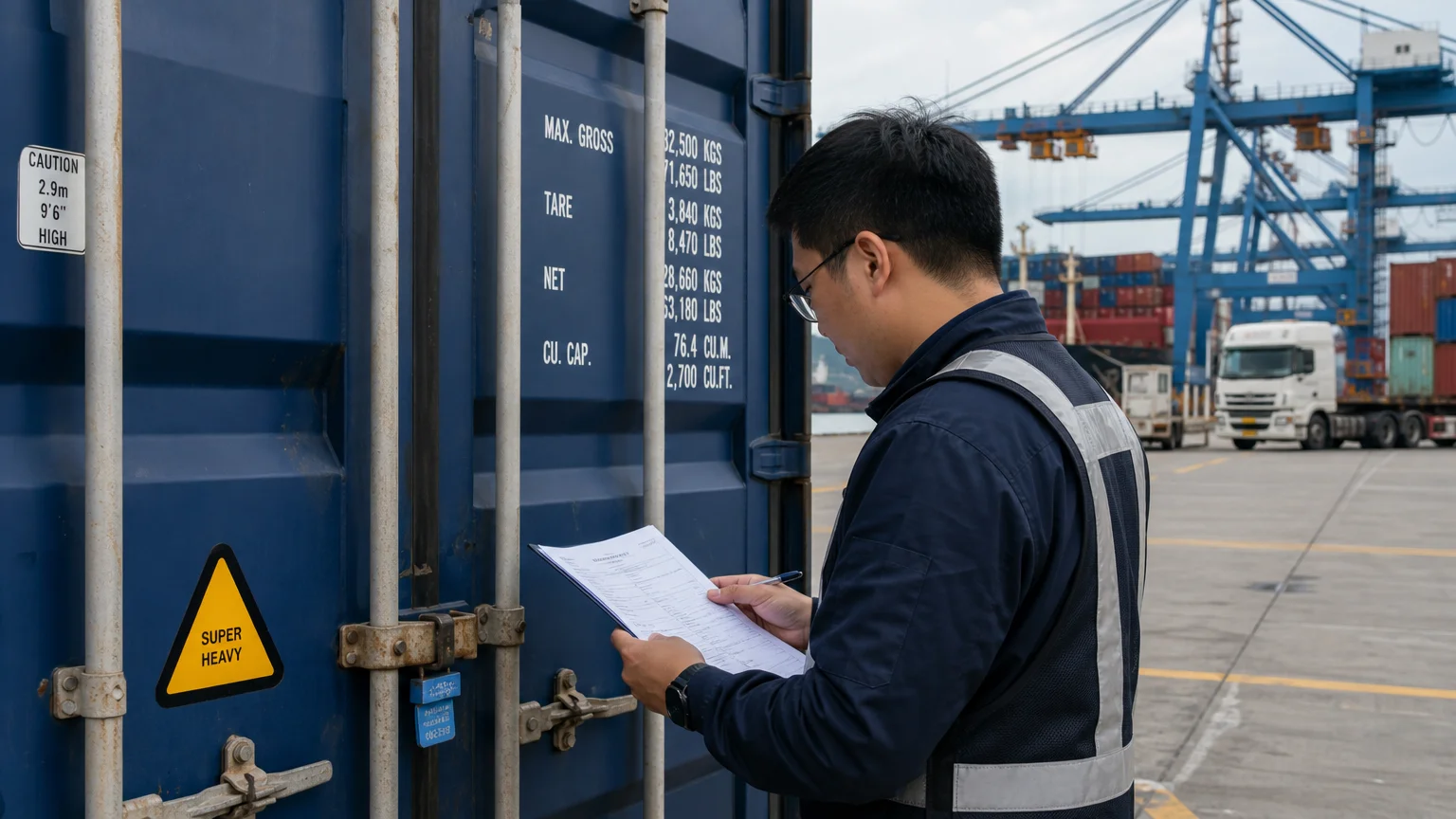
A container may be handed to a carrier before it is loaded onto the vessel. That timing can create uncertainty about when risk transfers under a strict FOB interpretation. If the container is damaged between the seller’s facility, the terminal, and the vessel, the parties may disagree about which event completed delivery.
This is one reason logistics professionals often recommend matching the Incoterm to the real handover point. For a container shipment, FCA can provide a clearer delivery point when the seller hands the cargo to the carrier. For a shipment where the seller manages transport and import delivery, DDP may provide a more complete service structure, subject to product, tax, and importer requirements.
A 2026 academic trade study discusses differences between CIF and FOB valuation in international trade data. The 2026 trade valuation study reinforces that FOB and CIF describe different cost boundaries. In commercial negotiations, you should therefore compare equivalent cost levels rather than treating two quoted prices as directly interchangeable.
For Amazon FBA, the main question is not simply whether the supplier offers FOB. You should ask who collects the cartons, who books the freight, who manages customs, who pays duties, who delivers to Amazon, and who handles claims if the shipment is delayed or damaged.
Should you choose FOB, CIF, or DDP for China to Amazon shipping?
The right term depends on your experience, shipment size, cash flow, and ability to manage international logistics. FOB can work well when you already have a trusted freight forwarder and want control over the main carriage. It may also support better rate comparison when you manage several suppliers or consolidate products.
CIF may appear simpler because the seller arranges ocean freight and insurance to the destination port. However, CIF generally does not include import clearance, duties, taxes, or delivery from the port to an Amazon warehouse. You may still need a local customs broker and inland delivery provider.
DDP shipping is designed to place more responsibility with the seller or logistics provider. The quoted service may include export handling, international freight, destination customs, duties, taxes, and door-to-door delivery. You should still confirm the importer of record, restricted product requirements, tax treatment, insurance, and any exclusions in writing.
For a direct comparison of the main options, our FOB vs. CIF vs. DDP comparison can help you evaluate cost, control, customs responsibility, and delivery scope. We can also provide route options when your shipment requires more than a supplier’s port price.
Many Amazon sellers prefer a managed arrangement when they are launching a product, replenishing inventory urgently, or shipping goods from several suppliers. Others choose FOB when they have established freight contracts and want to control the shipment from the port onward.
What should you check before accepting FOB terms?
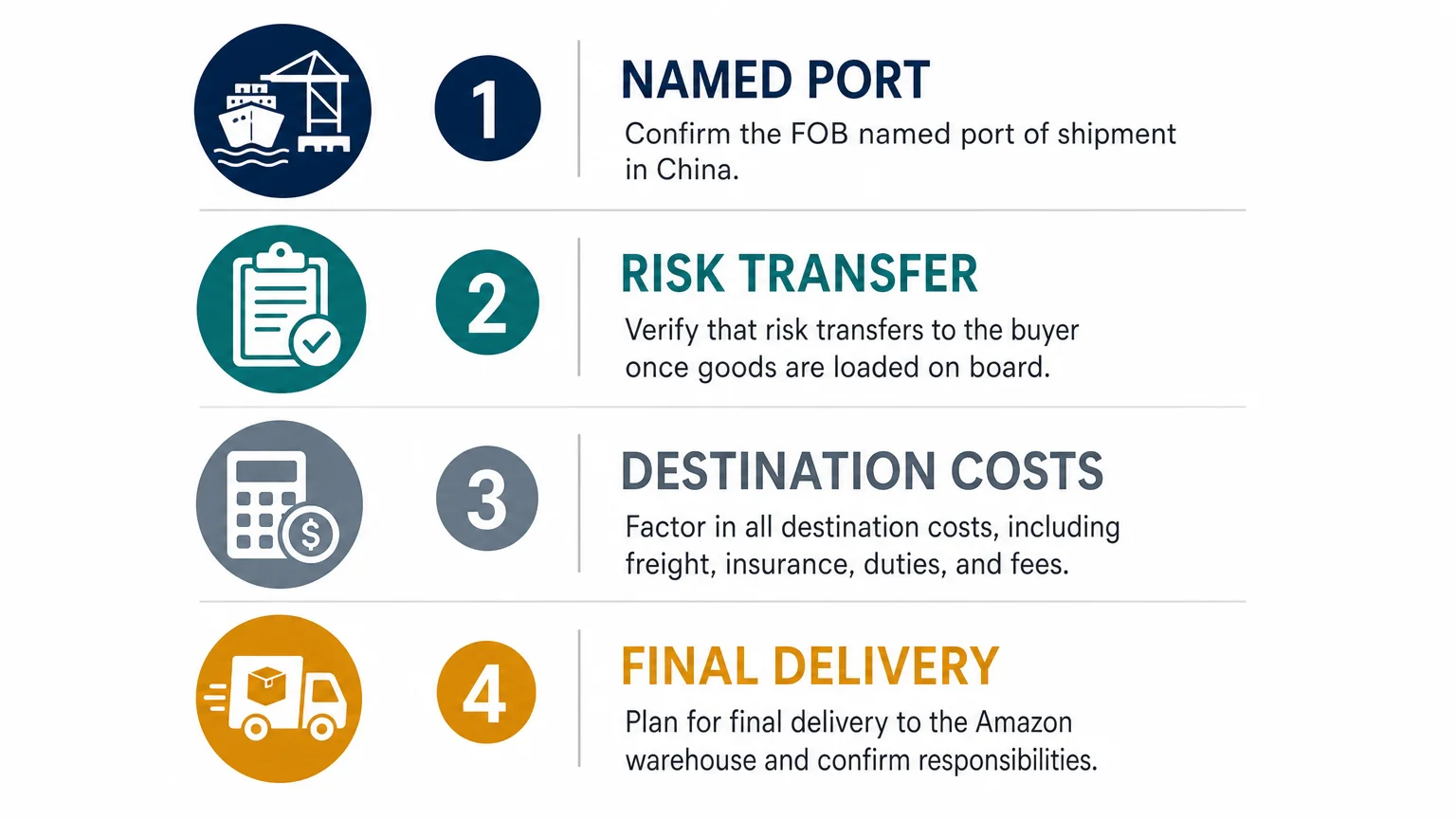
Before signing a purchase order, request enough information to convert the FOB price into a realistic delivery budget. A short checklist can prevent disputes later:
- Confirm the exact named port and the applicable Incoterms edition.
- Ask when risk transfers and which event completes delivery.
- Identify who pays origin terminal fees, documentation charges, and loading costs.
- Confirm whether the quote includes export clearance and any supplier declaration fees.
- Obtain the expected ocean freight rate and destination charges separately.
- Clarify responsibility for insurance, customs clearance, duties, taxes, and inspections.
- Confirm who arranges delivery from the destination port to the Amazon warehouse.
- Check carton labels, product restrictions, shipping documents, and Amazon receiving requirements.
- Agree on the claims process if cargo is lost, damaged, delayed, or held by customs.
You should also compare the supplier’s FOB price with a complete door-to-door quote. A lower product price may not produce a lower total cost once freight, customs, port handling, and final delivery are included.
For regular replenishment, ask for at least two route alternatives. Air freight may suit urgent, lightweight products, while ocean freight may suit planned, high-volume shipments. Fast boat and rail can provide additional options for sellers balancing delivery timing and freight cost.
Conclusion: use FOB as a responsibility marker
FOB full form means Free On Board, but the acronym alone does not describe the complete shipping journey. It identifies a delivery and risk point, usually when goods are loaded onto a vessel at the named port. Before accepting the term, separate the product price from freight, customs, duties, insurance, destination handling, and final delivery. For Amazon FBA shipments, the most suitable arrangement is the one that clearly assigns every responsibility from supplier pickup to warehouse receipt.
Take action with QG Horizon
When an FOB quote leaves you responsible for several international shipping stages, you may need a clearer route from the Chinese supplier to the Amazon warehouse. QG Horizon helps Amazon FBA sellers compare shipment options according to urgency, budget, shipment volume, product characteristics, and destination.
Our team can coordinate supplier pickup, international freight, customs clearance, DDP duties and taxes, door-to-door delivery, tracking, and shipment updates. You can submit product information or a packing list and receive route options with estimated timelines. To discuss your shipment, explore our shipping and freight services.
Frequently Asked Questions
What is the full form of FOB?
FOB stands for Free On Board. In international shipping, it usually means that the seller delivers the goods once they are loaded onto the vessel at the named port.
Does FOB include shipping to the buyer?
FOB normally includes delivery to the named port and loading onto the vessel, but it does not normally include the main ocean freight, import clearance, duties, or delivery to the final destination. Always review the quotation for origin and destination charges.
Who pays freight under FOB?
Under the international FOB Incoterm, the buyer normally pays the main carriage after the goods are loaded. Domestic US contracts may use FOB origin or FOB destination differently, so the named place and freight terms must be checked.
Is FOB suitable for Amazon FBA?
FOB can be suitable when you have a freight forwarder that can manage the shipment after the port handover. If you prefer one provider to coordinate customs, duties, tracking, and delivery to Amazon, QG Horizon can assess a managed route such as DDP.
What should I compare besides the FOB price?
Compare total landed cost, delivery timing, insurance, customs responsibility, duties, destination fees, domestic delivery, and the claims process. You should also confirm whether the chosen term matches the actual transport mode and container handover point.
Ready to Optimize Your Amazon Shipping?
Get 3 route options tailored to your products and timeline
Get Your Quote→