Meaning of DAP in Shipping Terms: Costs and Responsibilities
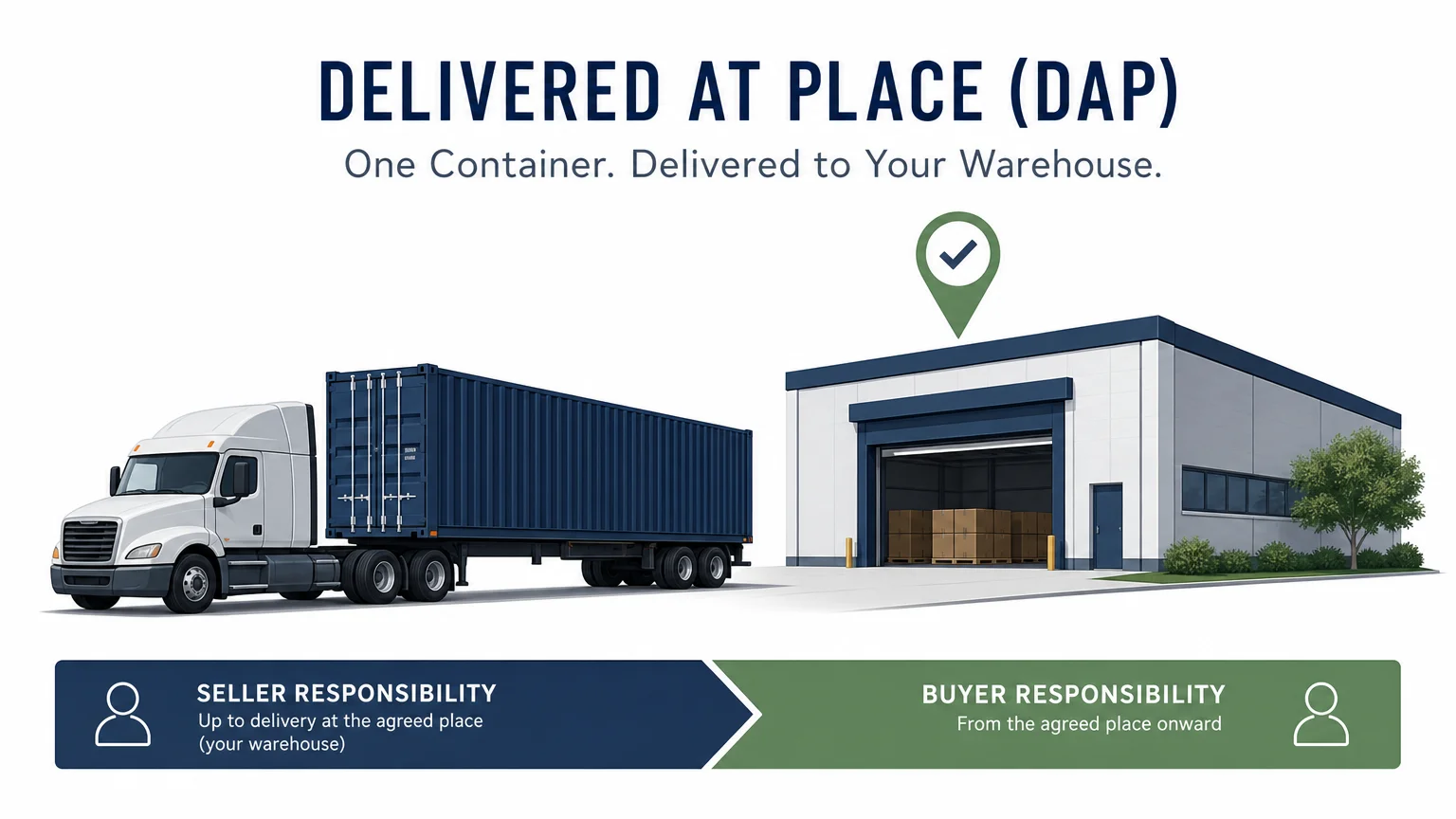
Summary: DAP means Delivered at Place, an Incoterms rule where the seller arranges transport to a named destination and carries the risk until the goods are ready for unloading. The buyer normally handles unloading, import customs clearance, duties, taxes, and onward delivery. Understanding this division helps you evaluate supplier quotes and avoid unexpected costs.
If you are searching for the meaning of DAP in shipping terms, the essential answer is straightforward: the seller delivers the goods to an agreed destination, ready for unloading. The buyer then takes responsibility for unloading and import formalities. Our DAP shipping explanation provides additional context for international shipments.
DAP can apply to air, ocean, road, rail, or multimodal transport. However, it does not mean that the seller has paid every charge through final receipt. Import duties, taxes, customs clearance, and unloading normally remain with the buyer, so the named place and contract wording deserve careful attention.
What does DAP mean in shipping?
DAP stands for Delivered at Place. It is an Incoterms rule used in international sales contracts to divide transport obligations, costs, and risks between the seller and buyer.
Under DAP, the seller arranges and pays for transport to a named place of destination. This place may be a warehouse, terminal, distribution center, factory, or another location agreed by both parties. The goods must be placed at the buyer’s disposal on the arriving means of transport, ready for unloading.
The seller generally manages export clearance, packaging, loading, carriage, and delivery to the named place. The buyer manages import clearance, duties, taxes, unloading, and any onward transportation. DHL’s Incoterms guide describes DAP as a rule where delivery and risk transfer occur when the goods reach the agreed destination ready for unloading.
Which costs does the seller pay under DAP?
Imagine a supplier in China selling inventory to a business in the United States under DAP Los Angeles warehouse terms. The supplier would normally arrange transport from the origin through the agreed warehouse, including the main freight and delivery to that location.
The seller’s responsibilities usually include:
- Export packaging and marking
- Commercial invoices and shipping documents
- Export licenses and origin customs formalities
- Pickup and pre-carriage from the supplier
- Loading and main international transport
- Transit formalities where applicable
- Delivery to the named destination
- Proof of delivery
The buyer’s responsibilities begin before or when the shipment reaches the destination. These normally include import customs clearance, customs brokerage, duties, tariffs, taxes, inspections, unloading, and onward delivery. Local charges can vary by destination, cargo type, and customs requirements, so you should request a complete cost breakdown before accepting a DAP quote.
When does risk transfer under DAP?
Risk does not transfer when the goods leave the seller’s warehouse or when the cargo is loaded onto the first vessel. Under DAP, risk transfers when the goods are placed at the buyer’s disposal on the arriving vehicle, ready for unloading, at the named destination.
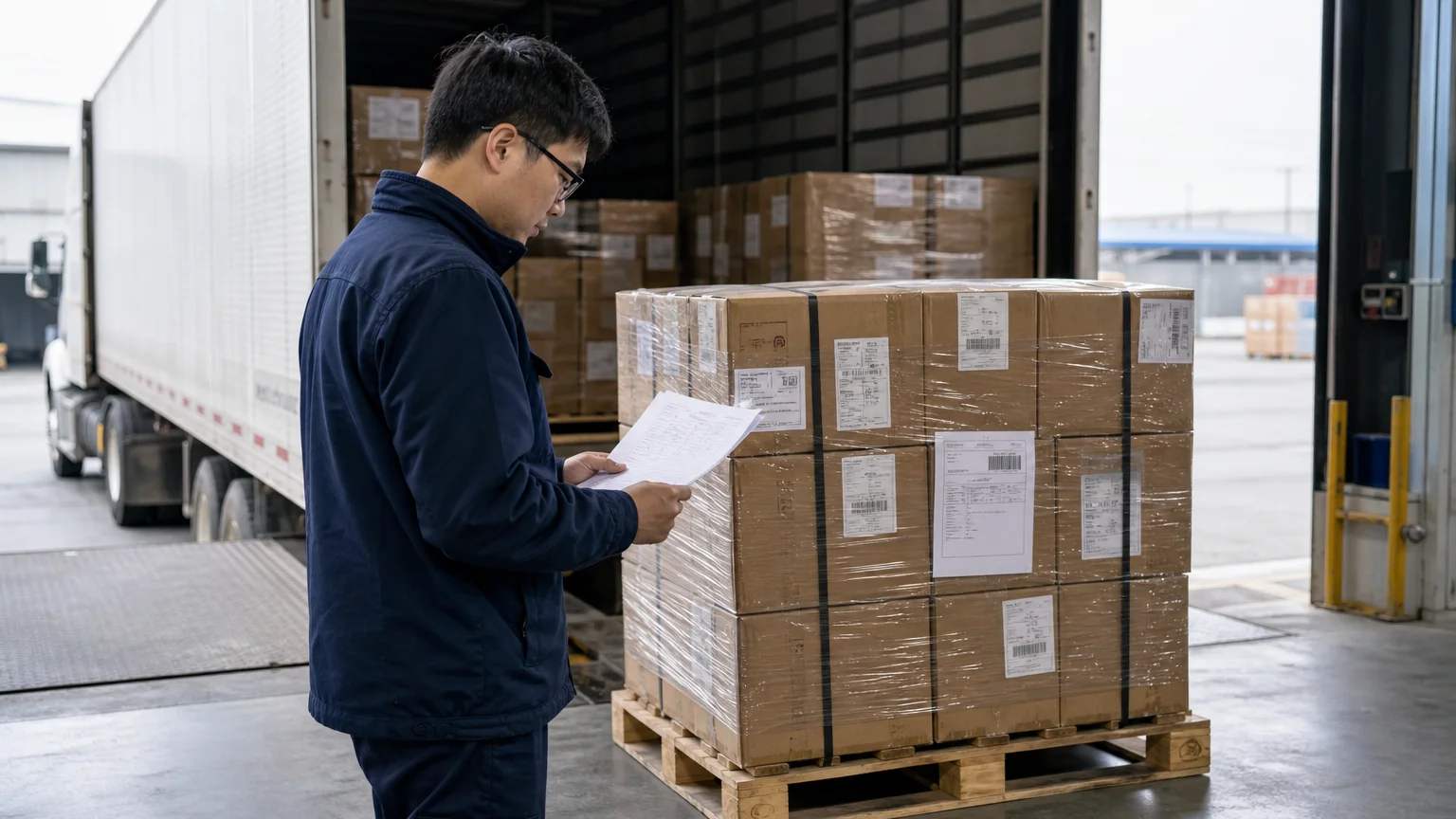
This distinction matters because the seller remains responsible for loss or damage during the journey to the named place. Once the cargo is ready for unloading, the buyer normally assumes the risk, even if unloading has not yet been completed.
Unloading is separate from delivery under DAP. Unless the sales contract states otherwise, the buyer arranges and pays for removing the goods from the arriving vehicle. The seller is also not automatically required to purchase cargo insurance, so both parties should agree separately on insurance coverage and claims procedures.
Crane Worldwide’s DAP reference also emphasizes that the seller carries the cost and risk to the agreed destination, while the buyer takes responsibility when the goods are ready for unloading.
What is the difference between DAP and DDP?
DAP and DDP are often confused because both can involve seller-arranged delivery to a named destination. The central difference is import responsibility.
- DAP: The seller delivers to the named place, while the buyer handles import clearance, duties, taxes, and unloading.
- DDP: The seller manages delivery, import clearance, duties, and taxes, subject to legal and operational feasibility in the destination country.
For a buyer, DAP may appear less expensive because the seller does not include import duties and taxes in the delivery price. However, the buyer must have the knowledge, documentation, customs broker, and cash flow needed to complete the import process. Delays can also create inspection, storage, demurrage, or detention charges.
For a seller, DAP provides control over the international freight journey without requiring responsibility for destination import formalities. FreightAmigo’s DAP overview explains this practical division between delivery to the named place and the buyer’s import obligations.
If you are comparing DAP with a managed door-to-door solution, our DAP delivery terms guide can help you assess which responsibilities remain with the buyer.
How does DAP affect Amazon FBA shipments?
Amazon FBA sellers should examine DAP carefully because delivery to an Amazon warehouse does not automatically mean that customs and taxes are included. A supplier may quote DAP to a warehouse or receiving location while leaving the seller responsible for import clearance, duties, taxes, and unloading arrangements.
This can affect your inventory budget and receiving schedule. If your shipment arrives before the import entry is complete, customs delays may postpone delivery to Amazon. If the named place is not clearly defined, the parties may also disagree about whether delivery means an airport terminal, a local warehouse, an Amazon receiving location, or another point.
Before accepting DAP for an FBA shipment, confirm the following details:
- The exact named place and delivery point
- The party responsible for the importer of record role
- The customs broker and import documentation process
- The party paying duties, taxes, and customs fees
- Whether unloading is included in the transport arrangement
- The treatment of storage, demurrage, detention, and inspection costs
- The expected delivery timeline to the Amazon warehouse
For sellers shipping products from China to Amazon, our DAP terms in shipping guide offers a useful way to compare DAP obligations with a DDP structure. We coordinate DDP Amazon FBA shipping when a seller wants one logistics partner to manage supplier pickup, freight, customs, duties, delivery, and tracking.
How should you write DAP in a shipping contract?
Writing only “DAP United States” is not precise enough. The contract should identify the named place and, where possible, the exact delivery point within that place. For example, “DAP, receiving dock, 123 Example Street, Dallas, Texas, United States, Incoterms 2020” is clearer than a broad city or country reference.
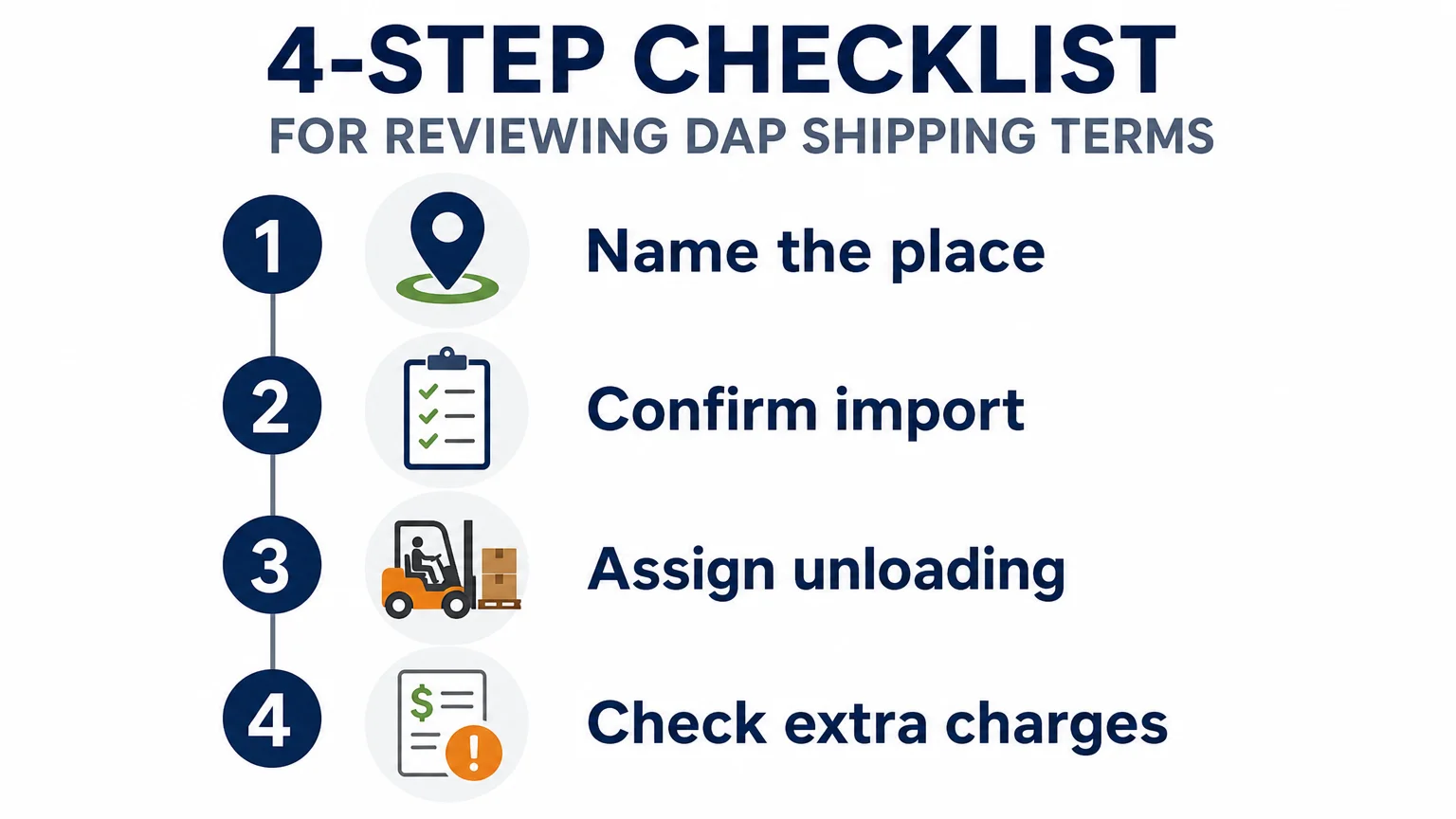
You should also state which version of the Incoterms rules applies. The wording should identify the delivery point, import responsibilities, unloading obligations, and any agreed exceptions. If the seller includes unloading, insurance, or certain destination charges, those additions should appear separately in the sales contract.
A practical contract review should answer four questions:
- Where exactly is delivery completed?
- Who files the import entry and pays duties and taxes?
- Who unloads the arriving vehicle?
- Who pays storage, inspection, detention, or demurrage charges?
Clear wording reduces the risk of disputes because the commercial invoice, purchase order, freight quote, and sales contract should all describe the same arrangement. If the shipment involves multiple transport modes, confirm that the DAP term applies to the complete journey rather than only one transport segment.
What are the advantages and limitations of DAP?
DAP can simplify international transport for a buyer because the seller coordinates the freight journey to a named destination. This may be useful when the seller has better access to carriers, origin services, or international transport arrangements.
The buyer also gains visibility over the division of responsibility. The seller remains responsible for transport risk until the named destination, while the buyer retains control over import clearance and destination taxes. That structure can suit experienced importers with established customs processes.
The main limitation is that DAP does not provide an all-inclusive landed cost. A buyer may still need to pay import duties, tariffs, taxes, brokerage charges, unloading costs, and local fees. For smaller businesses or Amazon sellers without a customs process, DDP may offer a more manageable arrangement, provided the seller or logistics provider can legally and properly handle destination import requirements.
For any DAP shipment, compare the quoted freight price with the likely import and destination charges. The lowest transport quote may not produce the lowest total landed cost once customs, taxes, unloading, storage, and delivery risks are included.
Choose DAP with a complete cost view
The meaning of DAP in shipping terms is a delivery arrangement, not a promise that every destination charge is included. The seller transports the goods to a named place and carries the risk until the shipment is ready for unloading. The buyer normally handles import clearance, duties, taxes, unloading, and onward movement.
Before you agree to DAP, define the delivery point, confirm the importer of record, assign unloading responsibility, and estimate every customs and destination charge. If your priority is a predictable door-to-door shipment, compare DAP with DDP rather than evaluating freight price alone.
Take action with QG Horizon
Choosing between DAP and DDP depends on your shipment route, product type, destination, timing, and ability to manage import formalities. For Amazon FBA sellers moving inventory from China, a clear comparison of freight, customs, duties, delivery, and tracking can help protect margins and prevent avoidable delays.
We coordinate supplier pickup, international air, ocean, fast boat, and rail freight, together with customs handling, DDP delivery, tracking, and support for Amazon warehouse shipments. Request a route comparison through our shipping and freight services to review suitable options for your weight, volume, budget, and delivery requirements.
Frequently Asked Questions
What does DAP stand for in shipping?
DAP stands for Delivered at Place. It means that the seller delivers goods to a named destination ready for unloading, while the buyer normally handles import clearance, duties, taxes, and unloading.
Does DAP include customs duties and taxes?
No, DAP normally excludes import duties, taxes, and import customs clearance. Those responsibilities generally belong to the buyer unless the sales contract adds different arrangements.
Who pays for unloading under DAP?
The buyer normally pays for and arranges unloading because DAP delivery occurs when the goods are ready for unloading on the arriving vehicle. Any exception should be written clearly into the contract.
Is DAP suitable for Amazon FBA shipments?
DAP can be suitable when the seller has a reliable process for import clearance, duties, taxes, and unloading. If you prefer one provider to coordinate these stages, QG Horizon also manages DDP Amazon FBA shipping with freight, customs handling, delivery, and tracking.
What details should appear in a DAP quote?
The quote should identify the exact named place, transport mode, delivery point, included freight charges, import responsibilities, unloading arrangements, and possible storage or inspection fees. You should also confirm the party responsible for customs clearance and the importer of record role.
Ready to Optimize Your Amazon Shipping?
Get 3 route options tailored to your products and timeline
Get Your Quote→