The Origin of FOB: History of the Free on Board Term
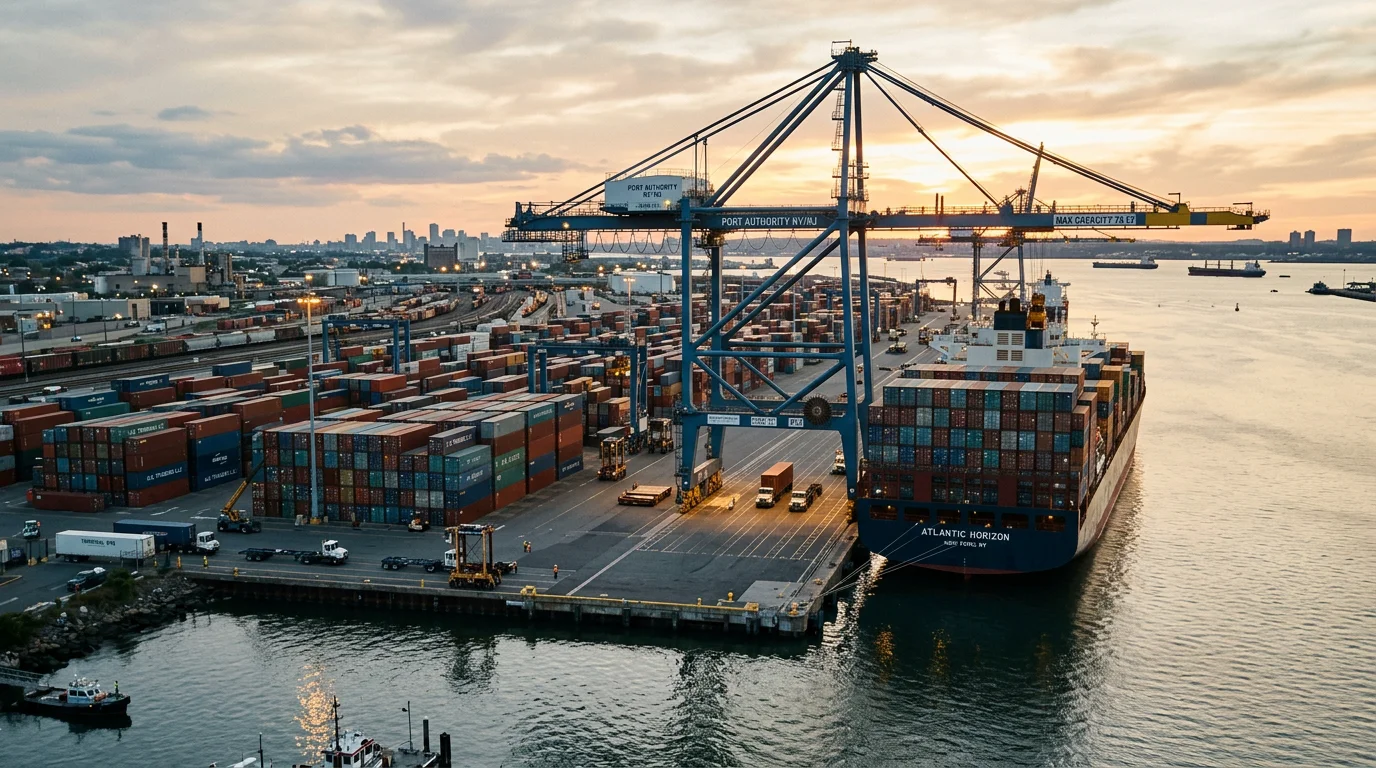
Summary: FOB, meaning Free on Board, dates back to the sailing-ship era and was formalized by the International Chamber of Commerce in its first Incoterms edition in 1936.
Few three-letter abbreviations carry as much history as FOB. It appears on purchase orders, invoices, and freight quotes every single day, yet its roots reach back centuries to wooden vessels and hand-loaded cargo. Understanding where the term came from is not merely academic: it explains why Free on Board still governs who pays and who bears risk on modern shipments. If you import goods and want the practical side, our guide to FOB origin and FBA risk connects the concept to real supply-chain decisions.
The confusion is understandable. The same acronym means one thing under international trade rules and something slightly different in North American domestic contracts. Tracing its evolution clears the fog and helps you read shipping documents with confidence, whether you are quoting a supplier in Shenzhen or receiving a pallet in Ohio.
What FOB Stands For and Where the Term Began
Before examining the shipping acronym, it is worth separating it from the everyday English word. The common noun “fob,” as in a small waist pocket or a watch chain, is unrelated. According to Etymonline, that word dates to the 1650s and is of uncertain origin, probably related to Low German “fobke” meaning pocket. The shipping term is a separate creation entirely.
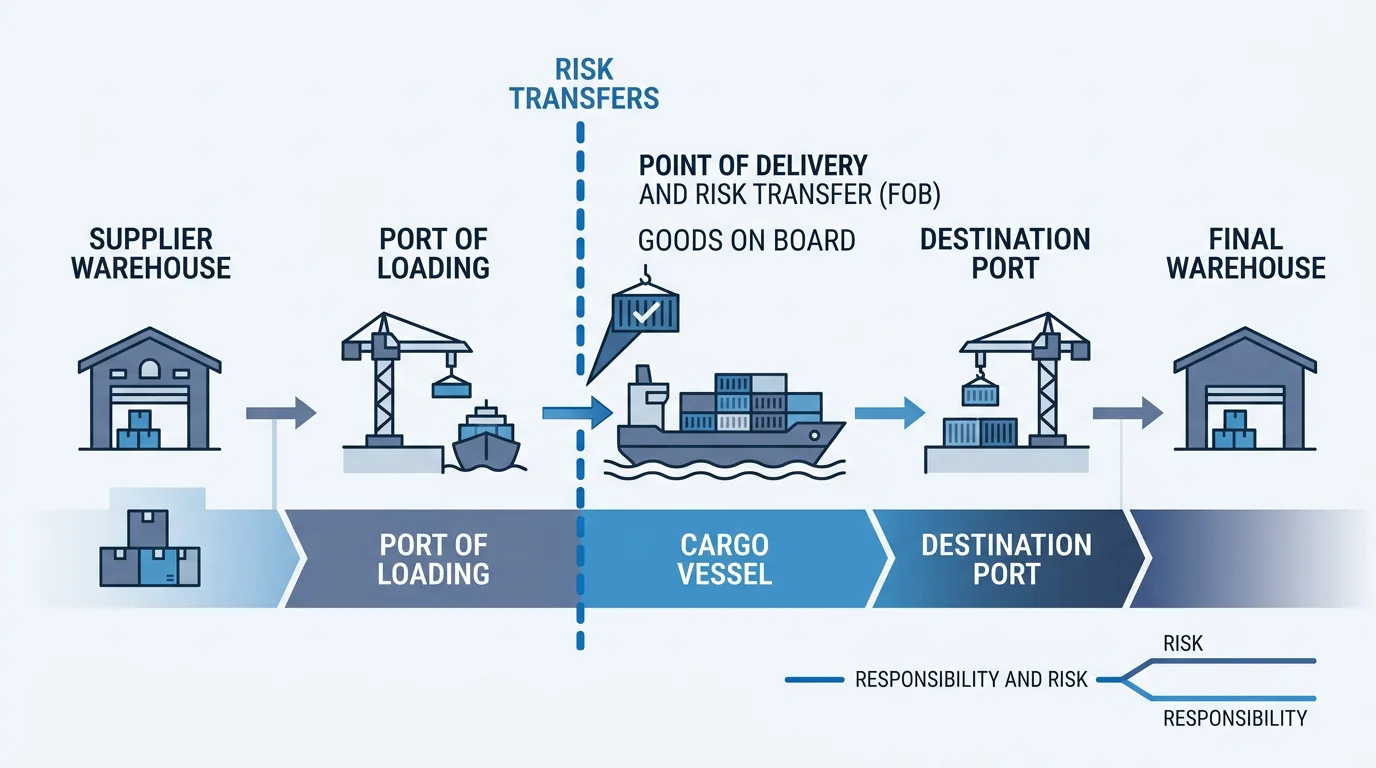
In trade, the origin of fob lies in a plain description of what happens at the dock: goods are placed “free on board” a vessel. The seller delivers the cargo onto the ship at an agreed port, and from that moment the buyer takes over. The phrase is functional rather than poetic, which is precisely why it survived. It describes a physical act that any merchant, in any century, could witness on a quay.
From Sailing Ships to the First Incoterms
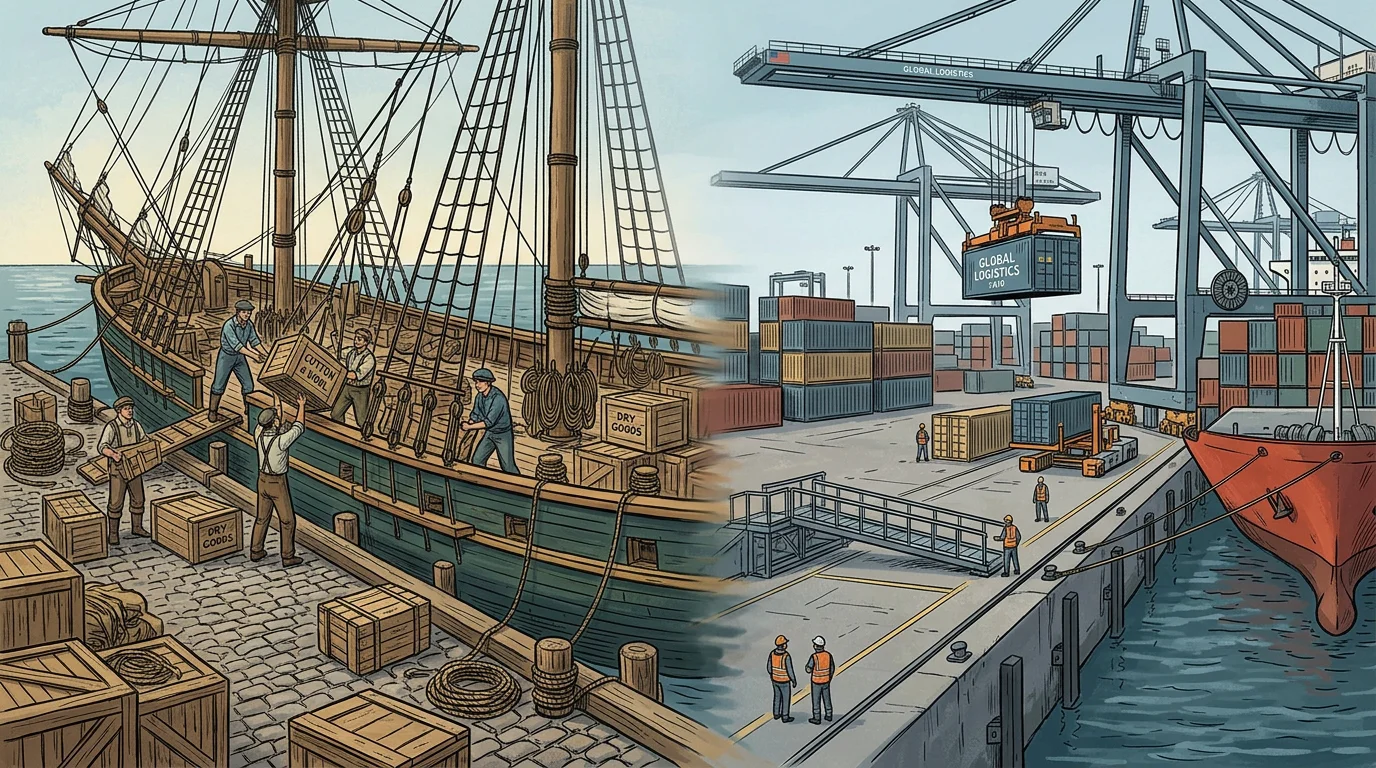
The term is genuinely old. Trade Finance Global notes that FOB has its origins in the days of sailing ships, when merchants needed a simple rule to mark the exact instant responsibility changed hands. Long voyages and unpredictable seas made that dividing line essential: someone had to own the risk once the cargo left the shore.
Standardization arrived in the twentieth century. The International Chamber of Commerce published its first set of Incoterms in 1936, and FOB was among the founding terms. That codification transformed a customary dockside practice into a globally recognized rule, giving buyers and sellers a shared vocabulary that no longer depended on local habit or memory.
The Ship’s Rail and Why It Was Removed
For decades, FOB carried a curious detail: risk was said to pass when goods crossed the ship’s rail. The image is almost comical, yet it had legal weight. As Corporate Finance Institute explains, the phrase originated when goods were literally passed over the rail by hand, so the rail marked a visible, agreed frontier between seller and buyer.
Containerization made that frontier obsolete. Once cargo is sealed inside a steel box loaded by crane, no one can pinpoint the precise moment it “crossed the rail,” and disputes multiplied. The ICC responded by dropping the ship’s rail language in its 2010 revision, aligning risk transfer with the simple fact of the goods being safely on board. Today, “on board” means on the deck or in the hold, a far more practical standard. If you want the plain-language version, our explainer on what FOB means keeps it jargon-free.
FOB Origin Versus FOB Destination
Here is where the acronym splits into two worlds. In international trade, FOB always means Free on Board under Incoterms and applies only to sea or inland waterway transport. In North American domestic shipping, however, “FOB” is paired with “origin” or “destination” to mark where liability shifts. This dual usage is a frequent source of costly misunderstandings.
Under FOB Origin, also called FOB shipping point, the sale is treated as complete at the seller’s dock, so the buyer assumes freight cost and liability during transit. Under FOB Destination, the sale completes at the buyer’s location, and the seller carries cost and risk until arrival. The table below compares both arrangements against the fully managed, duties-included model we operate for importers.
| Arrangement | Risk transfers | Who pays freight | Best suited for |
|---|---|---|---|
| FOB Origin (shipping point) | At seller’s dock, once loaded | Buyer | Buyers wanting control of the transport leg |
| FOB Destination | At buyer’s location on arrival | Seller | Buyers wanting a delivered price |
| Our DDP service to Amazon (QG Horizon) | Managed end to end until the warehouse | Handled for you, duties and taxes included | Amazon FBA sellers importing from China |
For sellers who prefer certainty over juggling carriers and customs, our door-to-warehouse model removes the guesswork. You receive an all-inclusive price known in advance rather than a series of surprises down the chain. Our overview of FOB meaning in shipping details how these terms interact with a delivered-duty-paid approach.
Why the Origin of FOB Still Matters for US Importers
History is not just trivia when a container is at stake. FOB remains one of the most widely used terms in trade between Asia and the United States, especially for sellers sourcing from China. Many suppliers quote FOB because it lets them keep control up to the port of departure, while the American importer manages the ocean leg and inland delivery.
That division sounds tidy on paper, yet it exposes the buyer to the exact risks the term was invented to clarify. Between the moment cargo is loaded and the moment it reaches an Amazon fulfillment center, freight charges, customs duties, and liability all fall on the importer. Misreading a single line on a bill of lading can shift thousands of dollars of exposure. Our team resolves that uncertainty by taking the shipment from the supplier’s factory through customs and onward to the warehouse, with real-time updates along the way. For the underlying vocabulary, our breakdown defining FOB shipping terms is a useful companion.
Common Mistakes When Reading FOB Terms
The most frequent error is treating FOB as a statement about ownership. It is not. FOB governs cost and risk, while title to the goods is defined separately by the contract of sale and the bill of lading. A seller can transfer risk under FOB while still retaining title until payment clears.
A second pitfall is applying FOB to containerized cargo. Because containers are handed to a carrier well before the vessel, the ICC now recommends other terms for that scenario, reserving FOB for goods actually loaded on board. A third mistake is confusing “Free on Board” with “Freight On Board,” a phrase that has no standing in Incoterms or the Uniform Commercial Code and is best avoided entirely in contracts.
Frequently Asked Questions
Does FOB stand for Free on Board or Freight on Board?
It stands for Free on Board. The phrase “Freight on Board” is not recognized by Incoterms or the Uniform Commercial Code, so using it in contracts is discouraged because it invites confusion.
How old is the FOB shipping term?
The concept predates modern rules and comes from the sailing-ship era. It was formally included in the very first Incoterms edition published by the International Chamber of Commerce in 1936, and it remains in active use today.
Is FOB Origin a good choice for Amazon FBA imports from China?
FOB Origin gives you control of the transport leg but leaves you responsible for freight, duties, and risk to the warehouse. Our delivered-duty-paid service manages that entire stretch for you, with an all-inclusive price and WhatsApp tracking.
Conclusion
The story of FOB runs from hand-loaded sailing ships to a rule codified by the ICC in 1936, and its core purpose has never changed: it marks the precise point where cost and risk pass from seller to buyer. That single dividing line, born on a wooden quay centuries ago, still decides who pays when a shipment is damaged in transit today. For US importers sourcing from China, mastering the meaning of Free on Board is the difference between a predictable landed cost and an unpleasant surprise. Rather than absorb that exposure alone, you can rely on our end-to-end, duties-included handling from the supplier’s factory straight to the Amazon warehouse, with transparent pricing and real-time support. To go further, consult our guide defining FOB shipping terms and ship with confidence.
Ready to Optimize Your Amazon Shipping?
Get 3 route options tailored to your products and timeline
Get Your Quote→