CPT Incoterms Explained: Carriage Paid To Terms in 2026

Summary: Under CPT (Carriage Paid To), the seller pays freight to the named destination, yet risk shifts to the buyer once goods reach the first carrier. It is one of 11 Incoterms.
How much shipment risk are you unknowingly accepting the moment your goods leave the factory? Under Carriage Paid To (CPT) terms, considerably more than most buyers assume. The confusion between who pays and who carries the risk is one of the most expensive misunderstandings in global trade, and our guide to CPT seller and buyer duties exists precisely to resolve it.
The reason this matters is structural. Incoterms are a set of 11 internationally recognized rules that define the responsibilities of sellers and buyers in an export transaction, and CPT sits among the most misread of them. Getting it right protects your margins; getting it wrong can turn a routine delivery into a costly dispute.
What the terms CPT mean under Incoterms 2020
Under Incoterms 2020, the terms CPT (Carriage Paid To) assign the seller the duty to arrange and pay for transport to a named place of destination, while completing export clearance. The seller selects and contracts the carrier. The buyer, meanwhile, handles import duties and formalities on arrival.
The Incoterms rules are not a modern invention. The International Chamber of Commerce first published them in 1936, and the framework is recognised by UNCITRAL as the global standard for interpreting common trade terms. CPT applies to any mode of transport, including sea, road, rail, air, or multimodal transport combining several of them.
The key phrase to remember is “named place of destination.” A contract should always read “CPT [Named Place], Incoterms 2020.” Writing “CPT” alone leaves the destination undefined and invites disputes.
Seller versus buyer: who pays and who bears the risk
The division of duties under CPT is precise. Confusing the two roles is where most trouble begins.
The seller is responsible for export packaging, export clearance, delivery to the carrier, and the freight cost all the way to the agreed destination. The buyer takes over responsibility for insurance (which is optional under CPT), import clearance, duties, taxes, and any transport beyond the named destination.
If your shipment involves several carriers, delivery is deemed complete once the goods are handed to the first carrier. This single detail reshapes your risk exposure. If you frequently weigh CPT against similar rules, you may find it useful to compare CPT with FCA terms of shipment, since the two share a similar logic but differ on the defined delivery point.
The cost-risk split that catches shippers off guard
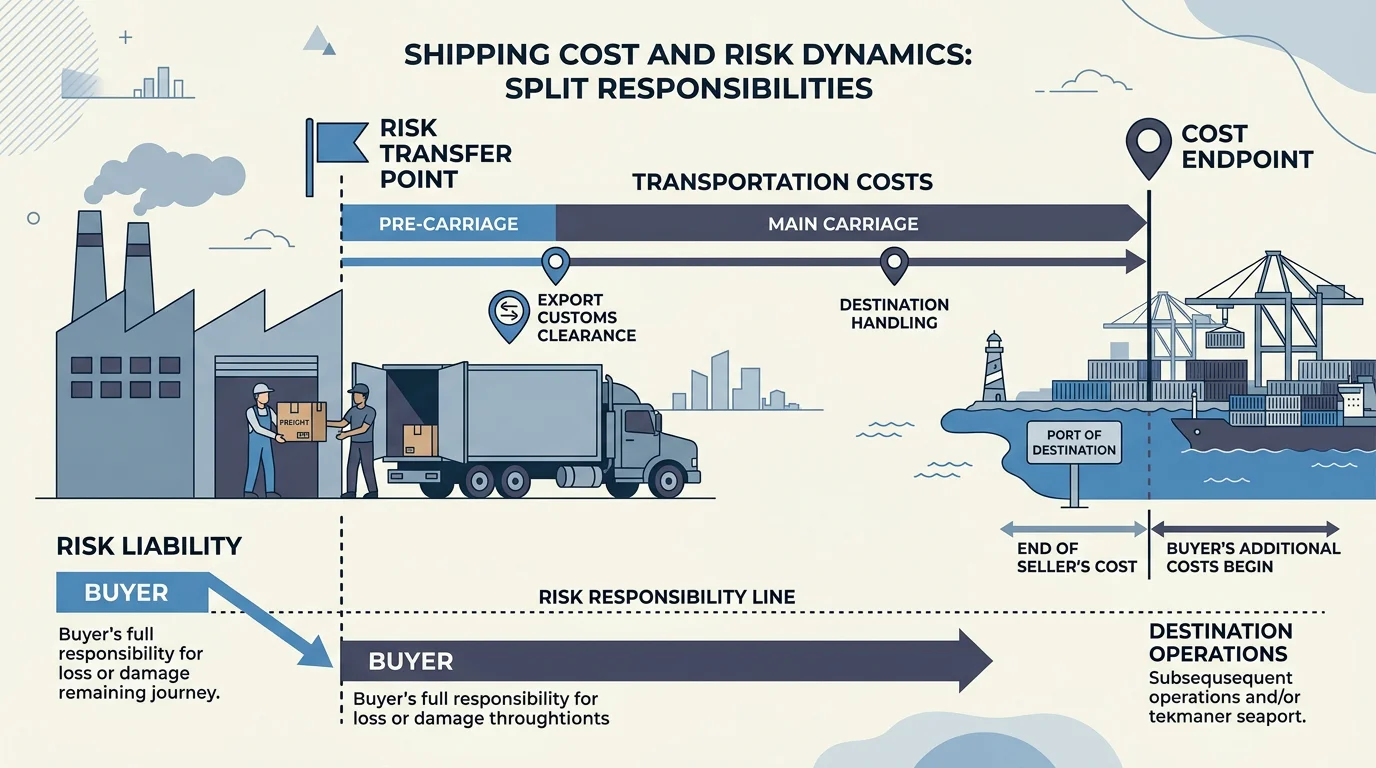
Here is the trap. Under CPT, cost and risk transfer at two different points. The seller pays the freight to the destination, but the risk of loss or damage passes to the buyer far earlier, the instant the goods reach the first carrier at origin.
Consider a practical case. A supplier ships auto parts under “CPT” to a plant across a border, moving by truck through an intermediate crossing. The seller pays the entire route, yet the buyer already carries the risk for the long inland transit. If an incident occurs midway and no cargo insurance was purchased, the loss falls on the buyer.
Under CPT, the seller pays for the journey, but the buyer owns the risk for most of it. That asymmetry is the defining feature of the rule.
This is why the choice to buy cargo insurance, though optional under CPT, deserves serious thought. The rule shields the buyer from origin-side complications but exposes them during the main carriage.
CPT versus CIP, FOB, and DAP: choosing the right term
CPT rarely stands alone in a decision. Buyers usually compare it with its close relatives before signing. The table below summarizes the practical differences, including how a fully managed service removes the guesswork entirely.
| Criteria | CPT | FOB | DAP | Our DDP FBA service |
|---|---|---|---|---|
| Export clearance | Seller | Seller | Seller | Included |
| Main freight cost | Seller | Buyer | Seller | Included |
| Import duties and taxes | Buyer | Buyer | Buyer | Included (DDP) |
| Delivery to Amazon warehouse | Buyer arranges | Buyer arranges | Seller to place | Included |
| Real-time tracking | Not defined | Not defined | Not defined | WhatsApp, 7 days a week |
The distinctions carry real weight in day-to-day commerce. According to the U.S. International Trade Administration, most B2B ecommerce agreements use EXW, CPT, or CIF, which shows how central CPT remains to cross-border online trade. CIP mirrors CPT but forces the seller to buy insurance. FOB is limited to sea freight and stops at the loading port. DAP pushes delivery further, to a named place in the buyer’s country. If your goods need to reach a specific address rather than a terminal, it helps to understand DAP delivery terms alongside CPT.
When CPT fits Amazon FBA shipments from China
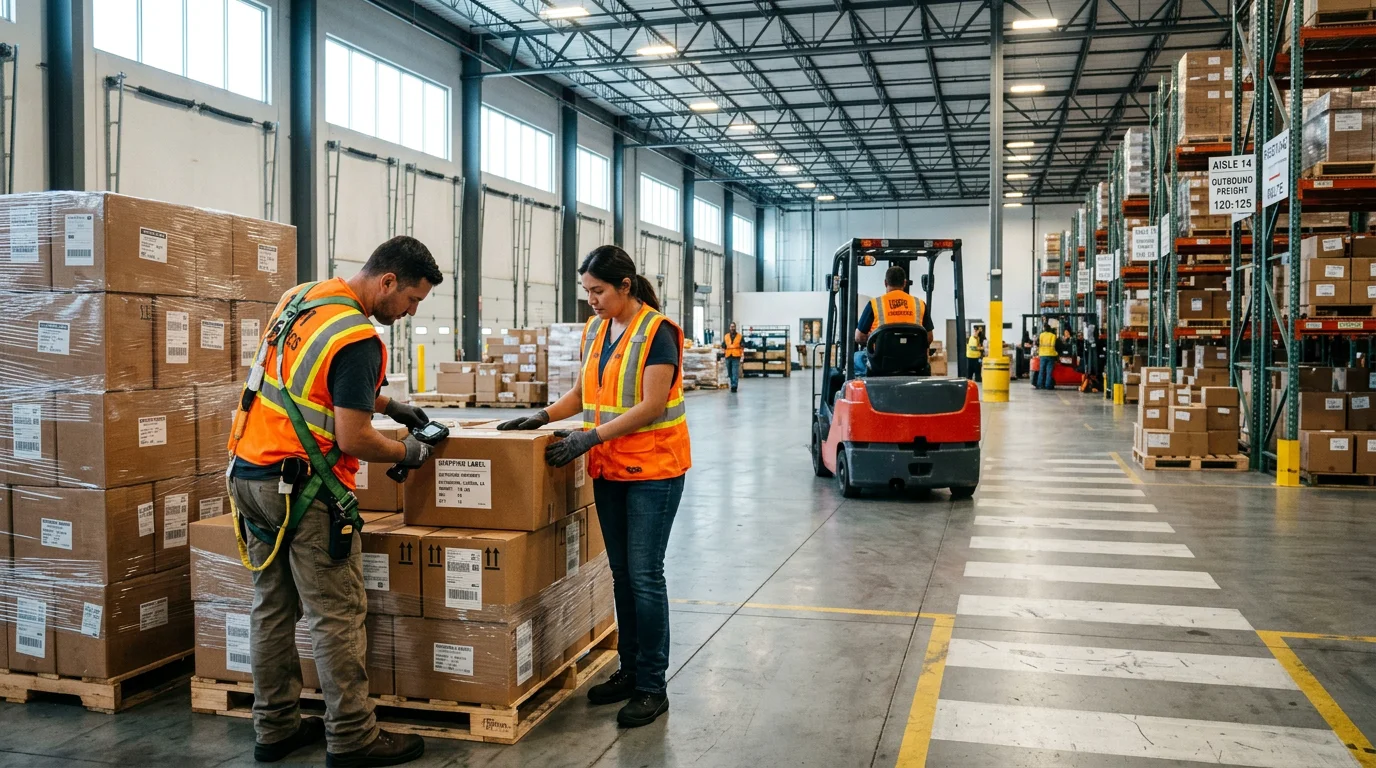
For Amazon FBA sellers importing from China, CPT can look attractive because the seller organizes freight. However, it leaves you, the buyer, holding transit risk and, crucially, responsible for import duties, taxes, and the final leg to the Amazon fulfilment center. That is where surprises and delays appear.
This is the gap we close. We handle collection at your supplier, freight, customs clearance in DDP (duties and taxes included), and delivery all the way to the Amazon warehouse, with a known all-in price agreed in advance. You receive real-time updates via WhatsApp, seven days a week, and three route options quoted within 24 hours across air, express sea, ocean, and China to Europe rail.
The practical result is fewer customs delays and no ambiguity over who owns which cost. If you are still weighing your options, our breakdown of CPT versus FOB, CIF, and DDP helps you match the term to your budget and urgency.
Common mistakes to avoid with CPT
Three errors account for most CPT disputes across the American market and beyond.
- Assuming risk transfers at destination. It does not. Risk passes at the first carrier, even though the seller still pays the freight.
- Assuming insurance is included. CPT contains no insurance obligation. If you want cover during the main carriage, you must arrange it yourself.
- Omitting the named place. “CPT” without a precise destination is incomplete and legally ambiguous.
Avoiding these three traps eliminates the majority of avoidable losses. Clarity in the contract is your cheapest form of insurance.
Conclusion
The heart of the Carriage Paid To (CPT) terms is a single, counter-intuitive fact: the seller pays freight to the named destination, but risk shifts to the buyer at the first carrier. Master that split and you avoid the disputes that trip up so many importers, especially across the 11 Incoterms rules that shape US trade contracts. Always name the destination, decide deliberately on insurance, and match the term to your real needs. Where CPT leaves you exposed to duties, taxes, and the final delivery leg, our clé-en-main DDP service removes that burden entirely, with transparent all-in pricing and live WhatsApp tracking. To ship with certainty, explore our CPT and Incoterm guidance for FBA sellers and start with a free quote.
Frequently Asked Questions
Does CPT include insurance?
No. CPT places no insurance obligation on the seller. If you want protection during the main carriage, you must arrange and pay for cargo insurance yourself, or choose CIP instead.
When does risk transfer under CPT?
Risk transfers to the buyer the moment the goods are handed to the first carrier at origin, even though the seller continues to pay freight to the named destination.
Is CPT a good choice for Amazon FBA imports from China?
CPT can work, but it leaves you responsible for duties, taxes, and final delivery. Our DDP FBA service covers freight, customs, and delivery to the Amazon warehouse under one all-in price.
Ready to Optimize Your Amazon Shipping?
Get 3 route options tailored to your products and timeline
Get Your Quote→