What Does the DAP Incoterm Mean for US Importers Today?
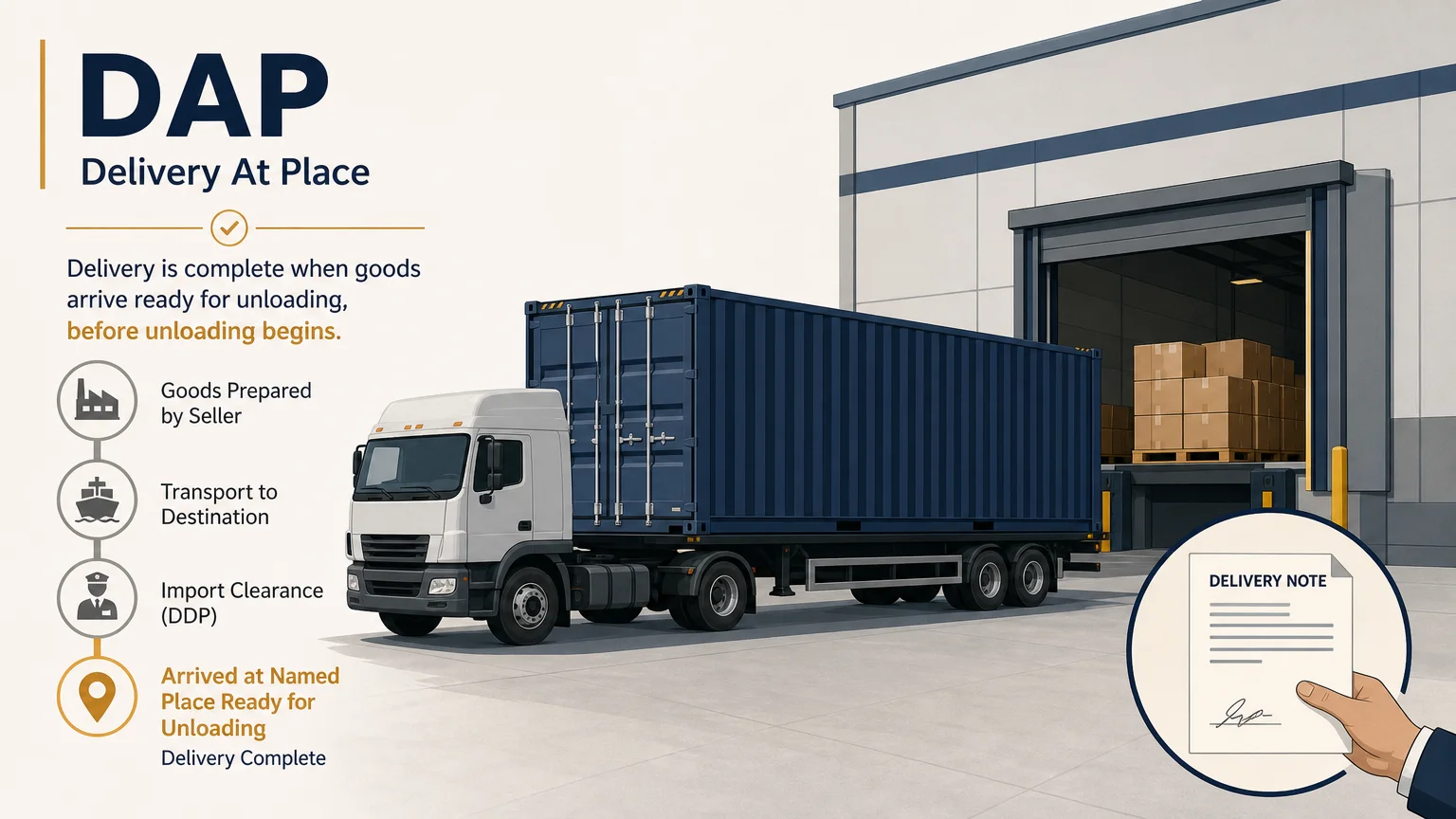
Summary: DAP means Delivered at Place. The seller arranges and pays for transport to a named destination, with the goods ready for unloading. The buyer handles unloading, import clearance, duties, and taxes. Risk transfers when the goods reach the agreed place, before unloading begins.
What happens after an international shipment reaches the United States? Under DAP, the answer depends on the exact delivery point and whether the buyer is prepared to clear and unload the goods. For a practical introduction, review what DAP means in shipping before accepting a supplier quotation.
What does dap incoterm mean in practical terms? DAP, or Delivered at Place, divides responsibility between the seller and buyer at a clearly named destination. The seller manages transportation and export formalities. The buyer takes over import procedures, applicable duties, taxes, unloading, and related destination responsibilities.
What does the DAP Incoterm mean?
DAP is an Incoterms® 2020 rule for shipments moved by one or more transport modes. It can apply to air, ocean, rail, road, or multimodal transportation. The seller delivers the goods to the named destination while they remain on the arriving vehicle and are ready for unloading.
The seller carries the transport risk until that point. Once the goods are available for unloading at the agreed location, risk transfers to the buyer. The seller does not normally unload the goods under DAP.
The destination must be more precise than a city or country. A useful clause identifies the full address, receiving dock, terminal, warehouse gate, or another agreed handover point. UK government guidance describes DAP as delivery on the arriving means of transport, ready for unloading at the named place, with the seller bearing the risks up to that place. UK government guidance also lists DAP among the rules suitable for any transport mode.
Who pays what under DAP?
Under DAP, the seller pays for most transportation costs before delivery. The buyer still needs to budget for several important charges after the shipment reaches the import country.
| Responsibility | Seller under DAP | Buyer under DAP |
|---|---|---|
| Export preparation | Provides goods, invoice, packing, and export documentation | Provides information needed for the transaction |
| Export clearance | Handles and pays for export formalities | Assists when information is required |
| Transportation | Arranges and pays for carriage to the named destination | Accepts delivery at the named place |
| Import clearance | Usually provides supporting documents | Arranges and pays for import clearance |
| Duties and taxes | Not responsible under standard DAP | Pays applicable import duties, taxes, and related charges |
| Unloading | No standard unloading obligation | Arranges and pays for unloading |
| Risk at destination | Risk ends when goods are ready for unloading | Risk begins at that delivery point |
Import costs can include customs broker charges, domestic transportation, insurance, and other destination expenses. The World Bank’s 2026 B-READY measurement framework treats customs brokers, freight forwarders, domestic transportation, trade finance, and insurance as potential import-related transaction costs. The World Bank framework illustrates why a DAP quote should not be treated as the buyer’s complete landed cost.
When does risk transfer under DAP?
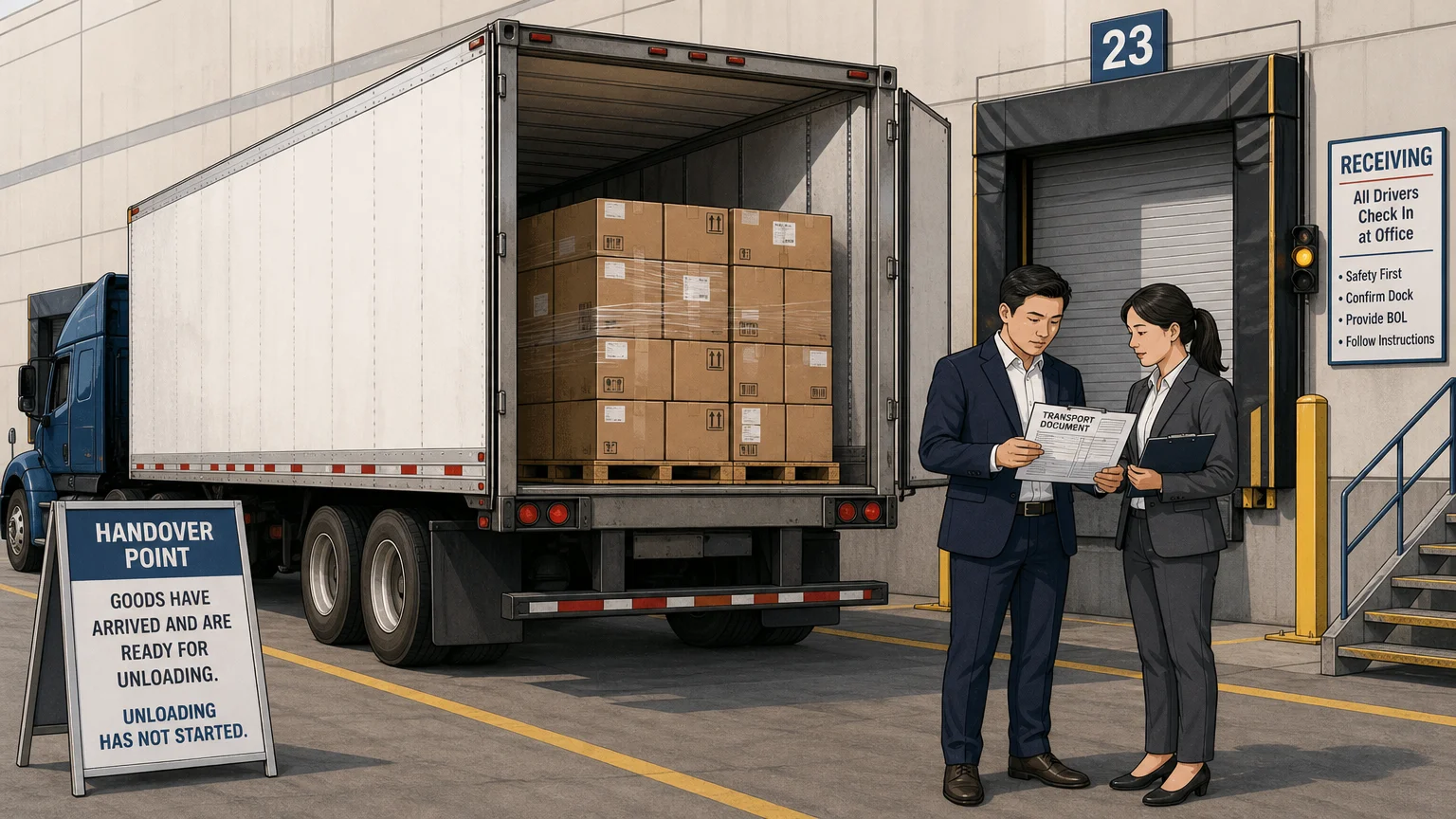
The most important DAP concept is the moment when the goods are ready for unloading. Delivery does not normally wait until the cartons have been removed from the truck, container, aircraft, or other arriving means of transport.
For example, imagine a supplier sends palletized inventory to a warehouse in California under DAP. The seller arranges the international and domestic transport. When the vehicle reaches the named warehouse dock and the cargo is available for unloading, delivery has occurred. The buyer then assumes the unloading risk and the responsibility for import procedures.
This distinction matters because a shipment can arrive physically while import clearance remains incomplete. If customs authorities have not released the cargo, additional storage, inspection, waiting, or redelivery costs may arise. The sales contract and transport quotation should explain which party handles those costs in the relevant situation.
DAP does not require the seller to purchase cargo insurance. The seller still bears transit risk until the named delivery point, but insurance arrangements should be addressed separately. Buyers may wish to arrange coverage that matches the shipment value, route, cargo type, and point of risk transfer.
What is the difference between DAP and DDP?
DAP and DDP both require the seller to arrange transportation to a named destination. The main difference is responsibility for import clearance, duties, and taxes.
| Issue | DAP | DDP |
|---|---|---|
| Delivery point | Named destination, ready for unloading | Named destination, ready for unloading |
| Transport to destination | Seller arranges and pays | Seller arranges and pays |
| Export clearance | Seller handles | Seller handles |
| Import clearance | Buyer handles and pays | Seller handles and pays |
| Import duties and taxes | Buyer pays | Seller pays |
| Unloading | Buyer handles unless separately agreed | Buyer handles unless separately agreed |
| Seller responsibility | Lower than DDP because import obligations remain with the buyer | Higher because the seller manages import obligations |
Choose DAP when the buyer has the local customs capability and wants control over import clearance. Choose DDP when the seller or logistics provider can lawfully manage destination import processes and the buyer wants a more coordinated delivery structure.
For a clearer explanation of the distinction, our resource on DAP incoterm meaning explains how delivery, import handling, duties, and unloading differ between the two rules.
How does DAP affect Amazon FBA shipments?
Amazon FBA sellers should examine DAP carefully because the named destination may be an Amazon fulfillment center, a freight terminal, or another receiving location. The buyer must understand who will act as importer, pay duties and taxes, submit customs information, and coordinate final delivery.
For inventory moving from China to an Amazon warehouse in the US, DAP can leave the seller responsible for transportation while the FBA seller manages destination import procedures. That arrangement may work when the seller has an experienced customs broker, the required importer information, and a clear process for duties and release.
If the seller lacks destination-country import capability, DAP may create delays or unexpected charges. Before booking, confirm the customs entry process, consignee details, delivery appointment, Amazon receiving requirements, and the party responsible for unloading.
We support Amazon FBA sellers with supplier pickup, export declarations, international air, fast-boat, ocean, or rail freight, destination customs coordination, DDP duties and taxes, delivery to Amazon warehouses, and tracking. Our route options are evaluated according to shipment size, urgency, product characteristics, destination, budget, and customs requirements. You can also review what DAP means in shipping before comparing DAP with a DDP arrangement.
How should you write a DAP delivery clause?
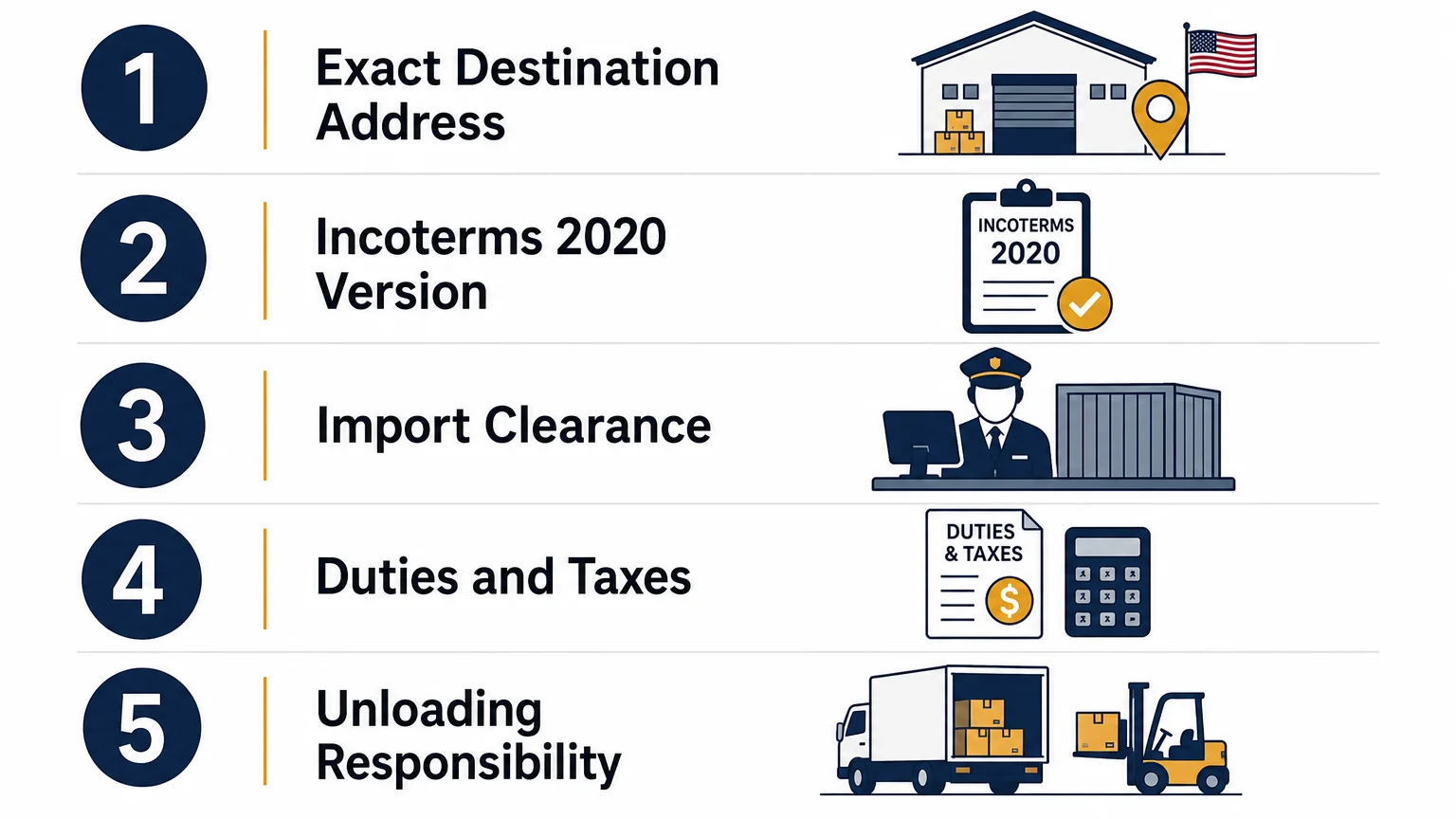
A DAP clause should remove uncertainty before the shipment leaves the seller’s facility. A practical format is:
DAP [full delivery address and precise receiving point], Incoterms® 2020
Then confirm these details in the sales contract or quotation:
- The complete delivery address and receiving point
- The planned delivery period or transit estimate
- The transport mode and route
- The party responsible for import clearance
- The party responsible for duties, taxes, and customs charges
- The unloading method and equipment
- Any appointment, access, storage, waiting, or redelivery conditions
- Insurance arrangements and cargo coverage
A city name alone may not identify the real handover point. For example, “DAP Chicago” leaves questions about the terminal, warehouse, dock, and final transport leg. “DAP [full warehouse address], Receiving Dock 2, Incoterms® 2020” is more precise.
Our DAP delivery terms resource can help you review the wording before requesting a freight quotation. For FBA shipments, provide the supplier address, carton count, dimensions, gross weight, product details, destination warehouse, and any special handling information.
When is DAP a suitable choice?
DAP can suit transactions where the seller controls international transportation and the buyer has strong import capabilities. It is also useful when the buyer wants the seller to manage delivery to a specific destination but prefers to control customs clearance and duty payments.
DAP may be less suitable when the buyer cannot act as importer or does not have a customs broker ready. It may also create friction when the destination country imposes requirements that the buyer has not prepared for before arrival.
The United Nations procurement manual recommends selecting an Incoterm according to the goods, transport method, acceptable risk, and intended obligations. It treats DAP as a term requiring an informed transaction-specific decision rather than an automatic default. The UN procurement manual provides a useful example of this selection approach.
Before agreeing to DAP, compare the total landed cost, not only the freight line. Include customs brokerage, import duties, taxes, unloading, insurance, storage exposure, and domestic delivery requirements. A detailed quotation makes it easier to compare DAP with DDP or another Incoterms rule.
Final takeaway on the DAP Incoterm
What DAP means in shipping is straightforward once the handover point is clear. The seller pays for transport and carries risk until the goods reach the named destination ready for unloading. The buyer then handles unloading, import clearance, duties, taxes, and related destination responsibilities. For US importers, the safest practice is to identify the exact delivery point, confirm customs capability, and document every cost that remains outside the quoted freight.
Need help planning your shipment?
Choosing between DAP and DDP affects customs responsibility, cash flow, delivery coordination, and the risk of unexpected destination charges. If you are shipping inventory from China to an Amazon warehouse, a route review can help you compare speed, cost, customs handling, and shipment visibility.
We coordinate supplier pickup, Chinese export declarations, air, fast-boat, ocean, or rail freight, destination customs processes, DDP duties and taxes, door-to-door delivery, and tracking. Request a quote through our freight forwarding services and provide your shipment details for route comparison.
Frequently Asked Questions
Does DAP include import duties?
No. Under standard DAP, the buyer handles import clearance and pays applicable duties, taxes, and related charges. If the seller is responsible for those obligations, DDP may be the more appropriate rule.
Who unloads goods under DAP?
The buyer normally unloads the goods at the named destination. Delivery occurs when the goods arrive on the means of transport and are ready for unloading, unless the parties agree on additional services.
Does DAP include insurance?
DAP does not require the seller to purchase cargo insurance. The parties should agree separately on whether insurance is needed, what journey it covers, and who manages claims.
Can DAP be used for air and ocean freight?
Yes. DAP can apply to air, ocean, road, rail, or multimodal shipments. The critical issue is the named destination and the responsibilities allocated at that point.
Is DAP suitable for Amazon FBA shipments?
It can be suitable when the FBA seller is prepared to manage import clearance, duties, taxes, and unloading. Our Amazon FBA logistics service also provides DDP route options when the shipment requires coordinated destination customs handling and door-to-door delivery.
Ready to Optimize Your Amazon Shipping?
Get 3 route options tailored to your products and timeline
Get Your Quote→