What Does DAP Mean in Shipping? A Clear Incoterms Guide
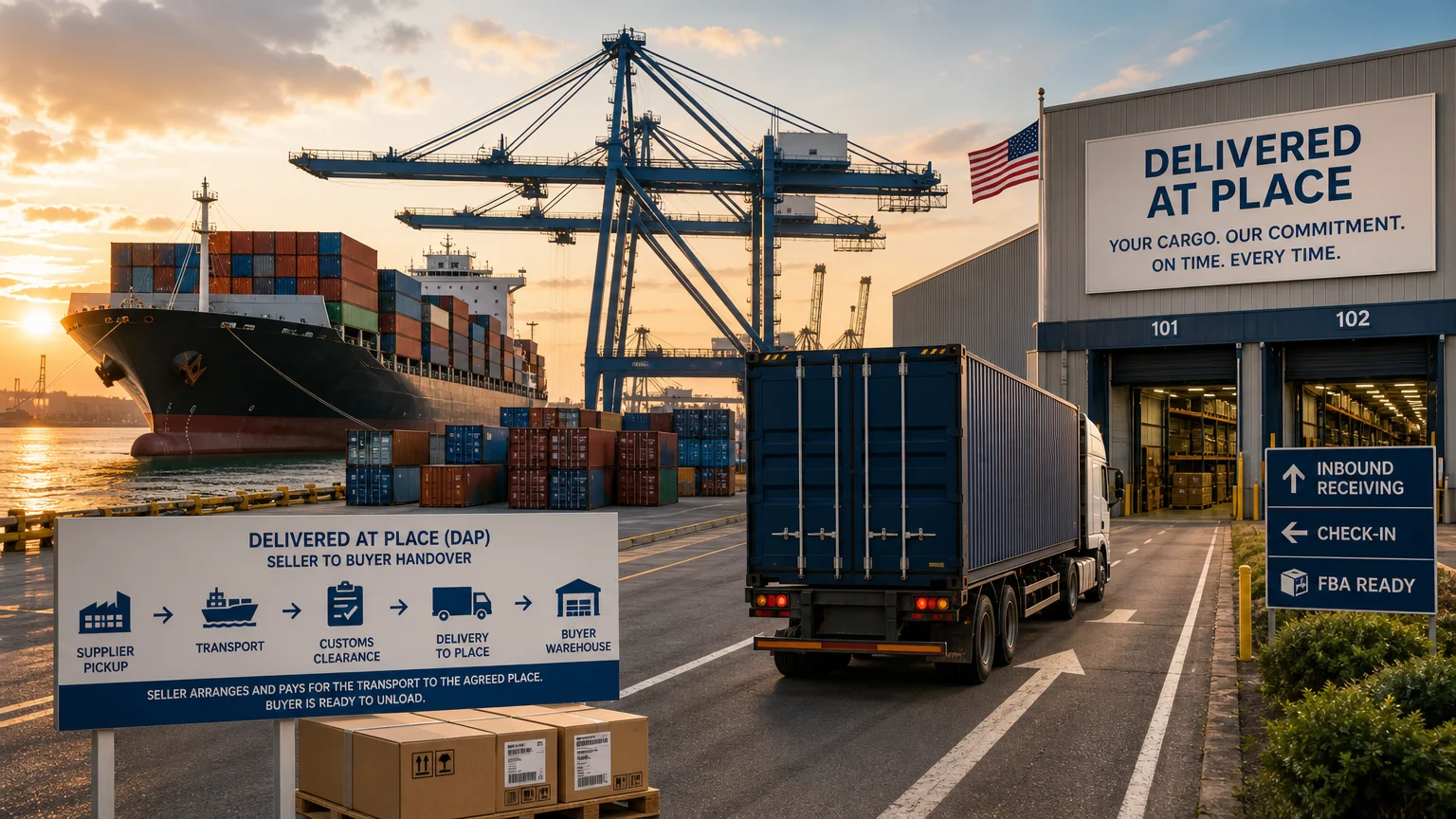
Summary: DAP stands for Delivered at Place, an Incoterm under which the seller arranges and pays for transport to a named destination and carries the risk until the goods are ready for unloading. The buyer then handles unloading, import customs clearance, duties, and taxes. It applies to every mode of transport.
Among the eleven Incoterms in force, one three-letter code decides who pays for freight, who carries the risk, and who clears customs. Misreading it can quietly erase your margin on a single container. If you would like a deeper reference while you read, our guide to DAP delivery terms in shipping (Incoterms) breaks the rule down step by step for importers.
So what does dap mean in shipping, and why does it matter for your bottom line? DAP means Delivered at Place, and it defines the exact point where responsibility passes from seller to buyer. According to a 2026 Incoterms overview, the current rules are Incoterms 2020, which took effect on 1 January 2020 and remain the global standard until an expected 2030 update. Understanding the term protects both your cash flow and your customer relationships.
The Meaning of DAP (Delivered at Place)
DAP is one of the “D” category Incoterms, the group that places the greatest share of responsibility on the seller. Trade finance analysis notes that DAP was introduced in Incoterms 2010 and carried forward in Incoterms 2020, replacing the older terms DAF, DES, and DDU. In practice, the seller manages transport, export clearance, and all costs up to the delivery point, while the buyer takes over import clearance.
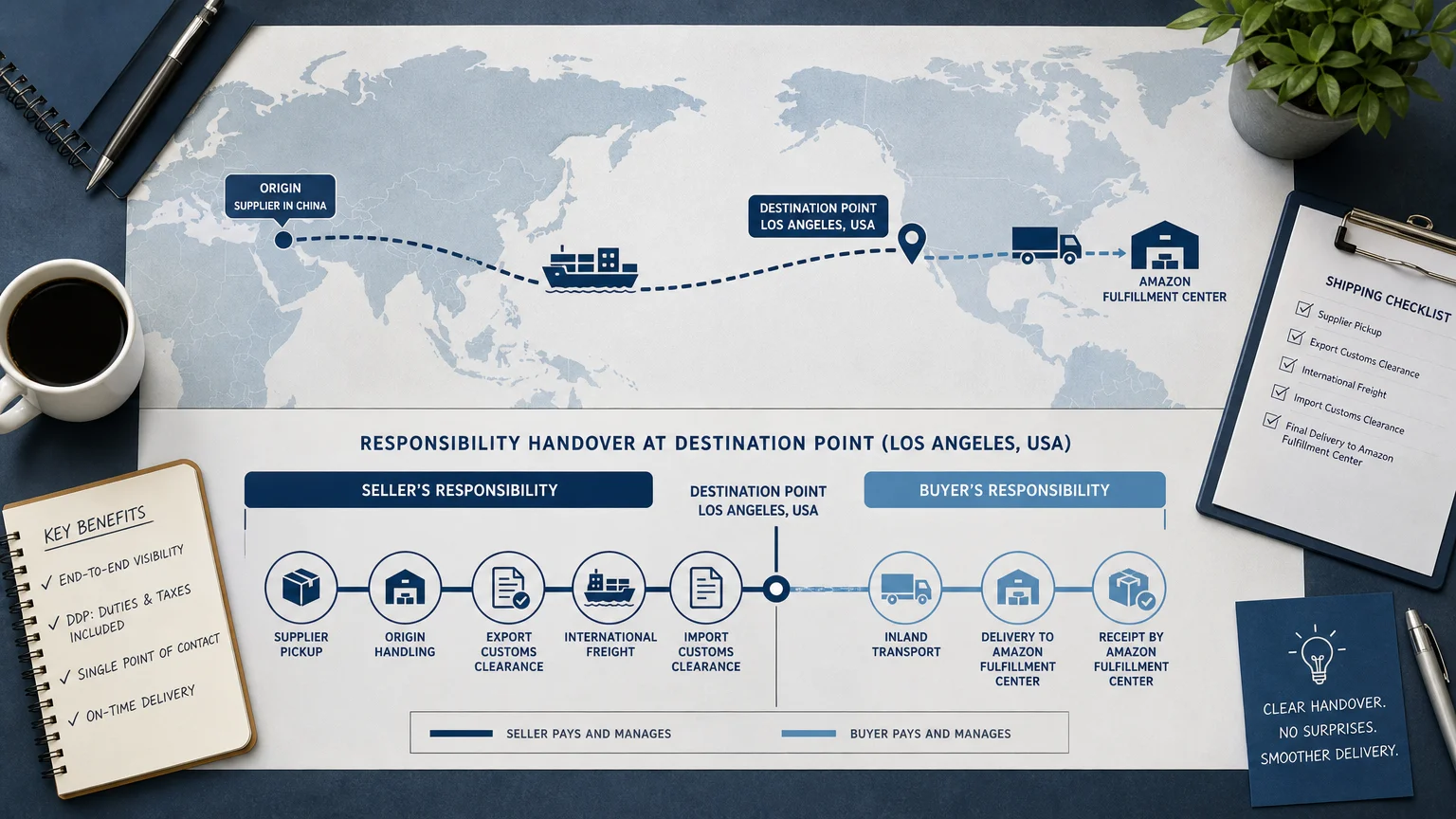
The named place of destination is the heart of the term. The goods are considered delivered when they are placed at the buyer’s disposal on the arriving means of transport, ready for unloading at the agreed location. That location can be a warehouse, a factory, or a distribution center inside the buyer’s country. For US importers moving goods across the American market, naming that point precisely prevents disputes over surcharges.
Seller and Buyer Obligations Under DAP
Who does what? The division is straightforward once the delivery point is fixed. The seller carries the cargo and the risk transfer does not occur until arrival, which favors the buyer during transit.
The seller is responsible for:
- Export packaging, marking, and documentation such as the commercial invoice.
- Export licenses and origin customs formalities, that is export clearance.
- Pre-carriage, main carriage, and any transit insurance to the named place.
- Delivery of the goods ready for unloading at the agreed destination.
The buyer is responsible for:
- Unloading the goods from the arriving vehicle.
- Import customs clearance at the destination country.
- Payment of import duties, VAT, and any local taxes.
- Onward carriage beyond the named place, where applicable.
A practical detail is often missed. Incoterms 2020 guidance confirms that cost and risk transfer from seller to buyer at the moment the goods are available for unloading, not before. If you are the buyer, you should agree the precise unloading spot and the expected transit time in the sales contract. Our overview of DAP terms in Incoterms details these clauses for first-time importers.
DAP vs DDP: The Difference That Affects Your Cash Flow
Where importers most often stumble is the boundary between DAP and DDP. Both are “D” terms, and both send goods to a named destination. The decisive gap is who clears imports and pays the duties.
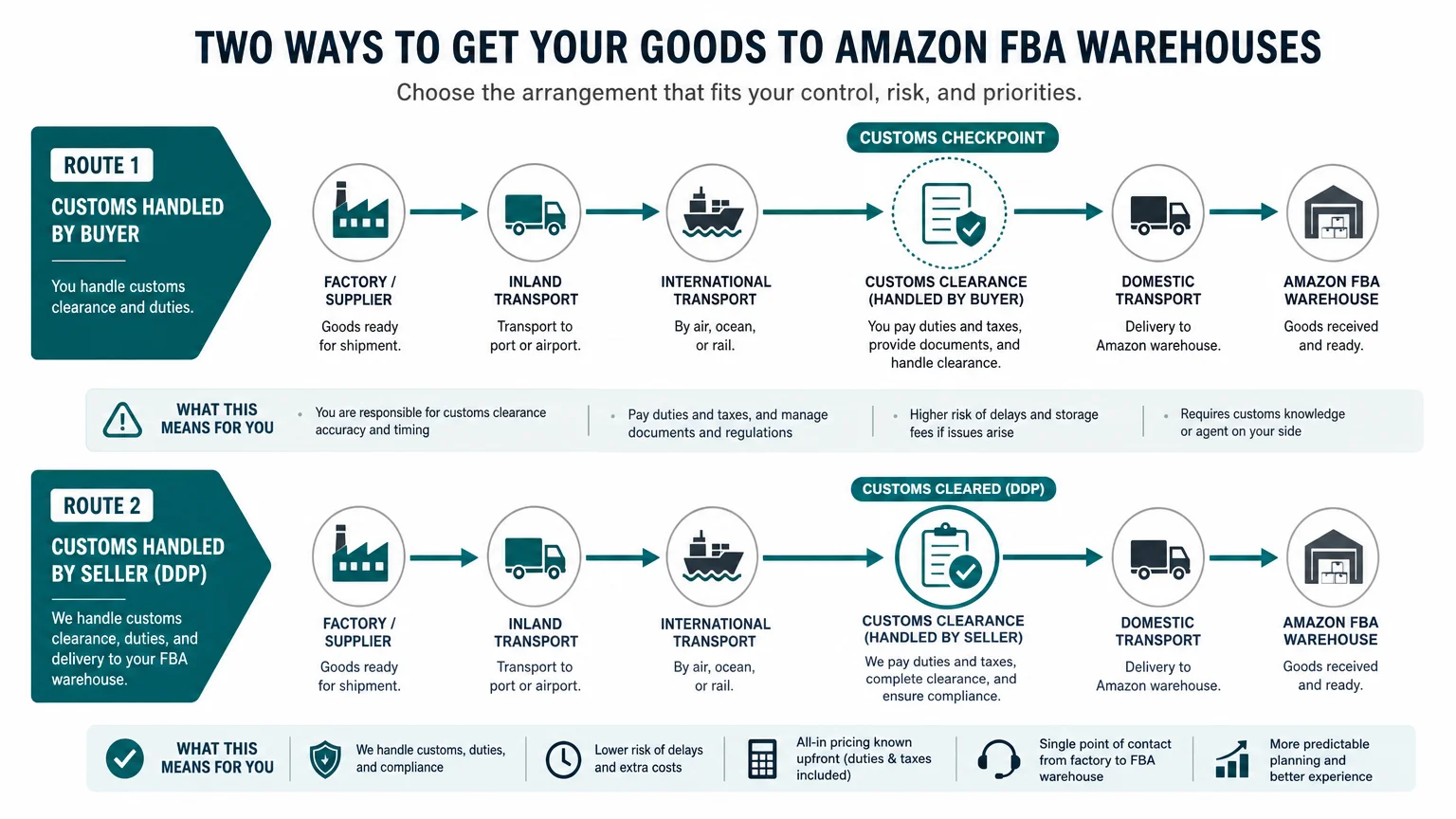
Under DAP, the seller stops short of import formalities, and the buyer absorbs the customs bill. Under DDP (Delivered Duty Paid), the seller carries everything, including duties and taxes, right to the buyer’s door. For many small and mid-size sellers, that single difference determines whether a landed cost is predictable or a surprise. The table below summarizes the split, including how we structure our own service.
| Arrangement | Main carriage | Export clearance | Import clearance | Import duties and taxes |
|---|---|---|---|---|
| DAP | Seller | Seller | Buyer | Buyer |
| DDP | Seller | Seller | Seller | Seller |
| Our DDP FBA service (QG Horizon) | We arrange | We arrange | We arrange | Included, all-in price known in advance |
If unexpected customs charges have ever stalled your shipment, our door-to-door approach removes that friction. You may compare the two frameworks further in our explainer on DAP in Incoterms, then decide which structure fits your supply chain.
When DAP Is the Right Choice
Imagine you sell to an experienced importer who already holds a customs broker relationship. In that case, DAP is efficient. The buyer prefers to control import clearance, reclaim VAT, and manage local duties on its own terms. DAP is also popular for door-to-door shipments where the seller wants to keep control over most of the logistics without touching foreign tax rules.
DAP suits any mode of transport, whether sea, air, rail, or road, which makes it flexible for multimodal routes. However, it is not always the smoothest experience for a buyer who lacks import expertise. When the receiver is a first-time importer or a private customer, unexpected duty invoices can trigger refused deliveries, which is why many sellers shift toward DDP for a fully landed price.
Common Mistakes With DAP Shipping
What quietly damages DAP contracts? The most frequent error is naming a vague destination. Writing only a city rather than a precise address invites out-of-area surcharges and quay rent that neither party budgeted. A second error is assuming the seller unloads the goods; under DAP, unloading is the buyer’s cost and risk.
A third pitfall involves customs readiness. Even though the buyer clears imports, delays there can strand a container and generate demurrage. In 2026, the EU and UK require electronic customs declarations for DAP and DDP shipments, so digital documentation must be prepared in advance. Naming the correct Incoterms year, that is Incoterms 2020, in your contract keeps both parties protected by the same legal language.
Choosing the Incoterm That Protects Your Margin
Understanding what Delivered at Place means in shipping is ultimately about knowing where risk and cost change hands. DAP asks the seller to deliver to a named place while the buyer clears imports and pays duties, whereas DDP shifts that final burden back to the seller. Name your destination precisely, agree the unloading point, and confirm who files the customs declaration before you sign. When those details are clear, your quoted price and your actual landed cost finally match.
Take action with QG Horizon
Choosing between DAP and DDP is only the first decision; executing it without customs delays is where many Amazon FBA plans unravel. We are a freight forwarder that has sold on Amazon for more than five years, so we understand labeling, receiving windows, and the duty pitfalls that stall inventory before a launch.
We collect from your supplier in China and deliver straight to the Amazon warehouse on DDP terms, with duties and taxes included in one all-in price quoted within 24 hours across three route options. With real-time tracking and seven-day WhatsApp support, you stay informed the whole way. Explore our shipping services and Incoterms help to move your next shipment with confidence.
Frequently Asked Questions
Does DAP include import duties and taxes?
No, DAP does not include import duties or taxes. Under Delivered at Place, the buyer is responsible for import customs clearance, duties, and VAT at the destination country. Only DDP shifts those costs to the seller.
Who is responsible for unloading under DAP?
The buyer handles unloading under DAP. The seller delivers the goods ready for unloading at the named place, and risk passes at that moment. Any cost or damage during unloading falls to the buyer unless the contract states otherwise.
Can DAP be used for air freight?
Yes, DAP applies to any mode of transport, including air, sea, rail, and road. This flexibility makes it suitable for multimodal shipments. You should still name the precise destination so responsibilities remain clear.
What is the difference between DAP and DDP?
The core difference is import clearance. Under DAP, the buyer clears customs and pays duties, while under DDP the seller covers everything to the door. Our DDP FBA service includes duties and taxes in a single all-in price so your landed cost is known in advance.
Which Incoterms version applies to DAP today?
DAP falls under Incoterms 2020, the current standard published by the International Chamber of Commerce. These rules took effect on 1 January 2020 and remain in force in 2026. Always cite the Incoterms year in your contract to avoid ambiguity.
Ready to Optimize Your Amazon Shipping?
Get 3 route options tailored to your products and timeline
Get Your Quote→