What Do the Initials FOB Stand For in Shipping Terms?
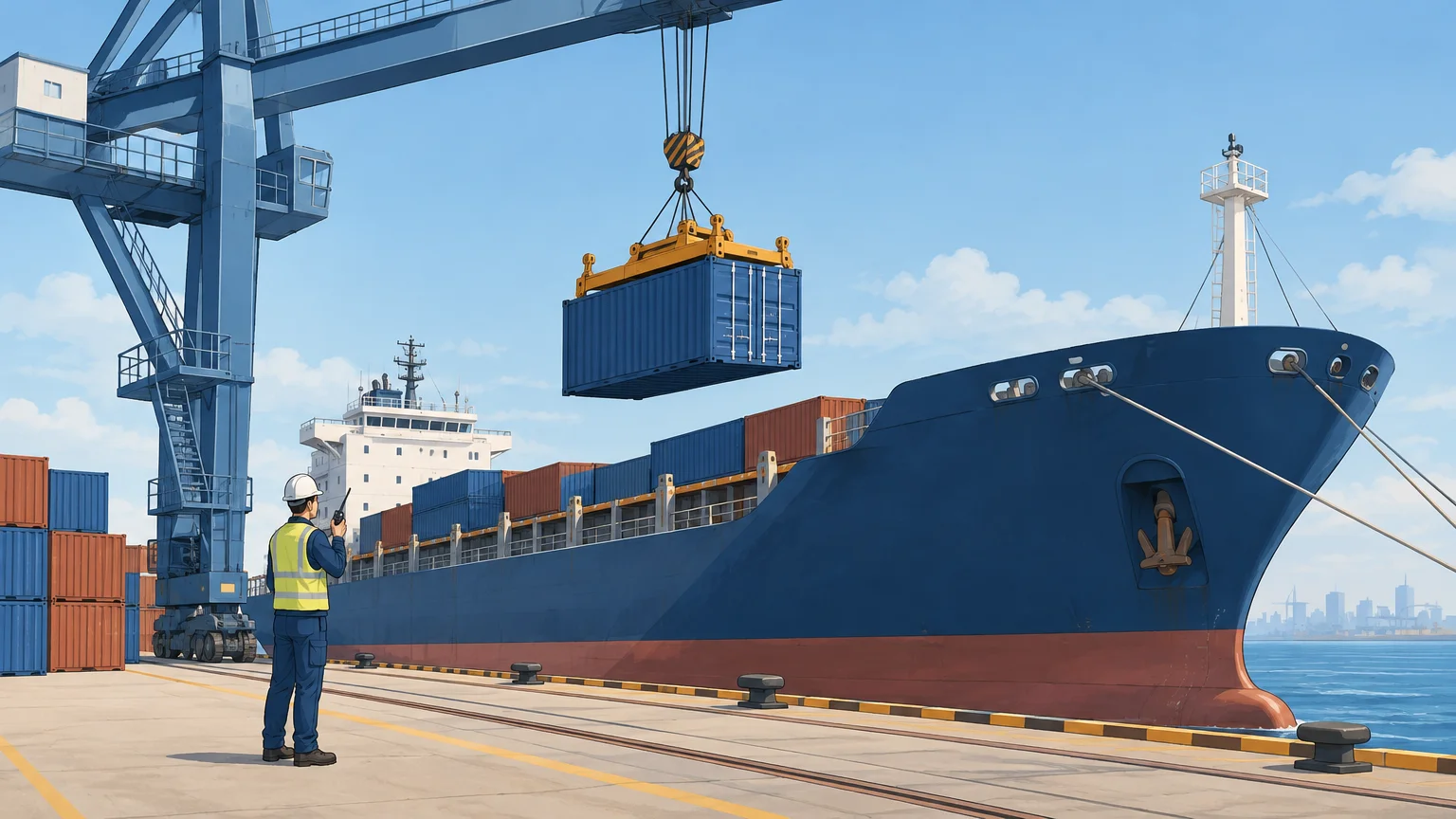
Summary: FOB stands for “Free On Board.” In international shipping, the Incoterms rule generally requires the seller to load goods aboard the buyer-nominated vessel at a named port; risk then transfers to the buyer. US domestic contracts can use FOB differently, so the precise meaning depends on the contract and context.
When a supplier writes “FOB” on a quote, the letters alone do not tell you every cost or responsibility. In international shipping, FOB means “Free On Board,” and the named port and agreed Incoterms version matter. Our explanation of what FOB stands for in shipping can help you interpret the term before comparing supplier quotes.
The distinction matters for US businesses buying goods overseas: an international FOB sale is not automatically the same as “FOB shipping point” in a domestic sales contract. FOB is a trade term that allocates specific delivery responsibilities, costs, and risk; it does not, by itself, settle every question about ownership, payment, insurance, or the full freight bill.
What do the initials FOB stand for?
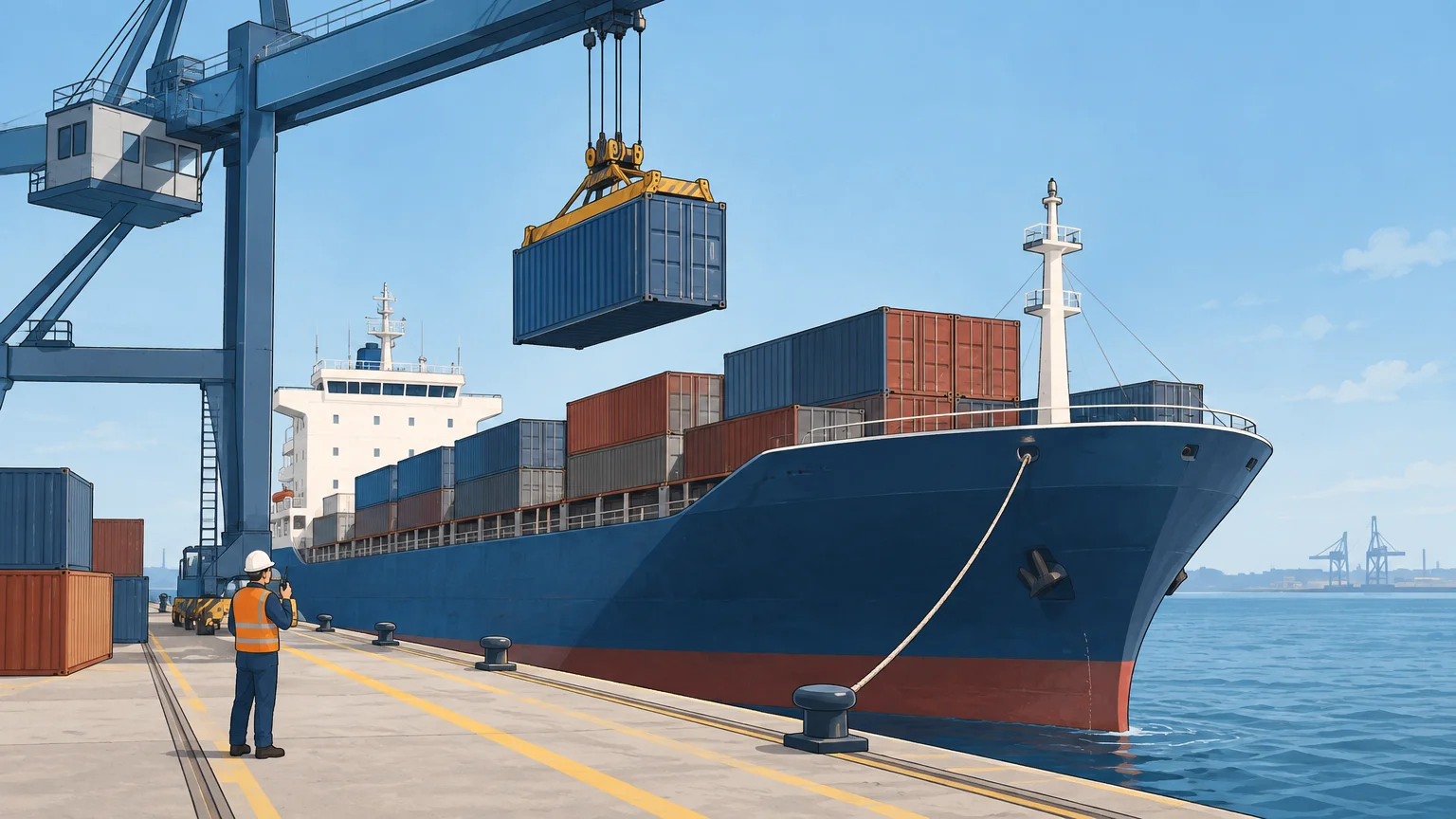
FOB meaning is “Free On Board.” In international trade, FOB is one of the Incoterms rules published by the International Chamber of Commerce. The term identifies a delivery point and helps establish which party carries certain responsibilities before and after delivery. Trade.gov’s Incoterms guide lists FOB with a named port of loading.
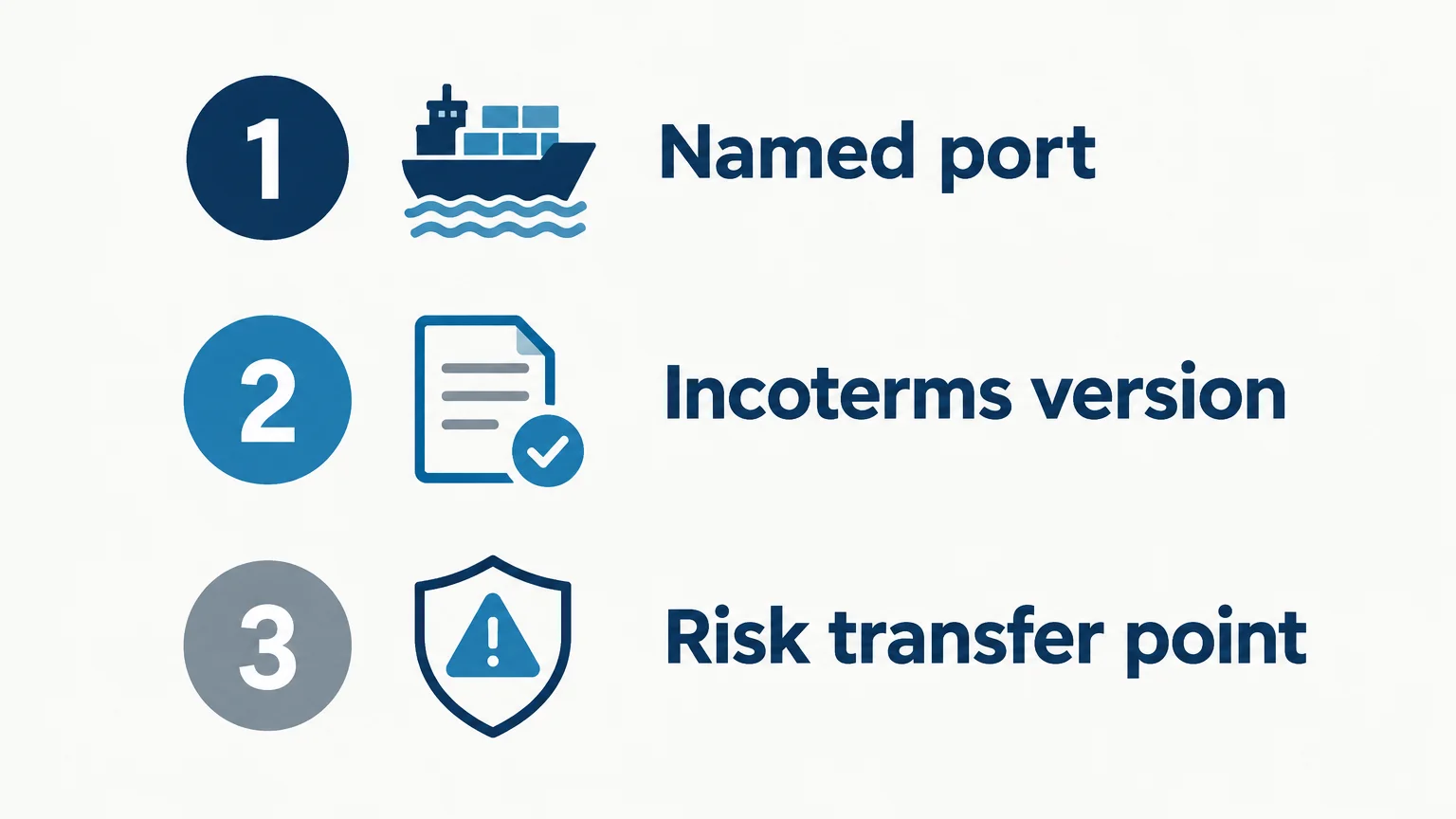
The words are not a promise that freight is free. Nor does the abbreviation alone state the entire shipping price. To understand a quote, identify the named port, the Incoterms version, and which services the seller has included.
What happens under FOB in international shipping?
Under the Incoterms rule, the seller delivers the goods by loading them aboard the vessel nominated by the buyer at the named port of shipment. The seller handles export clearance. Once delivery occurs on board, the risk of loss or damage transfers to the buyer, who arranges the onward carriage. The ICC’s Incoterms 2020 overview classifies FOB among the rules for sea and inland-waterway transport.
That mode restriction is useful when choosing a term. If a seller hands containerized cargo to a carrier at a terminal before it is loaded onto a vessel, FOB may not describe the actual handover point well. Confirm the appropriate delivery term with your trade partner and logistics provider rather than assuming that ocean transport automatically makes FOB the right choice.
Does FOB determine ownership, payment, or every shipping cost?
No. In international sales, FOB addresses delivery obligations and the allocation of costs and risk under the agreed rule. It does not, by itself, establish when legal ownership transfers or replace the sale contract’s payment terms. The WTO’s trade guide explains that Incoterms help clarify buyer and seller obligations, including under FOB.
Do not assume the buyer pays every expense from the factory onward, either. Under the Incoterms FOB rule, the seller’s responsibilities include getting the goods cleared for export and loading them aboard the vessel at the named port. The buyer takes on the risk after delivery on board and arranges the main carriage. Check the contract and quote to see how charges such as inland transport, terminal handling, freight, and insurance are addressed.
How does FOB work in US domestic sales?
In US domestic transactions, “FOB shipping point” and “FOB destination” can describe different delivery arrangements under the applicable sales contract and law. The Uniform Commercial Code provision published by the Iowa Legislature distinguishes a named place of shipment from a named place of destination. This domestic usage should not be mistaken for the international Incoterms FOB rule.
Read the whole phrase, not just the acronym. “FOB” without a clear named place or explanation can leave room for disagreement about delivery, risk, and expenses. For a US purchase, check the contract wording and applicable law; for an international purchase, name the port and Incoterms version explicitly.
What should you check before accepting an FOB quote?
Before comparing an FOB supplier price with another shipping offer, confirm the delivery point and list which charges are included or billed separately. Check who books the vessel, handles export procedures, arranges cargo insurance, and manages import clearance. A clear written agreement helps you distinguish the product price from the cost and responsibilities of getting inventory to its destination.
For inventory moving from China to an Amazon warehouse, FOB describes a sales delivery arrangement, not an end-to-end shipping service. Our Amazon FBA freight forwarding coordinates supplier pickup, international freight, export declarations, destination customs clearance, duties and taxes under DDP, and delivery to the warehouse. We provide route options and estimates based on shipment details, so sellers can compare the full logistics arrangement rather than relying on the FOB label alone.
Understand the named delivery point
FOB means “Free On Board,” but its practical meaning depends on whether you are reading an international Incoterms sale or a domestic US contract. Confirm the named place, applicable rule or law, risk transfer point, and included charges in writing. Those details make it easier to compare quotes and understand what remains your responsibility.
Plan Your Shipment to an Amazon Warehouse
When you are buying inventory from a Chinese supplier, the FOB price is only one part of the logistics decision. You also need to understand the route, customs process, duties, and delivery arrangements for your Amazon warehouse shipment.
We coordinate supplier pickup, international freight, customs clearance, DDP duties and taxes, and door-to-door delivery to Amazon warehouses. Our team has shipped from China for more than five years and offers air, fast boat, ocean, and rail route options. Request a quote for Amazon FBA freight forwarding to compare shipment-specific routes and estimates.
Frequently Asked Questions
What does FOB stand for?
FOB stands for “Free On Board.” In international shipping, it is an Incoterms rule that defines delivery responsibilities at a named port.
Does FOB mean freight is free?
No. “Free” is part of the phrase “Free On Board,” not a promise that transport costs nothing. Review the quote and contract to see which freight and handling charges are included.
When does risk transfer under international FOB?
Under the Incoterms FOB rule, risk transfers to the buyer when the goods have been delivered on board the nominated vessel at the named port. The contract should identify the port and the applicable Incoterms version.
Can FOB be used for air freight?
FOB under Incoterms is for sea and inland-waterway transport, not air freight. Choose a term that matches the transport mode and the actual delivery point.
Is FOB shipping point the same as international FOB?
Not necessarily. US domestic contracts may use “FOB shipping point” or “FOB destination,” while international FOB has a specific Incoterms meaning. Check the contract language and applicable rules before deciding who bears a particular cost or risk.
Ready to Optimize Your Amazon Shipping?
Get 3 route options tailored to your products and timeline
Get Your Quote→