What Does an FOB Location Mean? Shipping Point vs. Destination
Summary: An FOB location names where the seller’s delivery responsibility ends under the agreed shipping term. In a U.S. domestic sale, FOB shipping point generally places transit risk on the buyer after the goods are handed to the carrier, while FOB destination keeps it with the seller until arrival. International Incoterms FOB has a narrower, vessel-based meaning.
What does “FOB” actually tell you when a quote names a location? The answer can affect who bears transit risk and which party is responsible for getting the goods to the agreed point. If you are comparing shipping terms for imported inventory, our FOB origin meaning article offers related context on origin-based terms.
The meaning of an FOB location depends on the contract and the rules that apply to the sale. In U.S. domestic transactions, the term is commonly used for shipment and destination locations, including inland points. Internationally, Incoterms FOB refers to delivery on board a vessel at a named port, so the two usages should not be assumed to match.
What does an FOB location mean in a U.S. sale?

In a domestic U.S. sale, an FOB location identifies the point tied to the seller’s delivery obligations. The wording matters: “FOB seller’s warehouse” and “FOB buyer’s warehouse” point to different places and usually allocate transit responsibility differently.
Section 2-319 of the Uniform Commercial Code distinguishes FOB shipment terms from FOB destination terms. Under its model wording, the seller bears the expense and risk of putting goods into the carrier’s possession at the shipment point. For destination terms, the seller transports the goods to the named destination at the seller’s expense and risk. You can review the provision in UCC Section 2-319. State enactments and contract language matter, so confirm the governing terms rather than relying on the abbreviation alone.
FOB describes delivery obligations and risk of loss; it does not automatically answer every question about ownership, payment, insurance, or claims. The contract should state the precise location and explain any responsibilities the parties intend to vary.
How do FOB shipping point and FOB destination differ?
Consider a shipment of cartons traveling from a supplier’s facility to your warehouse. With FOB shipping point, delivery is tied to the origin: after the goods are placed in the carrier’s possession, the buyer generally bears the risk during transit. With FOB destination, the seller generally bears the risk until the goods reach the specified destination and delivery is tendered there.
These terms also affect freight responsibility. FOB destination places the cost and risk of transporting the goods to the named point on the seller under the UCC’s default wording. With FOB shipping point, the seller’s delivery responsibility is tied to handing the goods to the carrier; the parties should specify who arranges and pays for the remaining freight.
For a quick comparison, read FOB shipping point vs. FOB destination. The key question is not only who pays a carrier’s invoice. Check when delivery is considered complete, when risk transfers, and whether the contract separately addresses freight charges.
Does FOB always mean the same thing internationally?
No. The U.S. domestic use of FOB can name a shipping or destination point, including an inland location. Incoterms FOB is more specific: the named place is a port of shipment, and the seller’s delivery is tied to placing the goods on board the vessel.
The U.S. Department of Commerce describes Incoterms FOB using a named port of loading. Its Incoterms guidance also distinguishes international trade terms from the contract’s other requirements. Avoid treating a domestic “FOB warehouse” clause as though it automatically creates an international Incoterms FOB arrangement.
Under the International Chamber of Commerce’s Incoterms 2020 rules, FOB is among the terms for sea and inland waterway transport. The ICC explains that the rules define delivery and transfer of risk, while they become part of a sale only when incorporated into its contract. See the ICC Incoterms® 2020 guidance. For containerized shipments or other transport arrangements, review the full route and contract terms before selecting an Incoterm.
What should you check before accepting an FOB term?
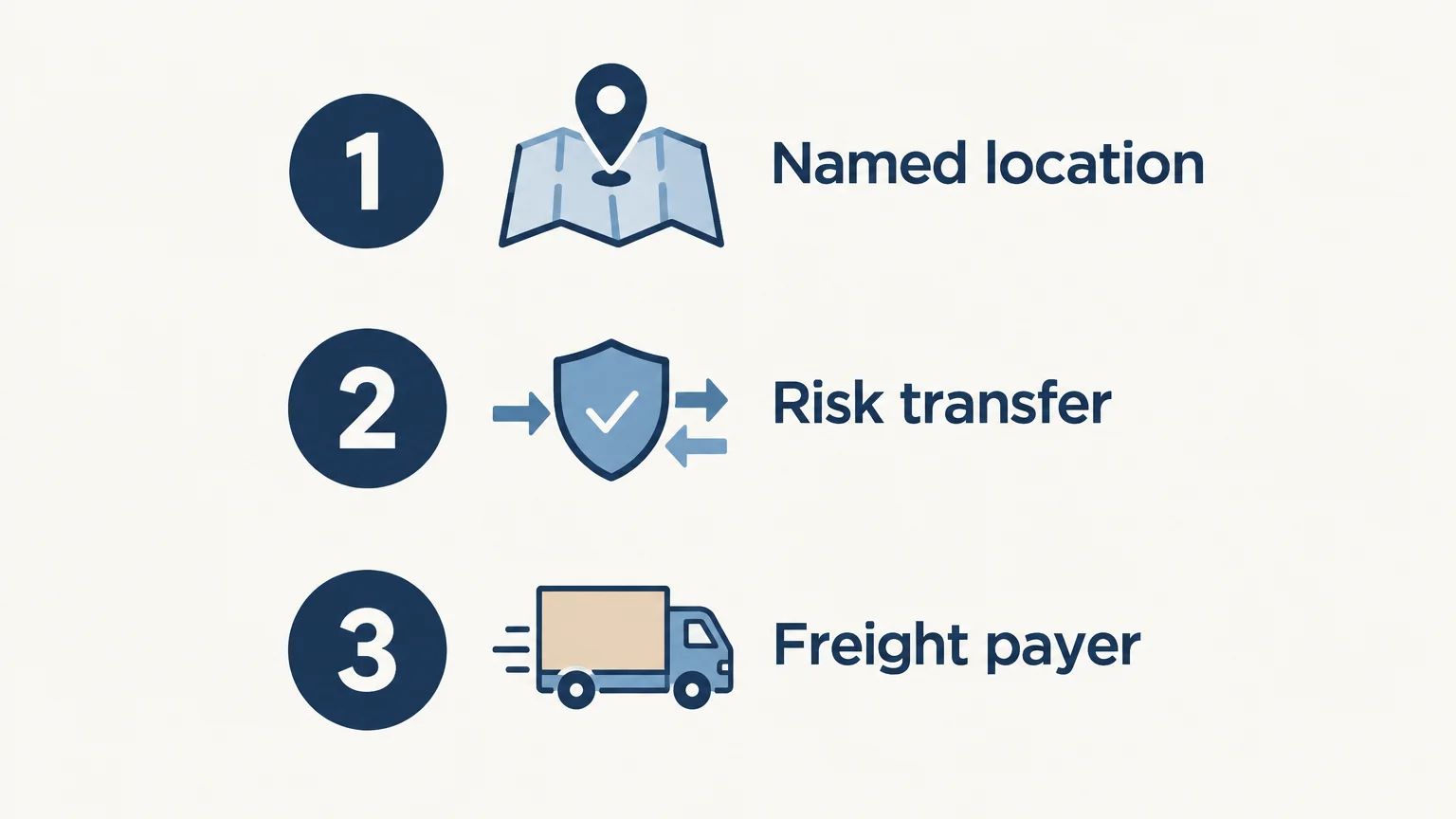
Before agreeing to FOB terms, check the details in writing. A short description such as “FOB port” can leave room for disagreement if it does not identify the precise port, delivery point, or applicable rule set.
- Named place: Confirm the full address, facility, or port, not just a city or country.
- Delivery point: State what action completes delivery, such as handing goods to a carrier or placing them on board a vessel.
- Transit risk: Identify the point at which the risk of loss moves from seller to buyer.
- Freight charges: Specify who arranges and pays each leg, including any separate freight-prepaid or freight-collect instructions.
- Applicable rules: Say whether the contract uses domestic UCC language or a particular Incoterms rule and version.
For sellers shipping inventory from China to Amazon warehouses, the transport term is only one part of the plan. Our FOB in logistics article explains the term in a freight context. When you compare a freight quote, check the named handoff point, destination responsibilities, customs handling, and what the quoted service includes.
Conclusion
The meaning of an FOB location comes down to the named delivery point and the contract’s allocation of risk and freight responsibilities. In U.S. domestic sales, shipping point and destination terms have different default effects; Incoterms FOB instead concerns vessel delivery at a named port. Put the exact place, applicable rules, freight arrangements, and risk-transfer point in writing before goods move.
Plan Your China-to-Amazon Shipment
If you are arranging inventory delivery from China to an Amazon warehouse, clarify the handoff point and which logistics steps your shipment quote covers. A defined route and clear customs responsibilities make it easier to compare the terms with your inventory plan.
We coordinate supplier pickup, international freight, Chinese export declaration, destination customs clearance, duties and taxes under DDP, and door-to-door delivery. Our team has shipped from China for more than five years and tested dozens of routes. Request a quote for our Amazon FBA freight forwarding service to compare route options and estimated timelines for your shipment.
Frequently Asked Questions
What does FOB location mean on a shipping quote?
It names the place connected to the seller’s delivery obligations under the agreed term. The contract should also specify when risk transfers and who handles freight beyond that point.
Who pays freight under FOB shipping point?
The buyer generally bears the freight responsibility after the seller hands the goods to the carrier at the shipment point. The agreement can specify who books or initially pays the carrier.
Who bears risk under FOB destination?
Under the UCC’s default destination wording, the seller transports the goods to the named place at the seller’s expense and risk. Confirm the destination and any agreed variations in the contract.
Is domestic FOB the same as Incoterms FOB?
No. Domestic U.S. FOB can refer to a shipment or destination location, including inland points. Incoterms FOB is for sea and inland waterway transport and ties delivery to the goods being on board a vessel at the named port.
What should I clarify before agreeing to FOB terms?
Write down the exact location, delivery action, risk-transfer point, freight arrangements, and applicable rules. If you are shipping from China to an Amazon warehouse, our Amazon FBA freight forwarding service coordinates freight, customs handling, and delivery.
Ready to Optimize Your Amazon Shipping?
Get 3 route options tailored to your products and timeline
Get Your Quote→