What Do FOB Shipping Terms Mean in International Trade?

Summary: FOB means Free On Board. Under FOB Incoterms® 2020, the seller delivers goods loaded on the buyer’s nominated vessel at the named port of shipment, and risk transfers to the buyer at that point. The seller handles export clearance; the buyer generally arranges the main carriage, import clearance, duties, and any insurance it wants.
A low FOB price does not necessarily cover the journey to your US warehouse. FOB sets a specific handoff: the seller delivers the goods loaded on the nominated vessel at the named port, and the buyer takes on the risk from there. If you want a plain-language starting point, we explain the basics in our FOB shipping terms definition.
Understanding what FOB shipping terms mean helps you separate the seller’s port-side obligations from your responsibilities after loading. It also helps you compare the quoted price with freight, insurance, and import costs that may fall outside that price. FOB is designed for sea and inland waterway transport, so it is not a universal term for every shipment.
What does FOB mean in a sales contract?
FOB stands for Free On Board. It is one of the Incoterms® rules used to set out the seller’s and buyer’s delivery tasks, costs, and risks. The term should identify a specific loading port, such as “FOB Port of Shanghai.”
Under the Incoterms® 2020 rules, FOB is one of four rules for sea and inland waterway transport. The U.S. trade guidance explains how Incoterms allocate responsibilities for tasks such as carriage, insurance, documentation, and customs formalities. FOB itself does not determine the sale price, payment method, or when ownership of the goods transfers.
That distinction matters when you calculate the full landed cost. A supplier’s FOB quote covers the seller’s obligations up to delivery on board at the named port, but it does not automatically include the buyer’s onward freight, import clearance, or duties.
Who handles each task, and when does risk transfer?
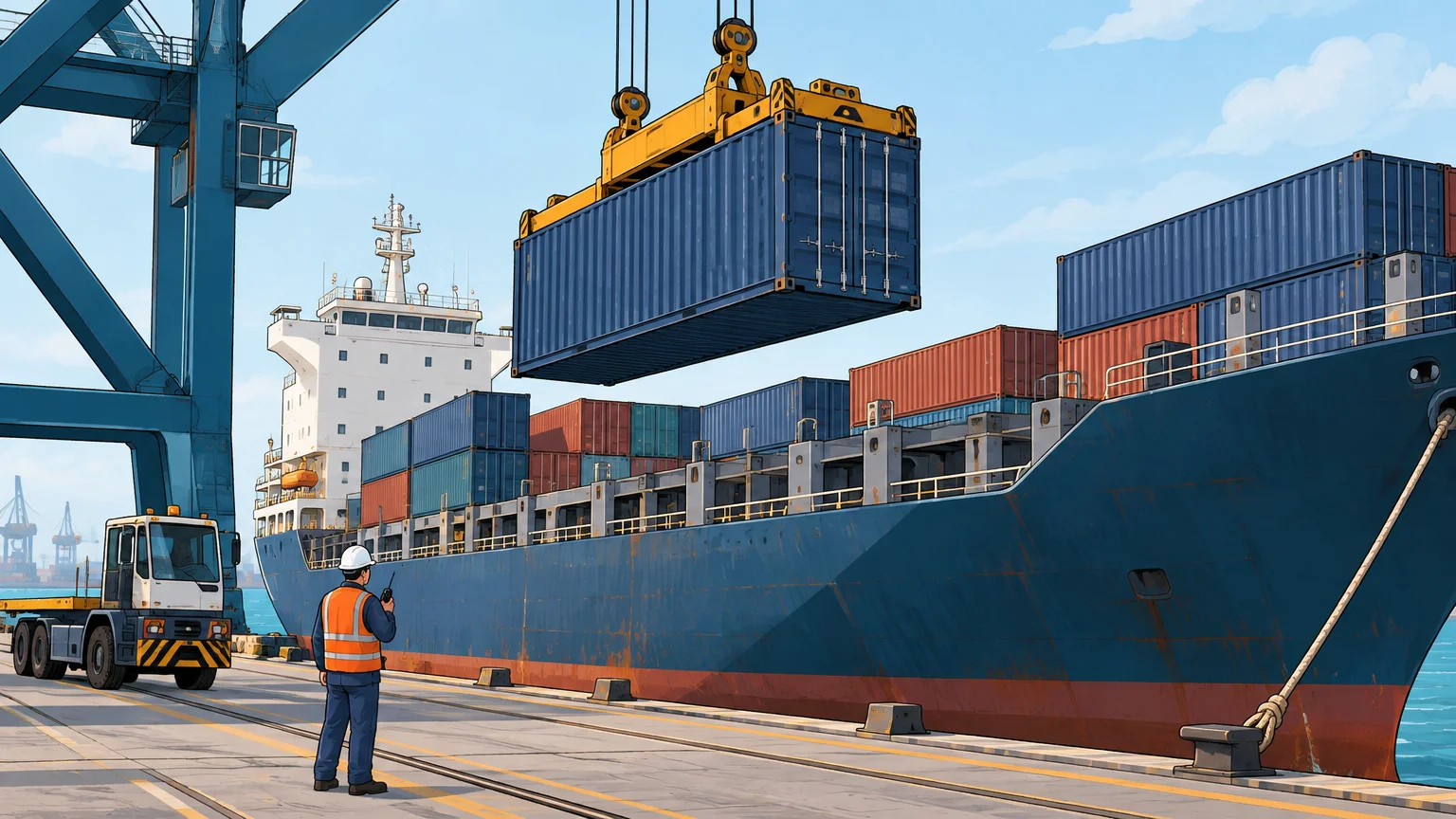
Imagine that your supplier brings goods to the agreed port and loads them onto the vessel you nominated. Under FOB, the seller completes delivery once the goods are on board. The ICC’s Incoterms guidance identifies this loading point as the delivery and risk-transfer point for FOB.
- Seller: Supplies the goods, completes export clearance, transports them to the named port, and loads them onto the nominated vessel.
- Buyer: Nominates the vessel, arranges the main carriage, and takes responsibility for risk after delivery on board. The buyer also handles import formalities and related duties.
- Both parties: Agree on the named port and coordinate the vessel, loading point, and timing. FOB does not require either party to buy cargo insurance.
So, if goods are damaged after they have been loaded on board, the buyer generally bears the risk under FOB, even if the buyer has not yet received them. Keep the risk-transfer point separate from ownership transfer: FOB does not decide when legal title changes hands.
FOB can be a poor fit when a seller hands a container to a carrier or terminal before it is loaded onto the vessel. In that situation, the parties should check whether FCA better matches the actual handoff; the ICC’s FOB guidance discusses the practical importance of choosing the correct delivery point.
How does FOB compare with FCA, CIF, and DDP?
Start by identifying the actual transport mode and the point where the seller hands over the goods. FOB applies only to sea and inland waterway transport, as the United Nations definition also states. The following distinctions help you avoid treating different cost and risk arrangements as interchangeable.
- FOB: The seller delivers goods loaded on the nominated vessel at the named port. The buyer arranges the main carriage and assumes risk after that delivery point.
- FCA: The seller delivers the goods to the buyer’s nominated carrier at the agreed place. This may suit container shipments handed to a carrier before vessel loading.
- CIF: The seller arranges and pays for carriage and insurance to the named destination port. Risk still transfers when the goods are loaded on board at the shipment port.
- DDP: The seller handles delivery to the named destination and import formalities, including applicable duties and taxes. The buyer should confirm the named destination and agreed delivery scope.
For US sellers shipping inventory from China to an Amazon warehouse, FOB and door-to-door DDP describe different arrangements. Our freight-forwarding service coordinates supplier pickup, international transport, destination customs clearance, duties under DDP, and delivery to an Amazon warehouse. If you are reviewing FOB terminology, see our explanation of the FOB Incoterm meaning alongside the exact delivery terms in your supplier contract.
How should you write FOB terms clearly?
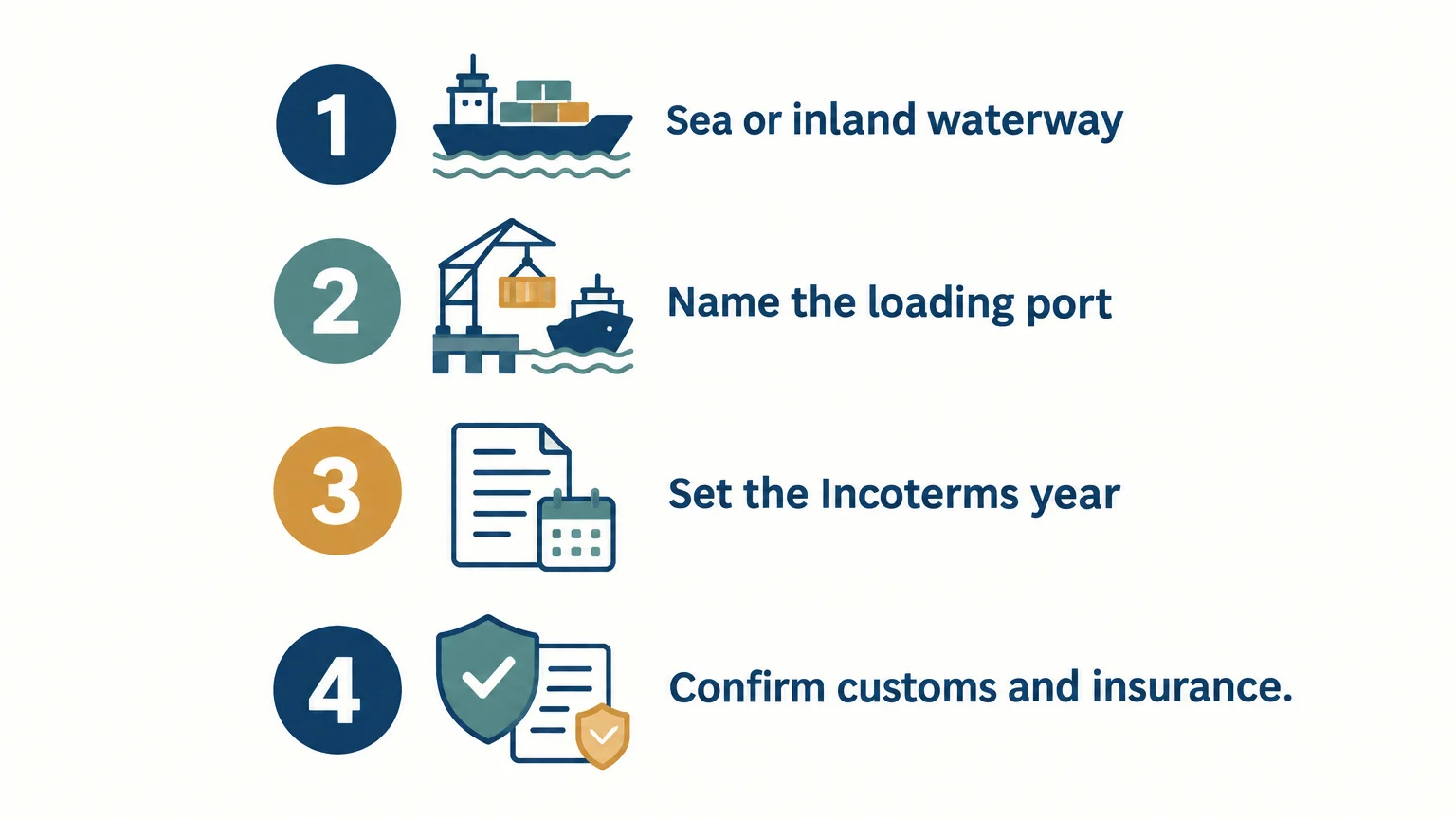
A contract that says only “FOB” leaves key details unclear. Record the named port and the Incoterms version, then confirm who will nominate the vessel and how the parties will coordinate loading. Incoterms® 2020 is one example of a version identifier; specify the version agreed by both parties.
- Name the precise port of loading, including its city and country.
- Identify the Incoterms version that governs the agreement.
- Confirm the vessel nomination, loading point, and notice deadlines.
- Check how the parties will manage freight, insurance, customs, duties, and documents beyond the FOB handoff.
Before accepting a quote, compare the goods price with the costs that sit outside the seller’s FOB obligations. Ask who will arrange the onward shipment, who will handle import clearance, and whether cargo insurance is needed for your risk exposure. Put any agreed variation to the standard responsibilities in writing.
Make the delivery point explicit
In practical terms, FOB shipping terms define where the seller’s delivery obligation ends and the buyer’s risk begins: once the goods are loaded on the nominated vessel at the named port. Check that the term fits the transport mode, identify the port and rule version, and budget separately for the responsibilities assigned to you. Clear wording helps both parties understand the handoff before the shipment moves.
Plan your shipment beyond the FOB handoff
Once you know which party should arrange ocean freight, customs, and final delivery, compare the full route against your inventory needs. For US Amazon sellers sourcing from China, the required logistics may extend beyond the port handoff described by FOB.
Our listed routes are structured as DDP, not FOB. We coordinate supplier pickup in China, export declarations, international freight by air, fast boat, ocean, or rail, destination customs clearance, duties under DDP, and delivery to Amazon warehouses. Submit product details to receive route options, estimated timelines, and a shipment-based quote. See our freight forwarding services.
Frequently Asked Questions
What does FOB mean in shipping?
FOB means Free On Board. The seller delivers the goods loaded onto the nominated vessel at the named port of shipment.
Who pays for freight under FOB?
The buyer generally arranges and pays for the main carriage after the goods are loaded on board. The seller covers the delivery tasks assigned to the seller up to that handoff, including export clearance.
When does risk transfer under FOB?
Risk transfers to the buyer when the goods are delivered on board the vessel at the named port. That point is separate from the transfer of ownership, which FOB does not define.
Does FOB include customs clearance or insurance?
The seller handles export clearance, while the buyer handles import formalities and related duties. FOB does not require either party to arrange cargo insurance, so agree on coverage separately if needed.
Is FOB suitable for container shipments to Amazon FBA?
It depends on the actual handoff: FOB is for sea or inland waterway transport, and FCA may better match a container handed to a carrier before vessel loading. For a China-to-Amazon warehouse shipment with destination customs and duties handled under DDP, our freight-forwarding service coordinates those logistics as a different arrangement from FOB.
Ready to Optimize Your Amazon Shipping?
Get 3 route options tailored to your products and timeline
Get Your Quote→