FOB Shipping Terms: Definition, Costs, Risk, and U.S. Use
Summary: FOB shipping terms define where the seller’s delivery obligation ends and how freight costs and transit risk are allocated. In the United States, “FOB shipping point” and “FOB destination” commonly describe different domestic handoff points. Under Incoterms® FOB, the seller delivers cargo aboard a vessel at the named port, a narrower rule for sea and inland waterway transport.
If goods are damaged in transit, does FOB mean the seller or buyer carries the loss? The answer depends on which FOB meaning the contract uses. For international shipping, our FOB Incoterm meaning page explains the vessel-based rule, which differs from common U.S. domestic usage.
The definition of FOB shipping terms is not one universal cost or delivery formula. In U.S. transactions, the phrase often identifies whether delivery occurs at the shipping point or destination. Under Incoterms® FOB, it identifies delivery aboard a vessel at a named port. Naming the rule and location helps you understand the handoff before goods move.
What does FOB mean in shipping?
FOB means “Free on Board.” In a sales agreement, the term identifies a delivery point and helps allocate responsibilities, costs, and risk between seller and buyer. The exact handoff depends on whether the parties mean a domestic shipping term or the formal Incoterms® rule.
That distinction matters because “FOB” on a purchase order does not automatically mean the seller is responsible until the goods reach your address. Nor does the abbreviation alone explain every part of the sale, such as payment arrangements. For a basic explanation of the phrase, see our FOB shipping definition.
A UN trade glossary describes FOB in shipboard terms and limits the definition to sea and inland waterway transport. That scope is important: the domestic phrases “FOB shipping point” and “FOB destination” are not interchangeable with the international Incoterms® rule.
How do FOB shipping point and FOB destination differ?
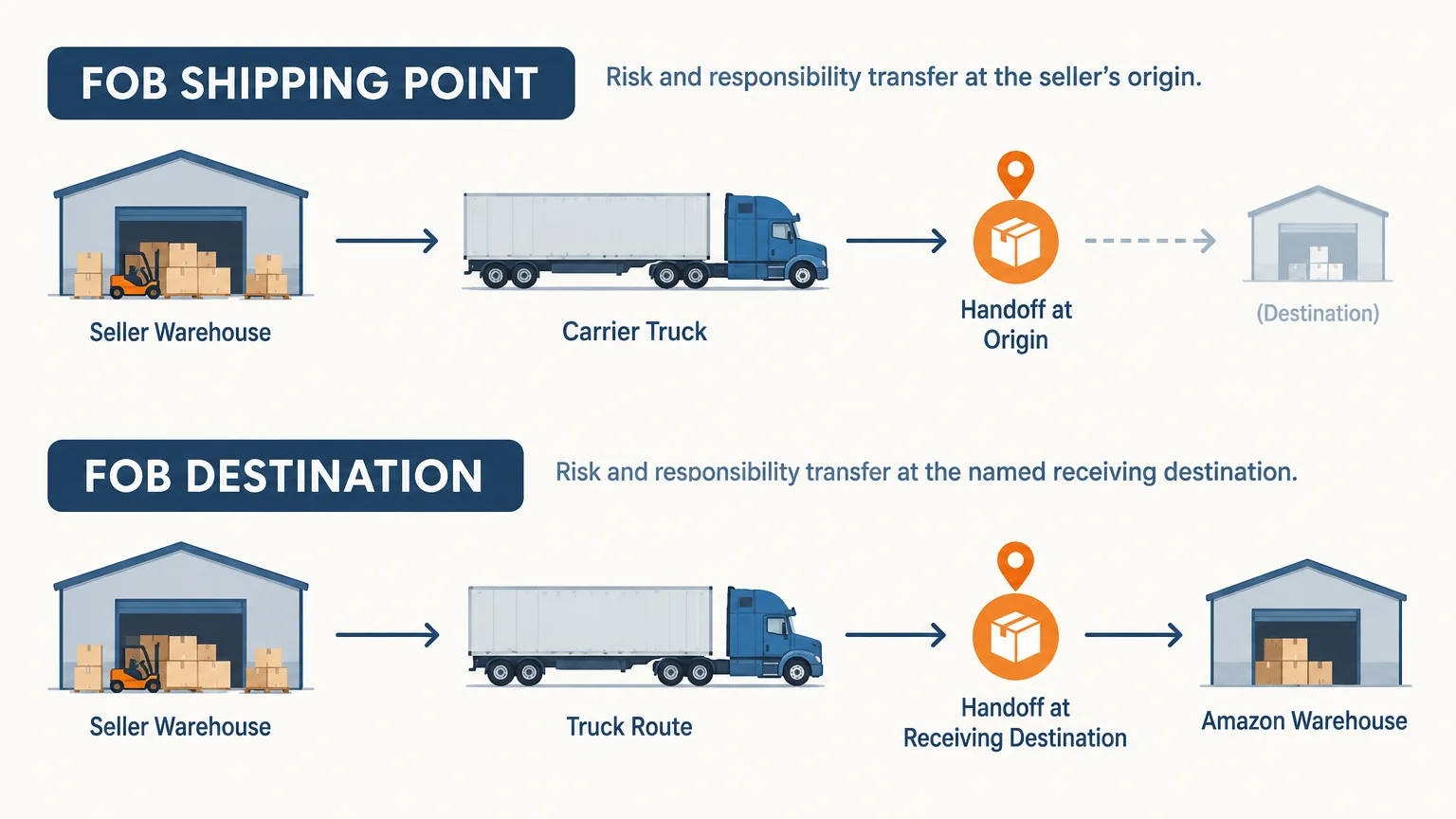
Consider a domestic order sent from a seller’s warehouse to your business. With FOB shipping point, the agreed delivery point is at the shipment’s origin. With FOB destination, the agreed point is the named receiving destination.
FOB shipping point
In common U.S. usage, the buyer generally takes transit risk once the goods are handed over at the agreed shipping point. The buyer commonly pays the onward freight, although the contract can allocate freight charges differently.
FOB destination
Here, the seller generally retains transit risk until the goods reach the named destination. The seller commonly arranges or pays for delivery there, but the contract may specify a different freight-payment arrangement.
Freight payment and transit risk are related, but they are not always assigned to the same party. For example, “freight prepaid” or “freight collect” can change who pays the carrier without necessarily changing the agreed risk handoff. A UPS shipping glossary outlines these distinctions. For a side-by-side explanation, see our FOB shipping point vs. destination article.
What does FOB mean under Incoterms®?
For an international sale using Incoterms® FOB, the seller delivers the goods aboard the vessel nominated by the buyer at the named port of shipment. The seller handles delivery to that point and export clearance. Risk transfers when the goods are on board, while the buyer arranges and pays for the main carriage and handles import responsibilities.
The named location is a port, not a vague reference to “China” or “the United States.” The contract should also identify the Incoterms® version being used. The Trade.gov guidance identifies FOB as a sea and inland waterway rule and recommends specifying the applicable version. Our overview of FOB terms of shipment provides further context.
Do not assume this international rule applies to every mode of transport just because a shipment includes ocean freight. If your agreement uses FOB, check that delivery is intended to take place aboard the vessel at the named port. When the actual handoff is elsewhere, specify a term that matches the agreed delivery point and transport arrangement.
What does FOB not decide?
A frequent misunderstanding is that FOB settles every question about a transaction. Incoterms® allocate certain costs, risks, and obligations, but the ICC guidance makes clear that the rules do not replace the full sale contract.
Therefore, do not assume the three letters define payment timing, product specifications, or every ownership question. State the agreed delivery point, freight payer, and any separate responsibilities in the contract. Also check who arranges cargo insurance, since a party bearing transit risk should understand what protection is in place.
FOB is not itself a complete landed-cost quote. In an international transaction, the buyer may also need to account for main carriage, destination handling, import clearance, duties, taxes, and delivery beyond the port. Confirm which of these items are included in the seller’s price and which require a separate arrangement.
How should you check an FOB quote?
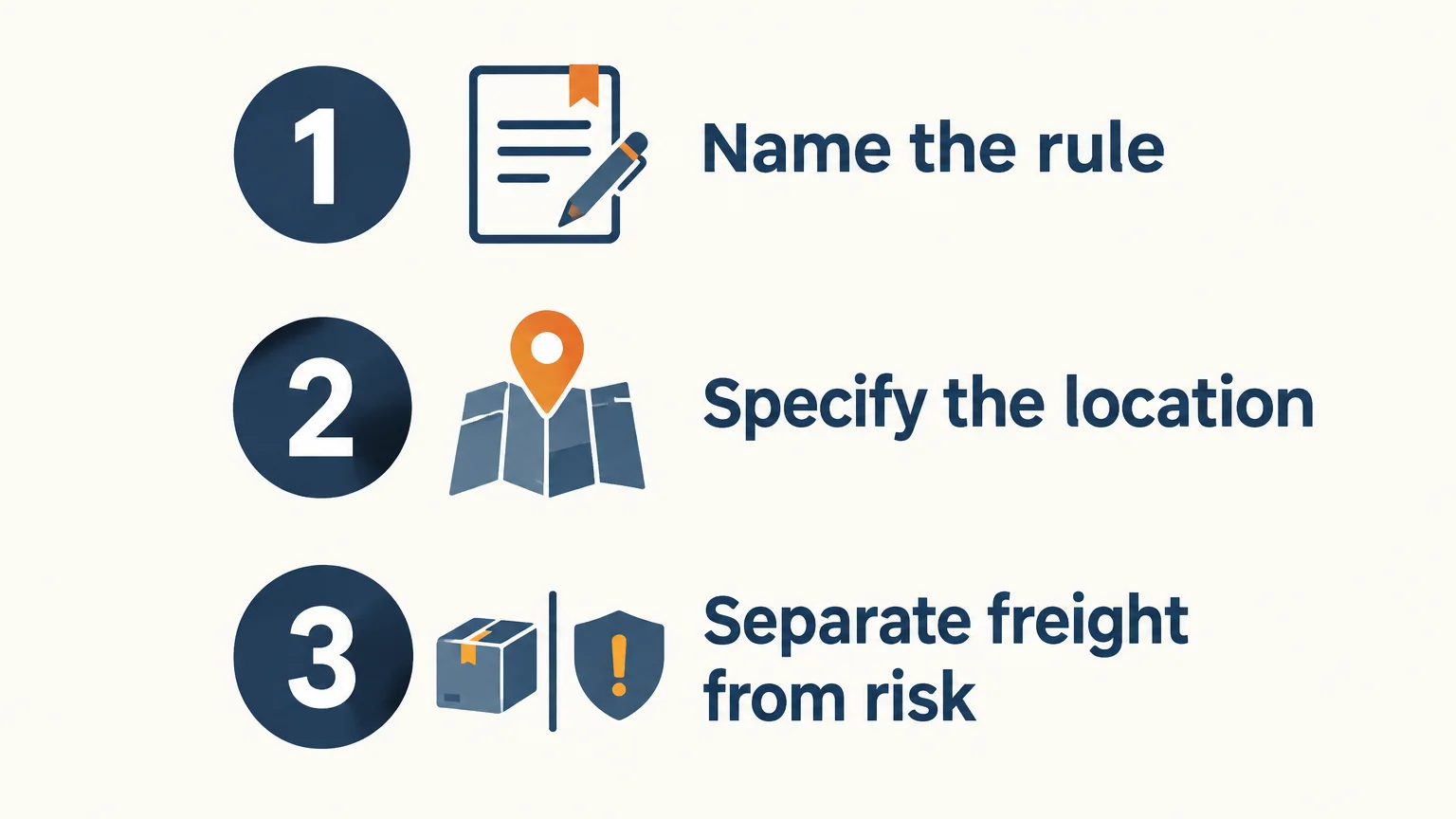
Before approving a quote, make the handoff concrete. These checks help you compare supplier offers without treating an abbreviated shipping term as a complete logistics plan.
- Name the rule. Confirm whether the contract means domestic FOB shipping point or destination, or Incoterms® FOB.
- Specify the location. Write the precise shipping point, destination, or port that defines delivery.
- Separate freight from risk. Confirm who pays the carrier, when transit risk transfers, and who handles export and import requirements.
For U.S. sellers sourcing inventory from China, FOB describes the handoff in the sales agreement, not necessarily the complete journey to your warehouse or Amazon fulfillment center. We coordinate supplier pickup, international freight, Chinese export declaration, destination customs clearance, DDP duties and taxes, and door-to-door delivery. Our Shenzhen-based team brings firsthand Amazon seller experience and more than five years of shipping from China.
Our quote includes a standard Chinese export declaration. An additional fee applies when the declaration is made under the supplier’s name for a Chinese export tax refund. Confirm this detail when comparing the FOB price with your separate forwarding and import costs.
Conclusion
Before accepting an FOB price, confirm the rule being used, the precise delivery point, who pays freight, and when transit risk transfers. The FOB shipping meaning changes between common U.S. domestic usage and Incoterms® FOB, so write the intended arrangement clearly and account separately for any transport, customs, or delivery beyond that handoff.
Plan the next stage of your shipment
Once you agree on the FOB handoff, you still need a clear plan for international transport, customs, and final delivery. For U.S. Amazon sellers shipping from China, matching the route to shipment size, budget, timing, and destination can make the next logistics decisions easier to evaluate.
We coordinate supplier pickup, air, fast boat, ocean, or rail freight, customs clearance, DDP duties and taxes, tracking, and delivery to Amazon warehouses. Send us your shipment details to receive three route options with estimated timelines within 24 hours. Pricing depends on shipment weight, volume, route, destination, and handling requirements. Explore our freight forwarding services to discuss your shipment.
Frequently Asked Questions
What does FOB stand for?
FOB stands for “Free on Board.” Its practical meaning depends on whether your agreement uses U.S. domestic shipping language or the Incoterms® rule.
Who pays freight under FOB shipping point?
The buyer commonly pays onward freight under FOB shipping point. The contract may assign payment differently, so check for wording such as freight prepaid or freight collect.
Who bears transit risk under FOB destination?
In common U.S. usage, the seller generally bears transit risk until the goods reach the named destination. Confirm the exact delivery point and any different terms in your contract.
Can you use Incoterms® FOB for air freight?
No, the Incoterms® FOB rule is for sea and inland waterway transport. For other transport modes, agree on a rule that fits the shipment and handoff.
Can a freight forwarder help after an FOB purchase?
Yes. Our freight forwarding service coordinates shipping from a Chinese supplier to an Amazon warehouse, including customs handling and DDP delivery options.
Ready to Optimize Your Amazon Shipping?
Get 3 route options tailored to your products and timeline
Get Your Quote→