FOB meaning: What Free on Board Means in Shipping Terms
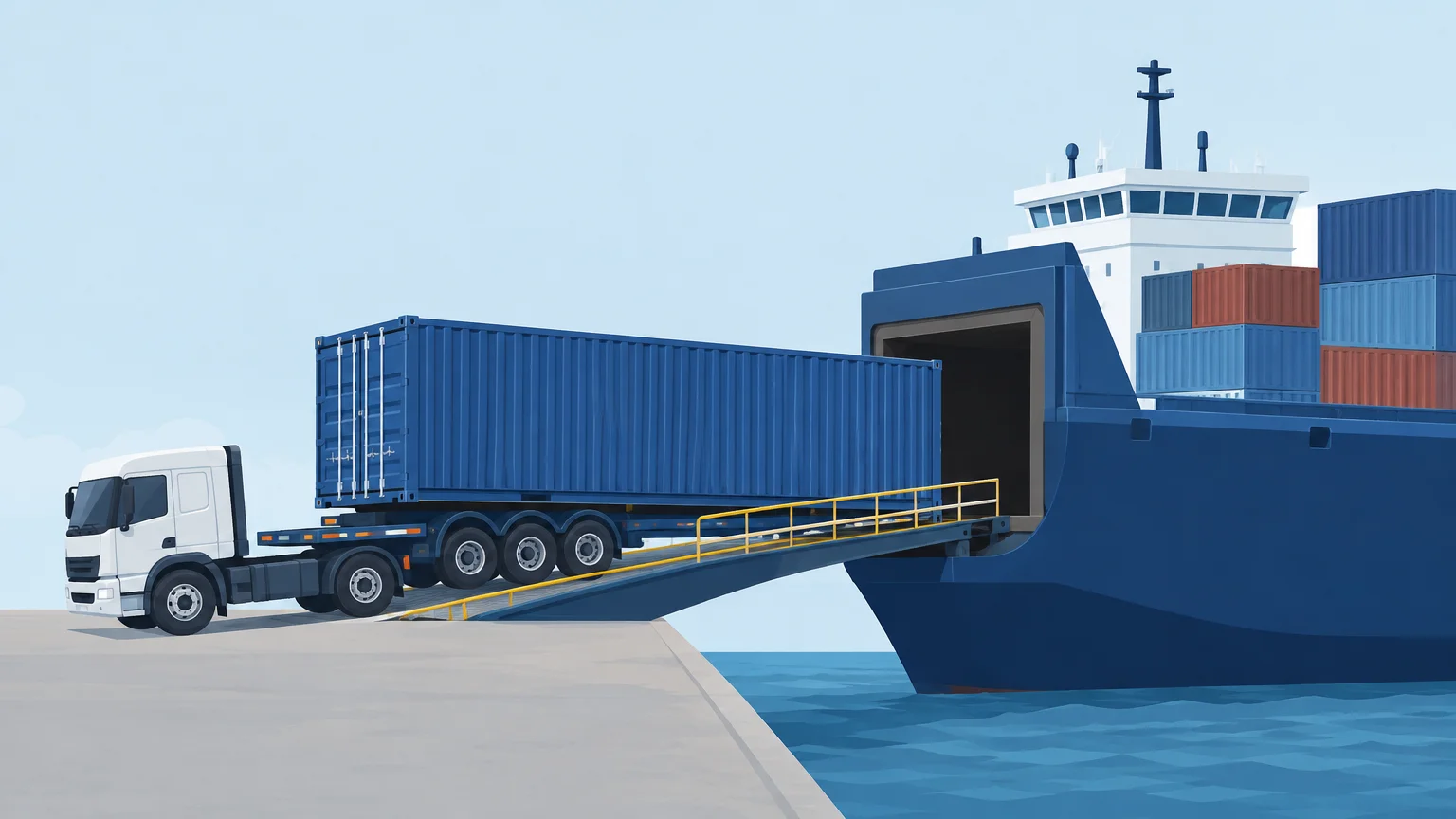
Summary: FOB stands for Free on Board in standard international shipping usage. Under the Incoterms FOB rule, the seller delivers goods aboard a buyer-nominated vessel at a named port, and transit risk shifts to the buyer at loading. In U.S. domestic contracts, FOB can mean a different handoff, so check the named place and the term’s context.
What does FOB mean when it appears on a supplier quote? In shipping, FOB usually stands for “Free on Board,” but what the initials mean in practice depends on the type of transaction. For a concise explanation of what the initials FOB stand for, start with the context in which the term appears. The named place and any stated Incoterms version matter.
The practical question behind FOB meaning is not just what the letters spell, but where the seller’s delivery obligation ends and which costs and risks shift after that point. In an international sale, Incoterms FOB concerns delivery aboard a vessel at the named port. U.S. contracts can use FOB under a different legal framework, so reading the exact wording helps clarify freight, export clearance, and responsibility for goods in transit.
What does FOB stand for in shipping?
FOB stands for Free on Board under the ICC’s Incoterms rules. The seller delivers the goods aboard the vessel nominated by the buyer at the named port of shipment. Under this rule, risk passes when the goods are on board, and the buyer bears costs from that point. The ICC’s FOB definition also specifies that FOB is for sea and inland waterway transport.
That distinction matters for the FOB shipping meaning: it is a trade rule for assigning delivery responsibilities, costs, and risk, not a freight service or a promise to deliver to the buyer’s door. The named port is part of the term, so “FOB” without a clear place leaves an important detail unresolved.
How does FOB work in an international shipment?
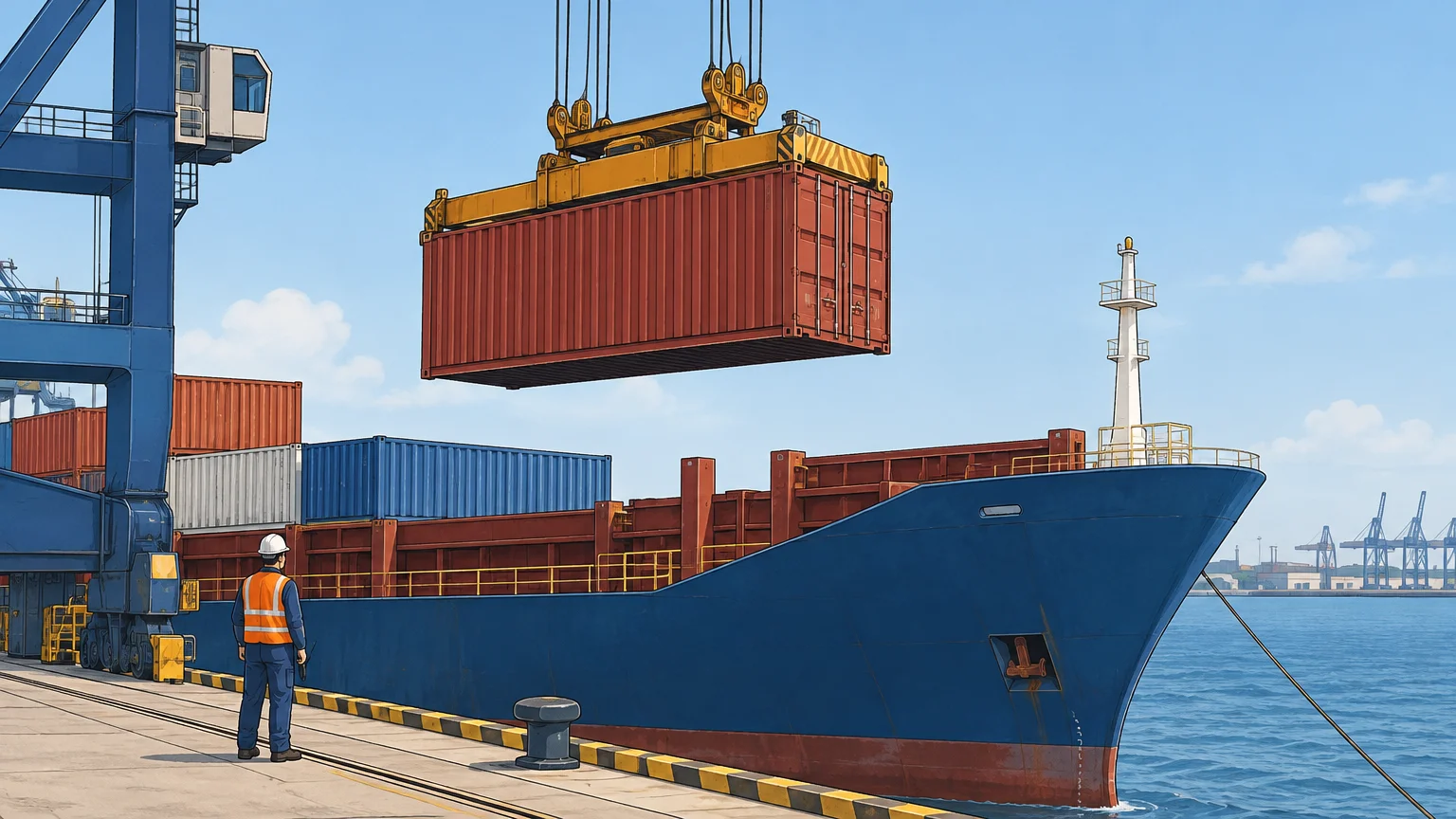
Picture a buyer arranging an ocean shipment from a named port. The seller’s obligation under Incoterms FOB is to get the goods aboard the buyer-nominated vessel and complete the applicable export formalities. Once loading is complete, the buyer takes on the transit risk and arranges the main carriage from the port.
For instance, a contract could state “FOB [named port], Incoterms 2020.” The parties should confirm the exact port, the applicable Incoterms edition, and who will arrange each stage after loading. FOB is not designed for goods handed to a carrier at a container terminal before they are aboard a vessel. The ICC identifies FCA as a rule to consider for that kind of handoff.
If you are comparing the term with other shipping arrangements, our explanation of what FOB stands for in shipping provides additional context.
Does FOB mean the same thing in U.S. domestic shipping?
Not necessarily. In U.S. domestic sales, the Uniform Commercial Code uses FOB with a named place, which can be the place of shipment or the destination. Under the model text of UCC section 2-319, FOB at the place of shipment generally puts the expense and risk of placing the goods with the carrier on the seller; FOB at the destination generally requires the seller to transport the goods there at its expense and risk. See the UCC section on FOB for the distinction.
So, do not assume that a U.S. domestic “FOB shipping point” term means exactly the same handoff as international FOB under Incoterms. Identify the transaction type and read the named location. If the wording affects a purchase, ask the other party to clarify the delivery point and responsibilities in the contract.
What should you check on an FOB quote?
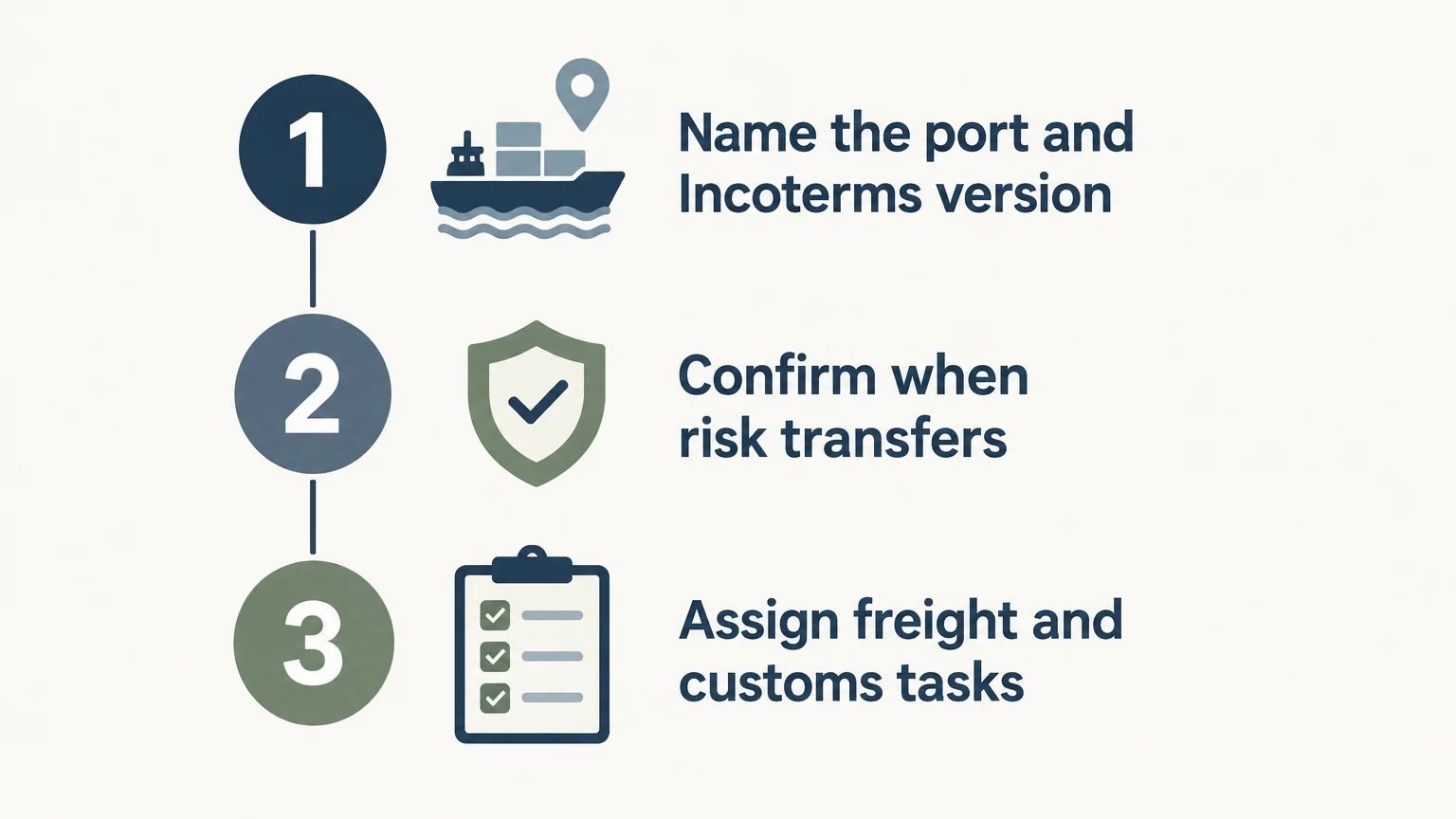
Before accepting a quote, make sure the term answers practical questions, not just who pays the initial freight charge. The U.S. Department of Commerce explains that Incoterms clarify responsibilities in sales transactions and lists Incoterms 2020 as the latest published version. Its Incoterms guidance is a useful reference when specifying the rule in a contract.
- Named place: Is the port of shipment stated clearly?
- Version: Does the contract identify the intended Incoterms edition?
- Risk transfer point: Is it clear when the goods are considered delivered?
- Freight and customs: Who arranges the main carriage, export clearance, and import formalities?
For a U.S.-based Amazon seller importing from China, FOB can mean that you manage freight and destination import arrangements after the vessel is loaded. We also coordinate China-to-Amazon warehouse shipments under DDP, which can suit sellers who prefer a door-to-door arrangement with destination customs clearance and duties included in the quote. Compare the exact scope before choosing.
FOB meaning: the key point
FOB means Free on Board in international Incoterms usage, with delivery and risk transfer tied to loading aboard a vessel at the named port. In U.S. domestic transactions, the named place can change the allocation of responsibility. Check the contract’s framework, place, and version before agreeing to a quote.
Plan Your China-to-Amazon Shipment
Once you know which party handles freight and import steps under FOB, you can decide whether to coordinate those stages yourself or request a door-to-door option. For U.S. Amazon sellers shipping inventory from China, the right route depends on shipment details, timing, destination, and budget.
We coordinate supplier pickup, Chinese export declaration, international freight, destination customs clearance, duties and taxes under DDP, and delivery to Amazon warehouses. Compare air, fast boat, ocean, and rail routes, with tracking and WhatsApp updates. Share your product details, quantities, weights, and dimensions to receive three route options with estimated timelines within 24 hours through our Amazon FBA freight forwarding service. The standard Chinese export declaration is included; an additional fee applies when the declaration is made under the supplier’s name for a Chinese export tax refund.
Frequently Asked Questions
Does FOB stand for Free on Board or Freight on Board?
In standard Incoterms usage, FOB stands for Free on Board. The specific rule concerns delivery aboard a vessel at the named port of shipment.
Who pays for shipping under FOB?
Under Incoterms FOB, the buyer arranges and pays for carriage from the named port. The seller’s delivery obligation includes loading the goods aboard the buyer-nominated vessel.
When does risk transfer under FOB?
Risk transfers when the goods are on board the vessel at the named port of shipment. The parties should state the port and Incoterms version clearly in their agreement.
Can FOB be used for air freight?
Incoterms FOB is intended for sea and inland waterway transport, not air freight. For goods handed to a carrier before loading aboard a vessel, consider whether another rule better fits the transaction.
Is FOB the same as DDP?
No. FOB assigns delivery and risk responsibilities around loading at the port, while DDP is a door-to-door arrangement that includes destination customs and duties. We provide DDP options for China-to-Amazon warehouse shipments.
Ready to Optimize Your Amazon Shipping?
Get 3 route options tailored to your products and timeline
Get Your Quote→