FCA Meaning in Shipping: Responsibilities, Risk, and Costs
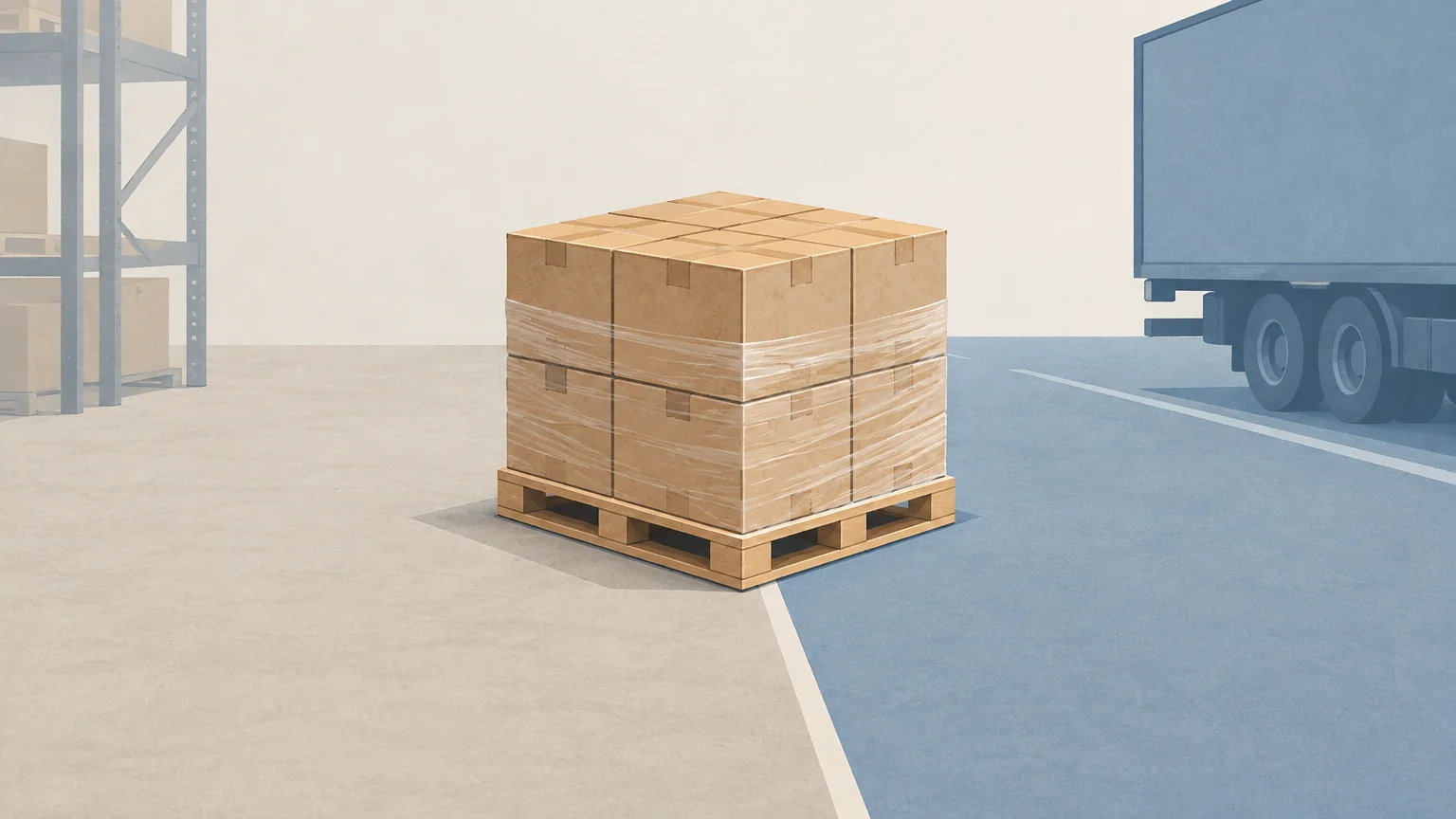
Summary: FCA means Free Carrier, an Incoterms® rule that sets where the seller delivers goods to the buyer’s carrier and where risk transfers. The seller handles export clearance, while the buyer generally arranges and pays for transport after the named delivery point and handles import. Specify the exact handover location and Incoterms version in the sales contract.
Who is responsible if cargo is damaged after it leaves your supplier but before it reaches you? Under FCA, the answer depends on the agreed handover point. If you are moving goods across borders, our FCA in logistics overview provides useful context for how the term fits into a shipment.
FCA meaning is straightforward once you separate delivery, risk, and transport costs. The seller delivers goods to the carrier or another person nominated by the buyer at a named place. Risk transfers at that delivery point, not when the goods arrive at their final destination. For US businesses buying internationally, identifying that point in the contract can clarify who arranges the next leg and who bears transit risk.
What does FCA mean in shipping?
FCA stands for Free Carrier. It is one of the Incoterms® rules for use with any mode of transport, including road, air, rail, sea, or a combination. The US Department of Commerce lists FCA among the Incoterms® 2020 rules for any mode of transport.
The named place is central to the rule. It might be the seller’s warehouse, a freight terminal, or another agreed location. The parties should also identify the exact handover point within that location, such as a specific warehouse loading area or terminal entrance. The US Department of Commerce’s Incoterms guidance identifies FCA by its named place of delivery.
FCA does not mean the seller must carry the goods all the way to the buyer. Instead, the seller delivers them to the buyer’s nominated carrier at the agreed place. The contract should name the applicable rule and version, for example, “FCA [specific place], Incoterms® 2020.”
When do delivery and risk transfer?
Consider a US buyer purchasing goods from an overseas supplier. The buyer appoints a carrier, and the sales contract names the seller’s warehouse as the FCA delivery point. The seller completes delivery when it hands over the goods there under the rule’s requirements. From that point, the buyer bears the risk of loss or damage during the onward journey.
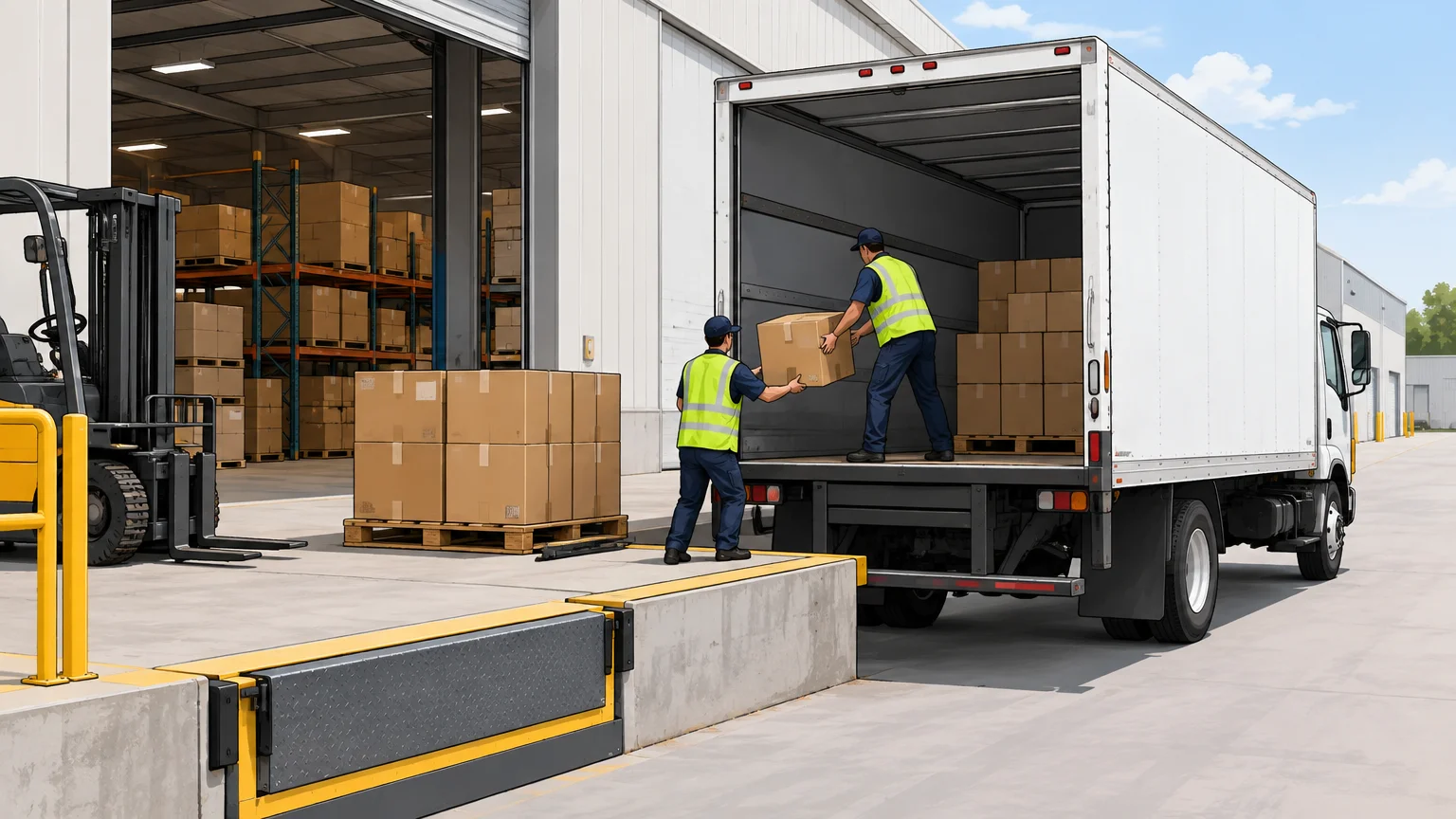
FCA has two handover situations. If delivery takes place at the seller’s premises, the seller loads the goods onto the collecting vehicle arranged by the buyer. If delivery takes place elsewhere, the seller brings the goods there on its own vehicle, ready for unloading and available to the buyer’s carrier.
The buyer-nominated carrier matters because handing goods to a different carrier hired by the seller does not necessarily mark FCA delivery. The International Chamber of Commerce explains that the named delivery point is where risk passes. Its guidance also distinguishes the buyer’s carrier from a haulier the seller might use to reach that point.
In practical terms, the place and handover method affect the moment your responsibility begins. Our page on what the FCA shipping term means offers further context if you are reviewing a supplier’s shipping proposal.
Who arranges transport and pays the costs?
FCA divides work between the seller and buyer at the delivery point. Before delivery, the seller prepares the goods, completes export clearance, and delivers them as agreed. Where delivery is at the seller’s premises, the seller also loads the buyer-arranged collecting vehicle.
After delivery, the buyer generally arranges and pays for the main carriage and subsequent transport. The buyer also handles import clearance and applicable import duties and taxes. The seller is not required by FCA to arrange insurance for the buyer’s transit risk, so the buyer should consider whether separate coverage is appropriate for the cargo and route.
These responsibilities concern the sale contract’s delivery terms. They do not prevent the buyer from hiring a freight forwarder to arrange transport or manage shipment logistics. However, using a forwarder does not by itself change the agreed FCA delivery point or risk transfer.
How does FCA differ from FOB, EXW, and DDP?
FCA and FOB both involve delivery before the goods reach their final destination, but the delivery point differs. FCA can apply to any transport mode, with delivery at the named place. FOB is limited to sea and inland waterway transport, and delivery occurs when goods are placed on board the vessel at the named port.
For containerized cargo handed to a carrier at a terminal before it is loaded aboard a vessel, FCA can match the actual handover better than FOB. The UK government’s Incoterms guidance distinguishes FCA delivery to a carrier from FOB delivery on board a vessel.
EXW generally places fewer delivery tasks on the seller: the seller makes the goods available at the agreed place, while the buyer arranges collection and export clearance. Under FCA, the seller handles export clearance and delivers the goods to the buyer’s carrier. DDP is different again: the seller takes responsibility for delivery to the named destination and import formalities under that rule.
These terms allocate different tasks and risks, so do not treat them as interchangeable shipping labels. For a related explanation, see the FCA Incoterms definition.
What should you check before agreeing to FCA?
Before you accept an FCA quotation or contract, confirm the details that determine where delivery takes place and who coordinates the next stage:
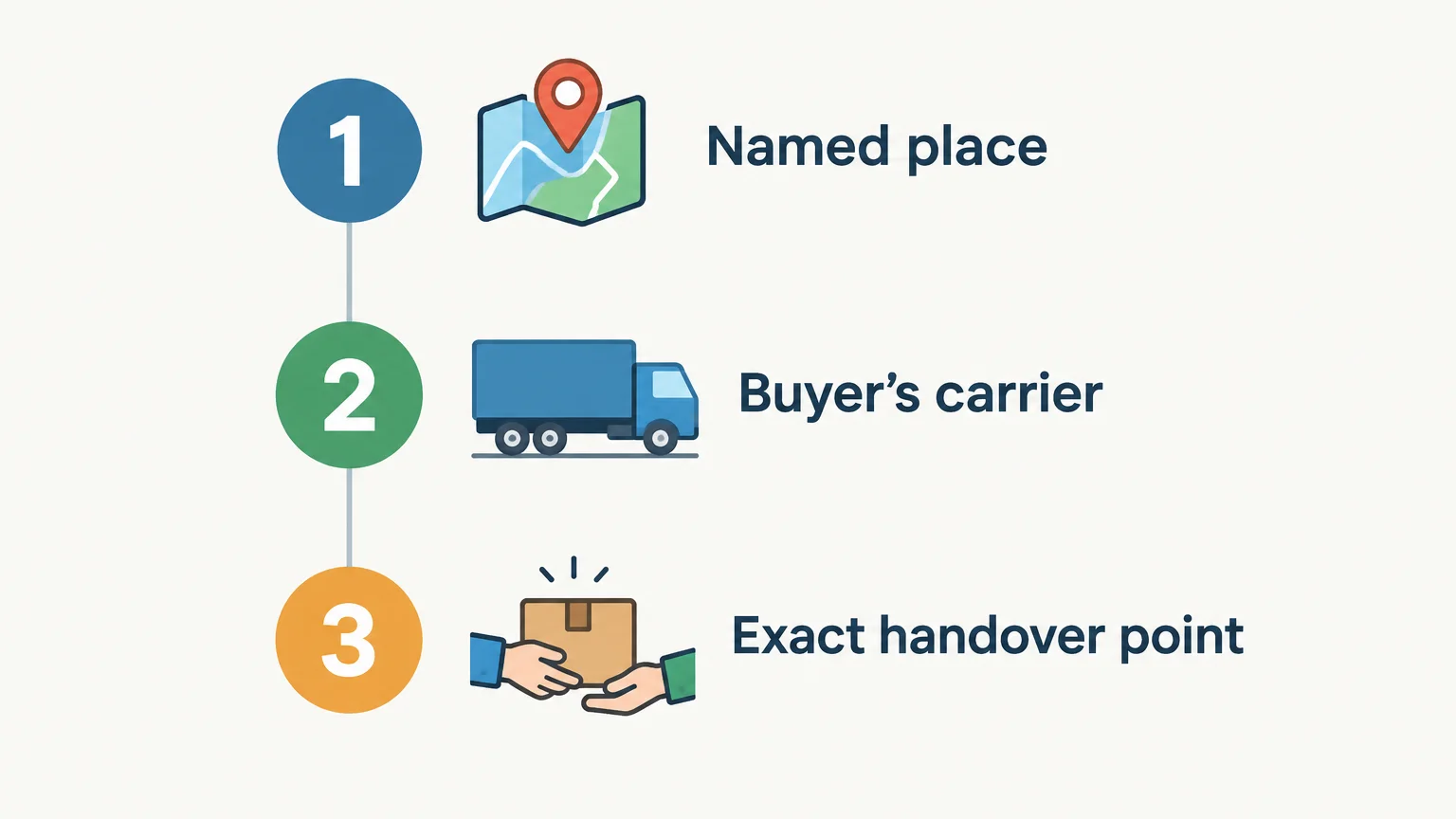
- Named place: Write the full location, not just a city, port, or country.
- Handover point: Identify the specific point within the named place where delivery is completed.
- Carrier: Confirm who nominates the carrier and who provides its collection details.
- Loading: Establish whether delivery is at the seller’s premises or another location, since the loading arrangements differ.
- Rule and version: State FCA and the version that applies to the contract.
Also check that the price quote and sales contract describe the same division of transport costs. If your supplier’s quote includes transport beyond the FCA handover point, ask which party is paying for each leg. A clear written agreement helps prevent confusion about whether a charge is included or who bears risk at a particular stage.
Make the FCA handover point explicit
FCA means the seller delivers goods to the buyer’s carrier at a named place, and risk transfers at that point. Before agreeing, write down the precise location, confirm loading arrangements, and state the Incoterms version. Then coordinate the buyer’s onward transport, import clearance, and any insurance separately. Those details make the responsibilities behind Free Carrier delivery clearer for both parties.
Plan Your Shipment From China
If you are buying inventory from a Chinese supplier, the FCA handover is only one part of the journey. Your onward transport, customs arrangements, and final delivery destination also need to fit your shipment plan.
We coordinate supplier pickup, international freight, Chinese export declarations, destination customs clearance, and DDP door-to-door delivery to Amazon warehouses. Our team consists of Amazon sellers who became freight forwarders and has shipped from China for more than five years. Request a quote with your product and shipment details to compare three route options; we provide options and estimated timelines within 24 hours. Explore our freight forwarding services for a separately quoted DDP shipping arrangement.
Frequently Asked Questions
What does FCA stand for?
FCA stands for Free Carrier, an Incoterms® rule. It describes delivery to a buyer-nominated carrier or another person at a named place.
Who pays for shipping under FCA?
The buyer generally arranges and pays for transport after delivery at the named FCA point. The seller covers its responsibilities up to delivery, including export clearance.
Does FCA include insurance?
FCA does not require either party to arrange insurance for the buyer’s transit risk. The buyer should consider appropriate coverage for the goods and route.
Is FCA suitable for container shipments?
FCA can be used for container shipments and other transport modes. The parties should specify the exact handover point, especially when the goods are delivered to a carrier at a terminal.
Can a freight forwarder manage a shipment sold FCA?
Yes, a buyer can appoint a freight forwarder to arrange transport after the FCA handover. For China-to-Amazon shipments, our Amazon FBA freight-forwarding service coordinates international freight, customs, duties under DDP, and door-to-door delivery as a separately agreed shipping arrangement.
Ready to Optimize Your Amazon Shipping?
Get 3 route options tailored to your products and timeline
Get Your Quote→